
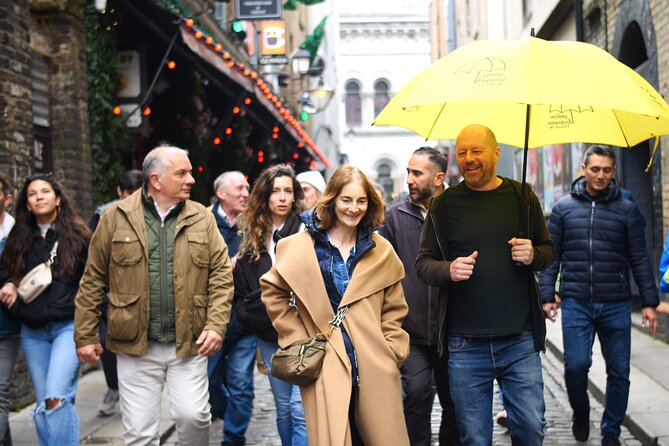
Reviewed · WALKING TOURS
Small Group Bucket List Sights Walking Tour with a Local Guide
Dublin’s story is packed into a two-hour walk from Christ Church Cathedral to Trinity College. Along the way, you cross the Liffey twice, pass Dublin Castle and Temple Bar, hear why the city’s bridges and streets matter, and finish beside the Book of Kells exhibition. It is a brisk introduction rather than a series of building tours.
I like the route for two reasons: it links the big sights into one clear picture, and the guides, including Peter, Patrick, Rob, and Martin, make room for questions and practical tips. The main drawback is simple: you do not go inside the major buildings, and a group of up to 25 people may feel less personal than the word small suggests.
In This Review
- Key points to know before booking
- Why this route works as a first look at Dublin
- From Viking foundations to St. Patrick’s Cathedral
- Dubh Linn Gardens and the city’s name
- Dublin Castle and City Hall
- Temple Bar beyond the pub signs
- Crossing the Liffey on two different bridges
- Merchant’s Arch and Dublin’s sharp contrasts
- College Green, Molly Malone, and Trinity College
- What the $20.52 price really gives you
- Guide style, group size, and walking pace
- Who should book this Dublin walk
- Practical details that affect your day
- Should you book the Small Group Bucket List Sights Walking Tour?
- FAQ
- How long does the walking tour last?
- Where does the tour start?
- Where does the tour finish?
- How much does the tour cost?
- Are admission tickets to the attractions included?
- What language is the tour offered in?
- How many people can join the tour?
Key points to know before booking
- Twelve central stops in two hours: You cover Dublin Castle, both cathedrals, Temple Bar, the Liffey bridges, Molly Malone, and Trinity College.
- A strong orientation walk: The route helps you understand how the old city fits together before exploring on your own.
- Local guides with different strengths: Peter is often praised for clear explanations and useful suggestions, while Patrick, Rob, and Martin have also led the walk.
- Exterior sightseeing only: Admission to Christ Church Cathedral, St. Patrick’s Cathedral, Dublin Castle, and the Book of Kells is not included.
- Good value at $20.52: The price is modest for a guided overview, especially if you use the advice to plan the rest of your Dublin stay.
- Free cancellation up to 24 hours ahead: Late cancellations and last-minute changes are not accepted.
Why this route works as a first look at Dublin
This tour does something useful that a simple photo stop does not. It connects Dublin’s religious, political, commercial, and literary landmarks in one walk. You begin in the medieval heart of the city and end at Trinity College, passing through areas shaped by Vikings, Norman rule, British government, Irish independence, and modern city life.
Each stop receives about ten minutes. That gives you enough time for a clear explanation and a few questions, but not enough time for a long building visit. I would treat the tour as a map in story form. It helps you decide where to return later, rather than trying to replace the cathedral interiors, castle rooms, or Book of Kells exhibition.
The route is also useful for a short break in Dublin. Several people who took it used the walk to get their bearings, then followed the guide’s suggestions for museums and walks afterward. That is one of the strongest reasons to book it early in your stay.
More walking tours in Dublin:
- Dublin Highlights and Hidden Gems Guided Walking Tour
★ 5.0 · 6,020 reviews - Dublin: Highlights and Hidden Gems Walking Tour
★ 4.9 · 2,140 reviews - 1916 Rebellion Walking Tour
★ 5.0 · 1,605 reviews
From Viking foundations to St. Patrick’s Cathedral
The tour starts at 121 R137 in Wood Quay, near Christ Church Cathedral, at 10 a.m. Confirm the exact meeting point before setting out, since the route begins in a busy central area and the walk does not wait for a long search.
Christ Church is a fine place to begin. The cathedral was first built in wood by the Vikings, later rebuilt in stone by the Normans, and renovated in the 19th century with money connected to the whiskey trade. You will spend around ten minutes hearing about the building and its place in Dublin’s story.
Admission is not included, so you see the cathedral from the outside during this experience. That is enough to appreciate its setting and broad historical arc, but if you want the interior, crypt, or other paid features, plan a separate visit and allow extra time after the walk.
Next comes St. Patrick’s Cathedral, named for Ireland’s best-known patron saint. The guide explains its connection to Sir Benjamin Lee Guinness, whose family funded a major renovation in the 1860s. Again, this is an exterior stop, not a cathedral visit.
I like the pairing of the two cathedrals. You are not just looking at two grand churches. You are seeing how Dublin’s identity took shape through Viking settlement, Norman power, religion, wealth, and later restoration. Ten minutes at each is short, but the contrast gives the opening section real purpose.
Dubh Linn Gardens and the city’s name
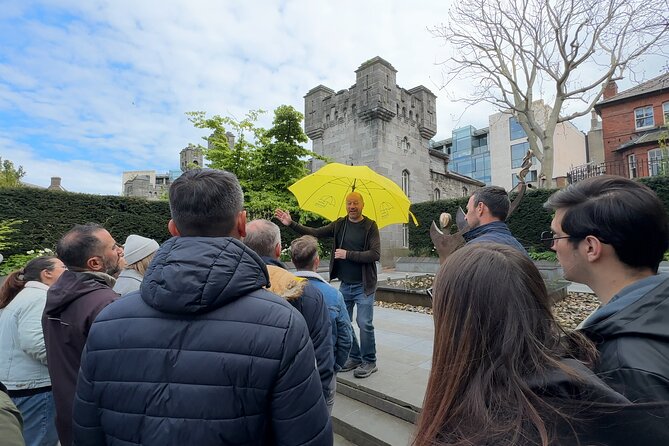
Dubh Linn Gardens offers a quieter pause near Dublin Castle. The garden is home to the Chester Beatty Library and marks the area associated with the Viking moorings in the 9th century. Admission to the garden is free.
This is one of the more thoughtful stops because it gives the group a calmer place to listen. The route is not all busy streets and famous photo points. A secluded garden can help you picture the water and settlement that shaped early Dublin, even while the modern city surrounds you.
The Chester Beatty Library is not part of the tour’s scheduled admissions. If its collections interest you, note it as a possible return visit. The walk gives you the location and the context, then lets you decide how to spend more of your own time.
Dublin Castle and City Hall
Dublin Castle comes next. For 700 years, it was the centre of British government in Ireland. Its architecture mixes medieval, Georgian, Gothic, and modern elements, so the stop is useful even if you are more interested in politics than design.
The guide uses the castle to explain power in Ireland, not simply to point out a handsome facade. You will hear how the site changed over time and why such a mixture of styles appears in one complex. Admission is not included, and the ten-minute visit is limited to an outside explanation.
The group then moves to City Hall, beside the castle gates. Here, the guide explains the meaning of Ireland’s national flag as a symbol of peace between Catholic and Protestant communities, and between North and South.
That short stop adds political context to the walk. Instead of treating Dublin as a string of old buildings, the guide ties architecture to the tensions and hopes that shaped the country. You may find this especially useful if Irish history feels confusing or if you want more than postcard views.
A few more Dublin tours worth weighing up
- Dublin to Glendalough, Wicklow and Kilkenny Full Day Guided Tour
★ 5.0 · 4,895 reviews - Dublin Book of Kells, Castle and Molly Malone Statue Guided Tour
★ 4.5 · 3,825 reviews - The Little Museum of Dublin Famous Guided Tour
★ 5.0 · 2,948 reviews - Dublin Jameson Distillery and Guinness Storehouse Guided Tour
★ 4.5 · 2,608 reviews
Temple Bar beyond the pub signs
Temple Bar is one of Dublin’s oldest areas and is now famous for pubs, nightlife, and busy streets. The guide explains how the area was laid out during the Tudor conquest of Ireland.
You should expect the tour to discuss Temple Bar rather than turn it into a pub crawl. The stop helps you see the district as part of the city’s older plan, not only as a nightlife zone. Admission is free, and the route remains outdoors.
This is also a place where the pace may feel lively. Stay close to the guide and listen for the historical details, since crowds and street activity can make conversation harder. The walk’s maximum group size is 25, so a position near the guide may help you hear every explanation.
Crossing the Liffey on two different bridges
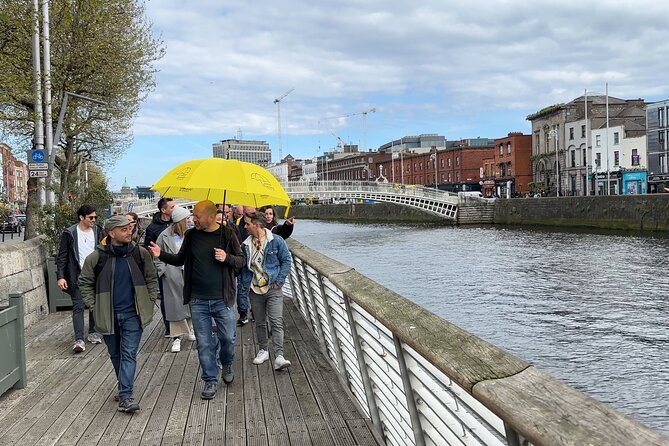
The Millennium Bridge takes the group from the south side of the Liffey to the north. From here, the guide points east toward the Celtic settlement said to date back 2,100 years and west toward the modern Silicon Docks, linked in the tour explanation to American influence.
This is a useful visual pause. You can look across the river while the guide connects early settlement with modern business. The tour does not ask you to memorize a long list of dates. It uses the view to show how Dublin changed from a small settlement into a modern capital.
The route then crosses back over the Ha’penny Bridge, one of Dublin’s most recognizable structures. The guide explains its earlier name, connected to the Duke of Wellington, and the work associated with Harland & Wolff that stopped the bridge from shaking as people walked across it.
The bridges are more than quick photo stops. They give the walk a natural shape and let you see Dublin from both sides of the river. You also get a break from looking at building fronts and a chance to understand how the Liffey divides and joins the city.
Merchant’s Arch and Dublin’s sharp contrasts
Merchant’s Arch brings you into a compact example of old and new Dublin. The guide uses Crown Alley, with Merchant’s Arch at one end and Sam Stephenson’s brutalist Stephenson Tower at the other, to show the city’s contrasts.
This stop should appeal to you if you enjoy architecture, urban change, and the odd visual clash. Older commercial spaces and later concrete construction sit close together, making the point without a lecture on every building in the area.
Admission is not included for this stop, though the tour is primarily an outdoor walk. As with the other locations, the value comes from the guide’s explanation and from knowing what to notice when you return alone.
College Green, Molly Malone, and Trinity College
College Green is one of the city’s most handsome open areas, with notable bank and parliament buildings around it. The guide explains how it served as a centre of government and finance in a city that saw itself as the second city of the empire.
This is another strong political stop. It gives you a way to read the surrounding buildings as evidence of Dublin’s former power and ambition. The area is free to view, and the group spends about ten minutes here.
No Dublin introduction would feel complete without Molly Malone. The statue is a quick, familiar stop, but it adds a lighter note after the heavier material on government, religion, and conflict. You get a chance to say hello, take a look, and keep moving.
The tour ends outside the front gate of Trinity College Dublin, on College Green, near Fox House at 37 College Green, Dublin 2. Trinity is home to the famous Book of Kells exhibition, but entry is not included. That arrangement is sensible for an orientation walk: you finish at a major attraction and can decide if you want to visit it immediately or return at a time that suits you.
The ending also makes the tour useful for planning. By this point, you have seen the main central districts and can choose to continue around Trinity, return to a cathedral, explore Temple Bar, or follow one of the guide’s suggestions for museums and walks.
What the $20.52 price really gives you
At $20.52 per person, this is inexpensive for a two-hour guided walk through Dublin’s central sights. You are paying for a local guide’s organization, historical explanations, route planning, and answers to questions. You are not paying for entry to attractions, transport, food, or a private tour.
That distinction matters. If you want to enter both cathedrals, visit Dublin Castle’s interiors, or see the Book of Kells, your total day will cost more. Still, the tour can save you time by showing you which places deserve a longer visit.
The value is strongest when you take it near the start of your stay. Guides such as Peter have offered practical advice on what to do next, including museums and walks. A short briefing at the beginning of a trip can prevent you from wasting an afternoon wandering between sights without a plan.
The price is also fair if you want a broad overview and do not need long stops. It is less suitable if you prefer one building explored in detail. In that case, spend the money on a single interior visit or choose a longer specialist tour.
Guide style, group size, and walking pace
The guides named in the tour information include Peter, Patrick, Rob, and Martin. Their styles may differ, but the experience is built around conversation, historical explanation, and questions rather than a fixed speech delivered without interruption.
Peter is often described as personable, clear, and generous with practical advice. Patrick has been praised for answering questions and giving a concise account of Dublin and Ireland. Rob has led very small departures without cancelling, and Martin is noted for his energy and enthusiasm.
That range is worth knowing because your guide affects the feel of a walking tour. The route is set, but the amount of discussion may change with the group. You may get a lively question-and-answer session, especially if the group is small, or a more structured talk if the full maximum of 25 people attends.
The advertised group limit is 25. That is still manageable on city streets, but it is not the same as a private walk. If you have trouble hearing in street noise, stay near the guide and ask questions when the group stops.
Most people can take part, the tour is near public transportation, and service animals are allowed. No special fitness requirement is stated, but it is a walking activity lasting about two hours, so wear shoes you can comfortably use on city streets.
Who should book this Dublin walk
I would recommend it most strongly for:
- First-time visitors who want a clear map of central Dublin
- People on a short break who need the main sights explained quickly
- Solo visitors who like asking questions and getting local suggestions
- Couples and families who want history without a full-day commitment
- Anyone deciding which cathedrals, museums, or attractions deserve extra time
It is also a good choice if you enjoy political and social history alongside architecture. The route covers religious buildings, government sites, bridges, streets, statues, and a university, so you get a broad view of the city rather than one narrow subject.
You may want something else if you need wheelchair-specific information, a private guide, or guaranteed access inside the sights. The available details say most people can participate, but they do not give a detailed accessibility assessment. You should confirm your particular needs before booking.
Practical details that affect your day
The tour starts at 10 a.m. near Christ Church Cathedral and finishes at Trinity College. Since the start and end are in different parts of central Dublin, the route works well as a morning activity followed by lunch or an afternoon attraction near College Green.
Bring a mobile ticket, since the experience is issued in mobile format and offered in English. The confirmation arrives when you book. Admission tickets are not included at Christ Church Cathedral, St. Patrick’s Cathedral, Dublin Castle, or Trinity College, so budget separately if you plan to go inside.
You can cancel for a full refund up to 24 hours before the local start time. Cancellations or changes made inside that 24-hour window are not accepted, and the amount paid is not refunded.
The tour is offered by Yellow Umbrella Tours Ltd. It is usually booked well ahead, with an average booking lead time of 61 days, so popular dates may reward early planning.
Should you book the Small Group Bucket List Sights Walking Tour?
Book it if you want a friendly, affordable introduction to Dublin and prefer to learn the city’s basic story before choosing your own longer visits. The route is well planned, the sights are central, and the guides add value through questions and practical suggestions.
I would not book it as your only experience of Dublin if you expect cathedral interiors, castle rooms, or the Book of Kells exhibition. Think of it as a well-priced first chapter. At $20.52, it gives you the city’s framework, then leaves you free to return to the places that catch your interest.
FAQ
How long does the walking tour last?
The tour lasts approximately two hours. Each of the twelve listed stops is planned for about ten minutes.
Where does the tour start?
It starts at 10 a.m. at 121 R137 in Wood Quay, Dublin, near Christ Church Cathedral.
Where does the tour finish?
The tour ends on College Green outside the front gate of Trinity College Dublin, near Fox House at 37 College Green, Dublin 2.
How much does the tour cost?
The listed price is $20.52 per person.
Are admission tickets to the attractions included?
No. Admission is not included for Christ Church Cathedral, St. Patrick’s Cathedral, Dublin Castle, or Trinity College and the Book of Kells exhibition. Dubh Linn Gardens, City Hall, Temple Bar, College Green, and other outdoor stops are listed as free or exterior visits.
What language is the tour offered in?
The tour is offered in English and uses a mobile ticket.
How many people can join the tour?
The maximum group size is 25 people. Most people can participate, the tour is near public transportation, and service animals are allowed.
Just added around Dublin
- Dublin: Pub Tour. Pour The Perfect Guinness, Whiskey & Music★ 5.0 · 3 reviews
- A Self Guided Walking Tour of Dublin’s Docklands★ 4.5 · 3 reviews
- Private Dublin City tour★ 5.0 · 3 reviews
- Dublin One Day Tour with a Local: 100% Personalized & Private★ 4.5 · 3 reviews
- Waterford Crystal and Kilkenny Full-Day Rail Tour from Dublin★ 5.0 · 3 reviews
- Secret and unusual Dublin: guided walking tour★ 5.0 · 3 reviews
- 5 Day Ireland’s South−East Including Admission from Dublin★ 4.5 · 3 reviews
- Turtle Bunbury’s Dublin: A Self-Guided Audio Tour from a Celebrated Author★ 5.0 · 3 reviews
Walking Tours, compared.
Dublin Highlights and Hidden Gems Guided Walking Tour
Read our review →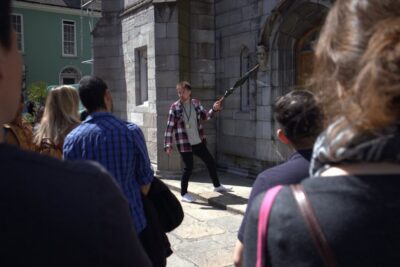
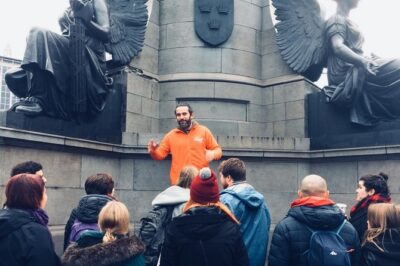
90 Minute Dublin Walking tour and Sightseeing tips
Read our review →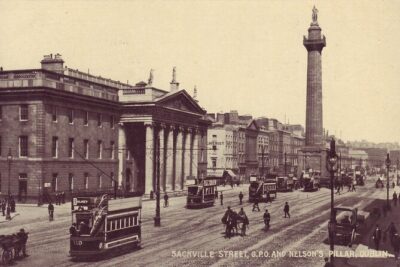

Dublin Traditional Irish 3 Course Meal Walking Tour with Local
Read our review →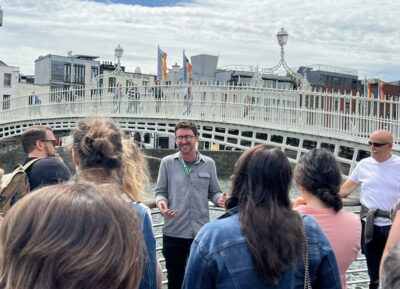
Browse the lists this tour appears in