
Reviewed · WALKING TOURS
A Self Guided Walking Tour of Dublin’s Docklands
Dublin’s Docklands tells its story in layers: the Custom House recalls trade and empire, the Famine Memorial faces the river, and modern bridges and offices show a city remaking its waterfront. This self-guided audio walk links those pieces in about an hour, from the Custom House to Grand Canal Square.
I like the freedom to stop for photos or coffee without holding up a group, and I like the offline maps and audio, which spare you from relying on mobile data. The main drawback is that you must bring your own smartphone and headphones, and the GPS narration cannot answer questions or adjust the route like a live guide.
In This Review
- Key points to know before you go
- Starting beside the Custom House
- Trade, labor, and transport along the quays
- The IFSC and Dublin’s new business district
- Famine memory beside the River Liffey
- Jeanie Johnston and the memory of Irish seafarers
- Modern bridges and the Convention Centre
- Dock engineering, bridges, and the port’s working machinery
- Hanover Quay and the final walk to Grand Canal Square
- How the audio format works for you
- Time, access, and value at $11.99
- Who will get the most from this Docklands walk
- Should you book it?
- FAQ
- How long does the Dublin Docklands audio tour take?
- Where does the tour begin?
- Where does the tour end?
- Is this a guided group tour?
- Is the tour available in languages other than English?
- Do I need my own phone and headphones?
- Can I use the tour without mobile data?
- Can I use the tour more than once?
- Can I listen to the tour without walking the route?
- Is the tour easy to reach by public transport?
Key points to know before you go
- A compact route through old and new Dublin: Walk from the Custom House past the Famine Memorial, Jeanie Johnston, Samuel Beckett Bridge, and Grand Canal Square.
- A manageable pace: The route takes about 50 minutes to 1 hour 10 minutes, depending on how long you pause at the sights.
- Useful offline access: Download the audio, maps, and geodata before setting out so you can walk without using mobile data.
- No fixed group schedule: You explore alone or with your own party, with unlimited use before and after your booking date.
- A strong transport connection: The start is close to Busáras, nearby bus and Luas stops, and Tara Street DART station.
- A modest price for orientation: At $11.99 per person, it costs less than many guided walks, but you are paying for the route and narration rather than personal interaction.
Starting beside the Custom House
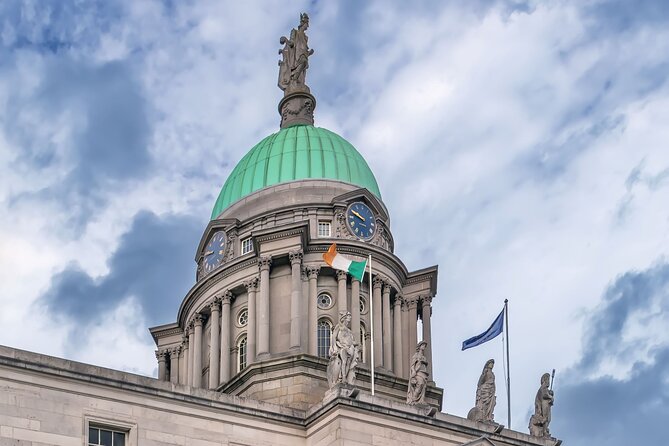
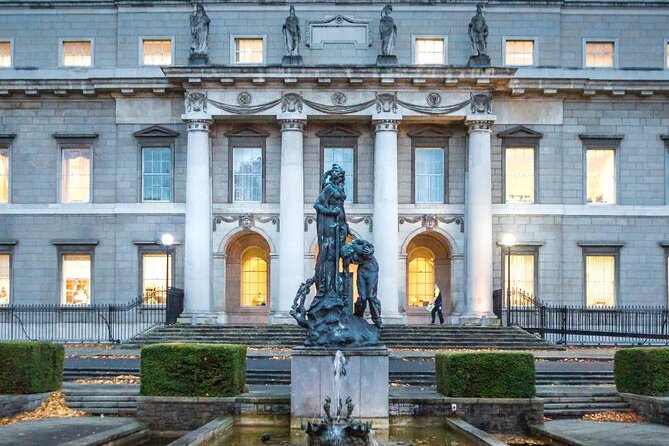
The tour begins at the Custom House on North Wall, Dublin 1. This grand neoclassical building once served as the center of Irish trade and commerce, making it a fitting first stop for a walk about shipping, labor, migration, and the changing River Liffey.
You will want to arrive with the app ready and your headphones connected. The directions bring you to the correct starting point, and the GPS format is meant to begin the tour when you reach it.
From here, the route moves through an area that was once Dublin’s maritime heart. The Docklands today has offices, apartments, transport links, public art, and event spaces, but the route keeps pointing back to the work once done along the river.
That contrast is the central idea of the walk. You are not simply looking at attractive buildings. You are watching a working port district change into a modern business and cultural quarter.
More walking tours in Dublin:
- Dublin Highlights and Hidden Gems Guided Walking Tour
★ 5.0 · 6,020 reviews - Dublin: Highlights and Hidden Gems Walking Tour
★ 4.9 · 2,140 reviews - 1916 Rebellion Walking Tour
★ 5.0 · 1,605 reviews
Trade, labor, and transport along the quays
The quayside gives you a useful first look at this change. Historic warehouses sit near newer development, so the walk can show you how storage, shipping, and port work once shaped this part of Dublin.
The route then brings you past the memorial to James Connolly. Connolly was a major figure in Ireland’s independence struggle and in the fight for workers’ rights, so his presence adds a labor and political thread to the port’s commercial story.
Nearby, Liberty Hall Theatre recalls Dublin’s labor movement. The building is also an important city landmark, and its place on this route helps connect working-class organizing with the wider history of the docks.
You will also pass Busáras, Dublin’s central bus station, and Connolly Train Station. These are practical city buildings rather than postcard sights, but they matter because they show how the Docklands remains a place of movement and connection.
Connolly Station serves domestic and international routes, while Busáras links the district to the rest of Dublin and beyond. I appreciate their inclusion because a good city walk should explain how a neighborhood functions now, not only point out old monuments.
The IFSC and Dublin’s new business district
The route passes the IFSC, Dublin’s International Financial Services Centre. Its offices and financial institutions represent a sharp shift from the warehouses and shipping facilities that once defined the area.
You may find this part of the walk less visually intimate than the older riverfront sections. The value here is context. The audio helps you see the Docklands as a district shaped by several kinds of work, first maritime trade, then transport and industry, and now finance and multinational business.
The tour also points out a Triumphal Arch connected with Dublin’s maritime heritage and economic prosperity. It is one of the smaller details that you could easily miss while walking between larger buildings, which is where the narration earns its keep.
Since the pace is self-directed, you can pause when something catches your eye. The supplied route information does not promise entry to any building, so treat this as an outdoor walk rather than an architecture tour with interior visits.
Famine memory beside the River Liffey
The Famine Memorial is one of the route’s most serious stops. The figures along the river honor those who suffered during Ireland’s Great Famine in the 19th century, and their position beside the water gives the memorial a direct connection to emigration and departure.
This is a place to slow down. The walk includes major infrastructure and modern offices, but the memorial keeps the human cost of Irish history in view.
From there, you cross the Liffey on the Seán O’Casey Bridge. The crossing gives you broad views of the riverfront and Dublin’s skyline, and it creates a natural midpoint in the route.
The bridge is also a practical reminder that the Docklands is connected across the river rather than divided into isolated pockets. Keep your headphones at a volume that lets you remain aware of other people and traffic around the crossing.
More self-guided routes in Dublin:
- St Patrick’s Cathedral: Self-Guided Cathedral Admission
★ 4.5 · 2,126 reviews - Christ Church Cathedral Entrance Ticket & Self-Guided Tour
★ 4.6 · 773 reviews - Dublin Ghost Hunt Exploration Game and Tour
★ 4.0 · 34 reviews - Private Dublin Treasure Hunt Self Guided Tour
★ 4.5 · 14 reviews
Jeanie Johnston and the memory of Irish seafarers
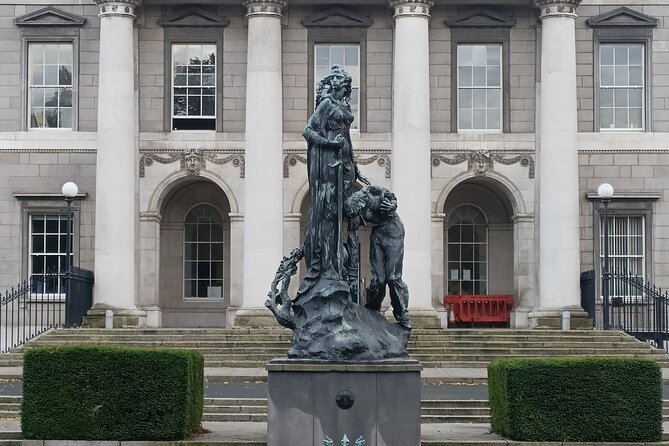
The route next passes a memorial to Irish seafarers who lost their lives at sea. This stop adds another human element to the port, shifting the focus from buildings and trade to the people who worked on the water.
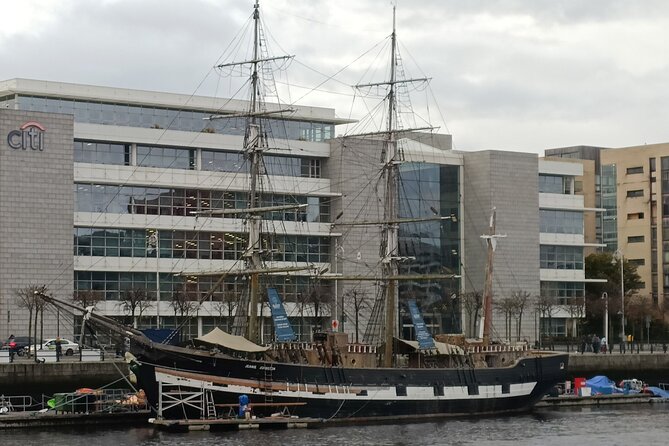
You will also see a replica of the Jeanie Johnston. The historic ship carried Irish emigrants to North America during the Great Famine, so it connects the Docklands to one of the largest movements of people in Irish history.
The ship is one of the clearest visual anchors on the walk. Even if you know the broad story of Irish emigration, seeing a vessel tied to that period helps place the story in the working port where departures began.
The audio format works especially well here because it lets you look at the river, ship, and surrounding quays while hearing the historical thread. Still, remember that this experience is an outdoor audio tour. The information provided does not include an admission visit inside the ship.
Modern bridges and the Convention Centre
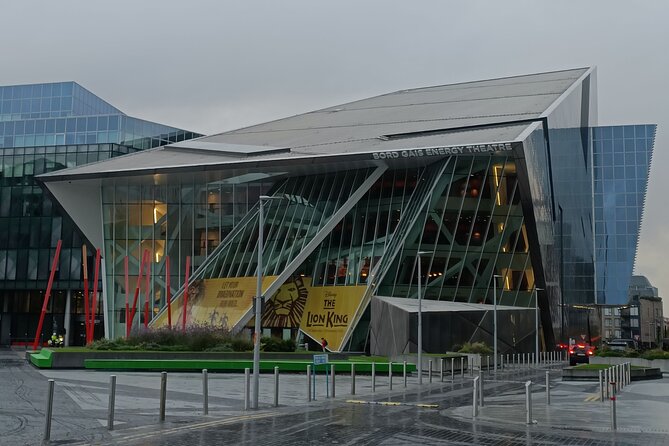
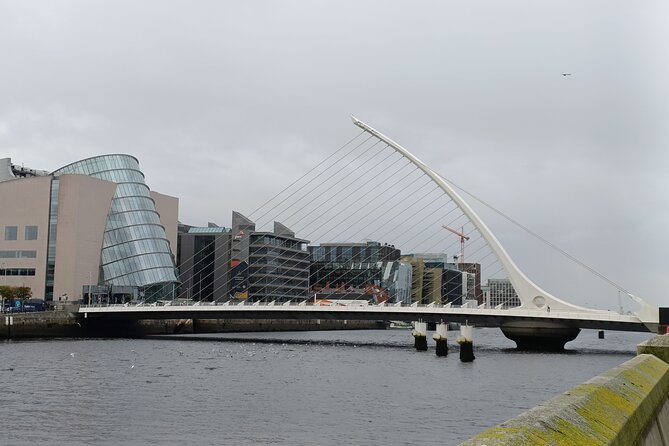
The Samuel Beckett Bridge is one of the Docklands’ most recognizable modern sights. Named for the Irish writer, its distinctive form gives the route a strong visual change from the Custom House and older port structures.
Soon after, you pass the Convention Centre Dublin, a modern venue for conferences, exhibitions, and events. These stops show how the Docklands has become a place for business, public gatherings, and contemporary city life.
I like this section because it avoids treating Dublin as a museum frozen in the past. You get older memorials and maritime reminders, then newer bridges and large-scale public buildings within the same walk.
The route also passes a statue of Admiral William Brown, an Irish-born naval officer who founded the Argentine Navy. That detail broadens the story beyond Dublin itself and points to the international reach of people connected with Ireland.
Dock engineering, bridges, and the port’s working machinery
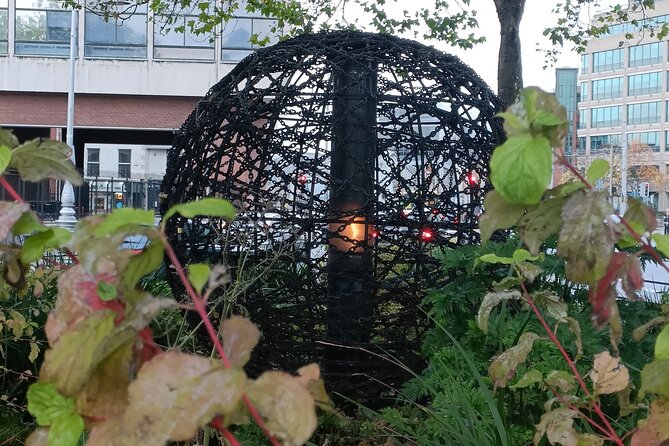
The historic dock-maintenance bell is another unusual stop. It recalls the practical labor needed to keep the port working, a useful counterpoint to the grand Custom House and official monuments.
You also pass the Tom Clarke Bridge, also known as the East-Link Bridge. It is a major transport connection between north and south Dublin, and its inclusion helps you understand the Docklands as active infrastructure rather than a purely scenic waterfront.
The route continues past BrewDog Outpost Dublin, a brewery with craft beer and a social setting. This is a modern leisure stop rather than a historic monument, but it reflects the area’s current mix of work, food, drink, and evening activity.
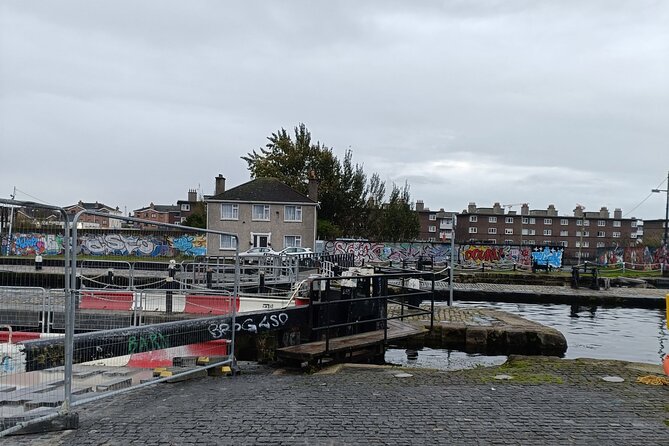
You then reach the sea lock, an important part of the docks because it regulates water levels. This is the sort of functional feature that can disappear into the background if you walk alone, so listen closely when the audio draws attention to it.
The Grand Canal Docks sign marks the entrance to the historic canal basin. Together, the lock and sign help explain how the water system was managed and how the canal basin fits into Dublin’s broader port network.
Hanover Quay and the final walk to Grand Canal Square
Hanover Quay brings the route into a waterfront area with residential and commercial development. The setting feels more like a modern city neighborhood than an old port, though the water keeps the district’s original purpose in view.
You pass Hanover Quay Studios, a recording studio complex used by musicians and artists. This stop adds a creative note to a route otherwise filled with trade, transport, labor, finance, and engineering.
The tour ends at Grand Canal Square, a public space surrounded by modern architecture and cultural attractions. The finish gives you a clear sense of how far the walk has moved from the Custom House and the older working waterfront.
Red Sticks Dublin is the endpoint named for the route, on the Grand Canal. The opening hours supplied for the activity are listed as Monday through Sunday, 12:00 a.m. to 11:59 p.m., so the walk is not tied to a narrow departure window.
How the audio format works for you
This is a GPS-based tour, not a live walking tour. You receive directions to the starting point, then listen as you move from stop to stop.
The narration comes from a local insider, but no guide name is provided. You should not expect a person waiting at the Custom House, group introductions, or a question-and-answer period.
The strongest practical feature is offline access. Download the audio, maps, and geodata before you begin, then you can save mobile data and reduce the risk of losing your way if your connection is weak.
The tour also includes virtual playback. You can listen like an audiobook from anywhere, even if you are planning your Dublin visit in advance or want to revisit the route later.
You receive unlimited, lifetime use before and after your booking date. That makes the $11.99 fee more useful if you want to preview the route, walk it over more than one session, or replay the narration after your visit.
Bring a charged smartphone and your own headphones. Neither is included, and a phone with a small battery or unreliable audio connection could make the experience less pleasant.
Time, access, and value at $11.99
The stated walking time is about 50 minutes to 1 hour 10 minutes. That range is realistic for a route with many short stops, since you may pause for photographs, read memorials, watch the river, or stop for a drink.
The start is easy to reach by public transport. It is close to Busáras Luas and bus stops, and Tara Street DART station is also nearby. From O’Connell Street, the Custom House is about a 10-minute walk, while College Green is roughly 15 to 20 minutes away on foot.
That makes the tour easy to fit into a day in central Dublin. You can walk to the start, complete the route, and continue exploring around Grand Canal Square instead of spending time crossing the city to a meeting point.
At $11.99 per person, the value depends on what you want. I consider it a good buy if you like independent sightseeing, want historical orientation, and prefer to set your own pace.
A live tour would offer more personal contact and the ability to ask follow-up questions. This audio walk costs less than many guided outings, but it cannot react to your interests or change the route when weather, crowds, or your energy level get in the way.
The activity is private in the simple sense that only your own group participates. You do not join strangers, but you also do not receive a private guide.
Most people can take part, and service animals are allowed. The route is described as accessible by public transport, though the supplied information does not give detailed measurements for pavement, slopes, seating, or restroom access.
Who will get the most from this Docklands walk
I would choose this for a first visit to Dublin if you want a short introduction to the Docklands without committing to a long guided excursion. It is also a good fit for repeat visitors who have seen the central sights and want to understand the riverfront’s newer districts.
History-minded walkers will appreciate the sequence of trade, labor, famine, emigration, shipping, and modern finance. Architecture fans get a mix of neoclassical, industrial, bridge, and contemporary public design.
Independent visitors will like starting and stopping as they please. The route also suits people who prefer listening quietly rather than joining a group.
I would hesitate if you want a lively guide, extensive local recommendations, or entry into several buildings. The experience focuses on outdoor sights and narration, so you should choose it for structure and context, not personal contact.
A supplied customer rating of 4.7 from three reviews points to a positive response, and the specific praise is useful: the explanation was easy to follow, the pace felt manageable, and the audio helped identify details that could otherwise be missed. Those are the qualities I would value most here.
Should you book it?
Book this tour if you want a low-cost, flexible way to connect Dublin’s maritime past with its modern Docklands. The Famine Memorial, Jeanie Johnston, Custom House, bridges, locks, and Grand Canal Square give the walk enough variety to fill an hour well.
Skip it if you need a live expert or a more personal route. For everyone else, $11.99 is a fair price for an offline audio guide that you can use at your own pace, replay later, and share only with your own group.
FAQ
How long does the Dublin Docklands audio tour take?
The walk takes approximately 50 minutes to 1 hour 10 minutes, depending on your pace and how long you stop at each location.
Where does the tour begin?
It begins at the Custom House on North Wall, Dublin 1, County Dublin, Ireland.
Where does the tour end?
It ends at Red Sticks Dublin in Dublin Docklands, on the Grand Canal, near Grand Canal Square.
Is this a guided group tour?
No. It is a self-guided GPS audio tour, and only your own group participates.
Is the tour available in languages other than English?
The tour is offered in English.
Do I need my own phone and headphones?
Yes. You must bring your own smartphone and headphones because they are not included.
Can I use the tour without mobile data?
Yes. The tour provides offline access to the audio, maps, and geodata. Download the material before you start.
Can I use the tour more than once?
Yes. The tour includes unlimited, lifetime use before and after your booking date.
Can I listen to the tour without walking the route?
Yes. A virtual playback option lets you listen to it like an audiobook from anywhere.
Is the tour easy to reach by public transport?
Yes. The starting point is accessible from Busáras Luas and bus stops, as well as Tara Street DART station. It is also about a 10-minute walk from O’Connell Street and a 15 to 20-minute walk from College Green.
Just added around Dublin
- Dublin: Pub Tour. Pour The Perfect Guinness, Whiskey & Music★ 5.0 · 3 reviews
- Private Dublin City tour★ 5.0 · 3 reviews
- Dublin One Day Tour with a Local: 100% Personalized & Private★ 4.5 · 3 reviews
- Waterford Crystal and Kilkenny Full-Day Rail Tour from Dublin★ 5.0 · 3 reviews
- Secret and unusual Dublin: guided walking tour★ 5.0 · 3 reviews
- 5 Day Ireland’s South−East Including Admission from Dublin★ 4.5 · 3 reviews
- Turtle Bunbury’s Dublin: A Self-Guided Audio Tour from a Celebrated Author★ 5.0 · 3 reviews
- Eco Bike Tour of Dublin City Top Attractions and Nature★ 4.7 · 3 reviews
Walking Tours, compared.
Dublin Highlights and Hidden Gems Guided Walking Tour
Read our review →
90 Minute Dublin Walking tour and Sightseeing tips
Read our review →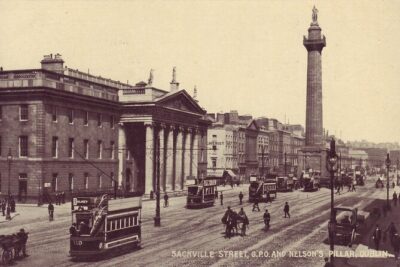

Dublin Traditional Irish 3 Course Meal Walking Tour with Local
Read our review →
Browse the lists this tour appears in