
Reviewed · DUBLIN MYTHS & STORYTELLING TOURS
Dublin: Mythology, Folklore and Legends Walking Tour
Dublin’s streets carry more than Georgian stone and pub signs. This tour brings out the older voices beneath the city, from Celtic origin stories and fairy lore to banshees, púcas, leprechauns, ancient warriors, and the stories that helped shape Irish identity. I like the way it gives familiar places such as Temple Bar and O’Connell Street a new layer.
I also like the storytelling-first approach and the fact that the route includes less familiar corners of Dublin. Guides including Helena, Emily, Dave, and Lee have been praised for humor, warmth, and strong delivery. The main consideration is that this is a spoken walking tour, so you need to stay engaged with the guide and be ready for Dublin weather.
In This Review
- Key points at a glance
- Why this Dublin tour feels different
- Starting beneath Temple Bar’s tourist surface
- Fairies, banshees, púcas, and leprechauns
- Finding Dublin’s less familiar corners
- The Georgian Quarter’s darker stories
- The Abbey Theatre and the power of tragedy
- O’Connell Street and the Gaelic revival
- How the guides shape the experience
- Is $27 a fair price for two hours?
- Who should book this folklore walk?
- Should you book the Dublin mythology tour?
- FAQ
- How long does the Dublin mythology and folklore tour last?
- How much does the tour cost?
- Where does the tour begin?
- Where does the tour finish?
- What language is the tour in?
- What does the price include?
- Is hotel pickup included?
- Is the tour wheelchair accessible?
- Can I cancel or pay later?
Key points at a glance
- Temple Bar with a Celtic beginning: Start with Ireland’s mythical origins and the beliefs that shaped early Gaelic culture.
- Fairies are not just cute souvenirs: Learn about banshees, púcas, leprechauns, and the serious place these beings hold in Irish folklore.
- A darker Georgian Quarter: Hear about rebellions, grave robbing, revolutions, and the macabre side of central Dublin.
- The Abbey Theatre’s tragic story: Connect Irish drama and national identity through one of Dublin’s important cultural institutions.
- Gaelic culture on O’Connell Street: Finish with the revival of the Irish language and culture, plus a look at modern street characters.
- Two hours for $27: The price is reasonable if you want a focused introduction to Irish stories without giving up half a day.
Why this Dublin tour feels different
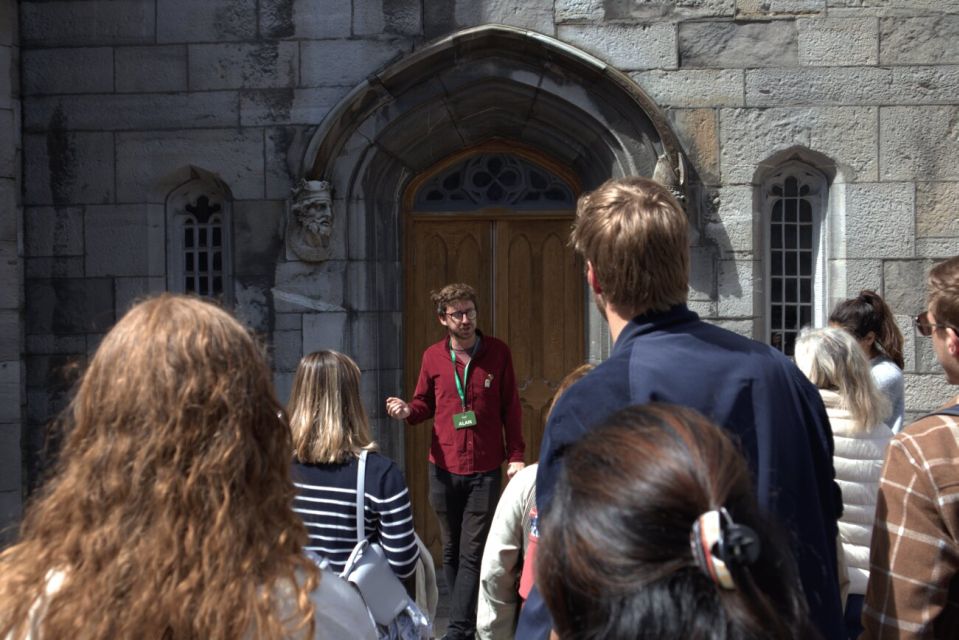
Many city tours explain what a building was used for, who designed it, and when it was built. This one asks a different question: what did people believe here, and how did those beliefs help shape Ireland?
That shift matters. You do not simply pass through Temple Bar, the Georgian Quarter, and O’Connell Street. You hear how old tales, political struggles, language, theater, and public memory connect. The result is less a list of sights and more a guided lesson in how storytelling works in Irish culture.
I especially like this choice for a first or second day in Dublin. It gives you a useful lens for the rest of your visit. Afterward, a pub name, street performer, monument, or bit of Irish language may carry more meaning than it did before.
The guides are central to the experience. Helena is described as charismatic, funny, enthusiastic, and especially good at keeping the stories moving. Emily is praised for warmth, humor, and bringing folklore into present-day Irish life. Dave adds jokes, practical Dublin tips, and a way of holding the attention of children. Lee has been praised for good energy and a friendly approach.
Your guide will vary, but the common thread is a performance built around spoken stories. That makes the guide’s delivery more important here than on a standard sightseeing walk.
More Irish myths and storytelling:
- Dublin Mythology and Folklore Tour with Irish Stories and Legends
★ 5.0 · 1,003 reviews - Storytelling of Irish Myths and Legends
★ 5.0 · 158 reviews - Private Dublin Pub Odyssey: Storytelling, and Pub Culture
★ 5.0 · 21 reviews
Starting beneath Temple Bar’s tourist surface
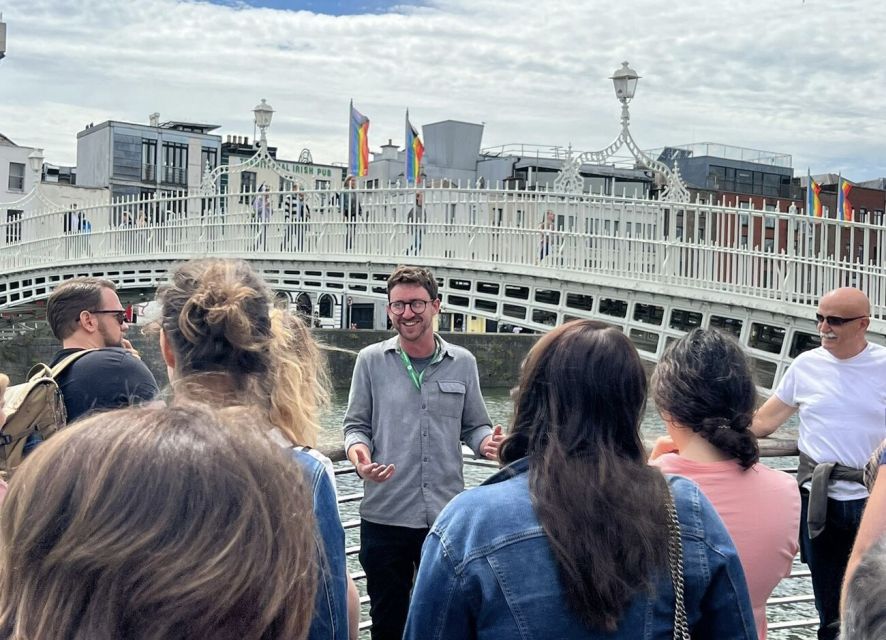
Meet outside The Old Storehouse pub in Temple Bar and look for the green umbrella. Temple Bar is one of Dublin’s best-known visitor areas, so the meeting point should be easy to locate, though the crowds can make it busy.
The tour uses Temple Bar as a starting point for Ireland’s mythical origins. Rather than treating Celtic culture as a decorative theme, the guide explains traditions and beliefs connected to early Irish society. This is a useful opening because it gives the rest of the tour a frame.
You begin to see mythology as part of cultural memory, not just a collection of strange creatures. Stories about origins, heroes, supernatural beings, and warriors helped people explain the world and pass values from one generation to the next.
The setting also makes a good contrast. Temple Bar is now associated with nightlife, restaurants, and tourist traffic. The tour asks you to look beyond that modern image and consider the older stories that existed long before the pubs and painted signs.
This section should suit you if you enjoy history presented through people, beliefs, and stories rather than dates alone. If you prefer detailed architectural commentary or a long list of monuments, the approach may feel less exact.
Fairies, banshees, púcas, and leprechauns
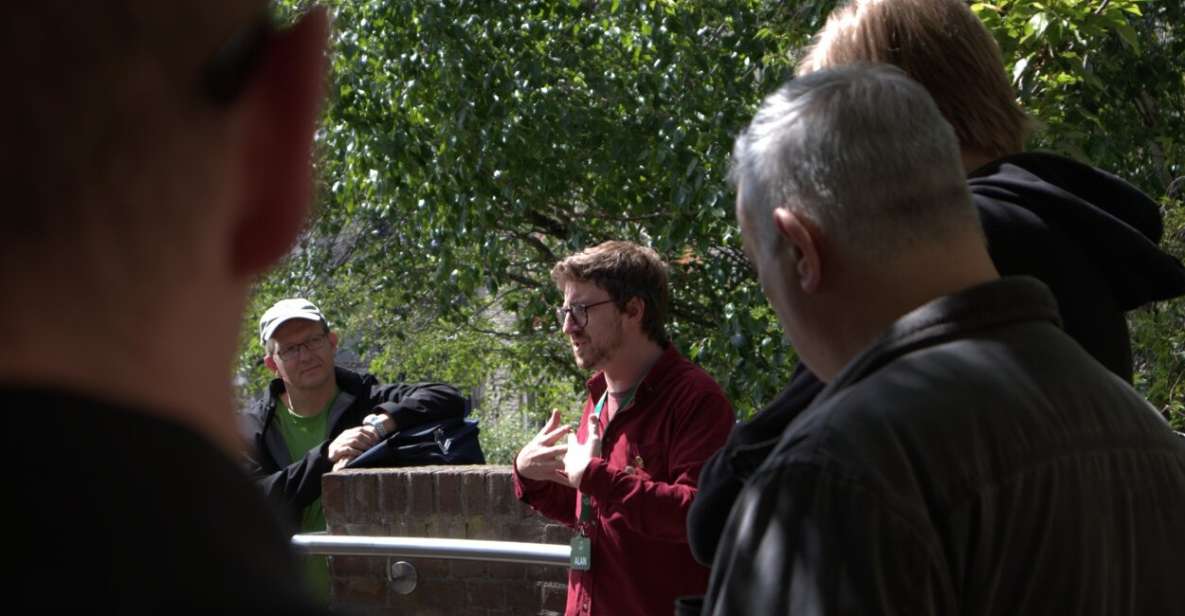
Irish folklore has plenty of fairies, but this tour places them in a broader cultural setting. You learn about fairies and creatures such as the banshee, púca, and leprechaun, along with the way these figures function in Irish storytelling.
The useful point is that these beings are not all interchangeable. The guide helps distinguish their roles and explains why supernatural stories mattered. A banshee, púca, or leprechaun can represent fear, mischief, warning, danger, or uncertainty, depending on the story.
This is one of the tour’s most memorable parts because it corrects the polished souvenir-shop version of Irish folklore. The familiar leprechaun image is only one small piece of a much larger tradition.
You also hear about ancient Irish warriors. That broadens the tour beyond supernatural creatures and shows how heroic stories sit beside fairy tales in the national imagination. Myths preserve ideas about courage, loyalty, conflict, and belonging.
The tour is particularly good for families and mixed-age groups at this point. Children have an easy way into the subject through mythical creatures, while adults can follow the cultural and historical meaning beneath the stories. One guide, Dave, has been especially effective at keeping younger listeners interested.
Finding Dublin’s less familiar corners
The route leaves the usual tourist path in places. That does not mean you will be taken far from central Dublin. Instead, you get a different selection of stops and stories in areas many first-time visitors might pass without noticing.
I value this because Dublin is compact and easy to cross on foot, yet its central streets can feel repetitive if every tour follows the same route. A folklore walk makes the city feel more layered. You are not only looking for famous facades. You are listening for the stories attached to them.
The walking pace includes several longer stops, giving you time to rest while the guide speaks. That is helpful after a full day of sightseeing, and it keeps the two-hour schedule from becoming a tiring march. The tour is wheelchair accessible, though you should still consider that it takes place outdoors on city streets.
There is no hotel pickup or drop-off. You meet the guide at The Old Storehouse and finish back at the same meeting point. Plan your route to and from Temple Bar on your own, and leave enough time to find the green umbrella.
More walking tours in Dublin:
- Dublin Highlights and Hidden Gems Guided Walking Tour
★ 5.0 · 6,020 reviews - Dublin: Highlights and Hidden Gems Walking Tour
★ 4.9 · 2,140 reviews - 1916 Rebellion Walking Tour
★ 5.0 · 1,605 reviews - 90 Minute Dublin Walking tour and Sightseeing tips
★ 5.0 · 916 reviews
The Georgian Quarter’s darker stories
The Georgian Quarter brings a sharp change in tone. Here, the tour explores Dublin’s macabre side, including rebellions, grave robbing, and revolutions.
This section is valuable because it links folklore with real fear and social upheaval. Irish stories did not grow in a vacuum. They developed alongside political conflict, poverty, religious tension, rebellion, and the unsettling realities of city life.
Grave robbing gives the Georgian Quarter an especially grim edge. It is the sort of subject that makes historic streets feel less polished and more human. You are reminded that Dublin was not simply a city of elegant doors and fine squares. It was also a place where desperate acts, public unrest, and disturbing trade could take place.
The guide’s tone matters here. Humor helps keep the subject listenable, but the stories still need room to be serious. Helena, Emily, and Dave have all been praised for balancing information with jokes and lively delivery. That balance should appeal to you if you like history with a human voice rather than a formal lecture.
This part may not suit very young children if they are uncomfortable with darker subjects. The material includes death, grave robbing, rebellions, and tragedy, so parents should decide if that tone fits their group.
The Abbey Theatre and the power of tragedy
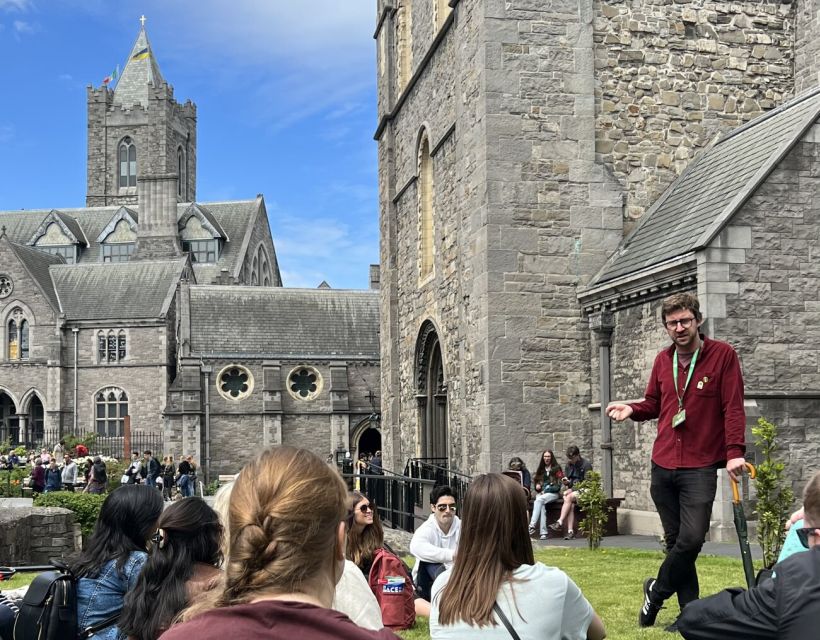
The tour also covers the tragic history of the Abbey Theatre. The Abbey is important not just as a theater building, but as part of Ireland’s cultural and national story.
The guide uses its history to show how drama and storytelling can influence a country’s sense of itself. That idea fits the tour’s main theme: stories are not separate from public life. They can shape language, identity, political feeling, and the way a nation remembers its past.
You do not need to be a theater specialist to appreciate this stop. The guide places the Abbey within the larger story of Ireland’s cultural development and explains why its history carries emotional weight.
I like this part because it prevents the tour from becoming a parade of supernatural creatures. Irish folklore is presented beside theater, political history, and language. The subjects support one another and show how old stories can continue to affect modern culture.
O’Connell Street and the Gaelic revival
The tour finishes on O’Connell Street with an introduction to the revival of the Gaelic language and culture in Ireland. This gives the walk a modern direction after its journey through ancient beliefs and darker historical episodes.
The ending is important. It shows that folklore is not trapped in the distant past. Irish language and cultural revival remain part of the country’s continuing identity. The guide also introduces contemporary street characters, bringing the tour back to the Dublin you can see around you.
That final turn keeps the experience from becoming a museum piece. You return to present-day city life with a clearer sense of how old traditions can survive, change, and appear in unexpected places.
The activity ends back at the meeting point, so you can continue exploring Temple Bar or make your way elsewhere in central Dublin. The route is also useful early in your stay because the guides often share recommendations for places to visit afterward, including options that do not cost much.
How the guides shape the experience
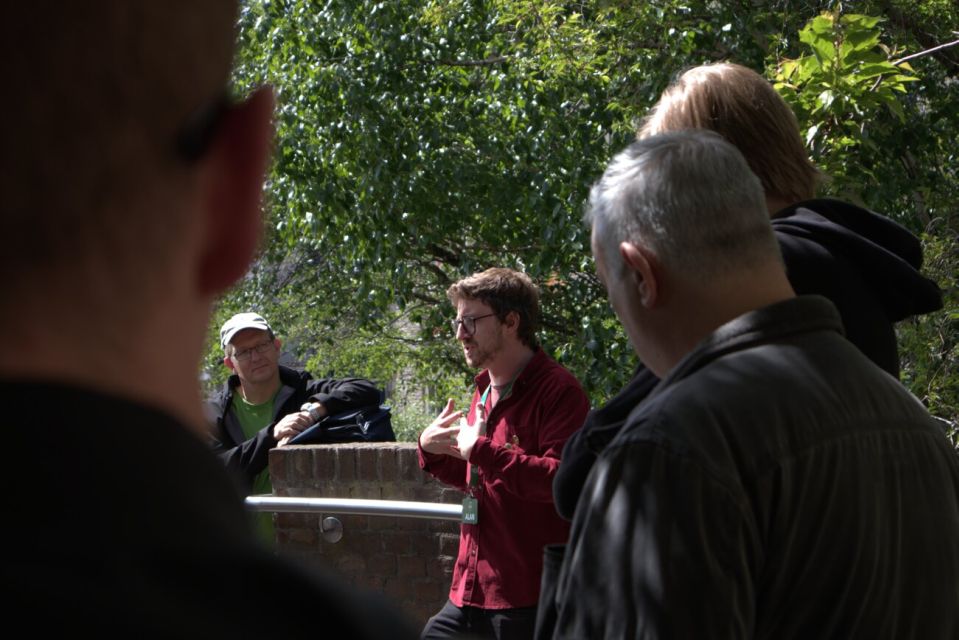
This is a tour where the guide is more than a person leading you from one address to another. The guide acts as storyteller, interpreter, comedian, and local contact.
Helena’s style is energetic and warm, with a strong focus on clear storytelling. Emily brings past and present together, including examples of how folklore influences community life. Dave combines mythology with practical Dublin advice and uses humor to keep families involved. Lee has been described as friendly, engaging, and able to make a small group feel comfortable.
Because different guides lead the walk, the tone may vary. One guide may lean harder into comedy, while another may give more space to cultural context or modern examples. That is not a flaw, but it is worth knowing if you expect a fixed script.
The strongest feature across the guides is enthusiasm for the subject. You will get the most from the tour if you enjoy listening, asking questions, and allowing the guide’s delivery to carry the stories.
Is $27 a fair price for two hours?
At $27 per person, this is fairly priced for a two-hour guided walk in central Dublin. You are paying for a live English-speaking guide and a carefully shaped route, not for transport, food, entry tickets, or hotel service.
The value depends on your interests. If you want a standard introduction to Dublin’s major buildings, another classic city tour may serve you better. If you want context about Irish myths, language, identity, and storytelling, this tour offers material you are less likely to get from a basic sightseeing walk.
The two-hour length is another advantage. It is long enough to cover several themes but short enough to fit around a museum visit, lunch, or evening plans. Several stops allow you to listen without constant walking, which makes the experience easier on tired feet.
You can also reserve now and pay later, keeping your plans flexible. Free cancellation is available up to 24 hours before the activity for a full refund. Check the available starting times when booking, since the schedule can vary.
Who should book this folklore walk?
I would choose this tour for:
- First-time Dublin visitors who want a cultural introduction beyond the main sights
- People interested in Celtic traditions, supernatural stories, and Irish identity
- Families who enjoy lively storytelling and mythical creatures
- Visitors who already know some Irish political history and want a different angle
- Anyone who likes walking tours with humor and local recommendations
- Travelers with limited time who want a focused two-hour activity
I would think twice if you want a quiet walk, a purely architectural tour, or a stop-by-stop history of Dublin’s buildings. The experience depends on spoken storytelling, and the darker material may not suit every child.
Wear comfortable shoes and prepare for outdoor conditions. Dublin weather can change, and there is no transport between stops. The route is wheelchair accessible, but the activity still takes place on public streets, so you may want to confirm that the available route fits your needs when you book.
Should you book the Dublin mythology tour?
Book it if you want Dublin to feel like more than a set of attractive streets and famous pubs. The best parts are the fresh look at Temple Bar, the serious treatment of fairies and supernatural creatures, the Georgian Quarter’s unsettling stories, and the link between folklore, theater, language, and modern Irish life.
At $27, the walk offers good value for a short cultural experience, especially near the start of your visit. Choose it for the guide’s stories, not for major interior visits or transport. If Helena, Emily, Dave, or Lee is leading, expect a friendly, humorous style with plenty of enthusiasm.
FAQ
How long does the Dublin mythology and folklore tour last?
The walking tour lasts two hours. Starting times vary, so check availability for the date you want.
How much does the tour cost?
The listed price is $27 per person.
Where does the tour begin?
Meet outside The Old Storehouse pub in Temple Bar. Look for the green umbrella.
Where does the tour finish?
The activity ends back at the meeting point outside The Old Storehouse.
What language is the tour in?
The tour is conducted in English with a live English-speaking guide.
What does the price include?
The price includes the guide and the walking tour.
Is hotel pickup included?
No. Hotel pickup and drop-off are not included, so you need to reach the Temple Bar meeting point yourself.
Is the tour wheelchair accessible?
Yes, the activity is listed as wheelchair accessible.
Can I cancel or pay later?
You can cancel up to 24 hours in advance for a full refund. You can also reserve your place and pay later, keeping your plans flexible.
Just added around Dublin
- Dublin: Pub Tour. Pour The Perfect Guinness, Whiskey & Music★ 5.0 · 3 reviews
- A Self Guided Walking Tour of Dublin’s Docklands★ 4.5 · 3 reviews
- Private Dublin City tour★ 5.0 · 3 reviews
- Dublin One Day Tour with a Local: 100% Personalized & Private★ 4.5 · 3 reviews
- Waterford Crystal and Kilkenny Full-Day Rail Tour from Dublin★ 5.0 · 3 reviews
- Turtle Bunbury’s Dublin: A Self-Guided Audio Tour from a Celebrated Author★ 5.0 · 3 reviews
- Secret and unusual Dublin: guided walking tour★ 5.0 · 3 reviews
- 5 Day Ireland’s South−East Including Admission from Dublin★ 4.5 · 3 reviews
Dublin Myths & Storytelling Tours, compared.
Dublin Mythology and Folklore Tour with Irish Stories and Legends
Read our review →

Private Dublin Pub Odyssey: Storytelling, and Pub Culture
Read our review →
Dublin Storytelling Pub Tour – 3 stops, drinks & local snacks
Read our review →Browse the lists this tour appears in