
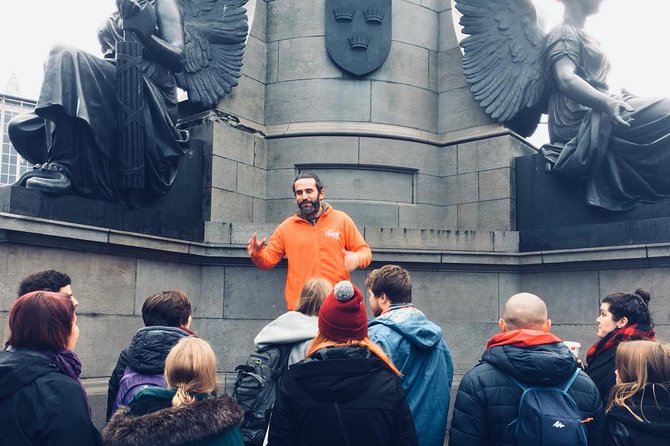
Reviewed · WALKING TOURS
90 Minute Dublin Walking tour and Sightseeing tips
Dublin’s story comes at you quickly on this walk: Viking settlement, rebellion, independence, literature, church, college, and pub culture, all packed into a route from the River Liffey to Christ Church Cathedral. Guide Alex is especially good at turning dates and battles into stories you can follow, while guide Sam brings the same friendly, enthusiastic approach.
I like the compact route, which gives you a useful first look at central Dublin without taking half a day. I also like the practical advice woven into the walk, especially around Temple Bar, Irish music, restaurants, and finding a good pint. The main drawback is that the tour can feel history-heavy, and city traffic may make it hard to hear unless you stay close to the guide.
In This Review
- Key points at a glance
- Why this short Dublin walk works well on arrival
- Aston Quay and the first steps into Dublin
- O’Connell Street and the GPO: Dublin’s political stage
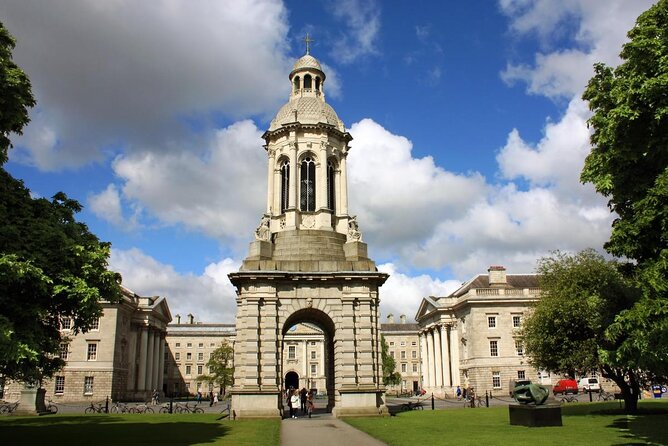
- Trinity College and the crossing to College Green
- Temple Bar: local advice amid the tourist noise
- City Hall and the buried Viking settlement
- Dublin Castle, from English authority to modern Dublin
- Christ Church Cathedral and the final questions
- How much history should you expect?
- Price, group size, and physical effort
- Who should book this Dublin tour?
- Should you book it?
- FAQ
- Where does the Dublin walking tour start?
- Where does the tour finish?
- How long does the tour last?
- What language is the tour offered in?
- Is a mobile ticket available?
- Which Dublin sights are included on the route?
- Is the tour suitable for children?
- How large can the group be?
- Does the tour require good weather?
- Can I cancel for a full refund?
Key points at a glance
- A fast introduction to Dublin: The route links Aston Quay, O’Connell Street, the GPO, Trinity College, Temple Bar, Dublin Castle, and Christ Church Cathedral.
- Strong storytelling: Expect Irish political history, Viking origins, mythology, architecture, and local anecdotes rather than a simple list of sights.
- Useful first-day timing: The walk is listed as 90 minutes but may last about 1 hour 45 minutes, making it a good early activity for getting your bearings.
- Personal guidance: Alex often adjusts the talk to the group’s interests and answers plenty of questions. Sam also leads tours.
- Small-group feel is possible: The advertised maximum is 25 people, though bookings can allow up to 40 people.
- Outdoor and weather-dependent: Wear comfortable shoes and prepare for wind or rain. Food, drinks, and entry tickets are not included.
Why this short Dublin walk works well on arrival
I see this as an orientation tour first and a history lesson second. You cross from the north side of the Liffey to the south side, pass several of Dublin’s main landmarks, and finish near a cluster of places you can explore later on your own.
That makes the timing useful. If you have just arrived in Ireland, the walk can help you understand how the city fits together before you spend time inside museums, churches, or Trinity College. Several people have also used it as a gentle first outing after a flight, though the route still requires a moderate level of fitness.
The walk is not built around lengthy admissions. You pause outside the main sights, listen to the guide, and keep moving. That is good for a short introduction, but you should not book it expecting a full visit to the Book of Kells, Dublin Castle’s state rooms, or Christ Church Cathedral. Those attractions may need separate time and admission.
More walking tours in Dublin:
- Dublin Highlights and Hidden Gems Guided Walking Tour
★ 5.0 · 6,020 reviews - Dublin: Highlights and Hidden Gems Walking Tour
★ 4.9 · 2,140 reviews - 1916 Rebellion Walking Tour
★ 5.0 · 1,605 reviews
Aston Quay and the first steps into Dublin
The meeting point is at 12 Aston Quay, near Temple Bar and public transportation. The opening meet and greet lasts about five minutes, giving you a chance to introduce yourself and tell the guide what interests you.
This small exchange matters. Alex has often shaped the walk around the group, adding more politics, architecture, food, or local stories when people ask for them. If you are curious about Irish independence, pubs, churches, music, or where to go after the tour, say so early.
The location beside the Liffey also gives you an immediate sense of Dublin’s central geography. You are not starting in a remote suburb or at a coach park. You begin in the middle of the city, within easy reach of the sights you will see later.
O’Connell Street and the GPO: Dublin’s political stage
From Aston Quay, the walk heads toward O’Connell Street, one of Ireland’s main thoroughfares and one of the most useful places to begin understanding the country’s modern story.
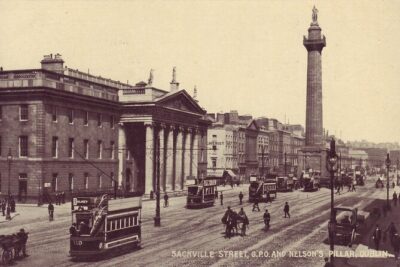
The guide explains how the street received its current name after being renamed twice. You also meet its statues and hear about the Irish War for Independence and the Civil War that followed independence. The stories about Nelson’s Pillar, the broken windows along the street, and the more recent Stiletto in the Ghetto give the avenue a mix of solemn history and local humor.
The stop itself is brief, around five minutes, so expect a brisk overview rather than a long pause at every monument. That pace keeps the tour moving, but it can also make the material feel dense if you are new to Irish history.
The General Post Office receives a longer stop of about ten minutes. This is one of the walk’s strongest historical moments. You hear about the 1916 fighting, the rebels, the gunboat Helga sailing up the Liffey, and the bombardment of central Dublin.
You may get to walk beneath the Post Office’s high ceiling, although that is not guaranteed. Even if you remain outside, you can see bullet damage on the building. The guide also introduces the statue of the dying Cú Chulainn, a major figure in Irish mythology, cast by Oliver Sheppard in 1935.
I like this stop because it joins a physical building to a political turning point. You are not merely told that rebellion happened here. You can look at the building, notice its scale, and connect the fighting with the people and symbols inside and around it.
Trinity College and the crossing to College Green
The walk returns toward Westmoreland Street and Trinity College, moving from Dublin’s north side to its south side. That crossing is simple, but it helps you read the city more clearly. The Liffey is not just a pretty river in the background. It has long divided and connected different parts of Dublin.
Around Trinity and College Green, the guide moves further back in time. The area is linked with a monastery and stories of St Patrick’s contact with pagan Celts. From there, the talk shifts to the founding of Trinity College and the traditions of its students today.
This is a useful stop for context, though it is only about five minutes. You will see the setting and learn how it changed over time, but this is not a campus tour. If you want to see the Book of Kells or spend time inside the college grounds, plan a separate visit.
The guide’s approach is conversational rather than formal. Alex has a talent for linking Irish events with better-known American events, which can help visitors from the United States place the story in a familiar frame. He also leaves room for questions instead of simply reciting a script.
A different side of Dublin on the same trip:
- Dublin to Cliffs of Moher, including Wild Atlantic Way and Galway
★ 5.0 · 23,331 reviews - From Dublin: Cliffs of Moher, Burren & Galway City Day Tour
★ 4.8 · 18,888 reviews - Dublin: Guinness Storehouse Entry Ticket
★ 4.6 · 16,863 reviews - Dublin to Cliffs of Moher, Burren, Wild Atlantic Way, Galway Tour
★ 5.0 · 12,924 reviews
Temple Bar: local advice amid the tourist noise
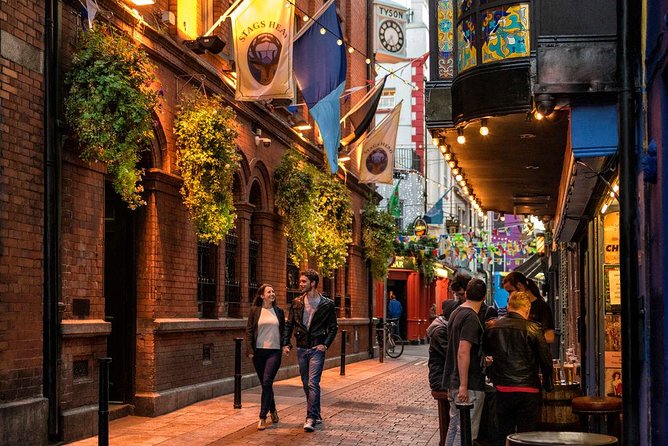
At Meeting House Square, the group pauses in Temple Bar. This is where the tour shifts from national history to practical Dublin advice.
Temple Bar is famous, easy to reach, and full of places to eat and drink. It is also an area where prices and quality can vary. The guide offers suggestions on Irish music, pubs, food, and the search for Dublin’s best pint of Guinness.
I find this advice particularly useful because Temple Bar is one of the first places many visitors see, yet it is not always the best place for every meal or drink. A local guide can help you decide when the district suits your plans and when another part of Dublin may be a better choice.
The stop lasts about ten minutes, and the surroundings can be noisy. Traffic and crowds may make the guide difficult to hear, especially on a larger departure. Stay near the guide and do not hesitate to ask for a point to be repeated.
City Hall and the buried Viking settlement
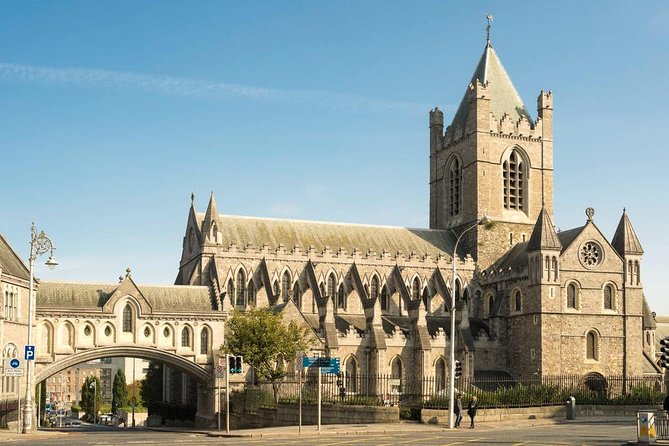
The walk continues through Temple Bar toward Dublin Castle, passing the area associated with the original Viking settlement of Dubhlinn. The guide explains how Dubhlinn became Dublin and how the settlement was lost, rediscovered, and later covered by new construction.
This is one of the more distinctive parts of the route because it asks you to picture a city beneath the modern one. The story is not limited to Vikings. You may also hear about Shakespeare’s Hamlet, Handel’s Messiah, and old soap factories, showing how one small area has changed use many times.
The City Hall stop lasts about ten minutes. It is a good reminder that Dublin’s past is not arranged in neat periods. Medieval settlement, colonial authority, music, theater, industry, and modern tourism overlap in the same few streets.
If you prefer a tour focused only on famous façades, this section may feel less direct. If you enjoy odd details and the way ordinary buildings carry old stories, it should be one of the more rewarding parts of the walk.
Dublin Castle, from English authority to modern Dublin
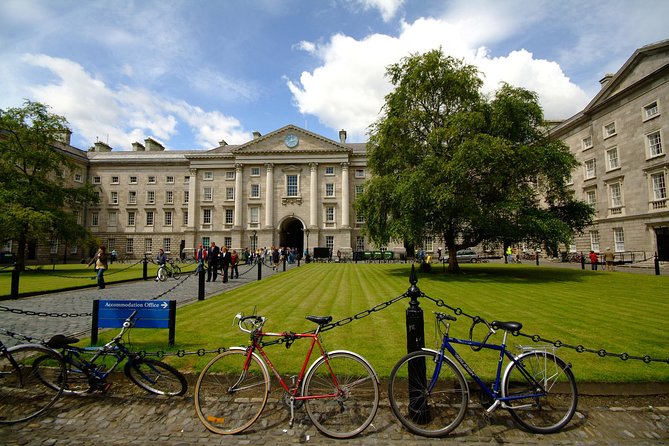
Dublin Castle was once the main seat of authority on the island of Ireland. The guide covers its construction, completed around 1230 under King John of England, and its role as the home of the Lord Lieutenants of Ireland until 1922.
The stop is not just about rulers. You also get a quick look at Irish architecture, the Dubh Linn Gardens, and the Chester Beatty Library, which holds important spiritual texts. The guide shows how much is contained behind the castle walls, even though the walking tour does not provide a full interior visit.
This part is useful for understanding Dublin’s political layers. The castle represents English rule, while the earlier stops at the GPO and O’Connell Street point toward rebellion and independence. Hearing those places in one continuous walk gives the city’s story a clearer shape.
You should allow extra time later if Dublin Castle interests you. Ten minutes is enough to locate the entrance, notice the setting, and learn the essentials. It is not enough to explore the entire complex.
Christ Church Cathedral and the final questions
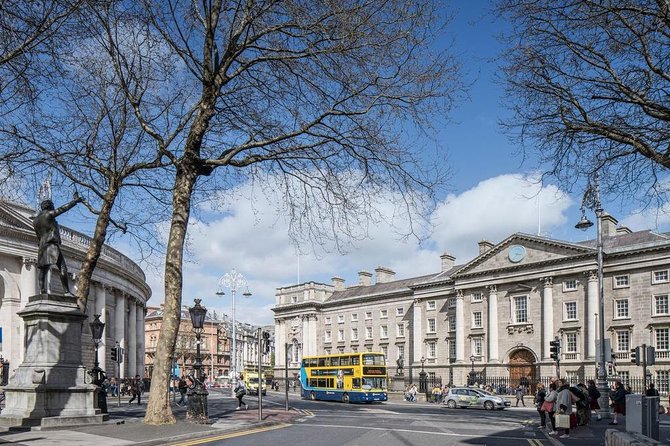
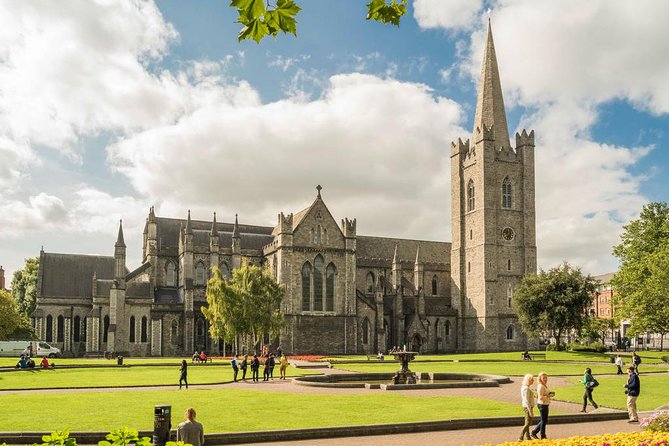
The walk ends at Christ Church Cathedral, around five minutes from the scheduled final stop. The cathedral was founded by Sigtrygg Silkbeard, a Viking king who ruled for more than 40 years before his defeat at the Battle of Clontarf.
The guide places the cathedral beside the Liffey across a long stretch of time, from Viking longships to Guinness barges and modern Dublin. You finish in the cathedral’s shadow, with a chance to ask what to see next.
This ending works well because it leaves you in a useful part of the city. Christ Church, Dublin Castle, the Chester Beatty Library, and several central streets are close by, so you can continue sightseeing without retracing the whole route.
Again, the tour ends outside rather than giving you a cathedral admission. If you want to see the interior, crypt, or other features, treat the walk as your introduction and return with a separate ticket or visit plan.
How much history should you expect?

History is the main ingredient here. You will hear about Viking Dublin, early Christianity, Irish mythology, rebellion, independence, civil conflict, architecture, music, and local life.
That breadth is a strength if you want a serious introduction in a short time. Alex is particularly effective at blending facts with stories and political context, and his answers can take the walk beyond the basic information on a city pamphlet.
The trade-off is that the commentary can sometimes feel like a college lecture. One departure ran longer than expected, and a participant left before the apparent ending. The listed duration is approximately 1 hour 45 minutes, despite the experience being described as a 90-minute tour, so allow extra time rather than scheduling something immediately afterward.
The route also passes through noisy streets. One person suggested individual audio guides, and another noted that a microphone would have helped. That is worth considering if you have hearing difficulties or dislike listening in traffic.
Price, group size, and physical effort
At $21.77 per person, the tour is reasonably priced for a local guide and a focused introduction to central Dublin. The value depends on how you use it. If the walk helps you choose a pub, restaurant, museum, or neighborhood for the rest of your stay, it can save time and prevent a few poor choices.
The price does not include food, drinks, lunch, or admission to the sights. You are paying for the guide’s time, stories, route, and local suggestions, not for entry into Trinity College, Dublin Castle, or Christ Church Cathedral.
The advertised maximum is 25 people, though booking information also allows a maximum of 40 people per booking. In practice, departures may be much smaller. Some walks have had only two people, allowing Alex to tailor the route closely to individual interests.
You need moderate physical fitness. This is a city walk with regular standing and movement, and Dublin’s weather can change quickly. Comfortable shoes, a waterproof layer, and a willingness to keep moving will make the experience easier.
Who should book this Dublin tour?
I would choose this walk if you are visiting Dublin for the first time, have limited time, or want a local introduction before exploring alone. It is also a good fit for solo visitors, families with older children, and couples who prefer stories and conversation over a large coach tour.
It suits people who enjoy politics, architecture, mythology, and unusual city details. The guide can also point you toward food, pubs, Irish music, and other things to do after the walk.
I would be more cautious if you want extensive interior visits, a quiet audio-supported experience, or a tour focused mainly on architecture and photographs. The route is fast, the streets can be loud, and the content leans heavily toward history.
Book early if your dates are fixed. The experience is booked an average of 32 days in advance, and free cancellation is available up to 24 hours before the start time. If poor weather or too few bookings cancel the activity, you are offered another date or a full refund. Late arrival, including delays from a cruise ship, is not covered by a refund.
Should you book it?
Book this tour if you want Dublin explained by a personable local guide, with a route that covers the GPO, Trinity College, Temple Bar, Dublin Castle, and Christ Church Cathedral in one outing. Alex is a strong choice for visitors who like detailed stories and plenty of questions, while Sam also brings an enthusiastic approach.
Skip it if you want a slow sightseeing walk with long photo stops or guaranteed access inside every major attraction. For most first-time visitors, though, the price, central route, and practical advice make it a smart way to begin your Dublin stay.
FAQ
Where does the Dublin walking tour start?
The tour starts at ThingsToDoDublin, 12 Aston Quay, Temple Bar, Dublin, D02 TE81, Ireland.
Where does the tour finish?
The tour ends at Christ Church Cathedral, Christchurch Place, Wood Quay, Dublin, D08 TF98, Ireland.
How long does the tour last?
It is described as a 90-minute walking tour and has an approximate duration of 1 hour 45 minutes. Allow some flexibility because the exact ending may vary.
What language is the tour offered in?
The tour is offered in English.
Is a mobile ticket available?
Yes. The experience includes a mobile ticket.
Which Dublin sights are included on the route?
The route includes O’Connell Street, the General Post Office, Trinity College, Temple Bar, City Hall, Dublin Castle, and Christ Church Cathedral. The tour views these places from the walking route and does not include food, drinks, lunch, or attraction admission.
Is the tour suitable for children?
Children must be accompanied by an adult.
How large can the group be?
The stated maximum is 25 people for the activity. Booking information also lists a maximum of 40 people per booking.
Does the tour require good weather?
Yes. If poor weather causes cancellation, you are offered a different date or a full refund.
Can I cancel for a full refund?
Yes. You can cancel at least 24 hours before the experience start time for a full refund. Cancellations or changes made less than 24 hours before the start time are not refunded or accepted.
Just added around Dublin
- Dublin: Pub Tour. Pour The Perfect Guinness, Whiskey & Music★ 5.0 · 3 reviews
- A Self Guided Walking Tour of Dublin’s Docklands★ 4.5 · 3 reviews
- Private Dublin City tour★ 5.0 · 3 reviews
- Dublin One Day Tour with a Local: 100% Personalized & Private★ 4.5 · 3 reviews
- Waterford Crystal and Kilkenny Full-Day Rail Tour from Dublin★ 5.0 · 3 reviews
- Secret and unusual Dublin: guided walking tour★ 5.0 · 3 reviews
- 5 Day Ireland’s South−East Including Admission from Dublin★ 4.5 · 3 reviews
- Turtle Bunbury’s Dublin: A Self-Guided Audio Tour from a Celebrated Author★ 5.0 · 3 reviews
Walking Tours, compared.
Dublin Highlights and Hidden Gems Guided Walking Tour
Read our review →

Dublin Traditional Irish 3 Course Meal Walking Tour with Local
Read our review →

Browse the lists this tour appears in