
Reviewed · MUSEUMS
The Little Museum of Dublin Famous Guided Tour
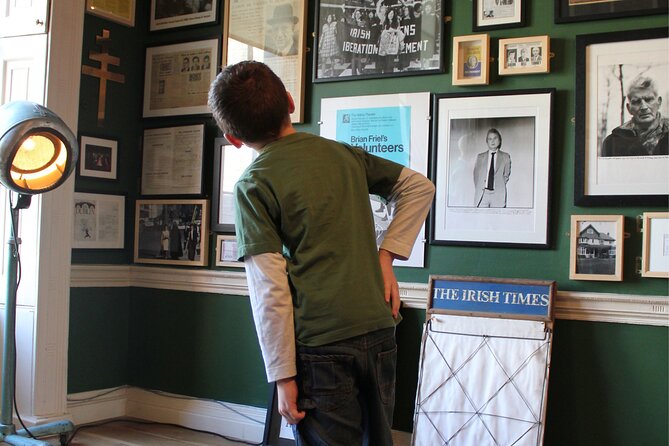
Dublin’s story comes alive in a small Georgian townhouse beside St. Stephen’s Green, where local guides turn objects and anecdotes into a quick, funny history lesson. The collection ranges from everyday items donated by Dubliners to U2 memorabilia and Tara’s Palace, a huge dolls’ house.
I like the warm local storytelling and the clever use of humor, which make this a good first stop for anyone who usually avoids museums. I also like the short format: roughly 30 minutes to an hour, with time afterward to look around. The main drawback is the tight space and fast pace. You may want more time with the displays than the guided visit allows.
In This Review
- Key points to know before you book
- A funny introduction to Dublin beside St. Stephen’s Green
- What happens inside the Georgian townhouse
- Dublin rather than all of Ireland
- Tara’s Palace and the U2 room
- Why the guide matters more than the labels
- How much time to allow
- Is $21.77 a fair price?
- Practical details that affect your visit
- Who will enjoy this most
- Should you book the Little Museum of Dublin?
- FAQ
- Where is the Little Museum of Dublin?
- How long does the guided tour last?
- What language is the tour offered in?
- How many people can join the tour?
- What can I see inside the museum?
- Is admission included?
- Can I cancel for a full refund?
- Are service animals allowed?
Key points to know before you book
- A small museum with a big Dublin focus: This is mainly about the capital, its people, habits, jokes, music, and turning points, rather than a full survey of Ireland.
- The guide makes the visit: Emma, George, Saul, Sean, Pauline, Fionn, Eamon, Lisa, Mark, and Daryl are among the guides praised for wit, warmth, singing, and storytelling.
- The tour is short but packed: Plan on 30 minutes to an hour, then stay to examine objects you could not take in during the talk.
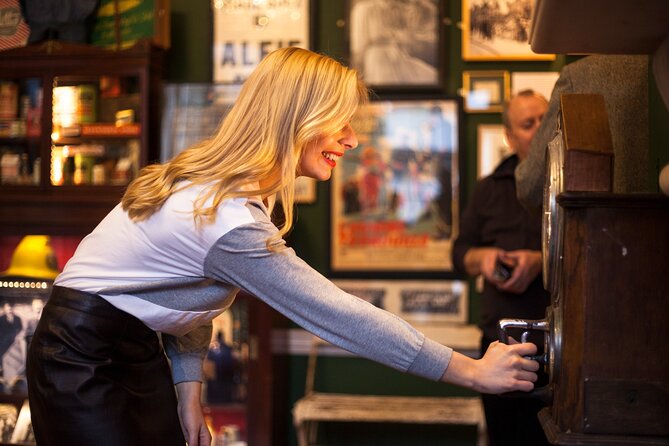
- The collection is personal: Many objects were donated by people from Dublin, giving the museum an everyday feel rather than a formal national museum tone.
- Tara’s Palace and U2 add variety: A giant dolls’ house and a room devoted to Dublin band U2 keep the visit from feeling like a standard history lesson.
- Small groups help: The maximum group size is 10, which suits a conversational guide-led experience and helps prevent the rooms from feeling too crowded.
A funny introduction to Dublin beside St. Stephen’s Green
The Little Museum of Dublin occupies 15 St. Stephen’s Green, Dublin 2, close to one of the city center’s best-known parks. That location makes it easy to fit into a walking day. You can pair it with a stroll around the green, then continue toward Grafton Street and central Dublin.
The attraction works because it does not ask you to absorb a long line of dates before you understand why the place matters. Instead, the guide uses objects, stories, jokes, and personal details to sketch Dublin as a lived-in city. You get the political and social background, but you also get the odd habits, personalities, songs, and small details that make a city memorable.
That approach suits you if you want a clear orientation early in your visit. It can also work near the end of a Dublin stay, when familiar streets and names begin to fit together. I would choose it near the start because the tour gives you useful context for the capital without demanding a full afternoon.
The tone is deliberately light. Guides have been praised for making the material entertaining without losing the educational side. George is described as funny and informative, Saul as an engaging host, and Daryl as someone who mixes facts with group interaction. Other guides, including Emma, Fionn, Eamon, Lisa, Mark, Sean, and Pauline, are also known for strong delivery.
More museums in Dublin:
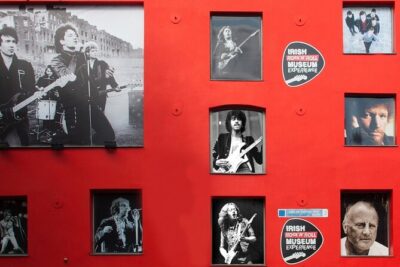
- Irish Rock ‘N’ Roll Museum Experience Dublin
★ 5.0 · 6,112 reviews - Dublin EPIC Museum Admission Ticket
★ 4.5 · 1,729 reviews - Giant’s Causeway with the Titanic Exhibition and the best of Northern Ireland
★ 5.0 · 1,122 reviews
What happens inside the Georgian townhouse
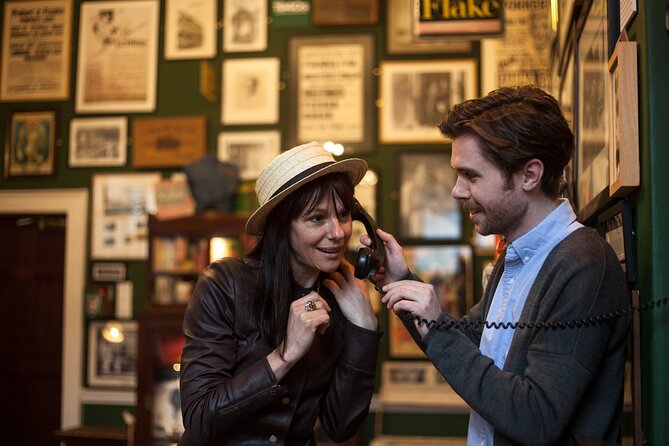
The museum is not a wide modern gallery. It is a compact house spread over three floors, with displays arranged in rooms rather than long, open halls. That setting is part of the charm, but it also explains why the tour can feel quick.
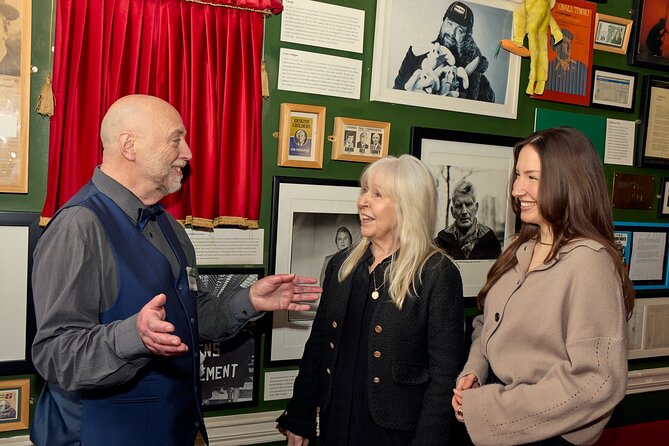
You join the guided visit and move through the house with your small group. The guide brings the displays into focus, explaining why an object matters and how it connects to Dublin. You are not simply left to read labels in silence. The point is the performance: a local voice, a string of stories, and a brisk path through the city’s past.
Expect a lively presentation rather than a formal lecture. The guides use corny jokes, movement, audience interaction, and, in some cases, dancing or singing. Pauline has been especially praised for ending with a song, while Emma and some other guides are noted for their singing voices. These details matter because they show how much the experience depends on the individual guide’s style.
The basic content remains the museum’s collection. Objects were largely donated by people in Dublin, so you may find yourself looking at items that feel close to daily life rather than grand relics. The displays help explain how Dubliners lived, remembered, celebrated, and presented their city.
You should not expect every item to receive a long explanation. The guide has limited time and a group to keep moving. If a particular object catches your eye, make a note of it and return to it after the formal tour.
Dublin rather than all of Ireland
The Little Museum gives you a focused look at Dublin. That distinction is important. If you want a detailed account of every region, period, and political movement in Ireland, this is not the right place to do all of that.
If you want to understand Dublin itself, the focus is an advantage. The city has its own stories, traditions, music, personalities, and sense of humor. A short talk about Dublin can be more useful than a broad national overview that races across centuries without giving you a feel for the capital.
Some visitors describe the visit as a quick introduction to Irish history, but the strongest use of your time is to treat it as a Dublin primer. You will likely leave with a better sense of the city’s character and a few stories that help the streets feel less anonymous.
The format also works well for families and mixed-age groups. Children may not want a quiet museum hour, while adults may not want a noisy attraction with little substance. Here, the jokes and performance keep the pace moving, while the objects and stories provide enough content for adults.
Tara’s Palace and the U2 room
Two displays give the museum extra personality. Tara’s Palace is one of the world’s largest dolls’ houses, and it offers a visual change from the historical objects around it. A dolls’ house on this scale is easy to appreciate even if miniature rooms are not normally your interest.
The U2 room connects the city’s history with modern Dublin music. U2 is one of the capital’s best-known cultural exports, so the display gives the museum a more recent and familiar angle. It also helps break up the older material.
These rooms are useful because they show that Dublin’s story is not only about political events or famous buildings. It is also about art, popular culture, childhood, music, and the people who shape how a city sees itself.
The museum’s small size means these features do not take over the whole visit. They sit within a broader collection, so you get variety without losing the main focus on Dublin.
A few more Dublin tours worth weighing up
- Dublin Highlights and Hidden Gems Guided Walking Tour
★ 5.0 · 6,020 reviews - Dublin to Glendalough, Wicklow and Kilkenny Full Day Guided Tour
★ 5.0 · 4,895 reviews - Dublin Book of Kells, Castle and Molly Malone Statue Guided Tour
★ 4.5 · 3,825 reviews - Dublin Jameson Distillery and Guinness Storehouse Guided Tour
★ 4.5 · 2,608 reviews
Why the guide matters more than the labels
The guide is the heart of this experience. A self-guided visit could still give you objects to inspect, but you would miss the pacing, jokes, connections, and storytelling that bring the rooms together.
George is praised for combining information with humor. Emma is described as animated and funny, while Saul keeps the presentation engaging. Fionn is noted for a strong gift for storytelling, and Eamon for making Dublin’s traditions and stories accessible. Daryl is praised for explaining the city through a mix of facts and interaction.
You cannot select a specific guide from the information provided, so you should book this for the format rather than for one named person. Still, the repeated praise for different guides suggests that the museum has built a strong team of presenters rather than relying on one star performer.
The maximum group size is 10. That is a useful detail. In a narrow townhouse, a large crowd would make it harder to hear, see, or respond to the guide. A small group supports the conversational feel and gives the presentation room to breathe.
The tradeoff is that a guided format may surprise you if you expected to wander at your own pace. One visitor was caught off guard by the fact that the museum visit was guided. If you prefer reading every label slowly, the first part may feel rushed. The solution is simple: stay afterward and inspect the rooms on your own.
How much time to allow
The stated duration is about 30 minutes to one hour. The exact length can depend on the guide, the flow of the group, and how much time is available for questions or additional viewing.
Thirty minutes is enough for a lively orientation. It fits neatly between other central Dublin plans and will not consume the day. If you are building a packed itinerary, this is a manageable cultural stop rather than a major time commitment.
Allow more time if you want to study the collection. The house holds far more objects than you can fully absorb during a quick presentation. One visitor felt there was not enough time to see everything, which is a fair warning for people who enjoy close inspection.
I would set aside at least an hour for the whole visit, even if the formal tour takes only 30 minutes. That gives you a little breathing room before or after the guide’s presentation. If you are especially interested in memorabilia, dolls’ houses, or small historical objects, you may want longer.
Is $21.77 a fair price?
At $21.77 per person, this is not the cheapest way to spend half an hour in Dublin. It is also more than the cost of simply walking around St. Stephen’s Green or looking at city streets on your own.
The value comes from the guide-led format and the compact experience. You are paying for a structured introduction, a small group, a local voice, and access to a collection that would be harder to understand without explanation. For a first visit to Dublin, that can be worthwhile.
The price makes the most sense if you want a quick, entertaining start to your sightseeing. It is less compelling if you already know Dublin well or plan to spend hours reading every display label at your own pace.
Compared with a long bus tour or a larger attraction, this experience gives you a direct connection to the city in a short period. The included admission and tour also remove the need to plan the visit on your own. Since it often sells out and is booked about 24 days ahead on average, prebooking is sensible for a fixed Dublin itinerary.
Practical details that affect your visit
The ticket is mobile, and the experience is offered in English. Confirmation arrives at booking, so you can keep the details on your phone.
You are not tied to a specific time slot according to the booking information, which adds some flexibility. At the same time, tours can sell out, so flexibility does not mean you should wait until the last minute if this is important to your plans.
The museum is near public transportation, making it easy to reach from other parts of Dublin. Its St. Stephen’s Green address also works well for a walking route through the center.
Most people can take part, and service animals are allowed. The tour has a maximum of 10 participants. The information does not describe seating, stair arrangements, or detailed mobility access, so contact the museum directly if those points matter to you.
Free cancellation is available up to 24 hours before the start time. Canceling within 24 hours, or making changes that late, does not qualify for a refund. The cut-off is based on local Dublin time.
Who will enjoy this most
I would recommend the tour to first-time Dublin visitors, families, couples, and anyone who wants history without a solemn museum atmosphere. The guide’s humor makes it friendly for people who usually lose patience with display cases and long written panels.
It also suits you if your time in Dublin is short. In roughly half an hour, you get a framework for the city and several stories to carry into the rest of your visit.
Music fans may enjoy the U2 room, while anyone interested in design or miniatures will want time with Tara’s Palace. The donated objects add a personal angle for people who prefer ordinary life to grand national symbols.
I would be more cautious if you want a quiet, self-paced museum. The presentation is fast and social, not silent and solitary. You may also find the small rooms limiting if you dislike close quarters or want to linger at every object during the guided portion.
Should you book the Little Museum of Dublin?
Book it if you want a short, funny, city-specific introduction led by a lively English-speaking guide. The strongest reason to go is not the size of the collection. It is the way the guide connects the objects to Dublin’s personality.
The visit gives you a Georgian townhouse, people-donated objects, Tara’s Palace, U2 memorabilia, and a cast of guides who bring energy to the rooms. George, Emma, Saul, Sean, Pauline, Fionn, Eamon, Lisa, Mark, and Daryl are all associated with the kind of warm, entertaining delivery this museum depends on.
Skip it if you want a large museum with long galleries and plenty of quiet time. Otherwise, it is a good-value addition to a Dublin day, especially near the beginning of your stay. Prebook if your schedule is fixed, arrive ready for jokes and stories, and stay afterward to see what the quick tour had to leave behind.
FAQ
Where is the Little Museum of Dublin?
It is at 15 St. Stephen’s Green, Dublin 2, D02Y066, in central Dublin.
How long does the guided tour last?
The experience lasts approximately 30 minutes to one hour.
What language is the tour offered in?
The tour is offered in English.
How many people can join the tour?
The maximum group size is 10 travelers.
What can I see inside the museum?
The collection includes objects largely donated by people from Dublin, Tara’s Palace, one of the world’s largest dolls’ houses, and a room dedicated to U2.
Is admission included?
Yes. The admission ticket is included in the experience.
Can I cancel for a full refund?
Yes, if you cancel at least 24 hours before the experience start time. Cancellations within 24 hours are not refunded.
Are service animals allowed?
Yes, service animals are allowed.
Just added around Dublin
- Dublin: Pub Tour. Pour The Perfect Guinness, Whiskey & Music★ 5.0 · 3 reviews
- A Self Guided Walking Tour of Dublin’s Docklands★ 4.5 · 3 reviews
- Private Dublin City tour★ 5.0 · 3 reviews
- Dublin One Day Tour with a Local: 100% Personalized & Private★ 4.5 · 3 reviews
- Waterford Crystal and Kilkenny Full-Day Rail Tour from Dublin★ 5.0 · 3 reviews
- Secret and unusual Dublin: guided walking tour★ 5.0 · 3 reviews
- 5 Day Ireland’s South−East Including Admission from Dublin★ 4.5 · 3 reviews
- Turtle Bunbury’s Dublin: A Self-Guided Audio Tour from a Celebrated Author★ 5.0 · 3 reviews
Museums, compared.


Giant’s Causeway with the Titanic Exhibition and the best of Northern Ireland
Read our review →


Irish Whiskey Museum: Whiskey Blending Experience
Read our review →
Irish Whiskey Museum Blending Tour with Tastings
Read our review →
Browse the lists this tour appears in