

Reviewed · WALKING TOURS
Dublin: Medieval History Walking Tour
Dublin’s medieval story comes into focus on foot, one old street and church at a time. This three-hour tour links the city’s Viking beginnings with Dublin Castle, Saint Patrick’s Cathedral, Christ Church Cathedral, St. Audoen’s Church, and Isolde’s Tower. I especially like the stop at Dubh Linn Gardens, where the city’s name and early story are introduced, and the walk along Cook Street, where traces of old fortifications still connect modern Dublin to its past.
I also like that you can choose a shared group or private walk. Guides such as Paula and Catherine have been praised for their warmth, clear storytelling, and flexibility, with Paula even adjusting the pace and plan for a family with a two-year-old and stroller. The main consideration is cost: at $62 per person, entry fees, food, and drinks are extra, so you are paying mainly for the guide and a focused historical route.
In This Review
- Key points to know before you book
- Why this walk works for Dublin’s medieval center
- Meeting at Crampton Quay and finding Dubh Linn Gardens
- Dublin Castle and the medieval power center
- The Chester Beatty Library and a change of focus
- Saint Patrick’s Cathedral and its gardens
- Christ Church Cathedral and Dublin’s older religious quarter
- St. Audoen’s Church and Ireland’s oldest bells
- Cook Street, old walls, and the Viking thread
- Isolde’s Tower and the final chapter
- What the guide adds to the $62 price
- Who should book this walking tour
- Should you book it?
- FAQ
- How long is the Dublin Medieval History Walking Tour?
- Where does the tour start?
- Where does the tour end?
- Is this a private tour or a shared group tour?
- What landmarks are included on the route?
- Does the price include entry fees?
- What languages are available?
- Is the tour wheelchair accessible?
- How much does the tour cost?
- Can I cancel the booking?
Key points to know before you book
- The route covers Dublin’s medieval core: You visit Dublin Castle, both major cathedrals, St. Audoen’s Church, Cook Street, and Isolde’s Tower.
- Viking Dublin gets proper attention: The tour begins with the origins of the city and early Viking conquests around Dubh Linn Gardens.
- You can choose your group style: Book a shared walk or arrange a private group for a more personal pace.
- The guide shapes the experience: Paula and Catherine are noted for lively facts, local tales, and thoughtful adjustments to each group.
- This is a walking tour, not an entry-included sightseeing package: Food, drinks, and admission fees are not covered in the $62 price.
- Several languages are offered: Tours are available in English, French, Spanish, and Italian, and the activity is listed as wheelchair accessible.
Why this walk works for Dublin’s medieval center
Dublin can feel like a patchwork of Georgian streets, lively shopping areas, pubs, offices, and old churches. The medieval story is there, but it is not always obvious. A guided walk helps you connect the pieces.
This route keeps you in the city center and ties together sites that are close enough to reach on foot but different enough to show how Dublin changed over time. You begin with Viking origins, move through the castle district, then reach the cathedrals and the remaining traces of the medieval city walls.
I like this approach because it gives you context before you start looking at buildings. Dublin Castle is more meaningful when you understand its place in the city’s development. St. Audoen’s Church makes more sense after you have seen how the older city was defended and organized. The route is less about checking off isolated sights and more about following the shape of old Dublin.
The three-hour length is also useful. You have enough time for a proper explanation at each major stop without committing an entire day to one subject. At the same time, this is not a quick orientation stroll. You should expect a sustained walk through the center, with history and stories forming the main focus.
More walking tours in Dublin:
- Dublin Highlights and Hidden Gems Guided Walking Tour
★ 5.0 · 6,020 reviews - Dublin: Highlights and Hidden Gems Walking Tour
★ 4.9 · 2,140 reviews - 1916 Rebellion Walking Tour
★ 5.0 · 1,605 reviews
Meeting at Crampton Quay and finding Dubh Linn Gardens
The meeting point is outside the Forbidden Planet comic book store at 5 Crampton Quay. This is a practical central starting place, but give yourself enough time to find the exact storefront before the tour begins. You will meet your guide there and start on foot.
The first stop is Dubh Linn Gardens, behind Dublin Castle. The name refers to the dark pool associated with the River Liffey area, and this is where the guide sets up Dublin’s earliest story. You hear about the city’s origins and early Viking conquests before moving into the later medieval period.
That opening matters. Dublin was not simply built as a tidy medieval town from the start. Its identity formed through contact, settlement, conflict, and changing rule. Beginning with Vikings gives you a useful foundation for understanding why the city grew where it did and why its oldest quarter has such a layered past.
The gardens also offer a calmer setting before the route moves through denser streets. You can look toward Dublin Castle while hearing how the area developed. I would pay close attention here, since early place names and settlement details can be easy to miss later when the walk becomes more visual.
Dublin Castle and the medieval power center
Dublin Castle is one of the major anchors of the route. The castle dates back to the 13th century, and its medieval tower provides the clearest physical link to the fortified city described by the guide.
The tour is designed around the sight and history of the castle, but entry fees are not included. That means you should not assume the walk includes admission to every interior space. The experience still gives you a guided look at the castle area and explains why it mattered, but anyone wanting a full indoor visit should budget separately.
I like having Dublin Castle early in the route because it gives the rest of the walk a political center. After hearing about Viking Dublin, you can see how the city later became a place of formal authority and defense. The contrast between the old tower, the gardens, and the surrounding modern city is part of the appeal.
This is also a good point to ask your guide questions. Paula, in particular, is described as willing to shape the day around a group’s interests. A private booking should give you the strongest chance to spend more time on subjects that catch your attention, while a shared group may keep to a steadier schedule.
The Chester Beatty Library and a change of focus
The route continues to the Chester Beatty Library, which holds Alfred Chester Beatty’s collection. The collection is regarded as one of Europe’s finest, and the stop adds a different kind of historical experience to the tour.
Instead of looking only at walls, towers, and churches, you are introduced to books, objects, and artistic material connected with wider cultural traditions. It broadens the walk beyond Dublin’s local political story. The exact amount of time spent inside is not specified, and admission is not included, so check the day’s plan with your guide if this stop is especially important to you.
For me, this is one of the more interesting choices in the itinerary. Medieval Dublin did not exist in isolation. A collection such as this can help place Irish history within a wider world of faith, writing, and art. It also gives you a break from walking through streets, though you should not book this tour expecting a long museum visit.
More history walks in Dublin:
- Dublin Historical Centre Food Tour with 8 Food Tastings & Drinks
★ 5.0 · 1,718 reviews - 2-Hour Historical Walking Tour from Dublin
★ 5.0 · 875 reviews - Historical 2-Hour Guided Walking Tour of Dublin
★ 4.7 · 865 reviews - Dublin to Cork, Blarney Castle & Cóbh Heritage Centre by train
★ 4.5 · 510 reviews
Saint Patrick’s Cathedral and its gardens
Saint Patrick’s Cathedral is the next major landmark. Dedicated to Ireland’s patron saint, it is one of the city’s most important religious buildings and a natural highlight of any medieval Dublin route.
The tour brings attention to the cathedral’s façade and gardens, allowing you to see the building as part of its surrounding setting. The guide’s explanation adds useful background about Saint Patrick and the cathedral’s place in Irish religious history.
Admission is not included, so the walk may focus on the outside unless you pay separately for entry or make other arrangements. This is worth checking before you book, especially if seeing the interior is a priority. The cathedral itself is a major reason to choose this route, but the advertised price does not cover admission fees.
Families may appreciate the guide’s flexibility here. Paula adjusted the pace and plan for a group traveling with a young child and stroller, which suggests that the private option can work well when your party has special needs or mixed interests. A shared walk may be less flexible, though the activity is listed as wheelchair accessible.
Christ Church Cathedral and Dublin’s older religious quarter
From Saint Patrick’s Cathedral, the walk continues to nearby Christ Church Cathedral. Seeing both cathedrals on one route lets you compare two major centers of Dublin’s religious and civic life.
Christ Church is not treated as a stand-alone photo stop. It forms part of the story of the old city, where churches, fortified streets, and civic power were closely linked. Your guide can help you see how the cathedral belongs to the same medieval quarter as Dublin Castle and the old wall remnants.
The two cathedral stops also give the tour a clear rhythm. Dublin Castle represents authority and defense. Saint Patrick’s and Christ Church represent faith, ceremony, and long-running community life. Together, they show why this compact part of Dublin has such a high concentration of historic buildings.
Again, keep admission costs in mind. The tour price covers the guide and walking experience, not entry tickets. If you plan to go inside both cathedrals, your total cost will be higher than $62 per person.
St. Audoen’s Church and Ireland’s oldest bells
St. Audoen’s Church brings the route into a quieter part of the old city. The church has both Catholic and Protestant connections, making it a useful stop for understanding Ireland’s divided religious past.
The building is also associated with Ireland’s oldest bells. That detail gives the stop a strong sense of place. You are not just hearing broad dates and famous names. You are looking at a surviving church with physical links to different periods of Dublin’s religious life.
I would expect this part of the walk to appeal most to visitors who enjoy smaller historic sites as much as headline attractions. Saint Patrick’s Cathedral and Christ Church are the obvious stars, but St. Audoen’s helps show what remains between them.
The church also reinforces one of the tour’s best qualities: it does not stop at the most famous landmarks. The route includes places that are important because they preserve a specific part of Dublin’s story, even if they receive less attention in a standard city sightseeing tour.
Cook Street, old walls, and the Viking thread
On Cook Street, you trace remnants of medieval fortifications and see how the older city was defended. These remains may not look dramatic at first glance. A guide is useful here because the historical meaning is often easier to understand than the physical evidence.
This section brings the Viking theme back into the walk. The city’s early growth, later walls, and changing centers of power are treated as parts of one story. You can begin to picture Dublin as a smaller fortified settlement rather than the modern capital spread around you.
I like this kind of stop because it rewards close attention. You may pass old fragments quickly if you are walking alone. With a guide, you are encouraged to notice what survives and understand what once stood around it.
It is also a reminder that medieval Dublin is not presented as a perfectly preserved old town. The experience works through remnants, churches, towers, gardens, and street patterns. If you want an entirely intact medieval district, this may feel modest. If you enjoy reconstructing a city from what remains, Cook Street is valuable.
Isolde’s Tower and the final chapter
The walk ends at Isolde’s Tower, an iconic medieval building tied to Dublin’s local lore. It provides a fitting final stop because it brings the tour back to the city’s surviving medieval structures after the larger stories of castles, cathedrals, and fortifications.
The tower is part of Dublin’s old architectural record, but the tour also gives it a place in the city’s legends. That mix of documented history and local tale is part of what makes a walking guide worthwhile. You get facts, but you also get the stories that help a place stay memorable.
The activity ends back at the meeting point. Since the tour begins at Crampton Quay and the route is on foot, you should finish in the central city rather than at a distant transport stop. The exact timing depends on the scheduled start, so check availability when booking.
What the guide adds to the $62 price
At $62 per person, this is not the cheapest way to see Dublin’s center. You can walk past many of these buildings on your own without paying anything. The value comes from the guide’s interpretation, the order of the route, and the chance to ask questions as you go.
The strongest praise has been directed at Paula and Catherine. Paula is described as pleasant, flexible, and eager to share Ireland’s story. One family appreciated that she first discussed what they wanted to learn, paused for a short coffee while planning the day, and adjusted the route for a two-year-old and stroller. She also suggested the Book of Kells exhibit at Trinity College after learning more about the group’s interests, although Trinity College is not part of the fixed route described here.
Catherine is noted for supplying historical facts and tales without leaving gaps in the main sights. That combination is important. A guide who only gives dates can make a medieval walk feel dry. A guide who tells only legends can leave you unsure what is documented. The best experience here appears to combine both.
The private option is the better value for families, older relatives, or anyone with a clear interest in religious history, Viking Dublin, or medieval architecture. A shared group should cost less in practical terms, but it may offer less control over the pace and questions.
Remember that the $62 does not include food, drinks, or entry fees. You are buying a three-hour guided walk, not a package with cathedral and castle admission.
Who should book this walking tour
I would choose this tour if you want a focused introduction to Dublin’s oldest central quarter. It suits first-time visitors who want a historical framework before exploring the city on their own.
It is also a good match for:
- Families who may benefit from a private guide and a flexible pace
- Visitors interested in Viking origins and medieval fortifications
- People who prefer walking and storytelling to a bus-based overview
- Travelers who want to see both Saint Patrick’s Cathedral and Christ Church Cathedral
- Visitors who enjoy smaller sites such as St. Audoen’s Church and Cook Street
- Anyone looking for a tour in English, French, Spanish, or Italian
You may want another option if you mainly want indoor access to the castle, cathedrals, or Chester Beatty Library. Admission fees are not included, and the exact arrangement for entering each place is not specified. You should also consider the price if you are happy to read about Dublin’s medieval sites and visit them independently.
The activity is listed as wheelchair accessible, which is helpful, but the route includes several historic areas. If you use a wheelchair or have specific mobility needs, confirm the practical route details with the provider before booking.
Should you book it?
Book this Dublin medieval walk if you want the city’s old quarter explained by a guide rather than simply photographed. The strongest reasons are the well-linked route, the attention to Viking origins, and the personal approach associated with guides such as Paula and Catherine.
Choose the private version if flexibility matters, especially with a child, stroller, or special interests. Choose the shared option if you want a guided introduction at a lower overall commitment. At $62, it is a fair choice for a three-hour history-focused walk, but plan for extra admission costs if you want to enter the major buildings.
FAQ
How long is the Dublin Medieval History Walking Tour?
The tour lasts three hours. Starting times depend on availability when you book.
Where does the tour start?
You meet outside the Forbidden Planet comic book store at 5 Crampton Quay.
Where does the tour end?
The activity ends back at the meeting point.
Is this a private tour or a shared group tour?
You can choose between a shared group walking tour and a private group option.
What landmarks are included on the route?
The route includes Dubh Linn Gardens, Dublin Castle, the Chester Beatty Library, Saint Patrick’s Cathedral, Christ Church Cathedral, St. Audoen’s Church, Cook Street, and Isolde’s Tower.
Does the price include entry fees?
No. Entry fees are not included. Food and drinks are also not included.
What languages are available?
The live guide service is available in English, French, Spanish, and Italian.
Is the tour wheelchair accessible?
Yes, the activity is listed as wheelchair accessible.
How much does the tour cost?
The listed price is $62 per person.
Can I cancel the booking?
Yes. You can cancel up to 24 hours in advance for a full refund. You can also reserve now and pay later.
Just added around Dublin
- Dublin: Pub Tour. Pour The Perfect Guinness, Whiskey & Music★ 5.0 · 3 reviews
- A Self Guided Walking Tour of Dublin’s Docklands★ 4.5 · 3 reviews
- Private Dublin City tour★ 5.0 · 3 reviews
- Dublin One Day Tour with a Local: 100% Personalized & Private★ 4.5 · 3 reviews
- Waterford Crystal and Kilkenny Full-Day Rail Tour from Dublin★ 5.0 · 3 reviews
- 5 Day Ireland’s South−East Including Admission from Dublin★ 4.5 · 3 reviews
- Turtle Bunbury’s Dublin: A Self-Guided Audio Tour from a Celebrated Author★ 5.0 · 3 reviews
- Secret and unusual Dublin: guided walking tour★ 5.0 · 3 reviews
Walking Tours, compared.
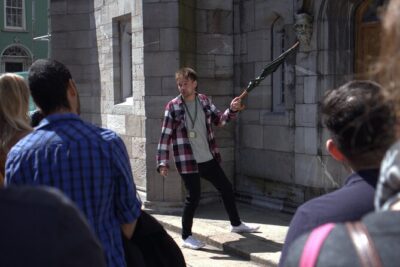
Dublin Highlights and Hidden Gems Guided Walking Tour
Read our review →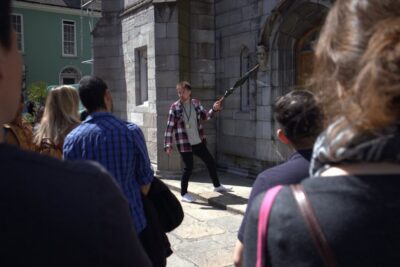

90 Minute Dublin Walking tour and Sightseeing tips
Read our review →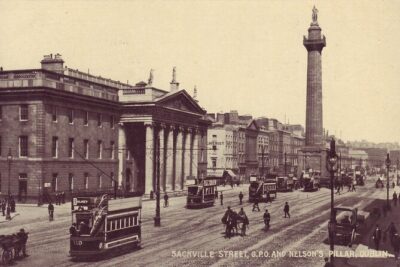

Dublin Traditional Irish 3 Course Meal Walking Tour with Local
Read our review →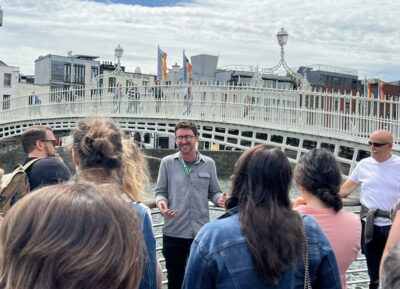

Browse the lists this tour appears in