
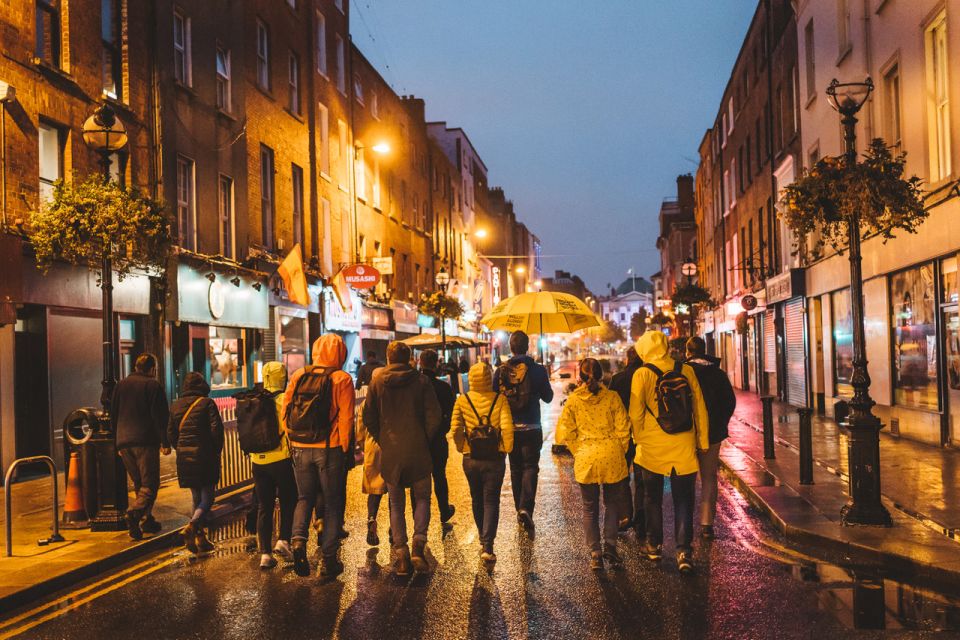
Reviewed · WALKING TOURS
Dublin: Macabre History Walking Tour
Dublin’s darker past is tucked into ordinary streets, cathedral corners, and riverside lanes. This two-hour walk brings out the city’s grisly side, from the death of the warrior Cuchulainn to grave robbing, mummified corpses, public executions, and man-eating rats. It is history with a strong dose of theatre.
I like the way the tour uses lesser-known streets rather than sticking to Dublin’s standard sightseeing circuit. I also like the guides’ storytelling style. Peter and Rob are described as animated, funny, and easy to talk with, and small groups can make the experience feel almost private.
The one caution is that the tour may be more curious than truly horrifying. One reviewer wanted even more blood and darkness, so you should book it for unusual Dublin history and lively storytelling, not a full haunted-house scare show.
In This Review
- Key points at a glance
- Dublin’s dark side begins at the Spire
- Cuchulainn and the theatrical opening story
- Quarantines, disease, and the hard limits of old Dublin
- Grave robbing beside the city mortuary
- Mummified corpses and the old city walls
- Public executions and the city’s appetite for spectacle
- Man-eating rats and the strange edge of folklore
- The brothel keeper’s final fire
- Why the guide makes or breaks this walk
- Is $19 a fair price for two hours?
- Who should book this Dublin walking tour?
- My verdict: book it for stories, not scares
- FAQ
- Where does the Dublin Macabre History Walking Tour start?
- Where does the tour finish?
- How long does the tour last?
- What language is the tour in?
- Is the tour suitable for children?
- Can I cancel the booking?
Key points at a glance
- Cuchulainn’s grisly final scene: Hear how the legendary warrior met his end, with a raven and a brutal loss of sight.
- Dublin beyond the usual sights: Walk old lanes and riverside stretches you might otherwise pass without noticing.
- Grave robbing beside the mortuary: Learn how 19th-century medical demand helped create a grim local trade.
- A parade of unsettling characters: Stories include a legless serial killer, a famous brothel keeper, and mummified corpses.
- A lively English-speaking guide: Peter and Rob use humour, drama, and local detail to keep the two-hour walk moving.
- A useful price for a city orientation: At $19 per person, you get a guided look at Dublin’s past without paying for transport or a major attraction ticket.
Dublin’s dark side begins at the Spire
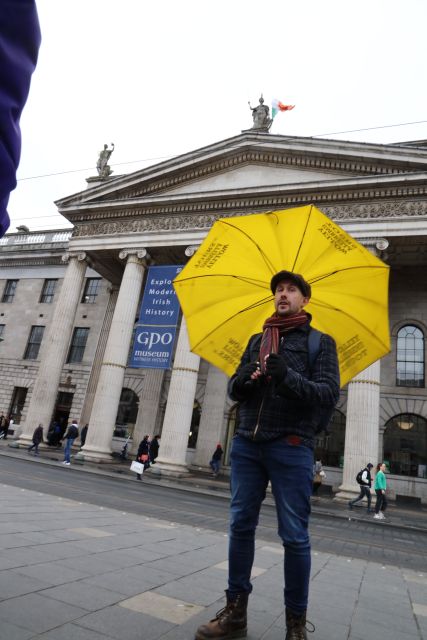
The meeting point is beside the Spire, the tall needle in the middle of O’Connell Street. Look for the yellow umbrella. This is a practical starting point because the Spire is one of the easiest landmarks to spot in central Dublin, though it is worth checking carefully for the correct umbrella if several tours are gathering nearby.
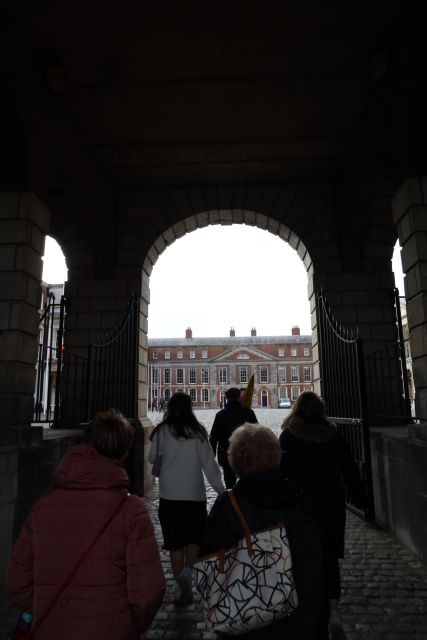
From here, the walk heads into the old city centre. You are not being taken from one indoor exhibit to another. The setting is the city itself, and the stories gain force from hearing them where Dublin’s older streets, walls, churches, and river crossings still shape the route.
The tour crosses both sides of the river. That gives the walk a useful sense of place. Dublin’s grim stories are not isolated in one historic quarter, and moving through different parts of the centre helps you see how death, disease, crime, religion, and business once fitted into daily city life.
I would treat the first part as a gentle orientation to central Dublin. You learn to look at overlooked corners with more interest. A plain lane or old wall can become a clue to another era once the guide explains what happened there.
More walking tours in Dublin:
- Dublin Highlights and Hidden Gems Guided Walking Tour
★ 5.0 · 6,020 reviews - Dublin: Highlights and Hidden Gems Walking Tour
★ 4.9 · 2,140 reviews - 1916 Rebellion Walking Tour
★ 5.0 · 1,605 reviews
Cuchulainn and the theatrical opening story
One of the early featured tales concerns Cuchulainn, the mighty warrior of Irish legend. His death is described in unusually stark terms: the raven on his shoulder pecked out his eyes. This is a good example of the tour’s approach, which mixes Ireland’s old myths with documented episodes from Dublin’s urban past.
The story also gives the guide room to set the mood without starting immediately with the most distressing material. You get legend, symbolism, and gruesome detail in one short episode. If you enjoy folklore as much as crime stories, this part should appeal to you.
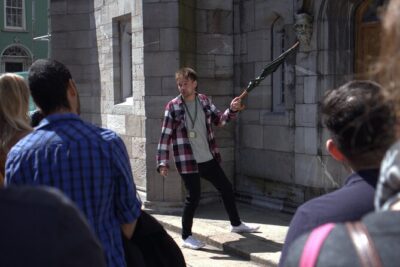
The guide’s delivery matters here. Peter is repeatedly praised for acting out stories, adding drama, and keeping the material clear for people from different countries. Rob is also described as personable and funny. The style is not a dry lecture, and it is not simply a list of dates. Expect a performance built around short stories, gestures, humour, and questions.
That approach works well for a walking tour because you are listening while moving. You do not need to remember every name or year. The main benefit is that you begin to connect Dublin’s streets with stories that are easy to overlook in a standard city tour.
Quarantines, disease, and the hard limits of old Dublin
Medieval quarantines form part of the darker picture. This section places the macabre stories in a wider setting. Death in old Dublin was not limited to murder or punishment. Illness could transform ordinary streets and force communities to make harsh choices about movement, contact, and care.
The quarantine material is valuable because it prevents the tour from becoming a string of sensational crimes. It shows how fear and survival shaped the city. You hear about the systems used to contain disease, while also gaining a sense of how exposed earlier communities were to outbreaks.
The tour does not present a museum-style display, so you will not be examining objects or written records at each stop. Instead, the guide uses the streets as the backdrop and supplies the context through narration. That keeps the pace lively, but anyone wanting detailed academic treatment of medieval medicine may find the format too light.
For most people, this balance is a strength. The tour gives you enough background to understand the subject, then moves before the story becomes a long history lesson.
Grave robbing beside the city mortuary
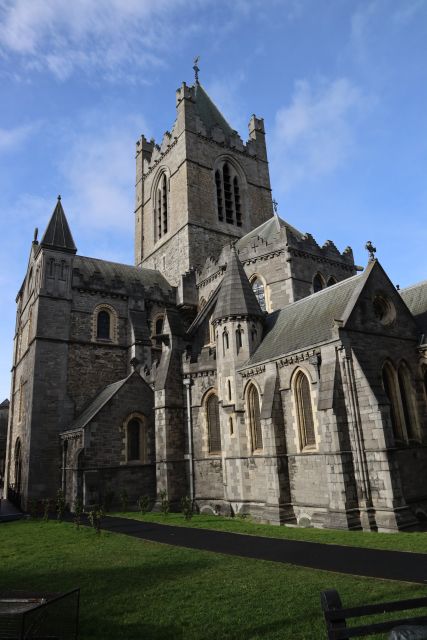
One of the most memorable subjects is Dublin’s 19th-century grave-robbing trade. The story connects the city mortuary with the demand for bodies, showing how medical progress could create an ugly market around the dead.
This is the sort of detail that makes the tour more useful than a simple collection of ghost stories. Grave robbing was not just a spooky tale. It points to the pressures surrounding medical study, the value placed on bodies, and the lack of consent or protection available to ordinary families.
The location near the old mortuary gives the story extra weight. You are not just hearing that grave robbing happened somewhere in Dublin. You are being shown part of the setting tied to the trade. That physical link is one reason I like this walk for people who want history attached to real streets.
The subject can be unsettling, especially if you are sensitive to stories about corpses or disturbed graves. The guide’s humour helps keep the mood manageable, but the material is still plainly macabre. This is an adult tour for a reason.
More history walks in Dublin:
- Dublin Historical Centre Food Tour with 8 Food Tastings & Drinks
★ 5.0 · 1,718 reviews - 2-Hour Historical Walking Tour from Dublin
★ 5.0 · 875 reviews - Historical 2-Hour Guided Walking Tour of Dublin
★ 4.7 · 865 reviews - Dublin to Cork, Blarney Castle & Cóbh Heritage Centre by train
★ 4.5 · 510 reviews
Mummified corpses and the old city walls
Near Dublin’s old city walls, the stories turn toward mummified corpses, unusual deaths, and the people once associated with this part of the city. The walls provide a strong setting because they remind you how compact and enclosed Dublin once was.
The appeal here is the contrast between the modern city around you and the older world beneath its streets. You may be walking through an area that feels ordinary, yet the guide draws attention to bodies, crime, and beliefs linked with it. That shift in perspective is a central pleasure of the tour.
A story about a legless serial killer adds another layer of oddness. The detail is so strange that it sounds like a tall tale, but it is presented as part of Dublin’s darker past. Peter is especially good at mixing what is firmly historical with what is more colourful and difficult to separate from local storytelling.
That blend is worth understanding before you book. The experience is not a courtroom report or a formal history seminar. It includes facts, legends, grim anecdotes, and what one review called probably-fact and definitely-fun information. If you need every detail labelled with a source, this may feel loose. If you like history delivered through memorable characters, it should work well.
Public executions and the city’s appetite for spectacle
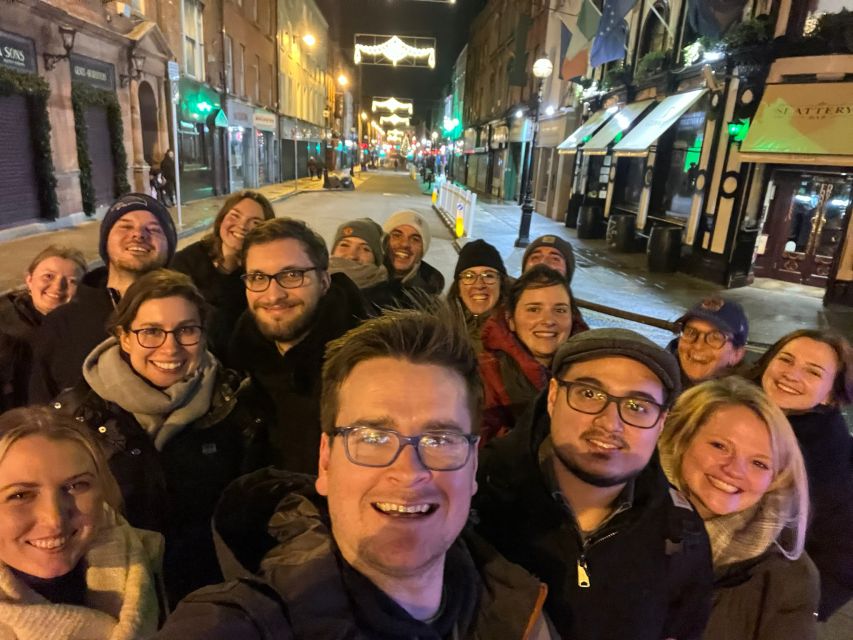
Public executions are another key theme. The tour examines punishment as a public event, not a private legal procedure. In earlier Dublin, execution could draw a crowd and turn death into a grim form of entertainment.
This section helps explain the social setting behind the city’s violent stories. It is easy to imagine the past as a series of isolated crimes, but public punishment shows how the wider population was involved. The audience, the authorities, and the location all mattered.
The guide’s theatrical style is well suited to this material. Stories about executions need a sense of place and timing, and an animated narrator can make the scene understandable without relying on graphic description alone. You should expect dark humour and drama rather than a quiet memorial tone.
That may not suit everyone. The tour treats grim events as compelling stories, and some people may prefer a more solemn presentation. The benefit is that the subject remains memorable and easy to follow during a moving walk.
Man-eating rats and the strange edge of folklore
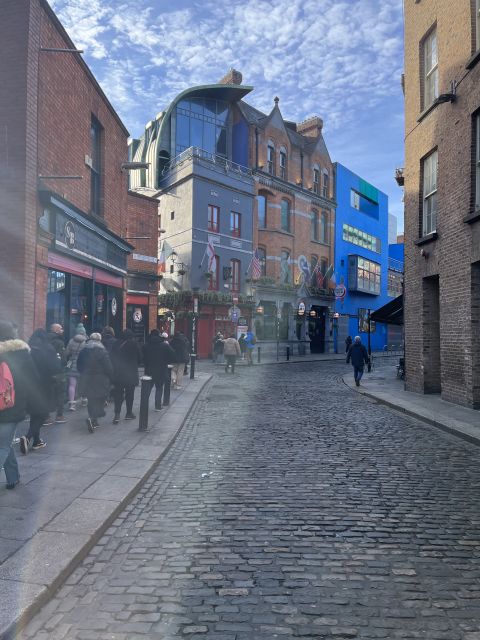
Man-eating rats provide one of the tour’s most memorable hooks. The phrase alone tells you that this experience likes unusual details. It also captures the way Dublin’s macabre traditions combine real hardship with stories that grow more dramatic as they are passed along.
You should not book this tour expecting a scientific discussion of urban pests. The rat story is part of the broader entertainment value, alongside the serial killer, mummified bodies, and other startling material. It gives the walk a touch of dark absurdity.
That mixture keeps the mood from becoming relentlessly bleak. The subject matter is grim, but the guide uses humour and lively narration to make the two hours enjoyable. Several descriptions of Peter focus on his passion, clarity, and ability to make the stories feel vivid without losing the thread of Dublin’s wider past.
This is also where your own taste matters most. If you want only documented tragedies, some parts may feel too colourful. If you like the border between folklore and history, you will probably enjoy the oddness.
The brothel keeper’s final fire
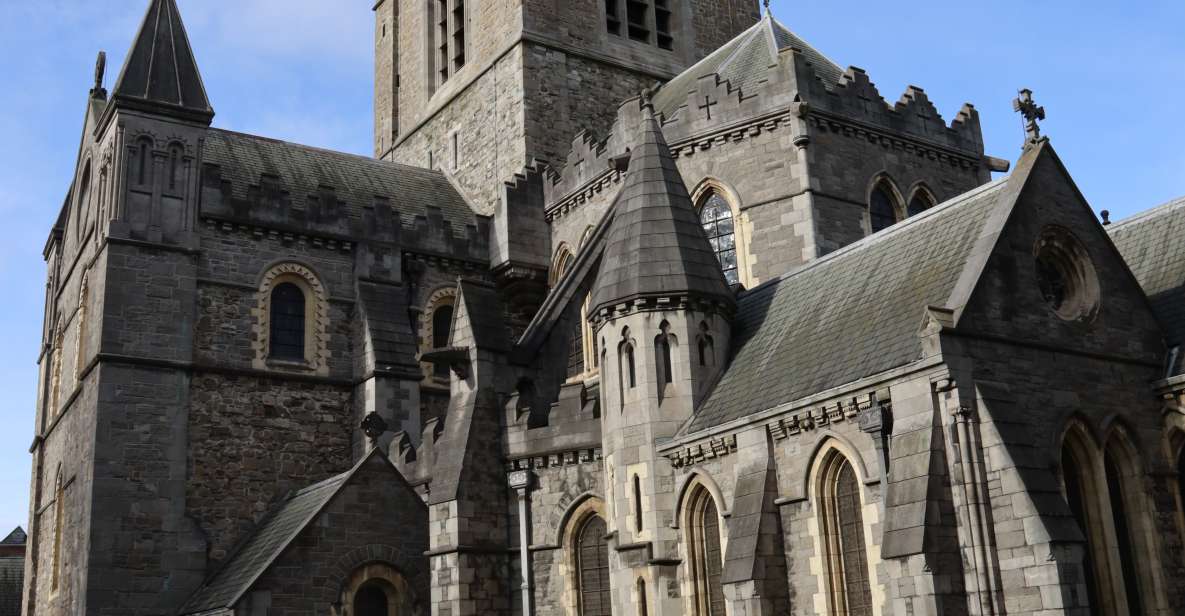
The closing section takes place beside the cathedral and concerns Dublin’s most famous brothel keeper. Her story ends with an untimely death by fire at the stake, giving the tour a dramatic finish.
Ending beside the cathedral works well because it brings together several themes from the walk: religion, punishment, sexuality, public opinion, and death. The cathedral setting also provides a clear landmark at the end of the story, even though the activity then returns to the original meeting point.
This final tale is less about a random shock and more about the social rules of the city. A brothel keeper could become famous, useful, feared, or condemned, depending on who held power. The guide uses her fate to show how public morality and punishment worked in an earlier Dublin.
The return to the Spire is convenient. You finish in central Dublin rather than being left in a distant district, so you can continue sightseeing, find a meal, or head back to your accommodation without arranging extra transport.
Why the guide makes or breaks this walk
A macabre walking tour depends heavily on its narrator. The route alone is not enough. You need someone who can explain the setting, build suspense, handle difficult subjects, and keep a group moving through busy city streets.
Peter is the name most often associated with this experience. He is described as a natural storyteller who acts out scenes, answers questions, slows down when needed, and makes a clear effort to include everyone. Rob also receives strong praise for his humour, warmth, and command of Dublin’s stories.
The small-group experience can be a real advantage. Some departures have had only three people, creating a relaxed, almost private feel. You should not assume every departure will be that small, but the format appears capable of becoming personal when numbers are low.
Solo visitors should find the social setup comfortable. The guide gives you a shared subject right away, and the walking format makes conversation easier than sitting silently in a large coach. You can also ask questions about Dublin’s history and daily life beyond the macabre stories.
The language is English, and the delivery is described as clear for an international audience. If you are not fully confident in English, the animated style and willingness to repeat or slow down may help, though the tour still relies on spoken storytelling for the full two hours.
Is $19 a fair price for two hours?
At $19 per person, I consider this a good-value city walk if you want a guide-led introduction to Dublin’s less obvious past. You are paying for two hours of local storytelling and a route through the old centre, with no extra attraction ticket required.
The value comes from interpretation rather than included extras. There is no hotel pickup, transport, meal, or entry to an indoor site. You are paying for the guide, the route, and the stories. That makes the price easy to compare with other walking tours, but you should not expect a packaged sightseeing excursion.
It is especially good value if you already plan to explore central Dublin on foot. The tour adds meaning to streets and buildings you might otherwise pass quickly. It can also help you notice parts of the old city that do not appear on a standard highlights route.
The tour lasts two hours, which is long enough to build a connected story without taking up your whole day. Wear shoes suitable for walking and leave room in your schedule for the group to pause, listen, and move between locations. The exact starting time varies, so check availability before booking.
Cancellation is flexible up to 24 hours before the activity for a full refund, and you can reserve now and pay later. The tour is wheelchair accessible. Children under 18 cannot join, so this is best treated as an adult experience.
Who should book this Dublin walking tour?
I would recommend it to you if you enjoy:
- Dark folklore and unusual urban stories
- Local history told through real streets
- Small-group walks with room for questions
- Guides who use humour and drama
- Experiences that show a side of Dublin beyond the usual landmarks
- Two-hour activities that fit neatly into a city break
It suits first-time visitors who want an unusual introduction to central Dublin, but it also works for anyone who has already seen the main sights. The route offers details that a bus tour is unlikely to cover, and the walking pace lets you notice places you might otherwise ignore.
You should think twice if you want a strictly factual crime tour, a ghost tour built around scares, or a long visit inside historic buildings. The experience is more about storytelling in the open air. One person felt it could have been darker, which is useful guidance: expect macabre history with wit, not nonstop horror.
My verdict: book it for stories, not scares
I would book this tour if I wanted to understand Dublin through its strangest deaths, harshest punishments, and most unsettling local tales. The best parts are the overlooked streets, the mortuary and grave-robbing story, the old city walls, and the guides’ ability to make complicated history easy to follow.
Peter and Rob seem to bring the warmth and energy this subject needs. Their style keeps the walk human rather than merely grim. At $19, the experience offers a strong return for anyone who likes history with a dark twist.
Choose it when you want a lively adult walk through Dublin’s past. Skip it only if you need graphic horror, a fully academic approach, or a tour built around indoor attractions. For most curious visitors, it is a memorable way to see the old centre from an angle that ordinary sightseeing misses.
FAQ
Where does the Dublin Macabre History Walking Tour start?
It starts beside the Spire, the large needle in the middle of O’Connell Street. Look for the yellow umbrella.
Where does the tour finish?
The walk ends back at the original meeting point beside the Spire.
How long does the tour last?
The tour lasts two hours. Starting times vary, so check availability when booking.
What language is the tour in?
The tour is conducted in English by a live guide.
Is the tour suitable for children?
No. The activity is not suitable for children under 18.
Can I cancel the booking?
Yes. You can cancel up to 24 hours before the tour for a full refund. You can also reserve now and pay later.
Just added around Dublin
- Dublin: Pub Tour. Pour The Perfect Guinness, Whiskey & Music★ 5.0 · 3 reviews
- A Self Guided Walking Tour of Dublin’s Docklands★ 4.5 · 3 reviews
- Private Dublin City tour★ 5.0 · 3 reviews
- Dublin One Day Tour with a Local: 100% Personalized & Private★ 4.5 · 3 reviews
- Waterford Crystal and Kilkenny Full-Day Rail Tour from Dublin★ 5.0 · 3 reviews
- Secret and unusual Dublin: guided walking tour★ 5.0 · 3 reviews
- 5 Day Ireland’s South−East Including Admission from Dublin★ 4.5 · 3 reviews
- Turtle Bunbury’s Dublin: A Self-Guided Audio Tour from a Celebrated Author★ 5.0 · 3 reviews
Walking Tours, compared.
Dublin Highlights and Hidden Gems Guided Walking Tour
Read our review →
90 Minute Dublin Walking tour and Sightseeing tips
Read our review →

Dublin Traditional Irish 3 Course Meal Walking Tour with Local
Read our review →

Browse the lists this tour appears in