
Reviewed · WALKING TOURS
Dublin: LGBT Pride Walking Tour with Queer History
Dublin’s queer story is told in the streets on this two-hour walking tour, linking places such as Liberty Hall, Trinity College, the General Post Office, the George, and Diceman’s Corner with the people who changed Ireland. You hear about revolutionaries, Pride pioneers, civil rights campaigners, and gender identity advocates rather than simply ticking off landmarks.
I like the strong mix of public history and personal stories, especially the focus on figures such as Panti Bliss and Dr Lydia Foy. I also like the guide’s human touch. Helena, also named Helene in some booking details, is described as warm, witty, energetic, and happy to chat between stops.
The main consideration is that this is a walking tour with a lot to cover in two hours. The subject includes discrimination, exclusion, and abuse, so it is not a light sightseeing stroll from start to finish. Comfortable shoes matter, and you should check the route and meeting details if mobility is a concern, even though the activity is listed as wheelchair accessible.
In This Review
- Key points at a glance
- Dublin’s queer story begins on the pavement
- Meeting outside the Old Storehouse
- Liberty Hall and the first Pride protest
- The General Post Office and queer revolutionaries
- Dr Lydia Foy and the fight for legal identity
- Trinity College and the Sexual Liberation Movement
- Hirschfeld Centre and community-building
- Diceman’s Corner and the George
- A guide who keeps serious history approachable
- What the two-hour format means for you
- Who will get the most from this tour
- Should you book the Dublin LGBT Pride Walking Tour?
- FAQ
- Where does the Dublin LGBT Pride Walking Tour start?
- Where does the walking tour finish?
- How long does the tour last?
- What language is the tour in?
- How much does the tour cost?
- Is the tour wheelchair accessible?
- What should I bring?
- Can I cancel the booking?
- Do I have to pay when I reserve?
Key points at a glance
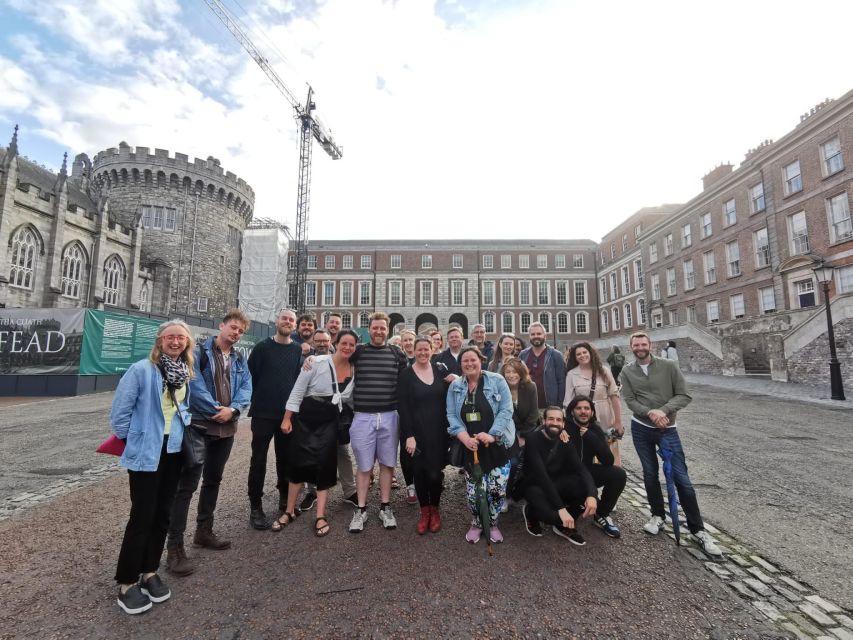
- Liberty Hall connects the tour to Ireland’s first Pride protest, giving the modern movement a clear physical starting point.
- The General Post Office adds revolutionary context, including stories about queer figures linked to Ireland’s political past.
- Dr Lydia Foy’s story explains the fight for legal gender recognition and the importance of the Gender Recognition Act.
- Trinity College introduces Dublin’s Sexual Liberation Movement, showing how social change grew beyond one protest or venue.
- The George and Diceman’s Corner bring the story into everyday queer life, from community spaces to well-known LGBTQ venues.
- Helena’s lively delivery is a major strength, with humor, personal anecdotes, and time for questions.
Dublin’s queer story begins on the pavement
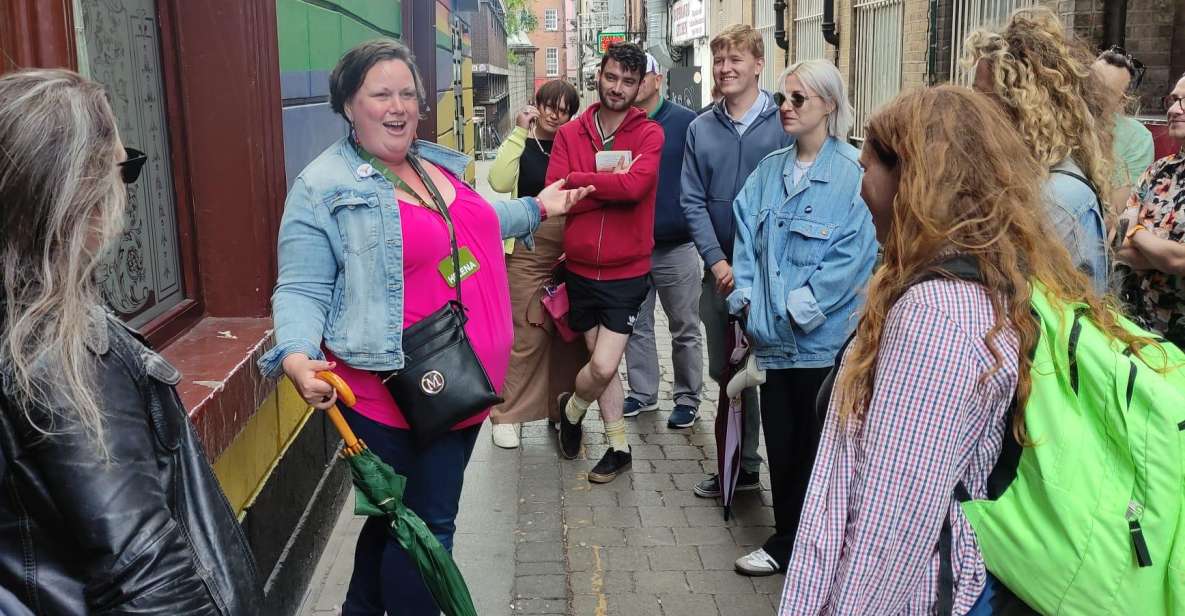
This tour works because it does not treat LGBTQ history as a separate subject locked inside a museum. You walk through central Dublin while the guide explains how ordinary streets, meeting places, political buildings, and nightlife venues fit into Ireland’s long fight for recognition.
The route covers a difficult shift in Irish society. You hear how the LGBTQ community faced exclusion and abuse, then learn how campaigners pushed for civil rights and legal change. The story reaches marriage equality, but the guide also connects it to earlier struggles, so the progress does not feel sudden or effortless.
I find this approach useful if you already know Dublin’s usual political story but have not heard whose voices were left out. It gives familiar places another layer. A building you might otherwise photograph and pass can become the setting for a protest, a legal battle, or a personal act of courage.
The tour is also a good way to understand that queer history is not one single story. It includes political activism, sexual liberation, gender identity, nightlife, public performance, and the gradual creation of safe spaces. In two hours, you get an introduction to each of these threads.
More walking tours in Dublin:
- Dublin Highlights and Hidden Gems Guided Walking Tour
★ 5.0 · 6,020 reviews - Dublin: Highlights and Hidden Gems Walking Tour
★ 4.9 · 2,140 reviews - 1916 Rebellion Walking Tour
★ 5.0 · 1,605 reviews
Meeting outside the Old Storehouse
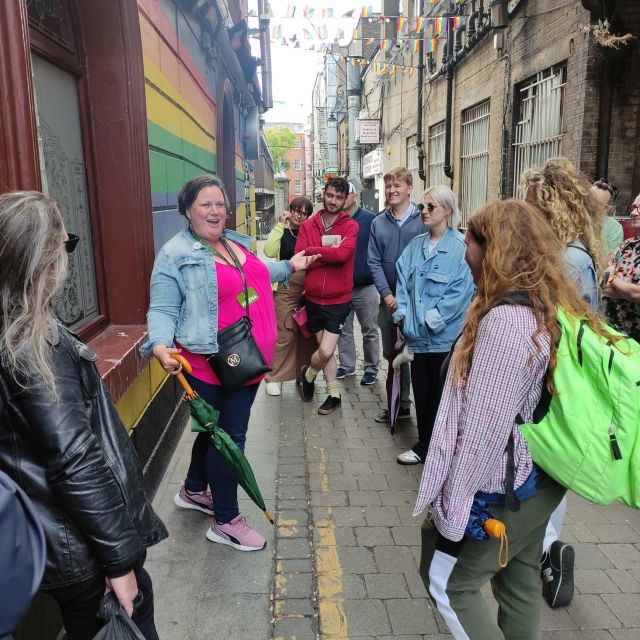
You meet your guide directly outside the Old Storehouse Bar & Restaurant. Look for the person carrying a green umbrella, a simple detail that should make the start easy to spot in a busy part of Dublin.
The walk ends back at the same meeting point. That makes the tour practical for fitting into a day of sightseeing, since you are not left at an unfamiliar part of the city. It also lets you continue with nearby plans after the tour without arranging extra transport.
The activity is listed at $27 per person. I see that as fair value if you want a focused subject and a live guide rather than a general city walk. You are paying for interpretation, connections between sites, and access to stories you are unlikely to get from simply walking past the buildings on your own.
It is less useful if you want a long stop inside each attraction. This is a guided outdoor walk, not a series of museum visits, and the price does not include separate attraction tickets. Its value comes from the guide’s explanation and the route’s historical links.
Liberty Hall and the first Pride protest
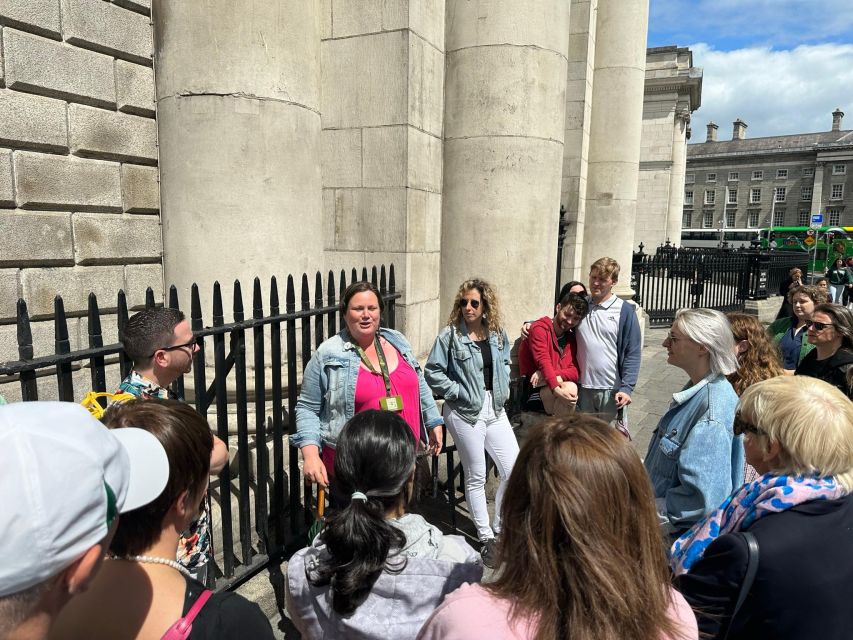
Liberty Hall is one of the tour’s most important stops because it is tied to the first Pride protest in Ireland. That gives the walk a clear emotional and political anchor.
Here, the guide places Pride within the wider history of protest and civil rights. You learn about the people who took public action at a time when visibility could bring serious personal and social costs. The point is not only that a protest happened, but that showing up in public helped change what could be discussed openly.
I like this stop because it turns Pride from a modern festival into part of a longer campaign. If your understanding of Irish LGBTQ history begins with marriage equality, Liberty Hall helps you see the many years of organizing that came first.
The tour also connects queer activism with Ireland’s broader political past. You are not asked to view LGBTQ history as something separate from the country’s political development. Instead, the walk shows how queer people took part in the same arguments about rights, citizenship, identity, and public life that shaped modern Ireland.
The General Post Office and queer revolutionaries
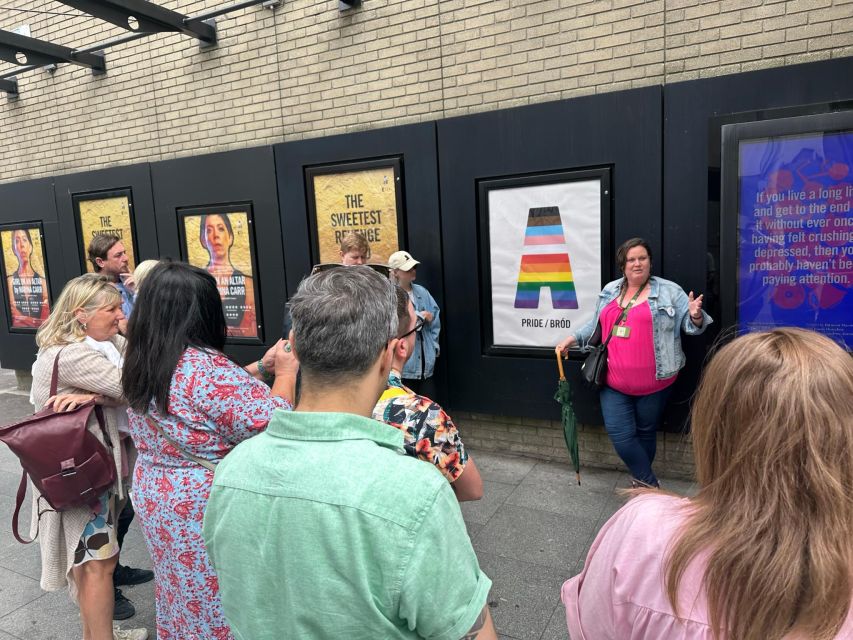
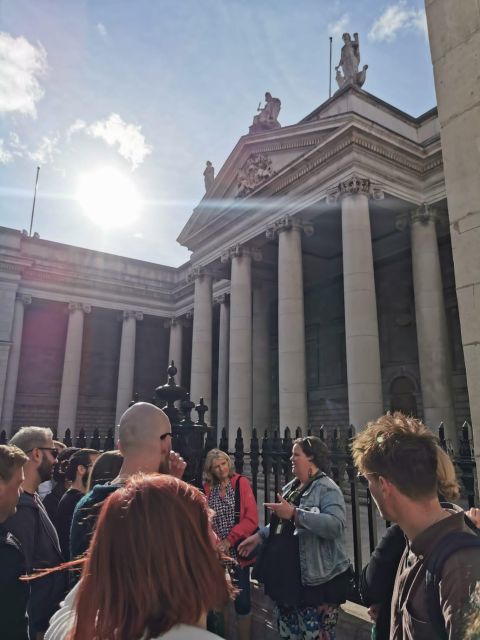
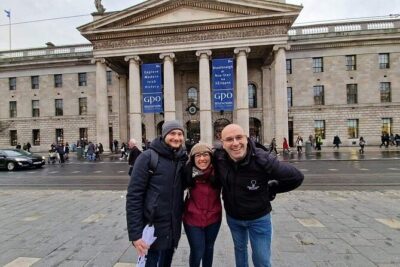
The General Post Office is one of Dublin’s best-known historic buildings, and this tour gives it a different angle. Alongside the familiar revolutionary associations, you hear about queer figures connected to Ireland’s political story.
That contrast is valuable. The GPO is often presented through a narrow national narrative, while the tour widens the picture by asking who else belonged in that story. You get a reminder that queer people were not absent from major events simply because older accounts often failed to name them.
Panti Bliss is among the figures discussed. Her name brings the subject into the present and helps connect political activism, public performance, and the demand to be seen on equal terms. The guide uses such personalities to keep the history personal rather than turning it into a list of dates and laws.
Expect the guide to move between the location itself and the wider story. The GPO is not treated as a stop where you spend a long time indoors. It is a point on the route where the surroundings support a broader conversation about revolution, identity, and public recognition.
More history walks in Dublin:
- Dublin Historical Centre Food Tour with 8 Food Tastings & Drinks
★ 5.0 · 1,718 reviews - 2-Hour Historical Walking Tour from Dublin
★ 5.0 · 875 reviews - Historical 2-Hour Guided Walking Tour of Dublin
★ 4.7 · 865 reviews - Dublin to Cork, Blarney Castle & Cóbh Heritage Centre by train
★ 4.5 · 510 reviews
Dr Lydia Foy and the fight for legal identity
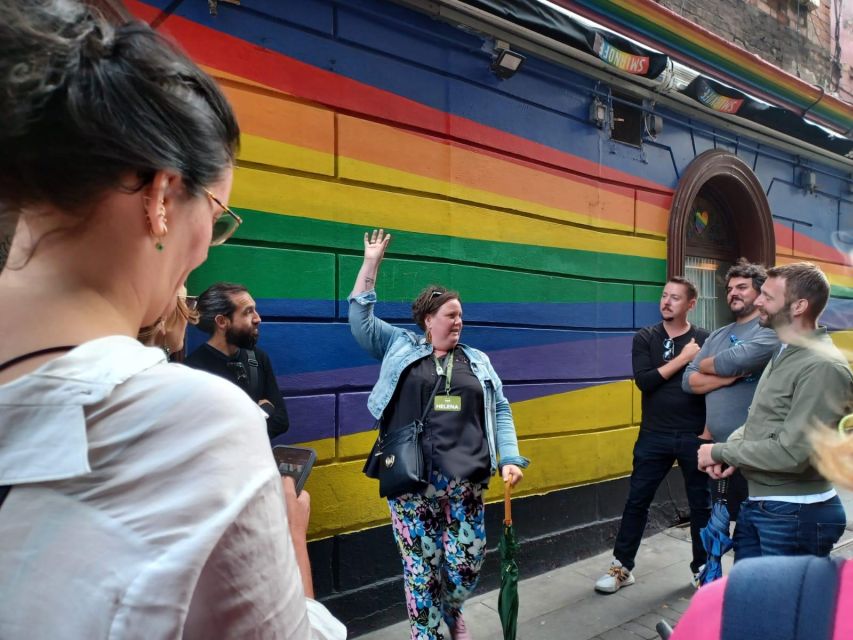
Dr Lydia Foy’s story is a key part of the walk. The discussion of her campaign and the Gender Recognition Act shows how the fight for LGBTQ rights includes more than marriage and Pride marches.
Gender recognition can sound like a legal subject, but the tour brings it back to a person’s ability to have their identity acknowledged by the state. The guide explains the obstacles Dr Foy faced and places her work within the longer effort to secure basic rights for transgender people in Ireland.
This section may be especially useful if you want to understand the different strands of LGBTQ activism. Marriage equality is one major milestone, but the story of gender recognition shows that legal change has its own timeline, campaigns, and setbacks.
The subject is serious, yet the guide’s style helps keep it accessible. The feedback about Helena repeatedly points to her ability to explain difficult material with energy and warmth. That balance matters here. You need enough detail to understand why the issue was important, without feeling as if you have been handed a legal textbook during a city walk.
Trinity College and the Sexual Liberation Movement
The walk passes Trinity College while discussing the Sexual Liberation Movement. This stop shifts the focus from individual legal cases to wider changes in how people talked about sex, relationships, freedom, and social control.
Trinity’s setting makes a useful backdrop for that discussion. It places the movement within Dublin’s intellectual and political life, rather than presenting it as something that happened only in private clubs or community centers.
I would pay close attention here if you are interested in how social movements grow. The tour shows that public change does not come from one famous person alone. It develops through arguments, organizing, protests, personal testimony, and the creation of spaces where people can meet and speak openly.
The stop also helps explain the link between sexual liberation and LGBTQ rights. These causes overlap, but they are not identical. A good guide needs to show both the connection and the difference, and the tour’s route gives room for that broader view.
Hirschfeld Centre and community-building
The Hirschfeld Centre is included as an important location in Dublin’s queer story. Its place on the route lets the guide talk about community infrastructure, not just public demonstrations or court battles.
That distinction is important. Movements need gathering places, advice networks, social support, and places where people can meet without having to explain themselves. A community center can be as important to long-term change as a large march, even if it receives less attention in standard sightseeing accounts.
The walk uses locations such as this to show how queer life developed through practical spaces. You are not only hearing about laws imposed from above. You are also hearing about people building community from the ground up.
Because the tour lasts two hours, the discussion at each stop will be selective. You should expect a guided introduction rather than a full academic treatment of every organization. Still, the route gives you a useful framework for exploring the subject further on your own.
Diceman’s Corner and the George
Diceman’s Corner and the George bring the story closer to Dublin’s social and nightlife culture. These stops show how queer history is also about places where people could gather, celebrate, perform, and find community.
The George is described as Ireland’s most iconic LGBTQ venue. Seeing it as part of the route gives the tour a living connection to present-day Dublin. It is not only a story about past oppression and past victories. It also points to the venues and public spaces that helped create a visible queer community.
Diceman’s Corner adds another stop with a strong connection to Dublin’s LGBTQ past. The guide uses these locations to help you understand the role of nightlife and social meeting places in a movement that needed both political organization and everyday community.
These locations may be most meaningful if you return later to experience Dublin’s nightlife for yourself. The tour does not include entry to a venue or a nightlife activity, so do not book it expecting an evening out. Instead, it provides context that can make later visits feel more connected to the city’s story.
A guide who keeps serious history approachable
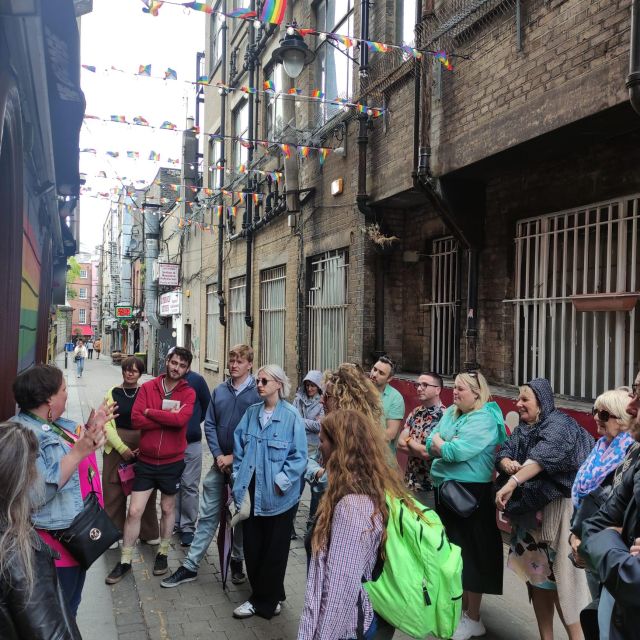
The guide is central to the experience. Helena is praised for being welcoming, funny, energetic, genuine, and able to answer questions. One particularly useful detail is that she chats with the group while walking between stops, rather than treating the spaces between landmarks as dead time.
Personal anecdotes are also part of the appeal. They add a human note to material that could otherwise feel formal or distant. At the same time, the strongest descriptions of her style emphasize that she covers both uplifting and difficult stories, so the humor does not erase the serious parts.
I would choose this tour for the guide-led conversation as much as for the route. If you prefer to move quietly at your own pace and read information on a plaque, you may find a scheduled walking tour less flexible. If you like asking questions and hearing a local perspective, the live format is a clear advantage.
The listed language is English. The feedback points to a guide who is happy to engage with questions, but the activity information does not promise private guiding or a specific group size. Keep that in mind when deciding how much individual discussion you expect.
What the two-hour format means for you
Two hours is long enough to build a clear story but short enough to fit beside other Dublin plans. The tour covers several major subjects: revolutionary queer figures, the first Pride protest, Panti Bliss, Dr Lydia Foy, the Gender Recognition Act, sexual liberation, community spaces, and LGBTQ nightlife.
The tradeoff is pace. You will be walking between stops and listening along the way, so some topics will receive an overview rather than an exhaustive account. I would treat this as a strong introduction, especially if the subject is new to you, rather than the final word on Irish queer history.
Wear comfortable shoes. That advice is basic but important, since the activity is entirely a city walk and includes several locations. The tour is listed as wheelchair accessible, though you should still confirm any personal route requirements when booking because no detailed accessibility notes are provided.
The tour runs at scheduled starting times, so check availability before building your day around it. The reserve-now-and-pay-later option can help if your Dublin plans are still shifting, and cancellation is free up to 24 hours in advance for a full refund.
Who will get the most from this tour
I would recommend it to anyone interested in LGBTQ history, Irish social change, civil rights, or the parts of Dublin that standard tours often skip. It is also a good choice for visitors who want their city sightseeing tied to real people and political struggles.
Parents or relatives exploring Dublin with a teenager may find the tone approachable. The guide’s wit and welcoming style can make a serious subject easier to discuss, while the route gives younger visitors a different way to understand recent Irish history.
You do not need to identify as LGBTQ to find value here. The tour explains how one community’s fight for rights reflects wider changes in Irish society. It can also help you understand why places such as the George matter beyond nightlife.
I would be more cautious about booking if your main goal is indoor sightseeing, a slow architectural walk, or a very detailed scholarly lecture. The activity is short, outdoors, and built around conversation while moving through the city.
Should you book the Dublin LGBT Pride Walking Tour?
I would book this tour if you want a focused, human account of Dublin’s queer past and present. The route gives you specific places, while Helena’s style adds the personal detail that turns those places into a connected story.
At $27 per person, the value is strongest for visitors who would otherwise miss this part of Dublin’s past. You get two hours, an English-speaking guide, and a route covering political history, legal change, activism, community centers, and LGBTQ venues.
Book it with comfortable shoes and an open mind. Expect serious subjects alongside humor and warmth, and expect an introduction rather than a complete course. For a compact way to see Dublin through the experiences of its LGBTQ community, this is a worthwhile choice.
FAQ
Where does the Dublin LGBT Pride Walking Tour start?
Meet your guide directly outside the Old Storehouse Bar & Restaurant. Look for someone carrying a green umbrella.
Where does the walking tour finish?
The activity ends back at the meeting point outside the Old Storehouse Bar & Restaurant.
How long does the tour last?
The tour lasts two hours. Starting times vary, so check availability when booking.
What language is the tour in?
The live guided tour is conducted in English.
How much does the tour cost?
The listed price is $27 per person.
Is the tour wheelchair accessible?
Yes, the activity is listed as wheelchair accessible.
What should I bring?
Bring comfortable shoes for walking through Dublin.
Can I cancel the booking?
Yes. You can cancel up to 24 hours in advance for a full refund.
Do I have to pay when I reserve?
No. The reserve-now-and-pay-later option lets you book your place without paying anything at the time of reservation.
Just added around Dublin
- Dublin: Pub Tour. Pour The Perfect Guinness, Whiskey & Music★ 5.0 · 3 reviews
- A Self Guided Walking Tour of Dublin’s Docklands★ 4.5 · 3 reviews
- Private Dublin City tour★ 5.0 · 3 reviews
- Dublin One Day Tour with a Local: 100% Personalized & Private★ 4.5 · 3 reviews
- Waterford Crystal and Kilkenny Full-Day Rail Tour from Dublin★ 5.0 · 3 reviews
- Secret and unusual Dublin: guided walking tour★ 5.0 · 3 reviews
- 5 Day Ireland’s South−East Including Admission from Dublin★ 4.5 · 3 reviews
- Turtle Bunbury’s Dublin: A Self-Guided Audio Tour from a Celebrated Author★ 5.0 · 3 reviews
Walking Tours, compared.
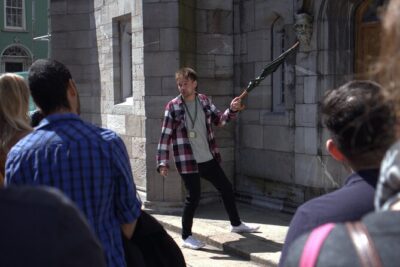
Dublin Highlights and Hidden Gems Guided Walking Tour
Read our review →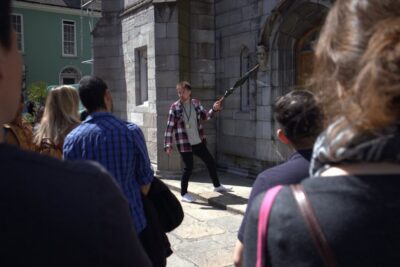
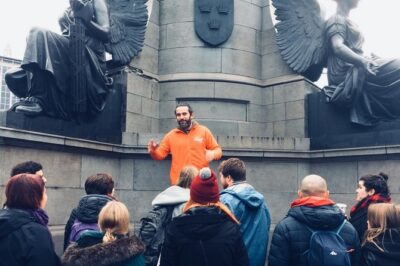
90 Minute Dublin Walking tour and Sightseeing tips
Read our review →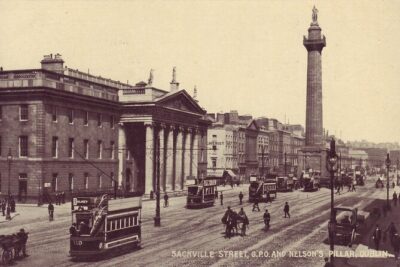

Dublin Traditional Irish 3 Course Meal Walking Tour with Local
Read our review →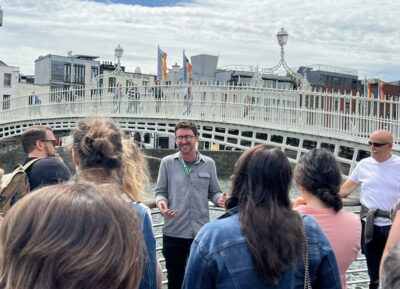
Browse the lists this tour appears in