

Reviewed · WALKING TOURS
DayTripper Dublin: A Guided City Walking Tour
Dublin’s story comes alive on foot, from Viking foundations and medieval cathedrals to Molly Malone, the Famine, independence, and modern Irish politics. This tour packs the city center into one guided walk, led by local guides such as Ciarán, Kyron, and Keiron, whose warm, personal style has earned especially strong praise.
I like the central route, which moves between St Stephen’s Green, Grafton Street, Dublin Castle, Temple Bar, O’Connell Street, and Trinity College without wasting time on long transfers. I also like the chance to ask for help with the rest of your visit, including where to eat and which lesser-known places are worth your time.
The main consideration is that the tour covers many subjects quickly, and most major buildings are viewed from outside. The listed duration is about 2 hours 30 minutes, although the tour description also refers to a three-hour walk, so confirm the expected finish time when planning your day.
In This Review
- Key points before you book
- Why this walk works well on your first day
- St Stephen’s Green and the Wolfe Tone starting point
- Grafton Street and the Molly Malone story
- St Patrick’s Cathedral and the beginnings of Dublin
- Dubh Linn Gardens and the Viking past
- Dublin Castle and Ireland’s political struggles
- Christ Church Cathedral and medieval Dublin
- Temple Bar without losing your whole day
- O’Connell Street and the Famine
- Trinity College and the finish at College Green
- The guides make the difference
- What $27.82 buys you
- Timing, group size, and cancellation
- Who should book this Dublin walk
- Should you book DayTripper Dublin?
- FAQ
- How long is DayTripper Dublin?
- Where does the tour start?
- Where does the tour end?
- Is the tour offered in English?
- Does the tour enter St Patrick’s Cathedral?
- Does the tour enter Dublin Castle?
- Is lunch included?
- Can I cancel for a full refund?
Key points before you book
- A strong first-day orientation: The route gives you a useful mental map of central Dublin before you explore on your own.
- History with a local voice: Expect Irish music, dance, Viking Dublin, the Famine, independence, and 20th-century politics.
- Exterior sightseeing only: St Patrick’s Cathedral, Dublin Castle, Christ Church Cathedral, and Trinity College are not entered.
- A small maximum group: The tour accepts up to 25 people, though the actual group may be smaller.
- Useful personal advice: Guides can suggest places to eat, things to do, and spots you may not find on your own.
- Good value for a first visit: At $27.82 per person, the tour costs less than many ticketed attractions while covering a wide area.
Why this walk works well on your first day
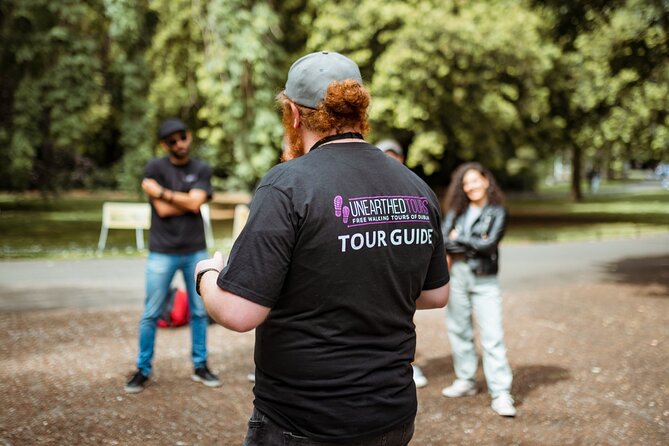
I often find that Dublin makes more sense once you understand how close its central sights are. This walk connects them in a logical route, beginning at the Wolfe Tone sculpture near St Stephen’s Green and ending at College Green.
That start is handy. St Stephen’s Green is easy to reach, and the meeting point puts you in the middle of central Dublin rather than at the edge of town. From there, you move through parks, shopping streets, civic spaces, religious sites, and political landmarks.
The route is not just a checklist of photo stops. Its value comes from the links between them. Irish history appears in the park, on statues, beside cathedrals, and along O’Connell Street. The guide can explain how Dublin’s past affects the city you see today.
You should expect a steady amount of walking over roughly two and a half hours. A moderate level of fitness is recommended. Wear comfortable shoes, and remember that Irish weather can change quickly, even on a short city walk.
More walking tours in Dublin:
- Dublin Highlights and Hidden Gems Guided Walking Tour
★ 5.0 · 6,020 reviews - Dublin: Highlights and Hidden Gems Walking Tour
★ 4.9 · 2,140 reviews - 1916 Rebellion Walking Tour
★ 5.0 · 1,605 reviews
St Stephen’s Green and the Wolfe Tone starting point
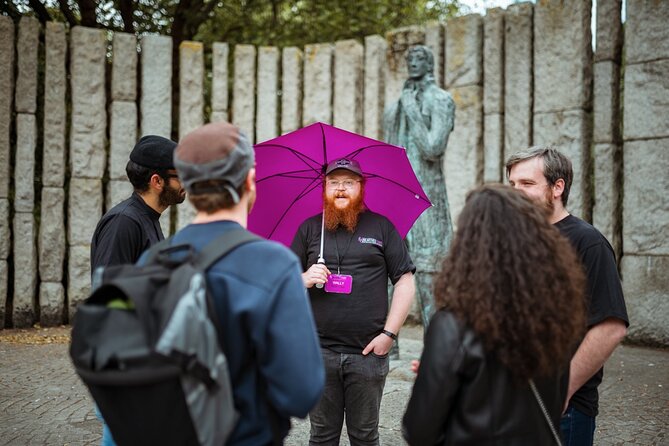
The tour begins near the Wolfe Tone sculpture at St Stephen’s Green. Wolfe Tone was a major figure in Irish republican history, so the meeting point introduces the political themes that return later in the walk.
Inside the park, your guide talks about Irish history and culture while you stroll through the gardens. This is a pleasant opening because the park gives you room to listen before the route shifts into busy streets.
The description also includes a session on Irish dance and music. That adds a cultural side to the tour that you will not get from simply walking between monuments. It helps connect Ireland’s political story with the traditions that remain part of daily life.
The park stop is listed at about 15 minutes, so do not expect a long garden visit. Think of it as a short introduction and a chance to settle into the group.
Grafton Street and the Molly Malone story
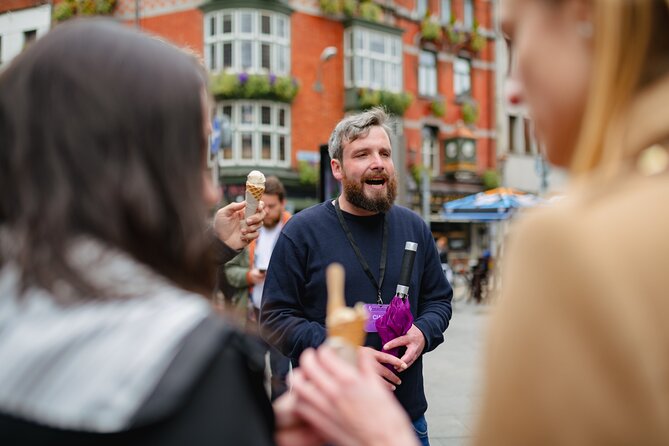
From St Stephen’s Green, the walk continues to Grafton Street, one of Dublin’s best-known high streets. The guide explains the street as you walk rather than treating it as a formal attraction with a long stop.
That format suits Grafton Street. You see the shops and street activity while learning how this part of central Dublin fits into the city. The stop lasts about 10 minutes, so the focus is on orientation and stories, not shopping time.
The Molly Malone statue comes next. Here, the guide connects the famous figure with working-class Dublin. That context matters because the statue is easy to photograph and move past without thinking about the social world behind the song and character.
This is one of the tour’s useful habits: familiar sights receive some background instead of being presented as isolated landmarks. You get a better sense of the people and city life connected with them.
St Patrick’s Cathedral and the beginnings of Dublin
At St Patrick’s Cathedral, the guide meets you in the gardens and explains the origins of Dublin. The cathedral itself is not entered, and admission is not included.
That limitation is important if you want to see the interior. This tour gives you a guided look at the setting and the story, but you would need to return separately to explore inside. The short stop is best for understanding the site rather than studying its architecture in detail.
The cathedral also helps set up the next section of the walk. Dublin’s religious sites are tied to the city’s early growth, and the tour uses them to move from broad Irish history into the older story of Dublin itself.
A few more Dublin tours worth weighing up
- Dublin to Glendalough, Wicklow and Kilkenny Full Day Guided Tour
★ 5.0 · 4,895 reviews - Dublin Book of Kells, Castle and Molly Malone Statue Guided Tour
★ 4.5 · 3,825 reviews - The Little Museum of Dublin Famous Guided Tour
★ 5.0 · 2,948 reviews - Dublin Jameson Distillery and Guinness Storehouse Guided Tour
★ 4.5 · 2,608 reviews
Dubh Linn Gardens and the Viking past
Dubh Linn Gardens is a quieter stop beside Dublin Castle. The name links back to the Viking origins of the city, and your guide uses the gardens to explain why this location mattered.
It is an easy place to pause because the setting is compact and picturesque. You are not simply looking at a garden. You are learning how the name Dublin developed and how the city’s earliest story is tied to this area.
The stop lasts about 10 minutes and admission is free. It works best as a short piece of context between St Patrick’s Cathedral and Dublin Castle.
Dublin Castle and Ireland’s political struggles
The walk continues into the courtyards of Dublin Castle, but not into the paid interior rooms. Your guide discusses Ireland’s political struggles and includes the history of Northern Ireland.
This is one of the more serious portions of the tour. If you want a light sightseeing walk with little political discussion, you should know that Irish independence and later conflict receive real attention. If you want a clearer explanation of how Ireland reached its present political shape, this section adds much more value than a quick photograph outside the castle.
The courtyards provide a useful setting for that conversation. You can see the location connected with British rule and Irish administration while the guide explains the events and tensions that shaped the country.
Since entry is not included, plan a separate visit if you want to see the castle’s interiors. The walking tour does not replace a dedicated Dublin Castle ticket.
Christ Church Cathedral and medieval Dublin
At Christ Church Cathedral, the guide stays in the courtyard and explains the outside architecture, the cathedral’s founding, and the Viking connection. Again, the interior is not included.
This stop adds a medieval layer to the walk. After the political discussion at Dublin Castle, Christ Church brings the focus back to religion, architecture, and the early city.
The 10-minute stop is brief. You will hear the main points and get a sense of the building, but you will not have time for a detailed architectural inspection. If Christ Church is high on your list, treat this as an introduction before returning on your own.
Temple Bar without losing your whole day
The tour then passes through Temple Bar. The stop is only about five minutes, which is a sensible choice for a walking route covering so much ground.
Temple Bar is easy to over-plan. A short guided pass gives you the location and atmosphere without using a large part of your day in one neighborhood. You can decide later if you want to return for food, music, or a longer look.
The guide’s local advice can be particularly useful here. You can ask where to eat and how to approach the area, though no meal is included in the tour. Bring money or a card if you plan to stop for food afterward.
O’Connell Street and the Famine
O’Connell Street shifts the tour toward Ireland’s 20th-century political story. The guide points out statues and explains the people and events connected with this major avenue.
The route also includes the Great Irish Hunger, commonly called the Famine, near Trinity College and the Central Bank. This subject is essential to understanding Ireland’s population, politics, emigration, and relationship with Britain.
The tour cannot cover every detail in a single stop, but it gives you a framework for the events. That is useful because Dublin’s statues and public spaces often carry political meaning that is not obvious at first glance.
O’Connell Street is also a practical orientation point. By the time you reach it, you have moved from the south side of central Dublin to one of the city’s main north-south routes.
Trinity College and the finish at College Green
The final stop is outside Trinity College. The guide discusses Trinity’s history, the Famine, and the nearby Central Bank. You do not enter the college, so the Book of Kells and the Old Library are not part of this experience.
That makes the finish convenient for planning. The tour ends at College Green, about a two-minute walk from Grafton Street. Tara and Pearse railway stations are around a 15-minute walk away, giving you easy options for continuing your day.
The ending also leaves you near several central sights and shops. You can continue sightseeing, find lunch, or return to a site that deserves more time.
A final guide conversation is part of the appeal. Guides can suggest where to eat, what to do next, and places you may otherwise miss. One particularly useful feature is the chance to tailor questions to your interests. A guest with an interest in women’s history found the guide able to adjust the discussion, which suggests that the walk can become more personal when the group is small.
The guides make the difference
The strongest part of this experience is the guide rather than any single monument. Names connected with especially positive feedback include Kyron, Keiron, Ciarán, and Cieran, although the guide assigned to your date may be different.
The best guide style here is conversational and flexible. You are encouraged to ask questions while walking, and the guide can explain Irish history in a clear way rather than presenting a string of dates.
The tour also benefits from local perspective. Guides have helped people plan the rest of a day in Dublin, including meals and nearby sights. If you are visiting on a cruise stop or have only limited time, that practical advice can be as useful as the formal history.
With a maximum of 25 people, the group is not guaranteed to be tiny. Still, that cap is more manageable than a large coach group. In a very small group, the guide may be able to shape the discussion around your interests. In a full group, you may need to stand close and speak up when you have a question.
What $27.82 buys you
At $27.82 per person, the price is fair for a local guide and a route that covers much of central Dublin. You are paying for explanation, direction, and the chance to connect separate sights into one story.
The value is strongest if you are new to Dublin. In two and a half hours, you get a map of the city center and a list of places to revisit. You also avoid paying entrance fees to several attractions you may not yet know you want to visit.
The value is weaker if you mainly want interior access. Admission to St Patrick’s Cathedral, Dublin Castle, Christ Church Cathedral, and Trinity College is not included, and the tour does not enter them.
Lunch is also not included. That keeps the price down and gives you freedom to choose, but you should plan your own meal after the walk or carry what you need.
Timing, group size, and cancellation
The experience is offered in English and uses a mobile ticket. Confirmation arrives when you book, and service animals are allowed. The meeting point is near public transportation.
The advertised duration is approximately 2 hours 30 minutes, while the description refers in one place to a three-hour history-packed tour. Allow a little flexibility rather than scheduling a train or timed attraction immediately after the stated end.
You can cancel for a full refund up to 24 hours before the start time. Changes or cancellations inside that 24-hour window are not accepted for a refund, and cut-off times use Dublin local time.
The tour is often booked well ahead, with an average booking lead time of 47 days. That does not guarantee every date will sell out, but it is a good reason to reserve early if your Dublin schedule is fixed.
Who should book this Dublin walk
I would choose this tour for a first visit, especially if you want to understand Dublin before picking individual museums and paid sights. It is also a good match for anyone interested in Irish independence, cultural traditions, the Famine, and the city’s Viking beginnings.
It suits people who enjoy learning while walking and asking questions. The route has enough flexibility for a guide to respond to interests such as women’s history, food, music, or local customs.
I would think twice if your priority is entering Dublin’s major buildings. You will see the exteriors and hear the stories, but you need separate tickets and extra time for the interiors.
Should you book DayTripper Dublin?
Book it if you want a clear first look at Dublin, a local voice, and useful advice for the rest of your visit. The price is modest for the amount of ground covered, and the route gives you a strong base for exploring on your own.
Skip it if you prefer to move at your own pace or spend a long time inside one cathedral, castle, or college. For most first-time visitors, though, this is a practical opening walk, especially when booked early and placed near the beginning of your Dublin stay.
FAQ
How long is DayTripper Dublin?
The tour is listed as approximately 2 hours 30 minutes. The description also refers to a three-hour tour, so allow some extra time when planning what comes next.
Where does the tour start?
It starts at the Wolfe Tone Sculpture near St Stephen’s Green in Dublin.
Where does the tour end?
The walk ends at College Green, near Grafton Street. Tara and Pearse Stations are about a 15-minute walk away.
Is the tour offered in English?
Yes. English is the stated tour language.
Does the tour enter St Patrick’s Cathedral?
No. The guide meets you in the cathedral gardens and discusses the site, but cathedral entry is not included.
Does the tour enter Dublin Castle?
No. The route goes into the courtyards, but the interior is not included.
Is lunch included?
No. Lunch is not included in the tour price.
Can I cancel for a full refund?
Yes, if you cancel at least 24 hours before the experience start time. Cancellations or changes made less than 24 hours in advance are not accepted for a refund.
Just added around Dublin
- Dublin: Pub Tour. Pour The Perfect Guinness, Whiskey & Music★ 5.0 · 3 reviews
- A Self Guided Walking Tour of Dublin’s Docklands★ 4.5 · 3 reviews
- Private Dublin City tour★ 5.0 · 3 reviews
- Dublin One Day Tour with a Local: 100% Personalized & Private★ 4.5 · 3 reviews
- Waterford Crystal and Kilkenny Full-Day Rail Tour from Dublin★ 5.0 · 3 reviews
- Secret and unusual Dublin: guided walking tour★ 5.0 · 3 reviews
- 5 Day Ireland’s South−East Including Admission from Dublin★ 4.5 · 3 reviews
- Turtle Bunbury’s Dublin: A Self-Guided Audio Tour from a Celebrated Author★ 5.0 · 3 reviews
Walking Tours, compared.
Dublin Highlights and Hidden Gems Guided Walking Tour
Read our review →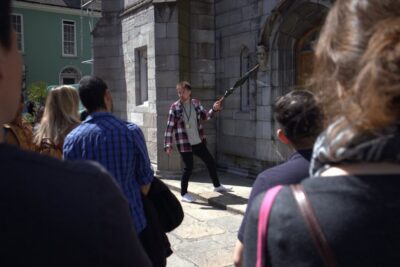
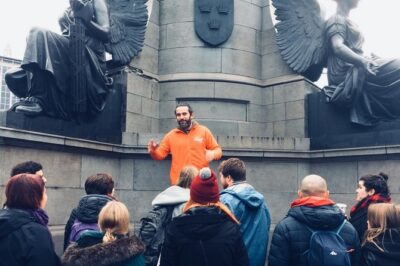
90 Minute Dublin Walking tour and Sightseeing tips
Read our review →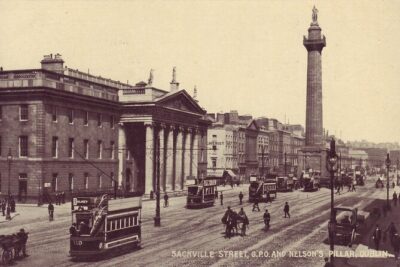

Dublin Traditional Irish 3 Course Meal Walking Tour with Local
Read our review →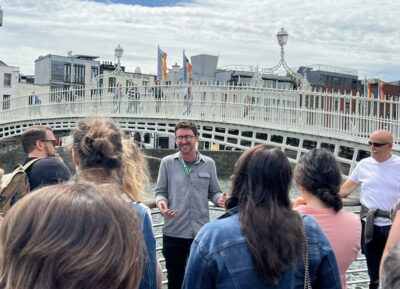

Browse the lists this tour appears in