
Reviewed · WALKING TOURS
Vikings In Dublin (Walking Tour)
Dublin’s Viking story comes alive on foot, where old streets, cathedral walls, and the River Liffey’s former waterfront help explain how Norse settlers shaped the city called Dubh Linn. This 90-minute walk connects major sights with lesser-known traces of Viking Dublin, rather than treating the period as a simple tale of raiders and battles.
I like the clear route through central Dublin and the guide’s effort to explain Viking customs, daily life, and motives in plain terms. I also like that the tour reaches both famous places, such as Christ Church Cathedral and Dublin Castle, and quieter historical points around Saint Audoen’s and Fishamble Street.
The main consideration is language: the live tour is offered in French. At $45 per person, it is a fair choice if you want a focused historical walk, but less appealing if you prefer to explore at your own pace or need a longer visit inside the cathedral.
In This Review
- Key points at a glance
- Starting beside Dublin’s Viking longboat
- Understanding Dubh Linn and the early settlement
- Christ Church Cathedral and the changing city
- Saint Audoen’s and the older religious quarter
- Fishamble Street, markets, and everyday life
- Dublin Castle and the shift toward political power
- Finishing near Trinity College
- What the guide adds to the experience
- Is $45 a fair price for 90 minutes?
- Who should book this Dublin walking tour?
- My verdict on Vikings in Dublin
- FAQ
- Where does the Vikings in Dublin walking tour start?
- Where does the tour finish?
- How long does the walking tour last?
- What language is the tour conducted in?
- How much does the tour cost?
- Is the tour wheelchair accessible?
- What places are included on the route?
- Can I cancel for a full refund?
Key points at a glance
- Start beside a Viking longboat sculpture: Meet at Báite, Viking Longboat (1988) by Betty Newman Maguire, an easy visual marker for the beginning of the walk.
- See Dublin through its Norse origins: The route explains how Viking sailors used the Liffey and helped establish the settlement known as Dubh Linn.
- Visit Christ Church Cathedral: This is the tour’s most imposing stop and gives the Viking story a strong architectural setting.
- Connect several old quarters: Saint Audoen’s, Fishamble Street, Dublin Castle, and a lesser-known stop add layers to the central Dublin route.
- Expect a thoughtful French-language guide: The guide presents Viking society with nuance, answers questions, and can adapt when a participant has a minor health concern.
- Plan for a brisk 90 minutes: The compact length works well before lunch or alongside a wider Dublin sightseeing day.
Starting beside Dublin’s Viking longboat

The tour begins at Báite, Viking Longboat (1988), a sculpture by Betty Newman Maguire. This gives you a clear meeting point and puts the theme in front of you before the walking starts.
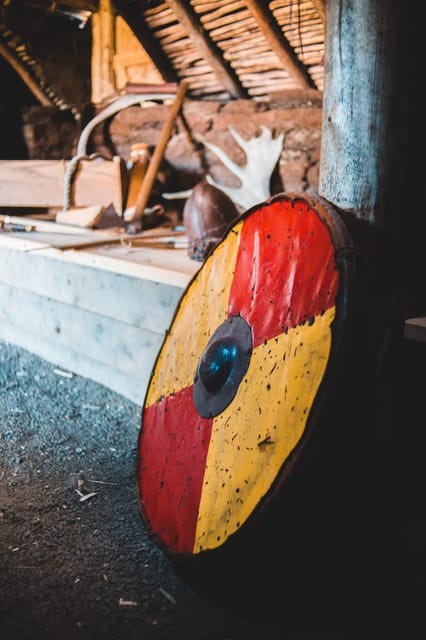
A sculpture is a useful beginning for this kind of tour. You are not just meeting outside an anonymous street corner. You are starting with a modern image of the longboats that carried Norse sailors across the Irish Sea and along the Liffey.
From there, the guide sets the scene for Viking Dublin. You can expect an overview of how Norse people lived, what their customs meant, and how their arrival affected Ireland and the wider world. The strongest part of the experience is likely to be this shift in perspective: the Vikings are presented as settlers, traders, families, and members of a working society, not only as raiders.
The exact starting time depends on the date you choose, so check availability before planning another timed activity around it. Since the route is on foot, arrive ready to walk through central Dublin rather than expecting a coach or a ride between stops.
More walking tours in Dublin:
- Dublin Highlights and Hidden Gems Guided Walking Tour
★ 5.0 · 6,020 reviews - Dublin: Highlights and Hidden Gems Walking Tour
★ 4.9 · 2,140 reviews - 1916 Rebellion Walking Tour
★ 5.0 · 1,605 reviews
Understanding Dubh Linn and the early settlement
The phrase Dubh Linn, usually linked with a dark pool near the Liffey, gives the tour a useful anchor. It connects Dublin’s modern name with the water, boats, and settlement patterns that made this part of the city important.
You will hear how Norse warriors navigated the river and how longships supported movement, trade, and settlement. The tour is not simply a list of dates. It aims to show what Viking influence looked like on the ground, including customs and the practical reasons a settlement could take hold.
That wider view is one of the tour’s real strengths. A short walk cannot explain every part of Viking Ireland, but it can help you read central Dublin differently. Streets that might otherwise look like ordinary routes between attractions become part of a story about docks, markets, religious sites, and political power.
The route includes a secret stop and another lesser-known point. Since their exact details are not provided in advance, part of the pleasure is letting the guide reveal them on the walk. Do not book this expecting a long archaeological excavation or a museum visit. Book it for spoken context at places where Dublin’s older layers are easy to miss.
Christ Church Cathedral and the changing city

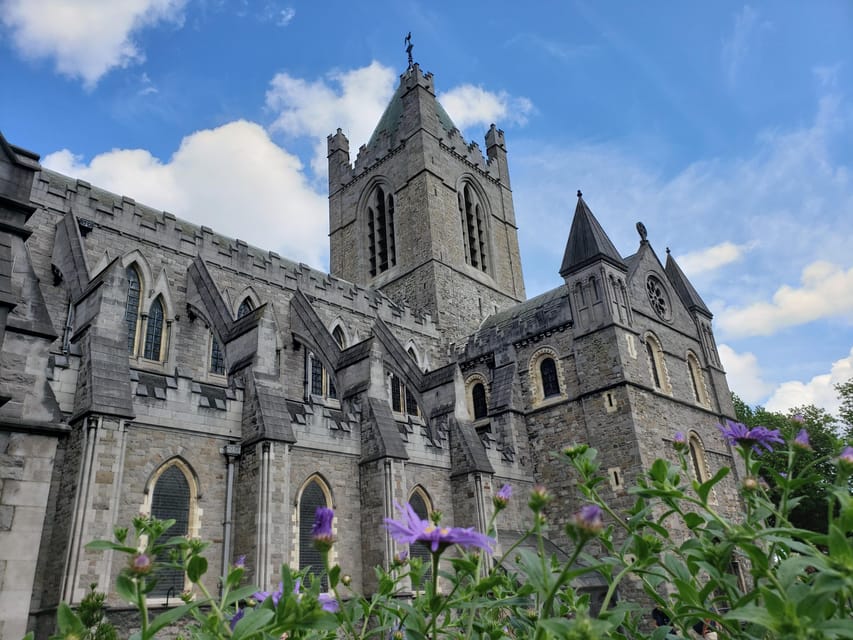
Christ Church Cathedral is the most prominent named stop. Its scale and age make it a natural place to discuss the meeting and conflict between Norse Dublin and Christian Ireland.
The cathedral gives the guide a strong backdrop for explaining how religious and political life changed over time. You can expect a guided presentation around the site, with attention to the Viking period and its continuing effect on Dublin. The supplied details do not promise an extended interior visit, so think of this as a historical stop during a walking route, not a full cathedral tour.
I like the way this part of the route links an easily recognized landmark with a less familiar period. Many people see Christ Church as a medieval church but do not connect it with Dublin’s earlier Norse settlement. A good explanation here can make the rest of the walk easier to follow.
You should also allow for the normal limits of an outdoor walking tour. The cathedral may be busy, and the pace depends on the group and the guide’s presentation. If you want substantial time to study the building, plan a separate visit rather than trying to do everything within the 90-minute tour.
Saint Audoen’s and the older religious quarter
Saint Audoen’s adds another important layer. The stop helps move the story beyond Vikings as seafarers and shows how Norse Dublin existed beside established Christian institutions.
The guide discusses the site as part of the period’s wider setting. This is useful because Viking influence did not replace every earlier tradition. Dublin developed through contact, tension, adaptation, and exchange between different communities.
You will likely get more from Saint Audoen’s if you listen for connections between places rather than treating each stop as an isolated monument. The guide’s role is to link the church, the settlement, the river, and the city’s later growth.
The tour is conducted in French, and that matters here. If French is comfortable for you, the language can make the storytelling feel natural and direct. If you only understand basic French, the amount of historical detail may be harder to follow, especially when the guide explains names, customs, and changes across several centuries.
A different side of Dublin on the same trip:
- Dublin to Cliffs of Moher, including Wild Atlantic Way and Galway
★ 5.0 · 23,331 reviews - From Dublin: Cliffs of Moher, Burren & Galway City Day Tour
★ 4.8 · 18,888 reviews - Dublin: Guinness Storehouse Entry Ticket
★ 4.6 · 16,863 reviews - Dublin to Cliffs of Moher, Burren, Wild Atlantic Way, Galway Tour
★ 5.0 · 12,924 reviews
Fishamble Street, markets, and everyday life
Fishamble Street brings the route closer to the idea of working Dublin. Its name and location make it a useful point for discussing markets, trade, and the daily activity that kept a settlement alive.
This is where the tour can move away from famous buildings and toward ordinary life. You may hear about how people bought and sold goods, how the settlement connected with the river, and how Viking customs influenced the city. The information provided for the tour does not give a detailed list of specific artifacts or excavated remains, so the value comes from the guide’s interpretation of the street and its place in Dublin’s past.
I like this type of stop because it gives you something practical to look for after the tour. Instead of remembering only a cathedral and a castle, you can think about where people worked, traded, and moved through the city.
The street is also a reminder that Dublin’s Viking story was not confined to a single monument. It spread through the urban area. A walking route is well suited to that idea because you move through the same central spaces that connect the city’s religious, commercial, and political centers.
Dublin Castle and the shift toward political power
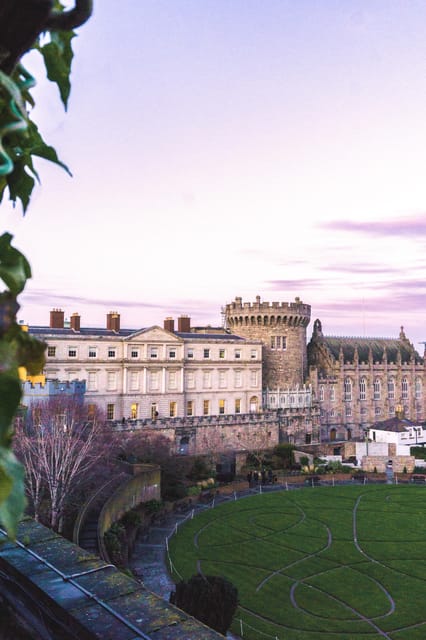
Dublin Castle adds a later layer to the route. Its main value here is not that it is a Viking building. Rather, it helps the guide explain how Dublin developed into a seat of authority long after the first Norse settlement.
The stop lets you compare different periods of the city’s growth. The Viking story begins with the river and settlement, while the castle points toward government and control. That contrast helps show that Dublin was shaped by several phases, not one fixed era.
You should expect a guided explanation outside or around the site as part of the walking route. The tour information does not promise castle admission, a full interior visit, or time to explore the state rooms. If the castle is high on your Dublin list, set aside a separate block of time.
This is also one of the reasons the tour works best as an introduction. It gives you a framework for the city. Later, when you visit the castle, cathedral, or other historic buildings on your own, you will have a better sense of how their periods overlap and differ.
Finishing near Trinity College

The itinerary finishes at Trinity College, bringing the walk into one of Dublin’s best-known academic and historic areas. This is a practical ending because you can continue sightseeing in the city center after the guide departs.
The supplied meeting information also says the activity ends back at the meeting point, while the route details identify Trinity College as the finish. Because those descriptions do not match perfectly, check the confirmed end point when you book or ask the operator before the walk begins.
Either way, the route stays within central Dublin and does not require transport between stops. That keeps the experience simple and makes it easy to pair with other city plans. Just avoid scheduling a tight connection immediately afterward until you know where the group will finish.
Trinity College also gives the tour a thoughtful final note. The walk begins with the Viking longboat and ends near a major symbol of Dublin’s later intellectual life. The contrast makes the city feel like a place built in layers, with each era leaving something behind.
What the guide adds to the experience
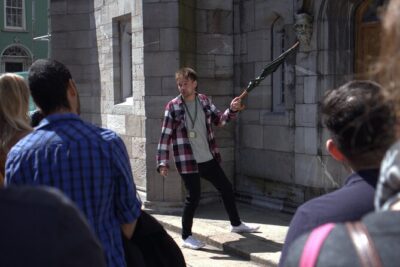
The guide is the key reason to choose this tour over reading a short Viking history page on your own. The presentation is designed to explain culture, customs, historical events, and the reasons behind Viking activity in Ireland.
The guide also treats the Vikings with some care. Norse people are not reduced to stock images of violent barbarians. You can expect attention to their society, motives, and influence, along with answers to questions and anecdotes that keep the walk from becoming a dry lecture.
That approach matters because Viking Dublin is easy to oversimplify. A useful guide shows that raiding was only part of the story. Settlement, trade, family life, religious change, and contact with local communities all help explain the city’s development.
The guide has also been able to adapt when a participant had a minor health problem. That does not guarantee a particular pace for every group, but it suggests a considerate approach. The activity is listed as wheelchair accessible, though you should still confirm any personal route requirements when booking.
Is $45 a fair price for 90 minutes?
At $45 per person, the tour costs about $30 per person per hour. That is not a bargain-priced orientation walk, so value depends on how much you want a focused Viking theme and a live French-speaking guide.
The price makes more sense if you plan to ask questions, enjoy historical storytelling, and want the city’s main Viking-related sites connected into one route. You are paying for interpretation and structure, not simply access to buildings. The tour includes a guided walk through the named locations, but it does not list admission to Christ Church Cathedral or Dublin Castle.
For a first visit to Dublin, this can be a good specialist add-on. It covers a distinct subject in a short period and leaves the rest of your day free. If you already know Dublin well and have read about its Viking period, the cost may feel high for a 90-minute route.
The rating is perfect across eight reviews, which is a small sample but still points to strong satisfaction with the guide. The most consistent praise concerns the guide’s historical grasp, clear explanations, friendly manner, useful answers, and ability to respond to a participant’s needs.
Who should book this Dublin walking tour?
I would choose this walk if you have a real interest in Viking society or want a fresh angle on central Dublin. It suits adults, students, families with older children, and anyone who prefers a guide to explain what a street or building means instead of simply pointing it out.
It is particularly useful for French-speaking visitors because the live guiding language is French. The tour may also suit you if you want a short activity that fits around meals, museums, or other city sights.
You may want another option if you need a long, slow visit inside each attraction, a tour in another language, or a detailed archaeological experience. The route covers many points in 90 minutes, so the pace will be purposeful. You will hear more than you can inspect at length.
The free cancellation policy allows you to cancel up to 24 hours before the activity for a full refund. You can also reserve now and pay later, which helps if you are still arranging your Dublin schedule.
My verdict on Vikings in Dublin
Book this tour if you want Dublin’s Viking past explained as a human story of settlement, trade, customs, and change. The route is compact but well chosen, linking the longboat sculpture, Christ Church Cathedral, Saint Audoen’s, Fishamble Street, Dublin Castle, a lesser-known stop, and Trinity College.
The best reason to go is the guide’s approach. Expect clear historical explanations, thoughtful answers, and a view of the Vikings that goes beyond the usual raider stereotype. At $45, it is best for someone who values interpretation and speaks French comfortably.
If you need a low-cost overview or prefer to explore alone, skip it. If the Viking roots of Dubh Linn sound more interesting than another standard city stroll, this focused walk earns a place in your Dublin plans.
FAQ
Where does the Vikings in Dublin walking tour start?
It starts at the Viking longboat sculpture, Báite, Viking Longboat (1988) by Betty Newman Maguire.
Where does the tour finish?
The route details identify Trinity College as the finish. The meeting information also says the activity ends back at the meeting point, so confirm the final location when booking.
How long does the walking tour last?
The tour lasts 1.5 hours.
What language is the tour conducted in?
The live tour guide speaks French. French is the listed tour language.
How much does the tour cost?
The listed price is $45 per person.
Is the tour wheelchair accessible?
Yes, the activity is listed as wheelchair accessible.
What places are included on the route?
The route includes the Viking longboat sculpture, a secret stop, Christ Church Cathedral, Saint Audoen’s, Fishamble Street, Dublin Castle, a lesser-known stop, and Trinity College.
Can I cancel for a full refund?
Yes. You can cancel up to 24 hours in advance for a full refund.
Just added around Dublin
- Private Dublin City tour★ 5.0 · 3 reviews
- Dublin: Pub Tour. Pour The Perfect Guinness, Whiskey & Music★ 5.0 · 3 reviews
- A Self Guided Walking Tour of Dublin’s Docklands★ 4.5 · 3 reviews
- Dublin One Day Tour with a Local: 100% Personalized & Private★ 4.5 · 3 reviews
- Waterford Crystal and Kilkenny Full-Day Rail Tour from Dublin★ 5.0 · 3 reviews
- Secret and unusual Dublin: guided walking tour★ 5.0 · 3 reviews
- 5 Day Ireland’s South−East Including Admission from Dublin★ 4.5 · 3 reviews
- Turtle Bunbury’s Dublin: A Self-Guided Audio Tour from a Celebrated Author★ 5.0 · 3 reviews
Walking Tours, compared.
Dublin Highlights and Hidden Gems Guided Walking Tour
Read our review →
90 Minute Dublin Walking tour and Sightseeing tips
Read our review →

Dublin Traditional Irish 3 Course Meal Walking Tour with Local
Read our review →

Browse the lists this tour appears in