
Reviewed · WALKING TOURS
Swords Dublin Ireland Walking Tour Fun Experience
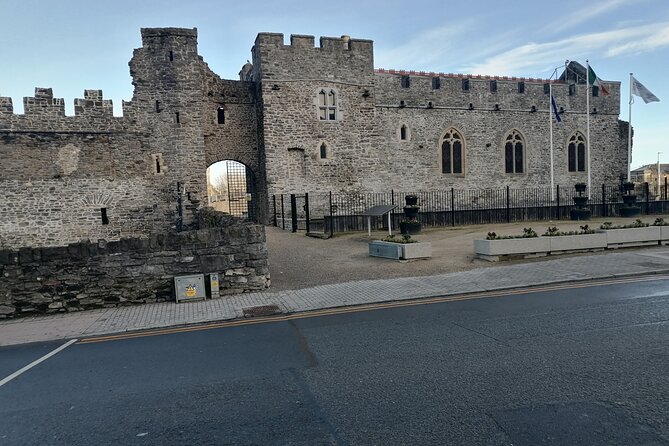
Swords Castle is the unusual star here: an early Anglo-Norman archbishop’s palace in a town only about 10 minutes from Dublin Airport. You’ll pair the castle with a Round Tower, church site, monastic remains, and the healing well tied to Swords’ name. I like the local focus and the way Tony connects small-town places to major Irish events, especially the Battle of Clontarf.
I also like the practical value. At $18.06, you get about two hours with a local guide, and admission is listed as free. Tony has shown real flexibility when access to the castle was blocked after an event, shifting attention to the church and tower site instead. The main drawback is access uncertainty: the castle grounds may occasionally be closed for cleanup or another event, so the experience can change slightly.
In This Review
- Key points to know before booking
- Why Swords makes a good short trip from Dublin
- Starting at Swords Castle, an archbishop’s palace
- The Round Tower and Brian Ború’s 1014 victory
- The monastic settlement and Swords’ healing well
- Tony’s local approach to Swords
- What two hours feels like on this walk
- Is $18.06 good value?
- Who will enjoy this Swords walk most
- Booking details and a useful backup plan
- Should you book the Swords walking tour?
- FAQ
- Where does the Swords walking tour begin?
- Where does the tour finish?
- How long does the tour last?
- What language is the tour offered in?
- What does the tour include?
- Is admission to the sites included?
- Can I cancel for a full refund?
Key points to know before booking
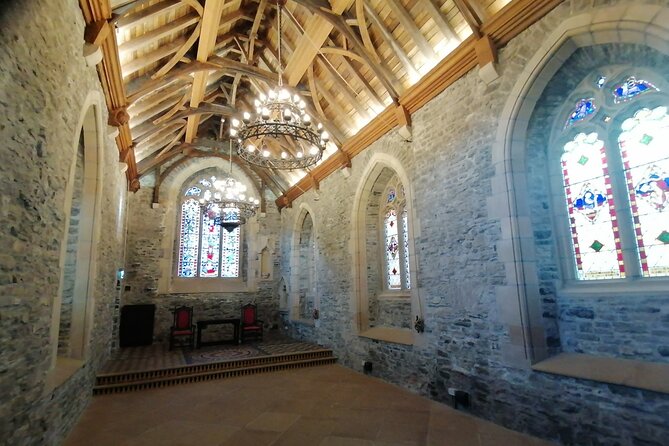
- Swords Castle dates to about 1200: Learn how the Anglo-Normans built it as an Archbishop’s Palace.
- Tony O Donghaile brings a local viewpoint: He grew up in Swords and connects its sights with wider Irish history.
- The Round Tower carries a dramatic story: It is linked with Brian Ború after his army’s victory over the Vikings at Clontarf in 1014.
- The walk includes more than the castle: You’ll also see a church and tower site, a monastic settlement, and a healing well.
- It is close to Dublin Airport: Swords makes sense if you have time before a flight or want a short outing beyond central Dublin.
- The tour returns to Bridge Street: The meeting point is Swords Castle on Bridge Street, and the walk ends there.
Why Swords makes a good short trip from Dublin
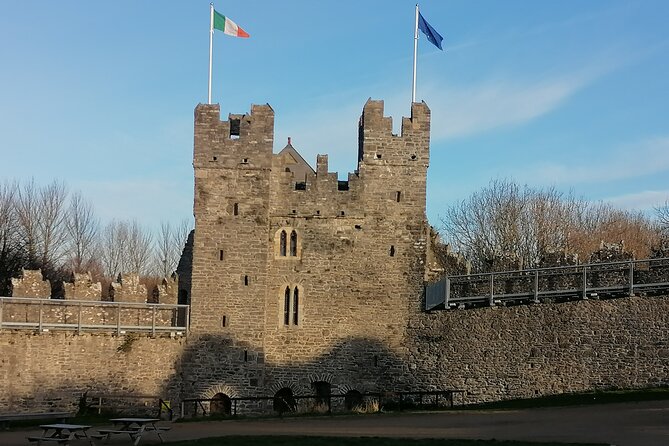
Many Dublin itineraries stay within the city center. That is understandable, but Swords gives you a different view of Ireland. This is not a grand capital-city tour with a long list of famous stops. It is a compact walk through one town, where a castle, church site, tower, and sacred spring help explain how the settlement grew.
The location matters. Swords is near Dublin Airport, and one past booking described it as about 10 minutes away. The exact travel time depends on traffic and your starting point, but the basic point is useful: you do not need to commit to a full day outside Dublin to see it.
I would consider this tour if you have a long airport layover, an early arrival before hotel check-in, or an extra half-day around Dublin. You need enough time to reach Swords and return to the airport or city, but the two-hour walk itself is manageable.
The meeting point is on Bridge Street beside Swords Castle. Since the walk finishes back at the same place, you do not need to arrange a separate pickup at the end. That simple loop works well for anyone planning the rest of the day around the tour.
More walking tours in Dublin:
- Dublin Highlights and Hidden Gems Guided Walking Tour
★ 5.0 · 6,020 reviews - Dublin: Highlights and Hidden Gems Walking Tour
★ 4.9 · 2,140 reviews - 1916 Rebellion Walking Tour
★ 5.0 · 1,605 reviews
Starting at Swords Castle, an archbishop’s palace
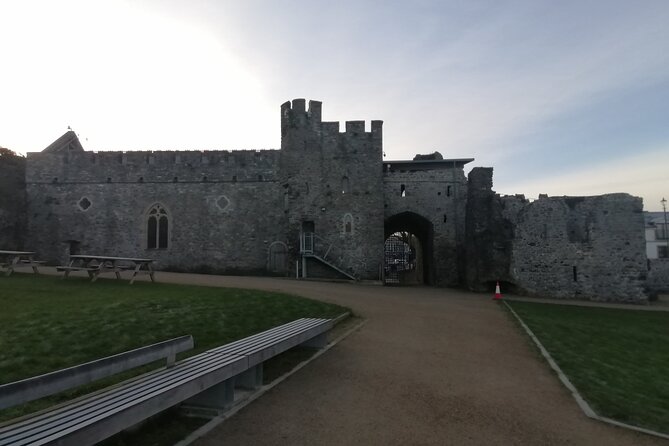
The walk begins at Swords Castle, where Tony introduces the site and its place in medieval Ireland. The castle was built around 1200 by the Anglo-Normans as an Archbishop’s Palace. That detail gives the visit more depth than a quick look at old stone walls. You are seeing a religious and political center, not just a defensive building.
The castle is the natural anchor for the walk. It gives you a clear starting point for understanding Swords, then the route widens to include the town’s earlier religious foundations. I like this order because you get the major medieval structure first, followed by smaller and older sites that show how the settlement developed.
Access can vary. One booking took place after a concert on the castle grounds, when cleanup prevented entry. Tony tried to find a way in, but the group instead spent more time at the separate church and tower site. That is worth keeping in mind if entering the castle itself is your main reason for booking.
Still, a temporary closure does not erase the value of the walk. The guide can place the castle in context and continue with other historic sites nearby. If you want a guaranteed interior visit, confirm current access before booking. If you want a broader introduction to Swords, the tour has enough material beyond the castle to remain worthwhile.
The Round Tower and Brian Ború’s 1014 victory
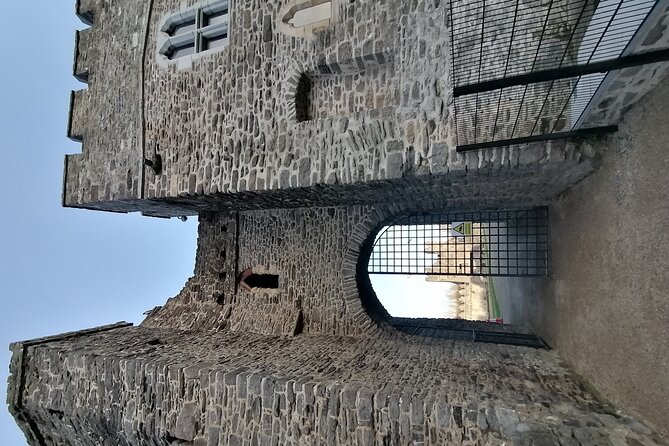
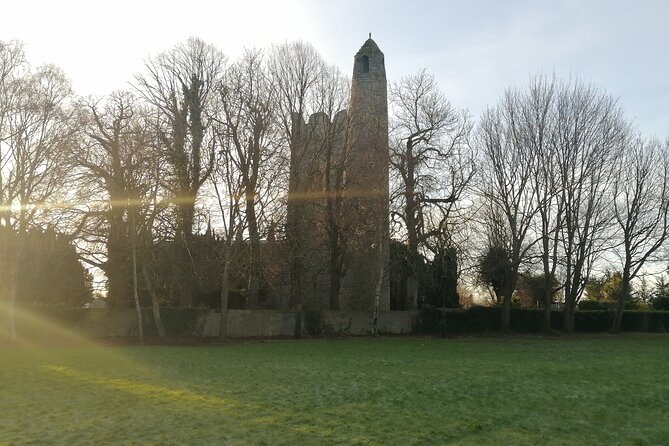
The Round Tower is one of the walk’s most memorable stops. These narrow stone towers are strongly linked with early Irish Christian sites, and this one helps shift the story back before the Anglo-Norman castle.
The tour connects the tower with Brian Ború, who was waked there after his army’s victory over the Vikings at the Battle of Clontarf in 1014. That is a powerful local link to one of Ireland’s best-known medieval conflicts. You are not only hearing about a battle fought elsewhere. You are learning how its aftermath was remembered in Swords.
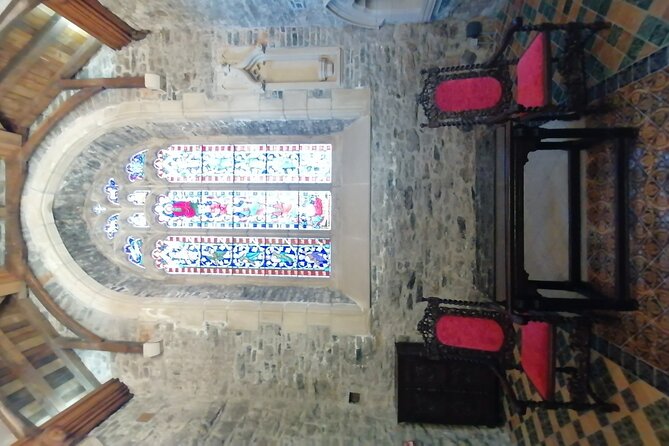
A separate church and tower site also appears in the walk, and one detailed account described the tower as dating to the ninth century. The information supplied for the experience does not give a full architectural guide, so you should expect Tony to supply the meaning and stories rather than a formal specialist survey of every stone.
That is a good fit for me. A local historian can help you see why a modest tower matters. Without that explanation, you might spend five minutes taking a photo and move on. With the story, the site becomes part of a much larger account of Irish kingship, Christianity, and Viking-era conflict.
The monastic settlement and Swords’ healing well
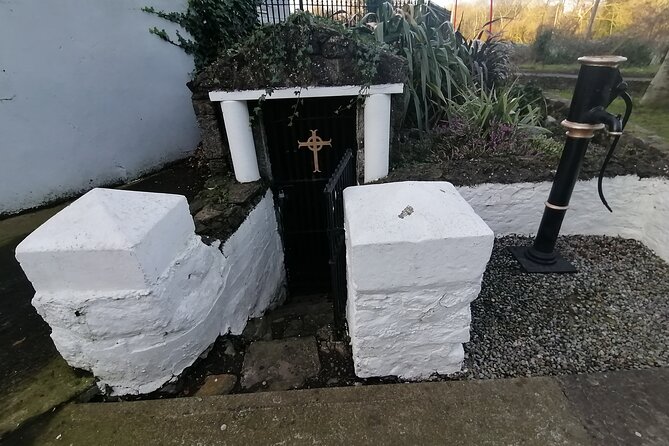
The tour also visits the monastic settlement connected with the origins of Swords. You will see the well associated with St. Colmcille, also known as Columba, and hear how the settlement grew around this sacred water source.
The well is especially useful for understanding the town’s name and beginnings. Swords is not presented simply as a later suburb or a place near the airport. Its identity is tied to a religious foundation and a spring believed to have healing power. That gives the town a strong sense of place, even if you have never heard of it before.
This part of the walk should appeal to you if you enjoy the quieter side of Irish history. The castle provides the obvious visual drama, but the well and monastic site explain why people gathered here in the first place. I often find that these smaller religious sites reveal more about daily life and local belief than a large fortress does.
The supplied details describe the well as blessed by St. Colmcille. The tour presents that tradition as part of Swords’ story. You should approach it as a piece of religious and local heritage, not as a modern attraction built around a staged legend.
A different side of Dublin on the same trip:
- Dublin to Cliffs of Moher, including Wild Atlantic Way and Galway
★ 5.0 · 23,331 reviews - From Dublin: Cliffs of Moher, Burren & Galway City Day Tour
★ 4.8 · 18,888 reviews - Dublin: Guinness Storehouse Entry Ticket
★ 4.6 · 16,863 reviews - Dublin to Cliffs of Moher, Burren, Wild Atlantic Way, Galway Tour
★ 5.0 · 12,924 reviews
Tony’s local approach to Swords
The guide is Tony O Donghaile, identified in the tour material as a local historian and described in one account as someone who grew up in Swords. That local connection is central to the experience. Tony is not simply reciting dates. He can answer questions about how the town’s sites fit together and why they matter to people from Swords.
The strongest feature here is the storytelling. The tour covers several periods: the early monastic settlement, the ninth-century tower and church site, the 1014 Battle of Clontarf connection, and the Anglo-Norman castle built around 1200. A guide is needed to turn that sequence into something understandable.
Tony also appears to communicate before the tour when needed. One party exchanged emails with him ahead of time to discuss details and ended up having a private tour. That does not mean every booking will be private, but it does suggest that direct communication can help sort out arrangements.
The maximum group size is listed as 100 people. That is a fairly high ceiling for a walking tour, and the actual group size may vary. If you prefer a quiet, small-group experience, ask about the expected numbers before you book. The guide’s local knowledge will still be useful, but a large group can make questions and movement less personal.
What two hours feels like on this walk
The advertised duration is about one to two hours, while the itinerary gives two hours for the Swords Castle visit and surrounding walk. I would plan on the full two hours rather than trying to squeeze it into a short gap.
That timing is enough for a focused introduction without turning the day into a history marathon. You can concentrate on the sites, listen to the stories, and still have time afterward to continue around Swords or head back toward Dublin.
The walk is described as suitable for most people, and service animals are allowed. It is also near public transportation. The supplied details do not specify the walking distance, terrain, or the exact number of indoor entries, so you should not assume a detailed accessibility plan beyond those points.
The experience is offered in English and uses a mobile ticket. That keeps the practical side simple. You can show your booking on your phone and meet at Bridge Street, rather than searching for a separate office or ticket booth.
Is $18.06 good value?
At $18.06 per person, this is a modestly priced guided walk. The admission charge for the itinerary is listed as free, so your payment mainly covers Tony’s time, local interpretation, and the convenience of having the historic sites linked into one route.
I think the value is strongest if you care about context. You can see a castle exterior or an old tower on your own, but the Battle of Clontarf connection, the Archbishop’s Palace story, and the origin of the healing well are easy to miss without guidance.
The price also works well for a short outing. You are not paying for a full-day excursion with transport from central Dublin. You are paying for a focused town walk that can fit around an airport schedule or an open afternoon.
There are limits. This is not a large museum visit, and the castle may not always be open for entry. If you want lavish interiors, major collections, or a long list of included attractions, spend your money elsewhere. If you want local stories and a simple way to understand Swords, the cost is fair.
Who will enjoy this Swords walk most
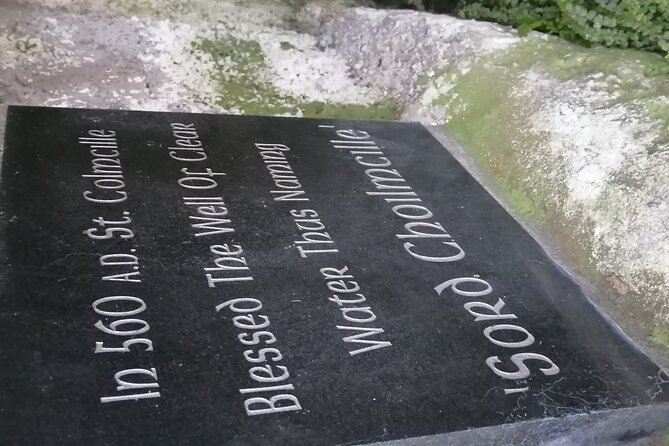
I would recommend it to history-minded visitors who have already seen central Dublin and want a less familiar place. It is also a good choice for you if medieval castles, Irish churches, local legends, and the early Christian period hold your attention.
Families may find the short format easier than a long museum tour, especially if children respond well to stories about castles, kings, Vikings, and healing wells. The tour is listed as suitable for most people, though the exact route and walking conditions are not described in detail.
It also suits airport-area visitors. If you are staying in Swords, the tour can help you get your bearings and understand the town beyond its modern role near Dublin Airport. If you are flying in or out, build in plenty of extra time and do not rely on the tour as a last-minute airport transfer.
I would be less likely to choose it if you have only a few hours in Dublin and have never seen the city center. Swords is a useful addition, not a replacement for Dublin’s main historic sights.
Booking details and a useful backup plan
You receive confirmation at the time of booking. The experience accepts mobile tickets, is offered in English, and is near public transportation. It returns to the Bridge Street meeting point, which makes onward planning easier.
Free cancellation is available if you cancel at least 24 hours before the start time. Cancellations or changes made less than 24 hours before the local start time are not accepted for a refund.
Because castle access can occasionally be affected by events or cleanup, I would keep an open mind about the order and balance of the walk. If the castle cannot be entered, the church, tower, monastic site, and well still provide a strong alternative route.
Should you book the Swords walking tour?
Book it if you want a short, local history walk rather than another standard Dublin attraction. Tony’s connection to Swords, the Round Tower story, and the well linked with St. Colmcille give the tour a clear sense of place.
The strongest reason to go is the combination of sites. You get an Anglo-Norman castle, an early Christian tower and church setting, a monastic settlement, and a sacred well in one compact outing. The main caution is that castle access may change, and the listed group limit of 100 could make the experience less intimate on a busy day.
For $18.06, I see this as a sensible add-on for history lovers, airport-area visitors, and anyone with an extra half-day near Dublin. If you want guaranteed castle entry or a major indoor attraction, check access first or choose a different tour. Otherwise, Swords offers a rewarding change of pace with plenty of stories packed into two hours.
FAQ
Where does the Swords walking tour begin?
The tour begins at Swords Castle on Bridge Street, Bridge Street, Townparks, Swords, County Dublin, Ireland.
Where does the tour finish?
The activity ends back at the meeting point.
How long does the tour last?
The experience lasts approximately one to two hours. The itinerary allows two hours for the walk.
What language is the tour offered in?
The tour is offered in English.
What does the tour include?
The walk includes Swords Castle, the Round Tower, a monastic settlement, a church and tower site, and the healing well associated with St. Colmcille.
Is admission to the sites included?
Admission is listed as free for the itinerary.
Can I cancel for a full refund?
Yes. You can cancel at least 24 hours before the experience start time for a full refund. Cancellations or changes made less than 24 hours in advance are not accepted for a refund.
Just added around Dublin
- Dublin: Pub Tour. Pour The Perfect Guinness, Whiskey & Music★ 5.0 · 3 reviews
- A Self Guided Walking Tour of Dublin’s Docklands★ 4.5 · 3 reviews
- Private Dublin City tour★ 5.0 · 3 reviews
- Waterford Crystal and Kilkenny Full-Day Rail Tour from Dublin★ 5.0 · 3 reviews
- Dublin One Day Tour with a Local: 100% Personalized & Private★ 4.5 · 3 reviews
- Secret and unusual Dublin: guided walking tour★ 5.0 · 3 reviews
- 5 Day Ireland’s South−East Including Admission from Dublin★ 4.5 · 3 reviews
- Turtle Bunbury’s Dublin: A Self-Guided Audio Tour from a Celebrated Author★ 5.0 · 3 reviews
Walking Tours, compared.
Dublin Highlights and Hidden Gems Guided Walking Tour
Read our review →
90 Minute Dublin Walking tour and Sightseeing tips
Read our review →

Dublin Traditional Irish 3 Course Meal Walking Tour with Local
Read our review →
Browse the lists this tour appears in