
Reviewed · WALKING TOURS
Small Group-Dublin Walking Tours
Dublin reveals itself best on foot, where Viking beginnings, Georgian streets, old churches, political landmarks, and lively pub quarters sit within a compact city center. This two-hour walk with Damian McGrath links those places with history, music, and the occasional skit rather than simply pointing at buildings.
I like the small maximum of eight people, which gives you room to ask questions and makes the walk feel personal. I also like the route’s useful mix of major sights and lesser-known stories, including Bram Stoker’s wedding church and the connection between Leinster House and the White House.
The main consideration is pace. You cover a lot of ground in two hours, often over cobblestones, and most stops are brief outdoor visits rather than long indoor tours. Wear good shoes and treat this as a city orientation, not a full tour of Dublin’s museums and monuments.
In This Review
- Key points to know before you book
- Starting behind Dublin Castle at Chester Beatty
- Dublin Castle and the city’s early foundations
- Christ Church Cathedral and Dublin’s Viking chapter
- Temple Bar, Ha’penny Bridge, and the River Liffey
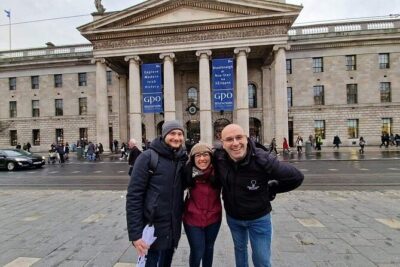
- O’Connell Bridge and the memory of 1916
- Trinity College and Parliament House
- St. Anne’s Church, Bram Stoker, and Grafton Street
- Leinster House and Ireland’s political center
- St. Stephen’s Green and the city’s Georgian side
- Powerscourt Townhouse Centre and the finish
- What the small group changes
- Is $60.47 good value for two hours?
- Pace, shoes, and practical planning
- Who should book this Dublin walk?
- Should you book Small Group-Dublin Walking Tours?
- FAQ
- How long does the Dublin walking tour last?
- Where does the tour begin?
- Where does the tour finish?
- How many people can join the tour?
- Is the tour offered in English?
- Can I cancel for a full refund?
Key points to know before you book
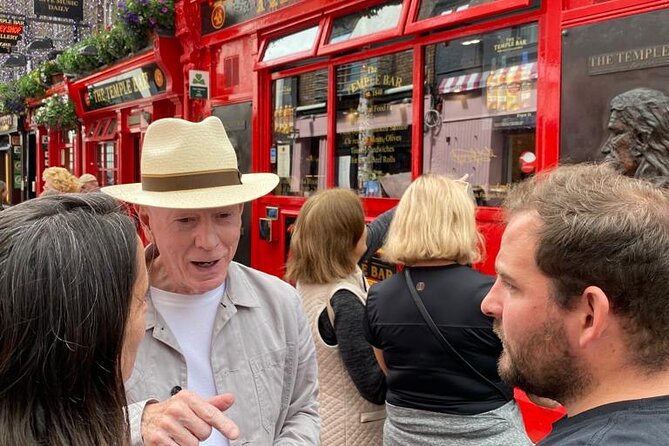
- Damian McGrath leads a personal, story-driven walk: Music, historical anecdotes, and short performances are part of his approach.
- The group is capped at eight people: You get a better chance to hear the guide and shape the conversation.
- The route covers central Dublin’s essential first-day sights: Dublin Castle, Christ Church Cathedral, Temple Bar, Trinity College, St. Stephen’s Green, and more.
- You see Dublin’s past in layers: Viking origins, church history, the 1916 Easter Rising, Georgian architecture, Irish politics, and modern city life all appear along the way.
- The two-hour length is useful for a first day: You get your bearings without giving up half a day.
- The walk ends near shops and cafés: Powerscourt Townhouse Centre is a practical place to continue exploring after the tour.
Starting behind Dublin Castle at Chester Beatty
You meet at the Chester Beatty Library, in the Dubh Linn Garden behind Dublin Castle. This is a sensible starting point because it is easy to find and places you close to one of Dublin’s key historic sites before the walking begins.
The first few minutes set up the story of Dublin itself. You learn how the city’s name connects with the dark pool that once shaped this part of town, and how the original setting differed from the streets you see today. That opening gives the rest of the walk a useful frame: Dublin is not just a collection of handsome buildings, but a city shaped by water, trade, invasion, religion, and government.
You do not pay an extra admission fee at this stop, but the tour is not presented as a full visit inside the Chester Beatty Library. If you want to explore its collections, plan a separate visit.
More walking tours in Dublin:
- Dublin Highlights and Hidden Gems Guided Walking Tour
★ 5.0 · 6,020 reviews - Dublin: Highlights and Hidden Gems Walking Tour
★ 4.9 · 2,140 reviews - 1916 Rebellion Walking Tour
★ 5.0 · 1,605 reviews
Dublin Castle and the city’s early foundations
The walk continues around the gardens and grounds of Dublin Castle. This is a good place to hear how power was organized in Dublin and how the city developed around its earliest settlement.
The castle area also helps you picture the old city’s physical setting. Damian connects the name of Dublin with its original surroundings, so the information is more than a list of dates. You get a sense of why this patch of ground mattered.
The stop is short, about ten minutes. That works well if you want an overview, but it will feel too brief if you are hoping for a detailed architectural tour of the castle. I would save a return visit for another day if the castle is high on your list.
Christ Church Cathedral and Dublin’s Viking chapter
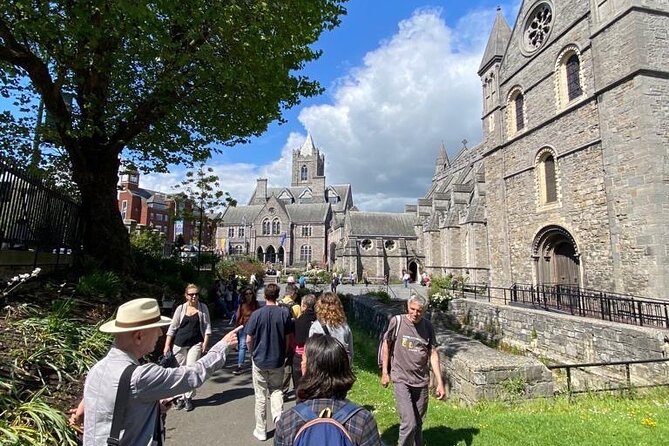
At Christ Church Cathedral, Damian discusses the history of the Catholic Church in Ireland and points out the venue connected with the first performance of Handel’s Messiah. You also hear how Dublin’s story reaches back to the Viking invasions from the north.
This is one of the route’s strongest history sections because the cathedral is not treated as an isolated monument. It becomes part of a larger story involving faith, music, settlement, and political change.
The stop is mainly a pass-by with time to look and listen outside. Admission is not included because there is no paid interior visit built into the walk. If you want to see the cathedral’s interior, you will need to arrange that separately.
Temple Bar, Ha’penny Bridge, and the River Liffey
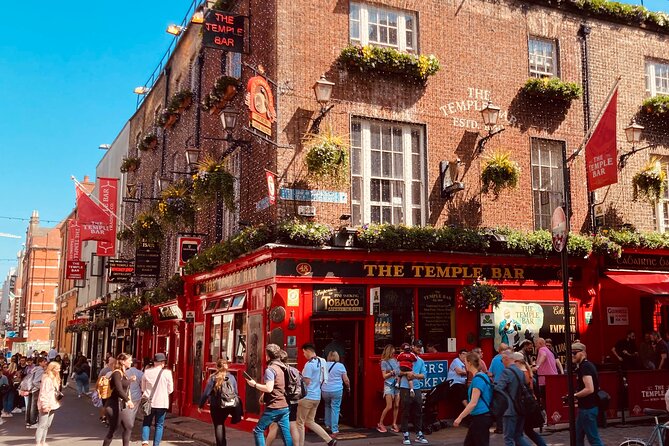
Temple Bar brings you into modern Dublin’s best-known nightlife quarter. You see the area during the day, then hear how it became the place many people associate with pubs, live music, and a pint in the evening.
I appreciate that this part of the walk does not pretend Temple Bar is a quiet medieval district. It is a popular social area, often crowded and tourist-oriented, but it remains an important part of how Dublin presents itself today. Damian helps place the nightlife beside the older foundations of the city.
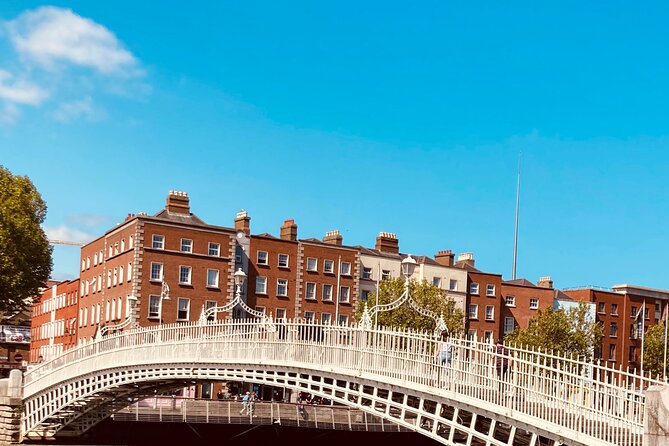
From here, you cross the picturesque Ha’penny Bridge. The bridge provides a change of pace and a clear view of the River Liffey, while the commentary turns toward trade, travel, and the growth of the town center.
This is one of the longer stops at about fifteen minutes, though the full route involves walking between every location. Expect people, traffic, uneven paving, and plenty to look at. Keep your shoes comfortable and your attention on the group while crossing busy streets.
A different side of Dublin on the same trip:
- Dublin to Cliffs of Moher, including Wild Atlantic Way and Galway
★ 5.0 · 23,331 reviews - From Dublin: Cliffs of Moher, Burren & Galway City Day Tour
★ 4.8 · 18,888 reviews - Dublin: Guinness Storehouse Entry Ticket
★ 4.6 · 16,863 reviews - Dublin to Cliffs of Moher, Burren, Wild Atlantic Way, Galway Tour
★ 5.0 · 12,924 reviews
O’Connell Bridge and the memory of 1916
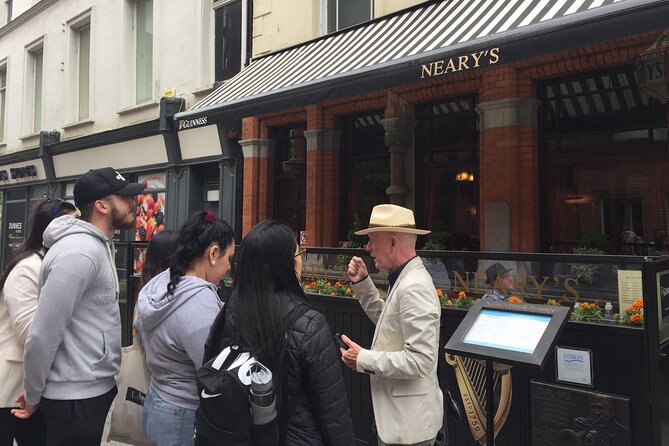
At O’Connell Bridge, you see the statue of Daniel O’Connell, the Irish parliamentarian whose name is attached to the bridge. Damian also talks about the River Liffey and the famous Liffey Swim.
This section moves toward the center of modern Irish political memory. You are approaching the area associated with the 1916 Easter Rising, so the bridge is more than a crossing point. It helps connect Dublin’s public spaces with the country’s struggle for self-government.
The stop lasts roughly ten minutes. It is short, but the location gives you a useful orientation to the river and the central streets. I find this kind of stop valuable early in a Dublin visit because it helps you understand how close together the city’s major civic landmarks are.
Trinity College and Parliament House
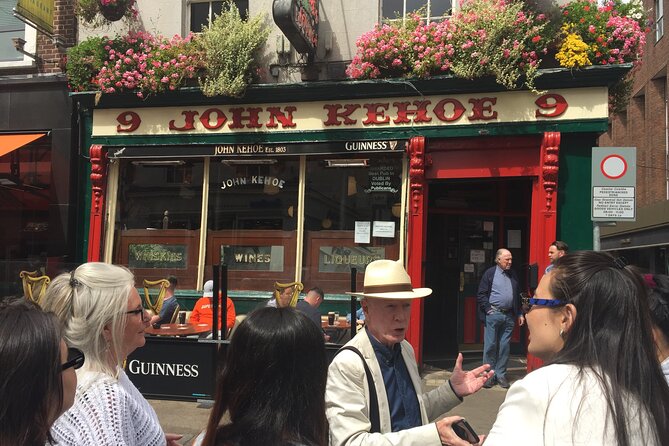
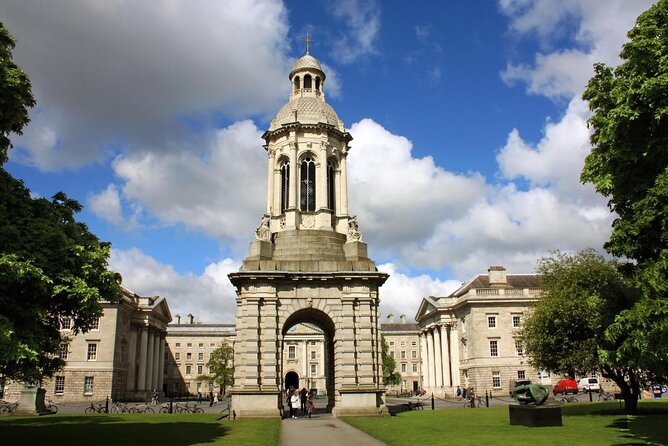
At Trinity College Dublin, you enter the courtyard for a few minutes and view the university’s original architecture. Damian explains the university’s place in Irish life and points to well-known figures who studied there.
You should understand the limits here. This is not a full Trinity College tour, and it does not include a visit to the Book of Kells. You get a quick look at the grounds and a clear explanation of why the college matters, then you can return later if you want more time.
The route also gives you a view of the old House of Lords, known as Parliament House, along Dame Street. This pairing works well: Trinity represents education and intellectual life, while Parliament House points to Ireland’s political past.
The stop is about ten minutes. That is enough to get your bearings and take in the architecture, but not enough for a slow visit or extended photography session.
St. Anne’s Church, Bram Stoker, and Grafton Street
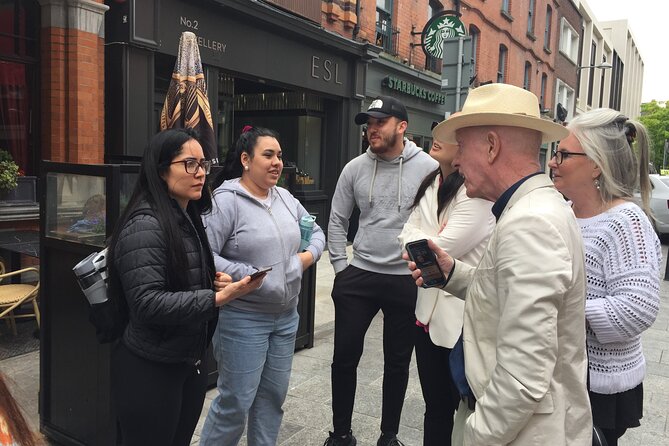
Outside St. Anne’s Church on Dawson Street, you hear about the wedding of Bram Stoker, the Irish writer associated with Dracula. The route later passes along Kildare Street, where you also learn about his original home.
These details give the walk a lighter human touch. Dublin’s history is not only about rulers, rebellions, and institutions. Writers, weddings, cafés, and ordinary city streets also leave their mark.
From St. Anne’s, the walk moves toward Bewley’s Café on Grafton Street. The café is ornate and sits on one of the city center’s best-known shopping streets. Grafton Street is a useful place to understand Dublin’s present-day rhythm, with shops, street activity, and easy access to nearby sights.
This section is especially helpful if you want to continue exploring after the tour. You can return to Grafton Street for shopping or use it as a route toward St. Stephen’s Green.
Leinster House and Ireland’s political center
Kildare Street brings two important subjects together. You see Leinster House, home of the Irish houses of parliament, and pass the National Museum of Archaeology.
Damian explains Leinster House’s connection with the White House in Washington, DC, along with some of its history. That comparison gives you an immediate way to understand the building’s wider political importance.
The stop is outside, so you should not expect a parliamentary interior visit. Still, the location makes sense in the larger route. After hearing about Dublin’s Viking origins, churches, writers, and rebellion, you reach the institutions that represent the modern Irish state.
This is also a good reminder that the tour is built around a chain of views and stories. You are not entering every building. You are learning what to notice, then deciding which places deserve a longer return visit.
St. Stephen’s Green and the city’s Georgian side
The route reaches St. Stephen’s Green after taking in Grafton Street, the Royal College of Surgeons, and examples of Georgian-era architecture. The park offers a welcome pause from the hard streets and busy crossings of central Dublin.
You also see the high-end shopping district from a different angle. Grafton Street is not just a retail strip. It helps show how Dublin’s old center remains a working part of the city, with historic buildings beside shops and cafés.
The stop at St. Stephen’s Green lasts around fifteen minutes. That gives you time to look across the park and note the surrounding architecture, but not enough for a full circuit. If you enjoy parks or Georgian streets, mark this area for a return walk.
The Royal College of Surgeons adds another layer to the stop. You may not remember every institutional detail, but you will understand how education, medicine, shopping, and public green space sit close together in Dublin.
Powerscourt Townhouse Centre and the finish
The tour ends at Powerscourt Townhouse Centre on South William Street, between South William Street and Clarendon Street. This former townhouse is an architectural highlight, now filled with boutique shops and a café and restaurant beneath its striking atrium.
I like this ending because it leaves you somewhere useful rather than beside an anonymous street corner. You can stop for food, browse the shops, or continue toward Temple Bar, Grafton Street, and other central sights.
The finish also gives you a practical choice. If the walk has sparked an interest in Georgian buildings, shopping, or Dublin cafés, you can stay in the area. If you are tired, you are already in a central part of town with public transportation nearby.
What the small group changes
With a maximum of eight people, the walk has a more conversational feel than a large city tour. Damian can answer questions, adjust the discussion, and keep an eye on the group without relying on a loudspeaker.
That small size also helps with the route’s personal touches. Music is matched to the sights and, at times, Damian uses short skits or performances to keep the history moving. This will suit you if you like stories delivered with warmth and humor rather than a formal lecture.
The style may not suit everyone. If you prefer silent sightseeing, lengthy building visits, or a strict academic presentation, the music and performance elements may feel like more than you want. For families, though, the approach can help hold the attention of children. The route has also worked well for people who need a considerate pace, though you should still be comfortable walking for about two hours.
Is $60.47 good value for two hours?
At $60.47 per person, this is not the cheapest way to walk around Dublin. You can see many of these streets and buildings without paying for a guide.
The value comes from the structure and interpretation. Instead of wandering between sights and trying to connect them yourself, you get one route linking Viking Dublin, church history, Temple Bar, the Liffey, the 1916 period, Trinity College, Irish politics, Georgian architecture, and modern city life.
The group limit matters here. A larger tour might cost less per person, but you would have less room for questions and less flexibility around your interests. You are also paying for a short, focused introduction rather than a full-day commitment.
I see the tour as good value if you are visiting Dublin for the first time, have a short stay, or want help choosing where to spend the rest of your time. It is less useful if you already know central Dublin well or want admission to major attractions included in the price.
Pace, shoes, and practical planning
The advertised duration is about two hours, and the individual stops are generally ten to fifteen minutes. The route covers a lot of ground, so you should expect a steady pace.
Wear comfortable shoes. Cobblestones, city sidewalks, bridges, and frequent street crossings are part of the experience. The tour is near public transportation, begins at an easy-to-find point at Dublin Castle, and finishes at Powerscourt Townhouse Centre.
The tour is offered in English and uses a mobile ticket. Service animals are allowed, and most people can participate. If you have a mobility concern, contact the provider before booking so you can discuss the walking demands and the route.
You can cancel for a full refund up to 24 hours before the start time. Changes or cancellations made inside that window are not accepted for a refund.
Who should book this Dublin walk?
I would choose this tour for a first morning or first afternoon in Dublin. It gives you a mental map of the center and points out places you may want to revisit, including Trinity College, St. Stephen’s Green, Temple Bar, and the National Museum area.
It is also a good fit for families and small groups who want history without a long formal lecture. Damian’s music, humor, and short performances add energy, while the small size leaves room for questions and personal interests.
I would look elsewhere if your main goal is to go inside Dublin Castle, Christ Church Cathedral, Trinity’s library, or the National Museum. Those attractions need separate time. This walk shows you where they are and explains why they matter, but it does not replace a full interior visit.
Should you book Small Group-Dublin Walking Tours?
Book it if you want a lively, compact introduction to central Dublin led by Damian McGrath, especially at the start of your trip. The combination of eight-person maximum, thoughtful route planning, music, and local stories gives you more than a simple checklist of landmarks.
Skip it if you dislike a brisk walking pace or want substantial time inside each attraction. For everyone else, the tour offers a useful first look at Dublin, with enough specific history and practical orientation to make the rest of your stay easier to plan.
FAQ
How long does the Dublin walking tour last?
The tour lasts approximately two hours. The route includes ten stops, with most individual visits lasting about ten minutes and the longer stops lasting about fifteen minutes.
Where does the tour begin?
The tour begins at the Chester Beatty Library in the Dubh Linn Garden behind Dublin Castle, at Castle Street in Dublin 2.
Where does the tour finish?
The tour ends at Powerscourt Townhouse Centre at 59 William Street South in Dublin 2, between South William Street and Clarendon Street.
How many people can join the tour?
The group has a maximum of eight travelers.
Is the tour offered in English?
Yes. The tour is offered in English, and you receive a mobile ticket.
Can I cancel for a full refund?
Yes. You can cancel at least 24 hours before the experience start time for a full refund. Cancellations or changes made less than 24 hours before the start time are not accepted for a refund.
Just added around Dublin
- Dublin: Pub Tour. Pour The Perfect Guinness, Whiskey & Music★ 5.0 · 3 reviews
- A Self Guided Walking Tour of Dublin’s Docklands★ 4.5 · 3 reviews
- Private Dublin City tour★ 5.0 · 3 reviews
- Dublin One Day Tour with a Local: 100% Personalized & Private★ 4.5 · 3 reviews
- Waterford Crystal and Kilkenny Full-Day Rail Tour from Dublin★ 5.0 · 3 reviews
- Secret and unusual Dublin: guided walking tour★ 5.0 · 3 reviews
- 5 Day Ireland’s South−East Including Admission from Dublin★ 4.5 · 3 reviews
- Turtle Bunbury’s Dublin: A Self-Guided Audio Tour from a Celebrated Author★ 5.0 · 3 reviews
Walking Tours, compared.
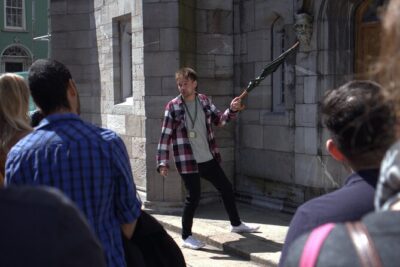
Dublin Highlights and Hidden Gems Guided Walking Tour
Read our review →
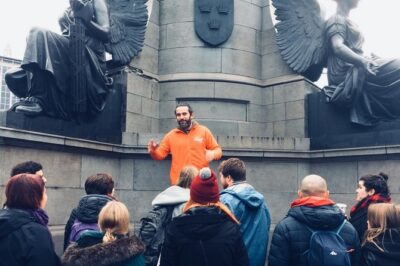
90 Minute Dublin Walking tour and Sightseeing tips
Read our review →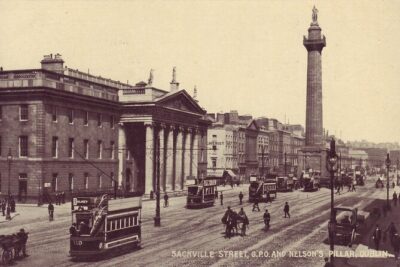

Dublin Traditional Irish 3 Course Meal Walking Tour with Local
Read our review →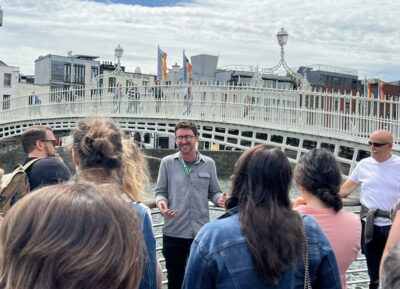
Browse the lists this tour appears in