
Reviewed · WALKING TOURS
Private Walking Tour in Dublin
Dublin’s story comes into focus on this private walking tour, which links Viking settlement, medieval churches, British rule, the 1916 Easter Rising, and modern city life in one compact route. You begin at Trinity College and finish beside the Molly Malone statue, with eleven central stops along the way.
I like the way the tour gives you a quick map of Dublin before you spend time exploring on your own. I also like the flexible format: guides such as Francesca, John, Sinead, and Yvonne have been praised for answering questions, adjusting the walk, and making the outing work for families. The main drawback is that several important interiors cost extra, so the $90.11 per-person price is for guiding rather than a fully ticketed sightseeing package.
In This Review
- Key points to know before booking
- Why this walk works as a first look at Dublin
- Trinity College and the city’s literary side
- The GPO, the Spire, and modern O’Connell Street
- Crossing the Liffey at Ha’penny Bridge
- Temple Bar beyond the pub signs
- Viking Dublin at Wood Quay
- Christ Church Cathedral and medieval Dublin
- St. Patrick’s Cathedral in the Liberties
- Dublin Castle and centuries of British rule
- George’s Street Arcade and Dublin’s everyday character
- Ending with Molly Malone
- What the $90.11 price gives you
- Timing, comfort, and who should book
- Should you book this Dublin walking tour?
- FAQ
- How long does the private Dublin walking tour last?
- Where does the tour begin?
- Where does the tour end?
- Is the tour private?
- Are admission fees included?
- What language is the tour offered in?
Key points to know before booking
- Eleven central sights in two to three hours: The route covers major Dublin landmarks without requiring buses or taxis between stops.
- A private guide for your group: You can ask questions freely and may be able to shape parts of the walk around your interests.
- Strong historical range: The route moves from Viking Dublin to the 1916 Rising, British administration, Georgian architecture, and modern city culture.
- Admission fees are separate: Trinity College, the GPO Museum, Christ Church Cathedral, St. Patrick’s Cathedral, and Dublin Castle do not include entry.
- A useful first-day orientation: The tour ends near central shopping, pubs, restaurants, and public transport, making it easy to continue exploring.
- Good fit for families and first-time visitors: John is specifically praised for accommodating children aged six and eight, while other guides are noted for personal recommendations.
Why this walk works as a first look at Dublin
Dublin is compact, but its past is not simple. A few streets can take you from a university founded by Elizabeth I to a Viking settlement, a medieval cathedral, a former seat of British power, and a market arcade still filled with small shops.
That makes this route useful early in a Dublin stay. You get the city’s basic shape and several strong clues about its past, then you can return to the places that catch your interest. The walk is not built around long museum visits. It is built around explanation, questions, and seeing how the parts of the city fit together.
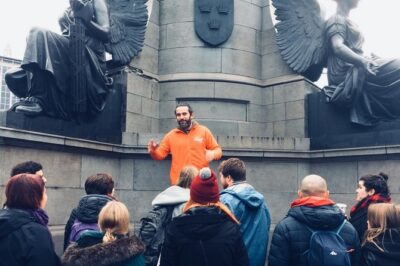
The private format matters here. On a large group outing, a guide has to keep moving at one pace. With only your group taking part, you can ask about Irish independence, church architecture, literary figures, Viking settlement, or practical plans for the rest of the day.
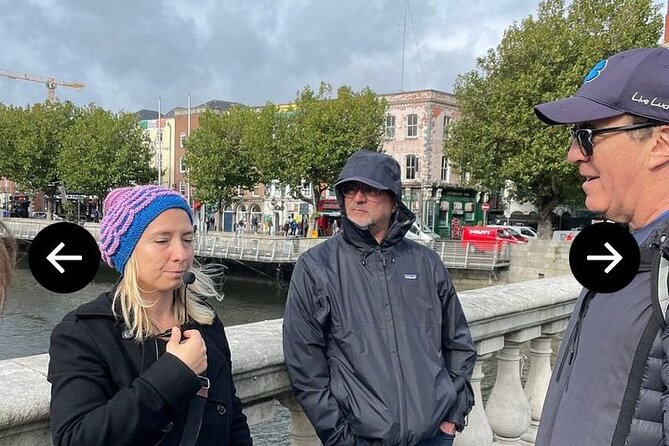
The guides named in the feedback include Francesca, John, Sinead, and Yvonne. You are not guaranteed a particular person unless the booking arrangement confirms it, but the praise is consistent on the points that matter most: clear explanations, friendly manner, strong command of Irish history, and a willingness to adapt the walk.
More walking tours in Dublin:
- Dublin Highlights and Hidden Gems Guided Walking Tour
★ 5.0 · 6,020 reviews - Dublin: Highlights and Hidden Gems Walking Tour
★ 4.9 · 2,140 reviews - 1916 Rebellion Walking Tour
★ 5.0 · 1,605 reviews
Trinity College and the city’s literary side
The tour begins at Trinity College Dublin on College Green. Founded in 1592 under Queen Elizabeth I, the university has more than 20,000 people working and studying there, giving it the feel of a small district within the city.
The planned visit here lasts about 20 minutes. That is enough for an introduction to the college and its place in Irish life, but not enough for a full campus visit or an extended look at the Old Library. Admission is not included, so you should treat this stop as an exterior and orientation visit unless you decide to pay separately.
Trinity’s famous former students include Oscar Wilde, Bram Stoker, and Jonathan Swift. Those names help explain why the college matters beyond its buildings. It connects Dublin’s academic past with the city’s literary identity.
If literature interests you, use this first stop to ask your guide for context about Dublin’s writers. If you want to see ticketed interiors, allow extra time and budget beyond the walking tour itself.
The GPO, the Spire, and modern O’Connell Street
The GPO Museum is one of the most meaningful stops on the route. The elegant Georgian building became a symbol of Irish independence after members of the Irish Volunteers and Irish Citizen Army seized it during the 1916 Easter Rising.
The bullet marks from the fighting remain on the front pillars. That physical detail gives the political story a human scale. Instead of hearing only about dates and leaders, you can look at the building and see evidence of the conflict.
The planned stop is about 15 minutes, and museum admission is not included. That timing works for an outside explanation. If you want the full museum experience, set aside additional time for a separate visit.
Five minutes later, you reach the Spire, officially called the Monument of Light. At 120 metres tall and three metres wide at its base, it is hard to miss. It was built to mark the new millennium and provides a sharp contrast to Dublin’s older churches, Georgian buildings, and medieval streets.
This is a brief photo and orientation stop rather than a major sightseeing visit. The Spire also helps you understand the layout of the city center. It is a useful visual marker if you continue exploring on your own afterward.
Crossing the Liffey at Ha’penny Bridge
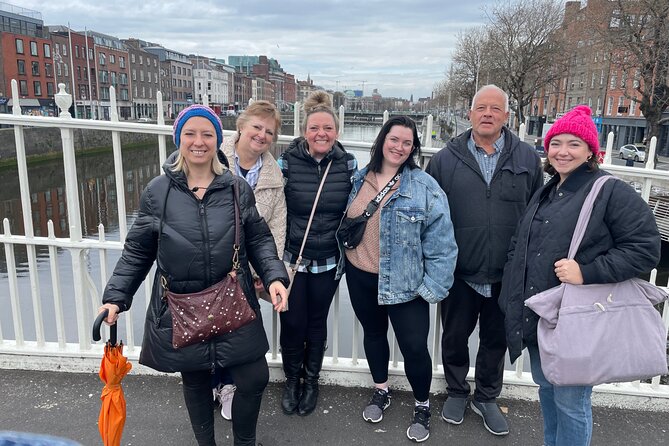
The Ha’penny Bridge is officially the Liffey Bridge, but its familiar name comes from the half-penny toll once charged to cross it. Built in 1816, it was Dublin’s first pedestrian bridge.
The stop lasts around five minutes. That may sound short, but the bridge works best as part of the moving route. You cross or pause near the river, look at the relationship between the north and south sides, and hear how a small piece of infrastructure became one of Dublin’s best-known symbols.
Do not expect a long river walk here. The value is in the setting and the story. The bridge also brings you toward Temple Bar, one of the city’s most recognizable districts.
A few more Dublin tours worth weighing up
- The Dublin Private Walking Tour
★ 5.0 · 701 reviews - Private Dublin Arrival Transfer – Airport to Hotel / Accommodation
★ 3.5 · 304 reviews - Private (Nearly!) All of Dublin in 5 hours (Walking Tour)
★ 5.0 · 281 reviews - Cliffs of Moher Private Award Winning Luxury Mercedes Car Tour
★ 5.0 · 176 reviews
Temple Bar beyond the pub signs
Temple Bar is Dublin’s best-known nightlife and cultural area. The route takes about 15 minutes to show you the old neighborhood, its famous pubs, traditional music venues, and restaurants serving Irish food.
This is a place where a guide’s local advice can be especially useful. You can ask which streets are worth returning to, where traditional music is played, and which places might suit your plans. The tour does not include a meal or pub stop, so think of this as a short introduction rather than a food tour.
Temple Bar can feel crowded and commercial, particularly around its most famous streets. That is part of the area’s character, but it may not be the quietest or most relaxed part of Dublin. A private guide can help you look beyond the most obvious pub fronts and understand how the district fits into the older city.
Viking Dublin at Wood Quay
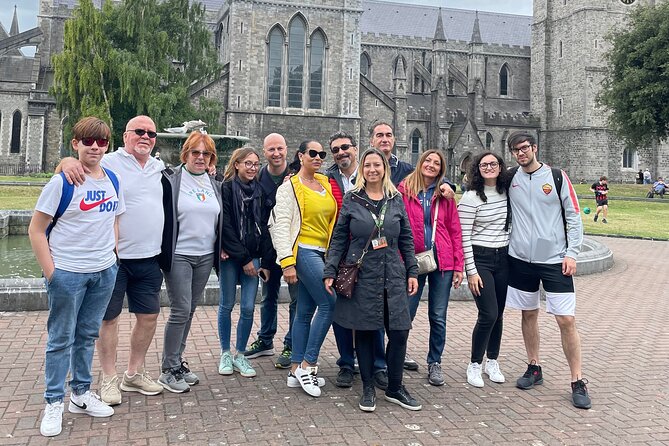
At Wood Quay Amphitheatre, the focus shifts far back in time. Archaeologists discovered one of the largest Viking settlements outside Scandinavia near the foot of the hill leading toward Christ Church, during work connected with Dublin’s new City Hall.
The Vikings first arrived as raiders and traders, then settled permanently in Dublin in 841 AD. This stop lasts about 15 minutes and is mainly about placing that settlement on the modern city map.
I find this kind of stop valuable because little of the original settlement is visible in the ordinary way. The guide’s explanation supplies the connection between today’s streets and the archaeological evidence beneath them. It also prevents Dublin’s story from becoming only a sequence of English rule and Irish independence. The city was already an important settlement long before the later political struggles.
Christ Church Cathedral and medieval Dublin
Christ Church Cathedral sits in the heart of Dublin’s medieval district. It began as a Viking church and has welcomed pilgrims and visitors for almost 1,000 years.
The planned stop is 15 minutes, with admission separate. That is enough to hear why the cathedral matters and to identify its major features, but you should not expect a full interior visit within the walking schedule. If you want to see Strongbow’s tomb and the copy of the Magna Carta, plan to pay for entry and allow more time.
Christ Church is especially useful for understanding the layers of Dublin. The Viking connection, medieval religious role, and later political importance all meet in one building. It is also a natural bridge between the archaeological story at Wood Quay and the religious and civic history that follows.
St. Patrick’s Cathedral in the Liberties
St. Patrick’s Cathedral is in the Liberties, an area with a strong local identity and a long connection to Dublin’s working life. The present building was completed between 1225 and 1270 in honor of Ireland’s patron saint.
The site is linked with the story of St. Patrick baptizing Irish Gaelic people and converting them to Christianity. Inside, the cathedral includes the tomb of Jonathan Swift and other historic objects.
Again, admission is not included, and the scheduled stop is about 15 minutes. The walk gives you the context. A separate paid visit gives you the time to examine the Gothic architecture and interior details.
The short timing is the clearest limitation of the route. You see a lot, but you cannot fully explore both major cathedrals, the museum, Trinity, and Dublin Castle during a two to three-hour walk. I would use the tour to decide which interiors deserve a return visit.
Dublin Castle and centuries of British rule
Dublin Castle was the seat of the viceroy, the representative of the English monarch in Ireland, for more than 700 years. That makes it central to understanding how Ireland was governed before independence.
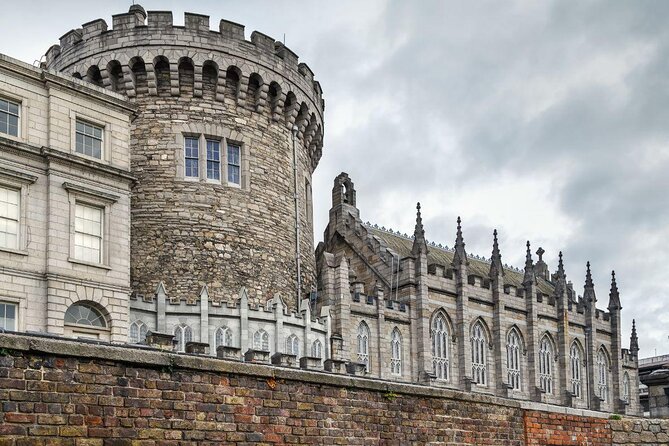
Only the Record Tower remains from the original medieval castle. The other major architectural elements are 18th-century State Apartments. This gives the site an unusual mix of medieval survival and later official grandeur.
The scheduled stop lasts about 20 minutes, with entry not included. That is enough for a strong explanation from outside and a look at the castle complex. If you want the State Apartments or a more detailed visit, you will need extra time and a separate ticket.
For me, this is one of the most important historical stops because it helps explain why the GPO and 1916 Rising matter. The tour places the former center of British administration alongside the building that became a symbol of Irish freedom.
George’s Street Arcade and Dublin’s everyday character
George’s Street Arcade sits in Dublin’s creative quarter and has operated for almost 140 years as part of the South City Market buildings. It is Dublin’s oldest shopping center and one of the city’s best examples of Victorian architecture.
The stop lasts only about five minutes. That makes sense if you are walking through the arcade, seeing its shopfronts and stalls, and getting a quick suggestion about returning later. It is not a long shopping session.
This stop adds a useful change of pace. After universities, churches, castles, and political landmarks, you see a working commercial space. The small shops and stalls show a more ordinary side of central Dublin, and the arcade is a good place to browse after the tour if something catches your eye.
Ending with Molly Malone
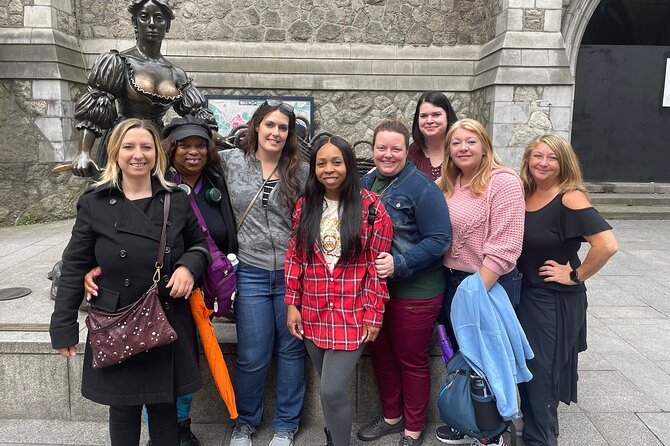
The tour ends at the Molly Malone statue on Suffolk Street. The statue was unveiled in 1988 to mark Dublin’s first millennium and represents the character from the famous song that has become an unofficial Dublin anthem.
The story is not entirely settled. One theory suggests Molly Malone may have been based on a real woman who died in Dublin in 1699, but there is no certainty that the song’s character existed as described.
The final stop lasts about five minutes. It is a practical ending point because you are still in central Dublin, close to other sights, shops, restaurants, and pubs. You can finish with a photograph, continue sightseeing, or follow the guide’s suggestions for the rest of your day.
What the $90.11 price gives you
At $90.11 per person, this is not the cheapest way to see Dublin’s streets. The value depends heavily on group size. Since the activity is private, a couple or family receives a more personal experience than it would on a standard group walk. A larger private group may find the per-person cost easier to justify.
You are paying for a guide’s time, explanations, route planning, and ability to respond to your questions. You are not paying for admission to the GPO Museum, Trinity College, Christ Church Cathedral, St. Patrick’s Cathedral, or Dublin Castle.
That distinction matters. If you want a low-cost walk with no paid entries, this may feel expensive. If you want a personal introduction on your first day, especially with children or mixed interests in the group, the cost can make sense.
The strongest value comes from the route’s range. In a short time, you cover the university quarter, O’Connell Street, the River Liffey, Temple Bar, Viking Dublin, the medieval district, the Liberties, Dublin Castle, a Victorian arcade, and a popular city symbol.
Timing, comfort, and who should book
The walk lasts approximately two to three hours. The itinerary has many short stops, including several of five minutes, so expect steady movement rather than long periods at one attraction.
Wear comfortable shoes and keep your schedule flexible after the tour. The walk finishes at Molly Malone, not back at Trinity College. The route is near public transportation, and service animals are allowed. Most people can take part, though anyone who needs frequent rest should consider the pace and the number of stops.
This tour suits:
- First-time visitors who want a clear introduction to central Dublin
- Couples who prefer a private guide to a large group
- Families, especially since John has been praised for working well with children aged six and eight
- History-minded visitors who want Irish political, religious, Viking, and literary context
- People who want advice for the rest of their stay
It may suit you less if you want long interior visits, a food tasting, or a slow photography walk. The route is broad rather than deep. You see many important places, then choose where to return.
The experience requires good weather. If poor weather cancels the walk, you are offered another date or a full refund. You can also cancel for a full refund up to 24 hours before the start time. Changes or cancellations inside that 24-hour window are not accepted.
Should you book this Dublin walking tour?
Book it if you want a private first-day orientation that explains how Dublin’s major sights connect. The route gives you strong historical coverage, and the guide can answer questions that a self-guided walk cannot.
I would especially consider it for a family, a couple sharing different interests, or anyone with only a short stay. The ability to ask for recommendations and adjust the conversation is a real advantage. The guides praised by name, including Francesca, John, Sinead, and Yvonne, are associated with the friendly, adaptable approach you want from a private walk.
Skip it if your main goal is to spend hours inside Trinity College, the GPO Museum, both cathedrals, and Dublin Castle. The admission fees are separate, and the schedule leaves only brief visits at each stop.
For most first visits, I see this as a useful way to get your bearings, learn the major chapters of Dublin’s story, and gather ideas for the rest of your time in the city.
FAQ
How long does the private Dublin walking tour last?
The tour lasts approximately two to three hours.
Where does the tour begin?
It begins at Trinity College Dublin on College Green, Dublin 2, Ireland.
Where does the tour end?
It ends in front of the Molly Malone statue on Suffolk Street, Dublin 2.
Is the tour private?
Yes. Only your group takes part in the activity.
Are admission fees included?
No. Admission is not included for Trinity College, the GPO Museum, Christ Church Cathedral, St. Patrick’s Cathedral, or Dublin Castle. The Spire, Ha’penny Bridge, Temple Bar, Wood Quay Amphitheatre, George’s Street Arcade, and Molly Malone statue have no admission fee listed.
What language is the tour offered in?
The tour is offered in English.
Just added around Dublin
- Dublin: Pub Tour. Pour The Perfect Guinness, Whiskey & Music★ 5.0 · 3 reviews
- A Self Guided Walking Tour of Dublin’s Docklands★ 4.5 · 3 reviews
- Private Dublin City tour★ 5.0 · 3 reviews
- Dublin One Day Tour with a Local: 100% Personalized & Private★ 4.5 · 3 reviews
- Waterford Crystal and Kilkenny Full-Day Rail Tour from Dublin★ 5.0 · 3 reviews
- Secret and unusual Dublin: guided walking tour★ 5.0 · 3 reviews
- 5 Day Ireland’s South−East Including Admission from Dublin★ 4.5 · 3 reviews
- Turtle Bunbury’s Dublin: A Self-Guided Audio Tour from a Celebrated Author★ 5.0 · 3 reviews
Walking Tours, compared.
Dublin Highlights and Hidden Gems Guided Walking Tour
Read our review →
90 Minute Dublin Walking tour and Sightseeing tips
Read our review →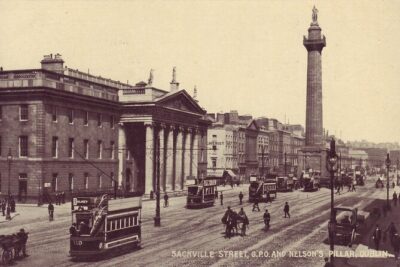

Dublin Traditional Irish 3 Course Meal Walking Tour with Local
Read our review →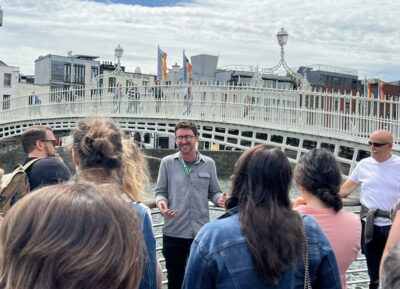

Browse the lists this tour appears in