
Reviewed · WALKING TOURS
Medieval Dublin Walking Private Guided Tour
Dublin’s medieval story is easiest to grasp on foot, and this private walk links the city’s best surviving clues in one compact route. You’ll see Viking-era archaeology, old defensive walls, Christ Church Cathedral, Dublin Castle, and St. Audoen’s Church, with guide Junona Wild explaining how the city changed over time.
I like the small private format, which lets Junona adjust the pace for your group rather than deliver a speech to a crowd. I also like the human scale of the route: archaeology, religion, warfare, witchcraft, and daily life all appear within a few streets. The main consideration is that the tour is offered on Mondays from noon to 3:30 p.m., and admission to Christ Church and Dublin Castle costs extra.
In This Review
- Key points at a glance
- Why medieval Dublin works best on foot
- Starting at Dublin City Council and the Viking past
- Wood Quay Amphitheatre and the oldest walls
- Christ Church Cathedral and Christianity in Ireland
- Dublin Castle and the Anglo-Norman takeover
- St. Audoen’s Church, walls, and medieval punishment
- What Junona Wild adds to the experience
- Is $193.09 good value for five people?
- Timing, meeting point, and practical details
- Who should book this private Dublin walk?
- Should you book it?
- FAQ
- How long does the Medieval Dublin Walking Private Guided Tour last?
- How many people can join the private tour?
- Who is the guide?
- What language is the tour offered in?
- Where does the tour begin?
- Where does the tour end?
- Are Christ Church Cathedral tickets included?
- Are Dublin Castle tickets included?
- Can I cancel for a full refund?
Key points at a glance
- Viking Dublin beneath the modern city: Begin at Dublin City Council and see artifacts from the city’s largest archaeological site.
- Rare surviving medieval walls: The Wood Quay Amphitheatre and St. Audoen’s Church reveal pieces of Dublin’s old defenses.
- Five stops in 2.5 hours: The route gives you a focused introduction without taking up an entire day.
- A private group of up to five: You get direct access to Junona Wild and a pace suited to your own group.
- Strong choice for mixed ages: Junona has kept both a 10-year-old child and an 87-year-old adult engaged, according to the experience details.
- Optional church and castle entry: The grounds and exterior discussion are part of the walk, but indoor tickets are separate.
Why medieval Dublin works best on foot
Modern Dublin can hide its oldest layers in plain sight. A city office, a public amphitheatre, and a busy historic church may not seem connected at first. On foot, though, the links become clear. This tour takes you through the old core, where Viking settlement, Anglo-Norman rule, Christian institutions, and religious conflict all overlap.
The route lasts about two and a half hours, with roughly 30 minutes at each of five stops. That gives you enough time for explanation and questions without asking you to commit a full morning or afternoon. You are not simply moving from one famous building to another. You are following the growth of a fortified medieval town.
The private setup matters here. Dublin’s oldest sites often need context because the surviving remains can be partial or easy to miss. With Junona, you can ask why a wall survives in one place, how a cathedral shaped the city, or what changed when new rulers arrived. The experience is offered in English, and a souvenir postcard is included.
More walking tours in Dublin:
- Dublin Highlights and Hidden Gems Guided Walking Tour
★ 5.0 · 6,020 reviews - Dublin: Highlights and Hidden Gems Walking Tour
★ 4.9 · 2,140 reviews - 1916 Rebellion Walking Tour
★ 5.0 · 1,605 reviews
Starting at Dublin City Council and the Viking past
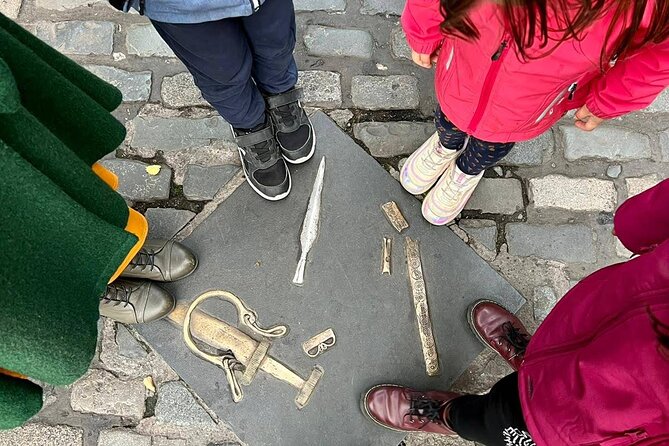
Meet at Dublin City Council’s Civic Offices on Wood Quay, Dublin 8. This is a useful starting point because the area is tied to one of the biggest archaeological excavations in the city. The first 30 minutes focus on artifacts found there and the people who founded Dublin.
This is where the tour earns its keep. Medieval Dublin was not just a collection of stone buildings. It was a settlement shaped by trade, migration, defense, and political change. Looking at artifacts gives you a more grounded picture than viewing monuments alone. Small objects can reveal how people lived, worked, worshipped, and exchanged goods.
The experience details specifically highlight Viking life and the changes the settlement underwent over time. That makes this opening stop especially useful if you want a clear introduction before seeing the later medieval buildings. Junona has been praised for explaining how Viking Dublin developed and for making that story accessible to different ages.
You should expect this part to be more about interpretation than grand architecture. If you want a large indoor museum collection, this is not that. The value comes from connecting the archaeological evidence to the streets around you.
Wood Quay Amphitheatre and the oldest walls
The second stop is the Wood Quay Amphitheatre, where you’ll see a section of Dublin’s oldest medieval walls. Allow about 30 minutes here.
Walls are easy to take for granted until you understand what they protected. In medieval Dublin, a defensive line marked the edge of the settlement and helped define who belonged inside. A surviving section offers a direct physical link to that period, even if the full medieval city has disappeared.
This stop also helps you picture Dublin as a compact fortified town rather than the much larger capital you see today. Junona can place the wall in the wider story of Viking settlement and Anglo-Norman control, giving the stones political meaning as well as architectural interest.
There is no admission charge for this stop. That keeps the tour good value, since two of the more famous paid sites are optional. You can also ask questions here without worrying that you are holding up a large group.
Christ Church Cathedral and Christianity in Ireland
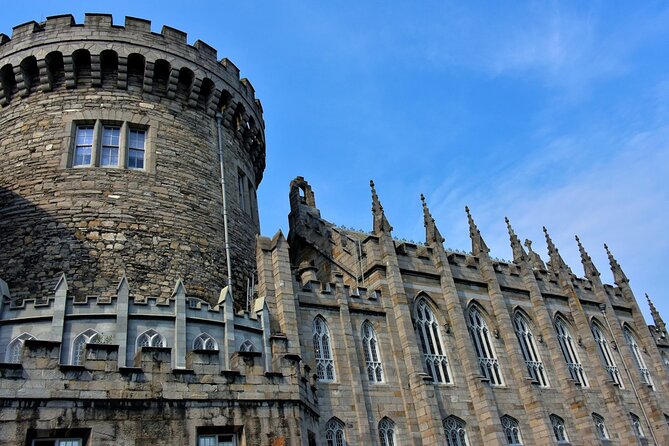
Christ Church Cathedral is the tour’s main religious stop. The 30-minute visit covers the cathedral grounds and architecture, along with the history of Christianity in Ireland. Entry inside is available on request, but the ticket is not included.
The distinction between seeing the grounds and entering the cathedral is important. If you want the full interior experience, budget €10 for an adult ticket, €8.50 for a senior or student, or €3.50 for a child. Confirm the entry plan when booking so you know how the extra time and cost fit your group.
Even from the grounds, Christ Church gives the walk a strong sense of place. Religious buildings were not just places for worship. They shaped power, education, ceremony, and the daily rhythm of medieval cities. The cathedral lets Junona explain Christianity in Ireland while also showing how architecture reflects changing periods of authority.
I would treat this stop as a choice based on your interests. If you care about church interiors, architecture, or Irish religious history, paying for entry can make the tour more rewarding. If your group prefers archaeology and city walls, the exterior discussion may be enough, especially since the walk already includes several historic sites.
The cathedral is also a useful pause in the route. By this point, you have seen archaeological evidence and fortifications. Here, the focus shifts to belief and institution.
A few more Dublin tours worth weighing up
- The Dublin Private Walking Tour
★ 5.0 · 701 reviews - Private Dublin Arrival Transfer – Airport to Hotel / Accommodation
★ 3.5 · 304 reviews - Private (Nearly!) All of Dublin in 5 hours (Walking Tour)
★ 5.0 · 281 reviews - Cliffs of Moher Private Award Winning Luxury Mercedes Car Tour
★ 5.0 · 176 reviews
Dublin Castle and the Anglo-Norman takeover
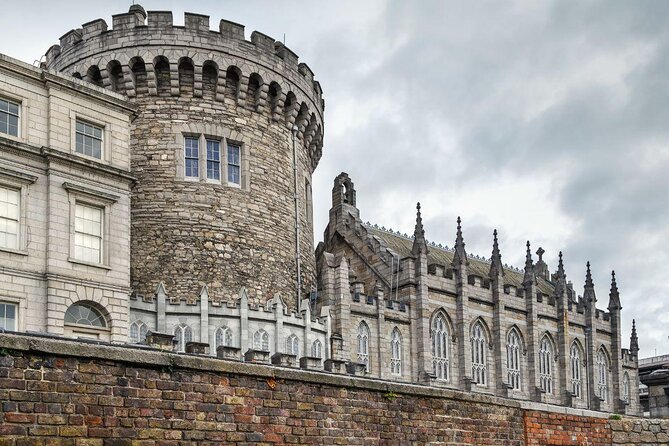
At Dublin Castle, Junona discusses the remains of the old medieval building, the Anglo-Norman intervention, and the castle gardens. The planned time is another 30 minutes, and castle admission is not included.
The word castle can create the wrong expectation. This part of the tour is about the remains and the story attached to the site, not simply a grand display of rooms. The important question is how power changed hands and how the Anglo-Norman arrival altered Dublin’s political and physical shape.
This is one of the most useful stops for understanding the city as a place contested by different groups. The castle represents administration and authority, while the walls and cathedral show defense and religion. Together, the sites create a clearer picture of how medieval Dublin worked.
Admission costs €8 for an adult, €6 for a senior or student, and €4 for a child. For a private group of up to five, that extra cost can be reasonable if everyone wants to go inside. If you are watching your budget, the guided discussion of the remains and gardens still gives you the essential setting without adding the ticket price.
The gardens provide a change of pace after the denser historical material. You’ll have space to pause, and there is a halfway stop for coffee or tea and a toilet break during the tour. Drinks are not included, so bring some cash or a payment method if you want something from the café stop.
St. Audoen’s Church, walls, and medieval punishment
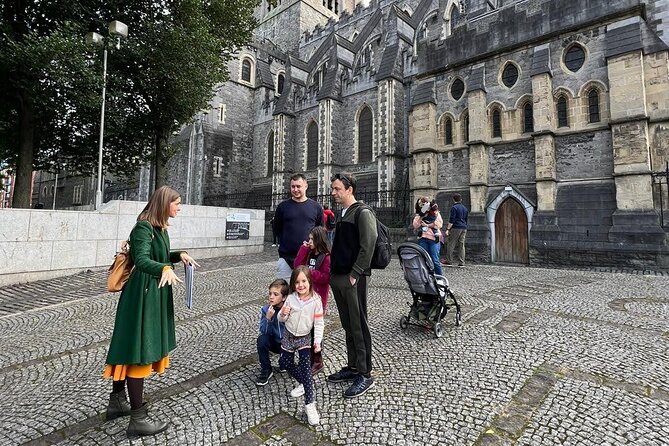
The final stop is St. Audoen’s Church, where the tour returns to surviving city defenses and the harder side of medieval life. You’ll see a preserved section of the city walls and hear about Catholic and Protestant conflict, witchcraft, and punishment in medieval Dublin.
This is a strong ending because it moves beyond kings, cathedrals, and official buildings. Medieval life included fear, law, accusation, and religious division. Stories about witchcraft and punishment can be memorable, but they also need careful context. Junona’s role is to explain how these ideas fit into the society of the time rather than treat them as simple curiosities.
The church also adds another layer to the religious story introduced at Christ Church. Catholic and Protestant conflict did not happen in isolation. It affected buildings, communities, authority, and public life. Seeing the wall near the church helps connect those social struggles to the physical city.
Admission here is free. That is helpful at the end of a route that may include optional tickets at the cathedral and castle.
What Junona Wild adds to the experience
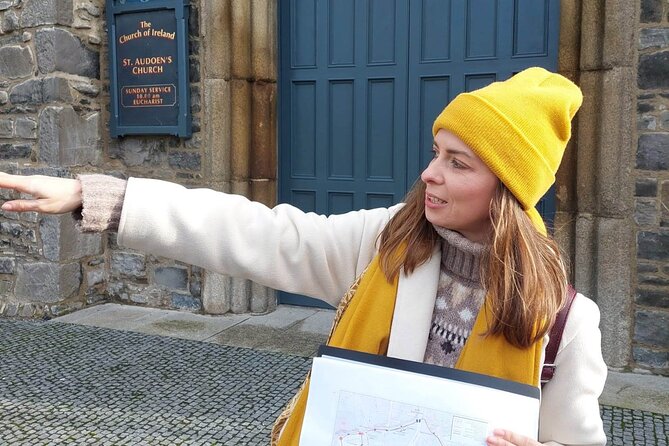
The guide is Junona Wild, who operates Dublin Story Tours. The experience is built around explanation and conversation, not just a fixed script. That matters most at sites where the remains are incomplete or the meaning is not obvious.
Junona has been praised for clear explanations of Viking Dublin and for showing remnants of the original city wall. The strongest indication of her teaching style is how well she has handled a group with a 10-year-old child, bilingual children, an English-speaking parent, and a Russian-speaking grandmother. She also guided an 87-year-old family member successfully.
That detail suggests a useful strength for families and mixed-age groups. You can expect the walk to work best when people ask questions and take part. It is not designed as a silent audio tour. If you have children, older relatives, or people with different levels of interest, tell Junona what will keep your group engaged.
The tour is offered in English. One family received help in both English and Russian, but Russian is not listed as the regular tour language, so you should not assume a bilingual tour unless you arrange it in advance.
Is $193.09 good value for five people?
The listed price is $193.09 per group, with up to five people included. For a full group, that works out to about $38.62 per person before optional admission and drinks. For two people, the per-person cost is much higher, so the private format makes the most financial sense for a family or small group sharing the fee.
You are paying for a dedicated guide rather than a general group departure. That gives you control over questions, pacing, and the balance between archaeology, architecture, religion, and political history. It also removes the uncertainty of being paired with a large crowd.
The free stops are substantial: Dublin City Council, Wood Quay Amphitheatre, and St. Audoen’s Church all contribute important pieces of the story. If you add both paid attractions for five adults, the entry fees would be €50 for Christ Church and €40 for Dublin Castle, for €90 total. You do not need to add both. Decide based on your group’s interests and budget.
I see the best value for families, couples traveling with relatives, and small groups who want a personal introduction to Dublin’s oldest quarter. Solo visitors and pairs may prefer a shared walk if keeping costs low is the main goal.
Timing, meeting point, and practical details
The stated operating time is Monday from noon to 3:30 p.m. The experience information covers June 19, 2022 through December 8, 2026, but availability still needs confirmation. You receive confirmation within 48 hours of booking, subject to availability.
The meeting point is Dublin City Council Civic Offices at Wood Quay, Dublin 8. The walk ends back at the same meeting point. Since the route includes several historic locations, comfortable shoes and weather-ready clothing are sensible choices, though the provided information does not specify a required dress code or fitness level.
Most people can participate, and service animals are allowed. The meeting point is near public transportation. The tour requires good weather, so poor conditions can lead to a different date or a full refund.
Free cancellation is available until 24 hours before the start time. Changes or cancellations inside that 24-hour window are not accepted for a refund. Check the local Dublin time when calculating your deadline.
Who should book this private Dublin walk?
I would choose this tour if you want a focused introduction to medieval Dublin and prefer a guide who can adjust to your group. It suits families especially well because the route changes subject several times, from artifacts to walls, churches, castles, and punishment.
It also works for older relatives who may appreciate a slower private pace, although the experience is still a walking tour with five stops. If your group includes someone with mobility concerns, ask the provider for current route details before booking, since the supplied information only says most people can participate.
History fans will get the most from the optional cathedral and castle entry. If you are mainly interested in street-level remains and the story of how Dublin grew, you can keep costs down by visiting the free stops and listening to the outdoor explanations.
I would not choose it if you want a full-day tour, extensive indoor sightseeing, or a broad overview of all Dublin periods. This is a concentrated medieval walk, not a general city tour.
Should you book it?
Book it if you have up to five people, want a private guide, and care more about understanding Dublin than rushing through photo stops. Junona Wild’s ability to keep both children and older adults involved is a real advantage, and the route links archaeology, walls, religion, government, and social conflict in a sensible order.
Before paying, make three decisions: confirm that Monday noon works, decide if you want to enter Christ Church and Dublin Castle, and check the weather forecast. If those details suit your plans, this is a well-focused way to get your bearings in medieval Dublin and see remains you could easily walk past on your own.
FAQ
How long does the Medieval Dublin Walking Private Guided Tour last?
The tour lasts approximately 2 hours and 30 minutes.
How many people can join the private tour?
The price covers one private group of up to five people.
Who is the guide?
The experience is provided by Dublin Story Tours by Junona Wild, and the guide named for the tour is Junona.
What language is the tour offered in?
The tour is offered in English.
Where does the tour begin?
It begins at Dublin City Council Civic Offices, Wood Quay, Dublin 8, Ireland.
Where does the tour end?
The activity ends back at the meeting point.
Are Christ Church Cathedral tickets included?
No. Visiting the cathedral is available on request, but admission is not included. Adult tickets are €10, senior or student tickets are €8.50, and child tickets are €3.50.
Are Dublin Castle tickets included?
No. Adult tickets cost €8, senior or student tickets cost €6, and child tickets cost €4.
Can I cancel for a full refund?
Yes. You can cancel at least 24 hours before the experience start time for a full refund. Poor weather may also lead to a different date or a full refund.
Just added around Dublin
- Dublin: Pub Tour. Pour The Perfect Guinness, Whiskey & Music★ 5.0 · 3 reviews
- A Self Guided Walking Tour of Dublin’s Docklands★ 4.5 · 3 reviews
- Private Dublin City tour★ 5.0 · 3 reviews
- Dublin One Day Tour with a Local: 100% Personalized & Private★ 4.5 · 3 reviews
- Waterford Crystal and Kilkenny Full-Day Rail Tour from Dublin★ 5.0 · 3 reviews
- Secret and unusual Dublin: guided walking tour★ 5.0 · 3 reviews
- 5 Day Ireland’s South−East Including Admission from Dublin★ 4.5 · 3 reviews
- Turtle Bunbury’s Dublin: A Self-Guided Audio Tour from a Celebrated Author★ 5.0 · 3 reviews
Walking Tours, compared.
Dublin Highlights and Hidden Gems Guided Walking Tour
Read our review →
90 Minute Dublin Walking tour and Sightseeing tips
Read our review →

Dublin Traditional Irish 3 Course Meal Walking Tour with Local
Read our review →

Browse the lists this tour appears in