
Reviewed · WALKING TOURS
Macabre, Ghostly & Bloody Walking Tour
Dublin’s darker past is tucked into ordinary streets, churchyards, bridges, and markets. This two-hour walk brings those stories together, from the death of Cuchulainn at the General Post Office to mummified corpses beneath St. Michan’s Church and the grim tale of a soldier eaten by rats.
I like the route’s variety. You get old legends, Viking customs, plague history, crime, and local folklore rather than two hours of ghost stories alone. I also like the small-group limit of 25 and the guides’ personal touch. Peter has added general Dublin history and local recommendations, while Rob brings an enthusiastic, funny delivery. The main consideration is tone: some stories are graphic, and the tour uses city streets rather than entering every site.
In This Review
- Key points at a glance
- Why Dublin’s macabre side works so well
- Starting beneath the Spire on O’Connell Street
- Cuchulainn and the General Post Office
- Grave robbers and Guinness at Wolfe Tone Park
- Viking rituals around Oxmantown
- A soldier and man-eating rats at Father Matthew Bridge
- Black Death quarantine cages at St. Audoen’s
- Fire and crime on Fishamble Street
- Mummies and a legless serial killer at St. Michan’s
- What $20.43 buys you
- Who will enjoy this Dublin walk
- Guide style and what to expect
- Booking, timing, and cancellation
- Should you book the Macabre, Ghostly & Bloody Walking Tour?
- FAQ
- Where does the Macabre, Ghostly & Bloody Walking Tour start?
- What time does the tour begin?
- How long does the walking tour last?
- Where does the tour finish?
- Is the tour offered in English?
- Can I cancel for a full refund?
Key points at a glance

- The Spire to Fishamble Street: A one-way walk across central Dublin, beginning at 6:00 pm and ending near Christchurch Cathedral and Temple Bar.
- Eight short stops: Each stop lasts about 15 minutes, keeping the pace moving while giving every story room to land.
- Grisly stories with wider context: You hear about Cuchulainn, Viking ritual, plague precautions, grave robbing, crime, and church burials.
- Guides with different strengths: Peter has supplied broader Dublin history and local tips, while Rob is described as funny, enthusiastic, and engaging.
- Good value for a short evening activity: At $20.43 per person, the tour costs less than many longer paid attractions and includes a professional guide.
- A compact group: The maximum of 25 people should make it easier to hear the guide than on a large city walk.
Why Dublin’s macabre side works so well
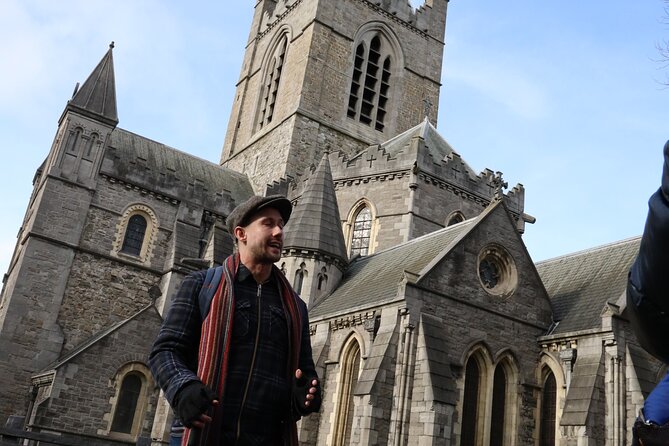
Dublin is easy to admire in daylight. Its grand streets, old churches, and riverfront draw most visitors toward familiar stories. After dark, though, the same streets can feel more mysterious, especially when a guide points out how ordinary places connect to death, disease, violence, and folklore.
This is not simply a ghost walk. The subject matter reaches across several periods. You move from Irish legend and Viking customs to Victorian crime, the Black Death, church burials, and notorious characters from Dublin’s past. That range gives the tour more substance than a string of unrelated haunted tales.
I especially like the way the route uses public places that you can revisit later. The General Post Office, Fishamble Street, St. Audoen’s Church, and St. Michan’s Church are not remote attractions. They sit within the normal sightseeing circuit, but the guide gives you another way to read them.
The two-hour length is also sensible. A shorter walk could feel rushed, while a much longer one might become tiring when the stories turn grim. Eight stops at about 15 minutes each create a clear rhythm. You walk, stop, listen, and move on before one story loses its grip.
More walking tours in Dublin:
- Dublin Highlights and Hidden Gems Guided Walking Tour
★ 5.0 · 6,020 reviews - Dublin: Highlights and Hidden Gems Walking Tour
★ 4.9 · 2,140 reviews - 1916 Rebellion Walking Tour
★ 5.0 · 1,605 reviews
Starting beneath the Spire on O’Connell Street
The meeting point is beside the Spire, the tall sculpture rising 120 metres above O’Connell Street. It is a practical place to meet because the landmark is hard to miss and sits in central Dublin.
The walk begins at 6:00 pm. That timing gives the tour a different mood from a daytime city walk without making it a late-night activity. You can spend the afternoon visiting museums or walking around central Dublin, then meet the guide for an evening route through the older parts of the city.
The first stop is free, as are all the listed stops. That does not mean every part of the evening is inside a building. Much of the experience takes place outdoors, so comfortable shoes and a coat suited to Dublin weather are sensible choices. The tour information confirms a walking route, but it does not specify the distance or the surface of every street.
The meeting point is near public transportation, and service animals are allowed. Most people can participate, although anyone who has difficulty standing or walking for two hours should consider the physical side before booking.
Cuchulainn and the General Post Office
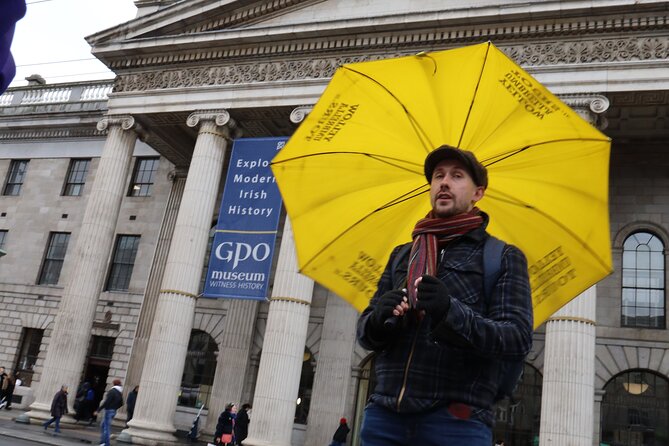
From the Spire, the group moves to An Post’s General Post Office. Here, the guide tells the story connected with the statue of the death of Cuchulainn, one of Ireland’s best-known legendary figures.
This stop gives the tour an important foundation. Not every macabre story is a documented crime or medical event. Irish legend has its own violence, tragedy, and heroic deaths, and Cuchulainn’s story shows how death can function as part of national storytelling.
The General Post Office also connects the old and modern city. You are looking at a major Dublin landmark while hearing a much older tale. That contrast is one of the route’s strengths. The guide is not asking you to visit a dark ruin far from the city center. The story unfolds beside a building many people already plan to see.
Allow about 15 minutes here. Since the stop is outside, you should be able to see the statue and listen without paying an admission fee. The limitation is that the experience depends heavily on the guide’s storytelling. Peter’s reported habit of adding wider Dublin history and local recommendations would be useful here, especially for anyone who wants more than the basic legend.
Grave robbers and Guinness at Wolfe Tone Park
At Wolfe Tone Park, the subject shifts to Victorian-era grave robbers. This is a strong change of mood after the legendary death of Cuchulainn. Grave robbing brings the story closer to social history, showing how burial practices, medicine, money, and fear could meet in disturbing ways.
The stop also includes the wedding venue of Arthur Guinness. That detail adds a bit of contrast. The route does not treat Dublin’s past as one long catalogue of murder and decay. It places an ordinary human milestone beside a darker tale, giving the stop more texture.
I like this kind of pairing because it keeps the walk from becoming monotonous. You hear about crime, then about a famous Dublin name and a wedding location, before moving on to the next grim chapter.
Again, the stop lasts roughly 15 minutes. That is enough time for the guide to explain the setting and tell the main story, but not enough for a full lecture on Victorian burial practices. If you want every detail, ask a follow-up question during the walk.
A different side of Dublin on the same trip:
- Dublin to Cliffs of Moher, including Wild Atlantic Way and Galway
★ 5.0 · 23,331 reviews - From Dublin: Cliffs of Moher, Burren & Galway City Day Tour
★ 4.8 · 18,888 reviews - Dublin: Guinness Storehouse Entry Ticket
★ 4.6 · 16,863 reviews - Dublin to Cliffs of Moher, Burren, Wild Atlantic Way, Galway Tour
★ 5.0 · 12,924 reviews
Viking rituals around Oxmantown
Outside the old fruit and vegetable market in Oxmantown, the guide turns to Dublin’s Viking past. The subject is not limited to trade or settlement. You hear about the gorier aspects of Viking ritual, which fits the tour’s focus but may be uncomfortable for some people.
This part helps explain why a macabre walking tour can offer useful historical context. Viking Dublin was not just a picturesque chapter from the city’s beginnings. Rituals around death and sacrifice reveal a different set of beliefs and social customs, and the guide uses the old market area as a place to discuss them.
The location also keeps the walk grounded in the city’s working past. A fruit and vegetable market sounds practical and everyday, yet the area carries older stories beneath the modern streets. That contrast is a recurring theme of the tour.
You spend about 15 minutes here. Families with older children may find the historical angle interesting, but the content can be graphic. The tour data does not set a minimum age, so parents should use their own judgment.
A soldier and man-eating rats at Father Matthew Bridge
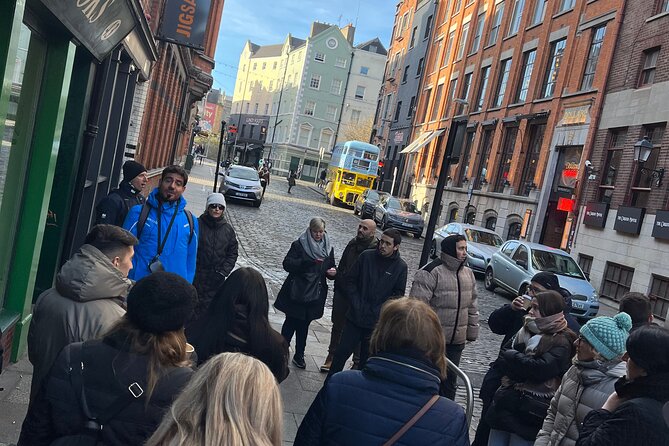
At Father Matthew Bridge, the guide tells the grim story of a soldier who was devoured by man-eating rats. It is one of the tour’s most startling episodes because the danger comes from creatures associated with neglected urban spaces rather than from a famous criminal or battlefield.
The stop shows how quickly Dublin’s past can move from folklore into horror. Bridges are usually seen as transport links or photo spots. Here, the setting becomes a stage for a gruesome end.
This is also a good place to gauge the tour’s tone. The guide may deliver the story with dark humor, but the central image is undeniably unpleasant. Rob’s enthusiastic and funny approach could help keep the material entertaining rather than oppressive, though the subject will not suit everyone.
The stop lasts about 15 minutes and remains outdoors. You do not need a ticket for the bridge, and the walk keeps moving after the story. If you prefer lighter sightseeing, this is one of the moments to consider carefully before booking.
Black Death quarantine cages at St. Audoen’s
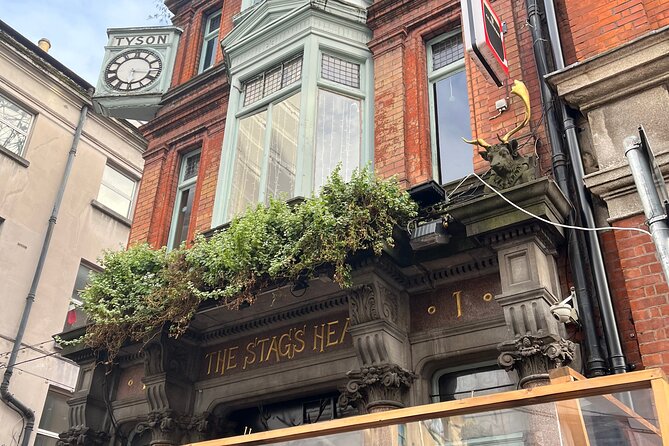
St. Audoen’s Church brings the tour to the Black Death and the quarantine cages at the old city walls. This is one of the more atmospheric settings on the route because the physical remains of old defenses help make the story easier to picture.
Quarantine is a familiar word now, but seeing the structures connected with disease control gives the subject a more direct impact. The stop is not only about death. It is also about how a medieval city tried to contain illness and protect itself, often with harsh measures.
St. Audoen’s adds an architectural layer to the walk. You get a church, old city walls, and a story about public health in one place. I find this kind of stop more satisfying than a tale with no visible connection to the setting.
You will hear the story from outside, and the itinerary does not promise entry into the church. That matters if you expect an interior visit or a formal church tour. The value here is the guide’s explanation of the site and its darker associations.
Fire and crime on Fishamble Street
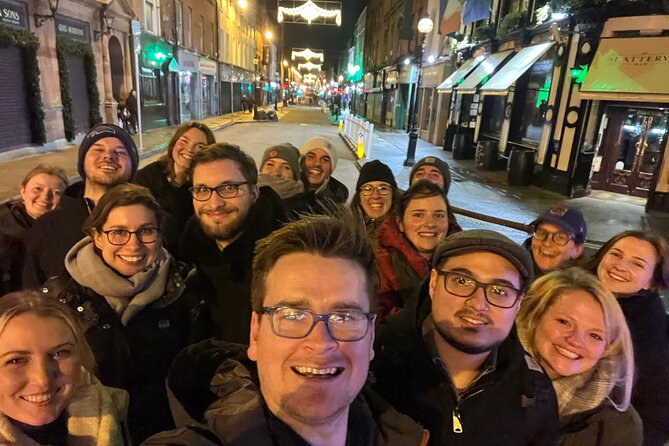
Fishamble Street brings the walk into the world of crime. The guide tells the story of an infamous brothel keeper and her death by fire at the stake.
This is one of the route’s most dramatic stops. It combines a notorious figure, a place associated with vice, and a brutal punishment. The story also raises questions about how past societies treated women, crime, sex work, and public shame. The tour may not explore all those issues at length, but the setting gives the tale more weight.
Fishamble Street is also where the tour ends. That makes the final stop easy to use as a starting point for the rest of your evening. The end point is beside Christchurch Cathedral and the Temple Bar District, so you can continue to dinner, a pub, or another central Dublin activity without arranging a separate ride.
The route’s endpoint is useful, but it can also be lively around Temple Bar. If you want a quiet finish, plan your next stop in advance. The tour itself does not include food, drinks, or entry to Christchurch Cathedral.
Mummies and a legless serial killer at St. Michan’s
The final story takes place at St. Michan’s Church, where you learn about mummified corpses in the cellar and a legless serial killer. It is a memorable ending because the subjects combine a physical site with an especially strange criminal tale.
The mummies give the guide something concrete to describe. They are not just an invisible legend attached to a street corner. The cellar’s preserved corpses are one of the most unusual details on the route, even though the information provided does not include admission to the church or cellar.
The legless serial killer story pushes the tour toward the sensational. That is part of the appeal for anyone booking a macabre walk, but it also means the material may be too graphic for people who prefer gentle folklore.
Since St. Michan’s is the last listed stop, you can decide later if you want to return during the day for a separate visit. Do not assume the walking tour includes access inside. The stated inclusion is a professional guide, not entry tickets.
What $20.43 buys you
At $20.43 per person, the tour is priced as an affordable evening activity. You are paying for about two hours of guiding and storytelling, not for museum admission, transport, food, or access to church interiors.
That makes the value strongest if you want structure. You could walk through these parts of Dublin on your own, but you would miss the connected stories and would need to research each location in advance. A professional guide turns scattered streets and landmarks into one clear route.
The maximum group size is 25. That is not a private tour, but it is small enough to be more manageable than a large crowd. It also matters for a storytelling experience. If you are standing on a busy street, hearing the guide clearly is more important than having a small discount.
The price is especially reasonable for a first evening in Dublin. The route ends near two major visitor areas, so you can combine it with dinner or a drink afterward. I would not book it as a replacement for Dublin’s major museums or paid historic sites. I would book it as a focused way to add local stories to a standard city visit.
Who will enjoy this Dublin walk
I would choose this tour if you like:
- Local legends with a gruesome edge
- Crime stories and unusual historical characters
- Short walks with frequent stops
- Guides who add general city history and recommendations
- Seeing familiar landmarks from a less polished angle
- Evening activities that finish in central Dublin
It suits solo visitors, couples, and small groups who want a shared activity without committing to a full evening event. The maximum of 25 people also makes it a reasonable choice if you prefer a group that is not enormous.
I would think twice if you dislike graphic descriptions of death, disease, punishment, or corpses. The themes are clear from the title and stops. This is not a softly spooky stroll built around harmless legends.
The tour may also be less suitable if you need frequent seating or have difficulty walking and standing. Most people can participate, and the route is near public transportation, but the available information does not list benches, step-free access at every stop, or the total walking distance.
Guide style and what to expect
The guide matters a great deal here. The tour covers eight subjects in two hours, so the person leading it needs to keep the pace brisk and connect each stop without turning the evening into a list of disconnected facts.
Peter has been described as professional and as someone who adds general Dublin history, wider Irish stories, and recommendations for the area. That is useful if you want the tour to help shape the rest of your stay.
Rob is described as enthusiastic, funny, and fascinating in his delivery. Those qualities matter with grim material. A dry recitation could make the walk feel heavy, while a lively guide can give the stories energy without losing their historical setting.
The tour is offered in English only. The confirmed details do not identify which guide will lead your departure, so expect the subject matter to remain the same while the presentation may vary.
Booking, timing, and cancellation
The tour starts at 6:00 pm beside the Spire on O’Connell Street Upper. Aim to arrive early enough to locate the meeting point without rushing, especially if you are unfamiliar with central Dublin.
Confirmation is provided when you book. The experience is offered with a mobile ticket, which keeps the practical side simple. The tour is generally booked about 33 days ahead, so reserving early is sensible if your Dublin dates are fixed.
Free cancellation is available until 24 hours before the start time for a full refund. Cancellations or changes made less than 24 hours before the start are not refunded or accepted, and the cut-off uses local time.
Should you book the Macabre, Ghostly & Bloody Walking Tour?
Book it if you want Dublin’s streets to tell darker stories than the usual sightseeing route. The best parts are the range of subjects, the compact two-hour format, the free outdoor locations, and the finish near Christchurch Cathedral and Temple Bar.
I would especially recommend it for adults and older children who enjoy folklore, crime, plague history, and unusual local characters. Peter’s broader city knowledge and Rob’s lively style suggest that the guide can make the walk useful as well as entertaining.
Skip it if graphic stories about death, disease, burial, and punishment are not your idea of a good evening. Also skip it if you expect entry into churches or paid attractions, since the experience includes a professional guide but does not list admission tickets.
For $20.43, this is a fairly priced way to spend two hours and see Dublin through its most unsettling stories. You leave with a route through central neighborhoods, a handful of memorable tales, and a better sense of how much of the city’s past sits just below the everyday surface.
FAQ
Where does the Macabre, Ghostly & Bloody Walking Tour start?
The tour starts beside the Spire at O’Connell Street Upper, North City, Dublin, Ireland.
What time does the tour begin?
The tour begins at 6:00 pm.
How long does the walking tour last?
The tour lasts approximately two hours.
Where does the tour finish?
The tour finishes on Fishamble Street, beside Christchurch Cathedral and the Temple Bar District.
Is the tour offered in English?
Yes. The tour is offered in English and includes a professional guide.
Can I cancel for a full refund?
Yes. You can cancel at least 24 hours before the experience start time for a full refund. Cancellations or changes made less than 24 hours before the start time are not accepted for a refund.
Just added around Dublin
- A Self Guided Walking Tour of Dublin’s Docklands★ 4.5 · 3 reviews
- Private Dublin City tour★ 5.0 · 3 reviews
- Dublin: Pub Tour. Pour The Perfect Guinness, Whiskey & Music★ 5.0 · 3 reviews
- Dublin One Day Tour with a Local: 100% Personalized & Private★ 4.5 · 3 reviews
- Waterford Crystal and Kilkenny Full-Day Rail Tour from Dublin★ 5.0 · 3 reviews
- Secret and unusual Dublin: guided walking tour★ 5.0 · 3 reviews
- 5 Day Ireland’s South−East Including Admission from Dublin★ 4.5 · 3 reviews
- Turtle Bunbury’s Dublin: A Self-Guided Audio Tour from a Celebrated Author★ 5.0 · 3 reviews
Walking Tours, compared.
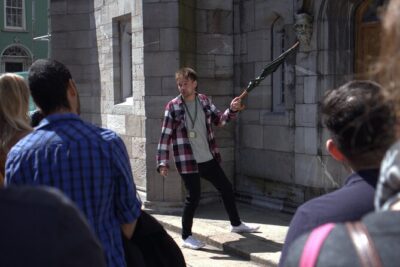
Dublin Highlights and Hidden Gems Guided Walking Tour
Read our review →
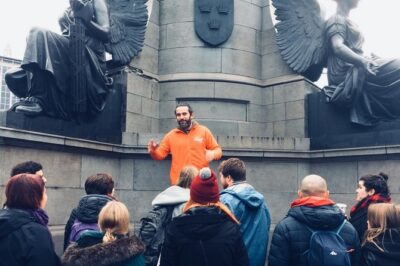
90 Minute Dublin Walking tour and Sightseeing tips
Read our review →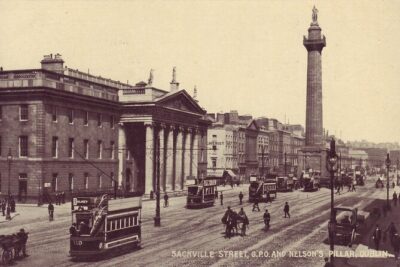

Dublin Traditional Irish 3 Course Meal Walking Tour with Local
Read our review →

Browse the lists this tour appears in