
Reviewed · WALKING TOURS
Dublin : Street Art Walking Tour
Dublin’s street art makes the best opening here. Starting at 57 Smithfield, you move through murals, old legends, 1916 landmarks, and Temple Bar installations instead of seeing the city only through its famous pub signs. The route links modern art with the stories behind the streets.
I like the private format, since you can shape the walk around your interests and ask questions without keeping pace with a large group. I also like the mix of Smithfield murals, St. Michan’s Church, and the Four Courts, which gives the tour more substance than a simple street-art hunt.
The main consideration is price: $57 per person is fair for a private three-hour walk, but less attractive if you only want a quick look at Dublin’s murals. Food and drinks are not included, and the tour ends where it begins.
In This Review
- Key points at a glance
- Why this Dublin walk is more than a mural tour
- Starting at 57 Smithfield
- Smithfield Square and its painted stories
- St. Michan’s Church and Dublin’s darker tales
- The Four Courts and the echoes of 1916
- Temple Bar’s street art and installations
- What the private format means for you
- Is $57 a fair price?
- Guide style and language choices
- Best suited to these Dublin visitors
- Booking advice before you set out
- Should you book the Dublin Street Art Walking Tour?
- FAQ
- How long is the Dublin Street Art Walking Tour?
- Where does the tour start?
- Where does the tour end?
- Is this a private tour?
- What languages are offered?
- Is the tour wheelchair accessible?
- Are food and drinks included?
- Can I cancel the tour for a refund?
Key points at a glance
- Smithfield murals begin the story: See public art that reflects the area’s past and present.
- St. Michan’s Church adds local legends: Hear stories linked to the infamous strangler of Smithfield and other Dublin tales.
- The Four Courts brings in 1916: Connect street scenes with one of the city’s major historic landmarks.
- Temple Bar provides a lively finish: Find street art and installations among Dublin’s best-known cultural streets.
- Private means flexible: The route can be adjusted to suit your interests and group.
- Paula has made a strong impression: Her style combines entertaining stories with useful historical context.
Why this Dublin walk is more than a mural tour
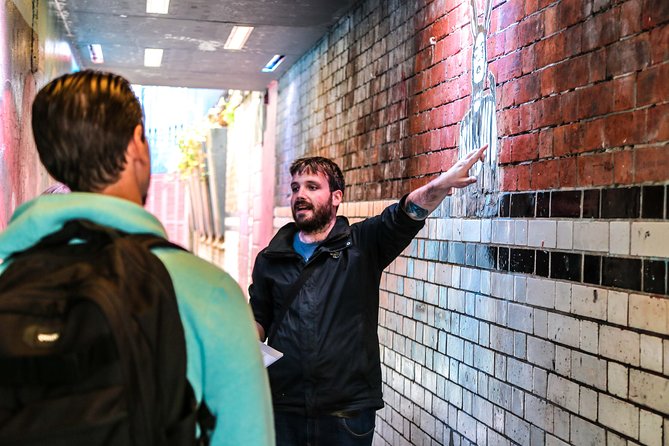
Street art can be easy to treat as decoration. This walk gives it a job: it helps you read Dublin through changing neighborhoods, local stories, and public memory.
You begin in Smithfield, then move toward St. Michan’s Church, the Four Courts, and Temple Bar. That sequence matters. You are not simply ticking off four disconnected sights. You are moving from a former market area with large murals, to old religious stories, to national political history, and finally to a district known for art, music, and nightlife.
The three-hour length gives your guide room to explain what you are seeing. You can ask about the murals, Dublin’s past, or the places that catch your eye. Since this is a private and customizable walk, you are not locked into a fixed group conversation.
The experience is offered with a live guide in English, French, Spanish, or Italian. Paula is one guide associated with the experience, and her approach has been praised for combining entertaining stories with more modern influences. That is useful in Dublin, where a good story can explain as much as a plaque.
A few more Dublin tours worth weighing up
- Dublin Street Art Walking Tour
★ 5.0 · 68 reviews - Street Art Walking Tour
★ 5.0 · 9 reviews
Starting at 57 Smithfield
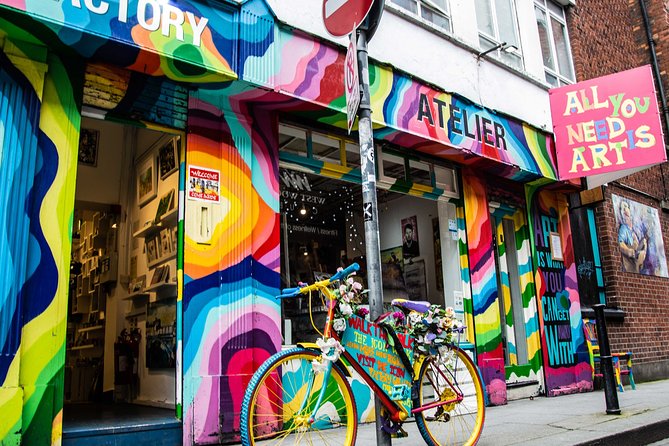
The meeting point at 57 Smithfield puts you in a central part of Dublin with pubs, restaurants, cultural venues, and other city sights close by. It is a practical place to begin because you can reach it as part of a wider day in central Dublin.
The walk starts near Play Park and takes you toward Smithfield Square. You should expect an urban setting rather than a formal gallery visit. The art is outdoors, part of the streets and buildings, and connected to the character of the area.
Smithfield is a useful first stop because it gives your guide space to explain how public art can record a neighborhood. Murals can point to local identity, past events, and present-day artistic life. The information provided for this tour does not name individual artists or promise a fixed list of murals, so the exact art you see may depend on the route and current conditions.
That flexibility is both a strength and a limitation. A private guide can spend more time on a mural that interests you, but you should not book this expecting a guaranteed catalogue of specific artworks. You are paying for a guided look at Dublin’s creative side, not admission to a named exhibition.
Smithfield Square and its painted stories
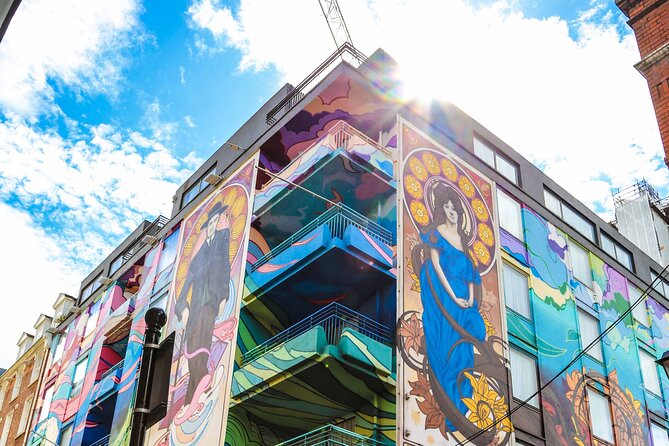
The murals in Smithfield are the artistic heart of the opening section. They are described as telling stories about the area’s past and its creative energy, so you get context rather than a series of quick photo stops.
I like this approach for first-time visitors. Street art often changes, and a guide can help you notice the parts that a casual walk might miss. You might find that one image connects to a local story, while another reflects a newer view of Dublin.
The tour also lets you see an area beyond the most familiar central streets. Smithfield has its own atmosphere, and beginning here keeps the experience from feeling like a standard route through only the best-known postcard locations.
Still, keep your expectations practical. The tour does not promise a large number of murals or a particular style of art. If your main goal is professional art criticism or a long list of named works, this may feel light. If you want public art paired with local explanation, the format makes more sense.
St. Michan’s Church and Dublin’s darker tales

From Smithfield, the walk continues to St. Michan’s Church, where the tone shifts from painted walls to old stories and local legend.
The church is tied to tales of the infamous strangler of Smithfield, along with other stories that add a darker edge to the route. This part will appeal to you if you enjoy Dublin’s less polished history, the kind that survives through rumor, memory, and dramatic storytelling.
A guide is especially helpful here because the value lies in the explanation. The church is not presented as a quick photo stop. It becomes a place where you hear how Dublin’s past has been remembered and retold.
The tour information does not include entry to the church, and food and drinks are not included either. The experience promises help from the tour team with booking tickets for desired visits, but you should check what is available when you reserve. Do not assume that every interior visit is included in the $57 price.
This is also one point where the private format helps. You can ask for more detail if the legends interest you, or keep the pace moving if you prefer architecture and street art. A large group would make that kind of adjustment harder.
More walking tours in Dublin:
- Dublin Highlights and Hidden Gems Guided Walking Tour
★ 5.0 · 6,020 reviews - Dublin: Highlights and Hidden Gems Walking Tour
★ 4.9 · 2,140 reviews - 1916 Rebellion Walking Tour
★ 5.0 · 1,605 reviews - 90 Minute Dublin Walking tour and Sightseeing tips
★ 5.0 · 916 reviews
The Four Courts and the echoes of 1916
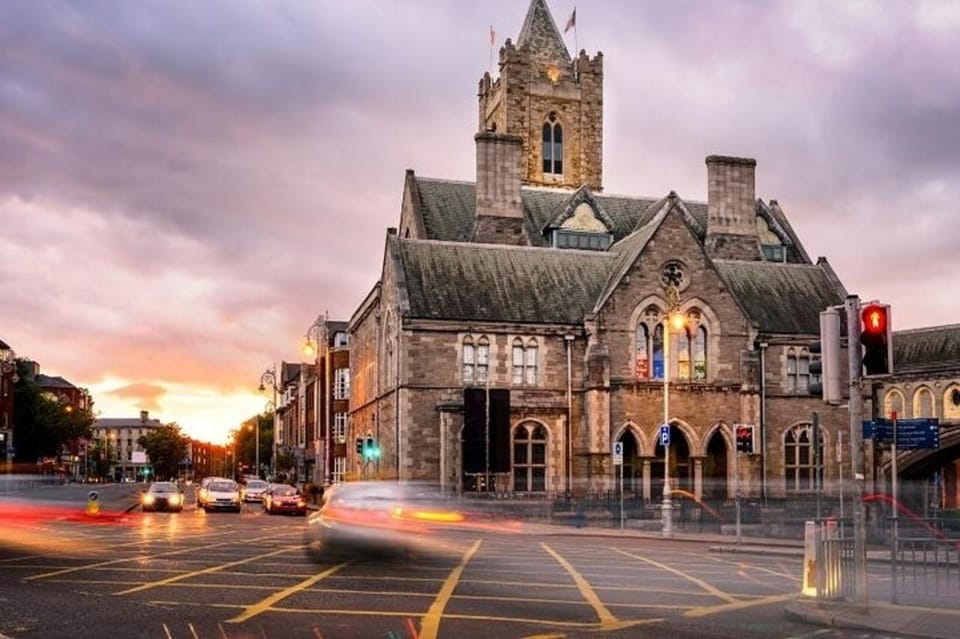
The next major stop is the Four Courts, one of Dublin’s most recognizable civic buildings. Here the tour shifts again, this time toward architecture and national history.
The building is linked to the events and echoes of 1916, giving you a way to connect Dublin’s streets with the political struggles that shaped modern Ireland. The tour also points to the architectural work of a distinguished English architect, so the stop is not only about events. You get a look at how the building was designed as well as why it matters.
This is a good counterweight to the street art. Murals show how people express ideas in public today, while the Four Courts brings you to a formal building tied to law, government, and conflict. The contrast helps make the route feel like a city tour with an art focus, rather than an art tour with a few historical facts added on.
The Four Courts section may be especially useful if you have limited time in Dublin. You get a recognized landmark without giving up the less obvious parts of the city. Your guide can also explain the site in relation to the walk, rather than leaving you to read a brief sign and move on.
The description does not promise a long interior visit or entry to courtrooms. Plan on seeing and discussing the landmark from the walking route unless your guide confirms otherwise.
Temple Bar’s street art and installations
The final section takes you to Temple Bar, where the route ends among street art and public installations.
Temple Bar is one of Dublin’s most famous areas, known for pubs, restaurants, cultural venues, and busy streets. It can feel crowded, especially at popular times, so the atmosphere here differs from a quieter neighborhood walk. That energy is part of the appeal, but it may also make it harder to pause for long explanations or photographs.
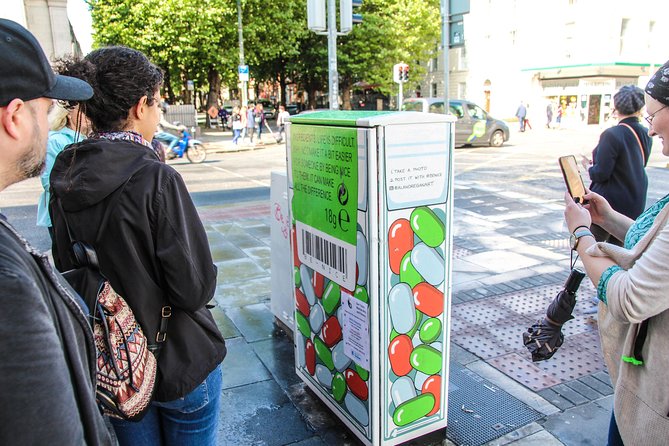
The art gives you another reason to look beyond the obvious pub fronts. Installations and street pieces help show Temple Bar as a cultural district, not just a nightlife stop.
This ending works well because Temple Bar is easy to fit into the rest of your day. You can continue exploring nearby after the walk, stop for a meal, or visit a venue in the area. Since the activity ends back at the meeting point, you should confirm the exact route with your guide and allow time to return to Smithfield if you have another booking.
The tour information describes the finish in Temple Bar but also says the activity ends back at the meeting point. That means the walk includes a return to 57 Smithfield, or an arranged return as part of the route. Clarify the precise timing if you need to meet a train, reservation, or timed attraction afterward.
What the private format means for you
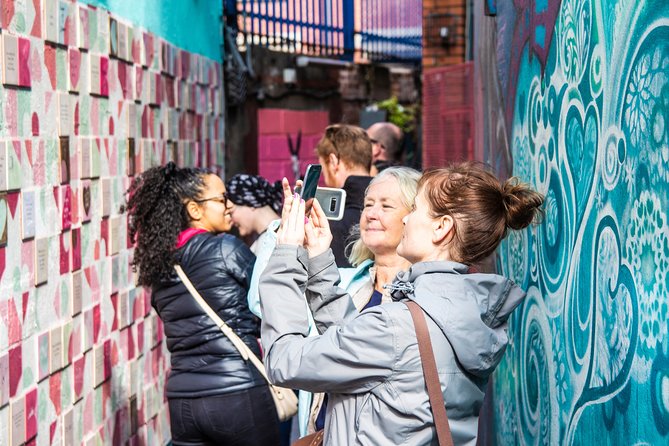
Private and exclusive means no one else is placed in your group. That gives you more control over the pace and the subjects covered.
You can ask for more art, more architecture, more 1916 history, or more local stories. The route is described as customizable, so the guide can give extra attention to the parts that interest you most. This is valuable for repeat visitors who have already seen the main sights and want a different angle on Dublin.
The included transport arrangement is walking and public transport, except if you select another option. The route itself is presented as a walking tour, so comfortable shoes are sensible. The supplied details do not state how much public transport you will use or whether any fare is included, so check those points before booking if you prefer to avoid buses or trams.
The private setup can also suit families and small groups. You do not have to worry about losing a guide in a large crowd, and you can pause for questions. The tradeoff is simple: a private tour usually costs more per person than a large shared walk, especially for a solo visitor.
Is $57 a fair price?
At $57 per person, this is best judged as a private three-hour guide service, not as a basic walking route.
The price has more value if you are traveling with family or friends and can share the private experience across the group. It also makes sense if you want to ask questions, adjust the focus, or see Dublin through a local guide’s personal knowledge rather than follow a standard script.
For a solo visitor, the price is harder to justify if you only want to photograph murals. You can walk through central Dublin independently, but you would miss the connected stories about Smithfield, St. Michan’s Church, the Four Courts, and Temple Bar.
Food and drinks are not included, and any desired tickets may require separate payment. Factor that into your budget. The tour team can help with ticket bookings, but the listed price should not be treated as an all-inclusive sightseeing pass.
The strongest value comes from the guide. Paula’s feedback points to stories that are both entertaining and informative, including Dublin’s older history and more modern influences. That combination is what makes the price easier to accept.
Guide style and language choices
The tour is available with a live guide in English, French, Spanish, or Italian. That gives you a useful choice if you understand one of those languages better than English, or if your group has mixed language needs.
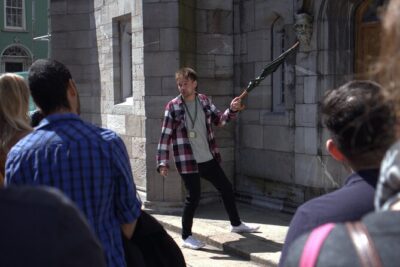
Paula is specifically associated with warm, story-led guiding. Her style appears suited to this route because the walk depends on connecting facts with legends and present-day art. You will get more from the experience if you ask questions and tell the guide what interests you.
The guide is described as local and familiar with the area. That matters most in the flexible sections, where the route can respond to your interests. The exact guide may vary, so Paula is not guaranteed unless confirmed at booking.
The tour is wheelchair accessible. Dublin’s streets and the amount of walking can still make route details important, so tell the provider about your needs when arranging the experience. The supplied information confirms accessibility, but it does not give a detailed breakdown of surfaces, slopes, or public transport arrangements.
Best suited to these Dublin visitors
I would consider this tour a good match for:
- First-time visitors who want major sights plus less obvious street art
- Repeat visitors who want a new angle on central Dublin
- Small private groups who prefer a flexible pace
- People interested in the connection between art, local stories, architecture, and politics
- Visitors who enjoy guides who tell stories rather than only list dates
- Families or friends who want a walk tailored to their shared interests
It may be less suitable if you want a dedicated church interior tour, a specialist art lecture, or a guaranteed list of named mural artists. It may also feel expensive if you are comfortable exploring Smithfield and Temple Bar alone.
The route is three hours, so it takes a substantial part of a morning or afternoon. Check the available starting times before committing your next activity. The private format gives you flexibility, but the distance and the return to the meeting point still require some planning.
Booking advice before you set out
Book this when you want interpretation, not just directions. The most useful part of the tour is the way a guide connects what you see with Dublin’s stories and changing identity.
Ask about the exact guide, the meeting point, the return timing, and any ticketed visits you want to add. If St. Michan’s Church is a priority, confirm whether you will enter and what additional cost may apply.
The tour offers free cancellation up to 24 hours in advance and allows you to reserve now and pay later. Those terms are helpful if your Dublin schedule is still moving, but you should still check the current availability and start times before booking.
Wear shoes suited to three hours on foot. Bring questions. A private guide can make the experience far more useful when you say what you already know and what you want to understand.
Should you book the Dublin Street Art Walking Tour?
Book it if you want a private, story-led introduction to Dublin that blends murals with major landmarks and local legends. Smithfield, St. Michan’s Church, the Four Courts, and Temple Bar create a varied route, and Paula’s entertaining style is a strong reason to value the experience.
Skip it if you only want a short street-art walk or a formal tour of church interiors and historic buildings. At $57 per person, the price works best for a private group that will use the customization and ask plenty of questions.
For most visitors who want to see Dublin beyond the standard pub-and-castle circuit, this is a thoughtful three-hour choice. Just confirm the exact stops, entry arrangements, and return timing before you pay.
FAQ
How long is the Dublin Street Art Walking Tour?
The tour lasts three hours. Starting times vary, so check availability when booking.
Where does the tour start?
The listed starting point is 57 Smithfield, a central Dublin location near pubs, restaurants, cultural venues, and other city sights.
Where does the tour end?
The activity ends back at the meeting point. Confirm the exact return timing with the provider if you have another scheduled activity.
Is this a private tour?
Yes. The experience is private and exclusive, with no one else added to your group. Customization is available.
What languages are offered?
Live guides are available in English, French, Spanish, and Italian.
Is the tour wheelchair accessible?
Yes, the activity is listed as wheelchair accessible.
Are food and drinks included?
No. Food and drinks are not included in the price.
Can I cancel the tour for a refund?
Yes. You can cancel up to 24 hours in advance for a full refund. You can also reserve now and pay later.
Just added around Dublin
- A Self Guided Walking Tour of Dublin’s Docklands★ 4.5 · 3 reviews
- Private Dublin City tour★ 5.0 · 3 reviews
- Dublin: Pub Tour. Pour The Perfect Guinness, Whiskey & Music★ 5.0 · 3 reviews
- Dublin One Day Tour with a Local: 100% Personalized & Private★ 4.5 · 3 reviews
- Waterford Crystal and Kilkenny Full-Day Rail Tour from Dublin★ 5.0 · 3 reviews
- Secret and unusual Dublin: guided walking tour★ 5.0 · 3 reviews
- 5 Day Ireland’s South−East Including Admission from Dublin★ 4.5 · 3 reviews
- Turtle Bunbury’s Dublin: A Self-Guided Audio Tour from a Celebrated Author★ 5.0 · 3 reviews
Walking Tours, compared.
Dublin Highlights and Hidden Gems Guided Walking Tour
Read our review →
90 Minute Dublin Walking tour and Sightseeing tips
Read our review →

Dublin Traditional Irish 3 Course Meal Walking Tour with Local
Read our review →

Browse the lists this tour appears in