
Reviewed · WALKING TOURS
Dublin: Sightseeing Walking Tour in German
Dublin’s best introduction may be on foot, and this German-language walking tour gives you a useful sweep of the city center in just two and a half hours. You move from the medieval quarter around Dublin Castle across the Liffey to O’Connell Street, finishing near Trinity College and its famous Book of Kells.
I like the small-group format and the mix of major landmarks with odd little discoveries, such as a church that is now a café, a former Lisbon tram, and Dublin’s first full-time cinema. I also like that the guide explains the human stories behind the buildings in clear, easy-to-follow German. The main drawback is that every stop is viewed from outside, so you’ll need a separate visit if you want to enter Dublin Castle, Christ Church Cathedral, or the Book of Kells.
In This Review
- Key points at a glance
- Why this German walking tour works as a first look at Dublin
- Dame Street and Dublin’s medieval quarter
- Christ Church, Fishamble Street, and Smock Alley
- Temple Bar beyond the nightlife
- Crossing the Millennium Bridge over the Liffey
- St Mary’s Church and Dublin’s unusual conversions
- O’Connell Street, the General Post Office, and independence
- The former Parliament House and the final approach to Trinity
- What the $34 price gives you
- Pace, group size, and practical comfort
- Who should book this Dublin walk?
- Should you book it?
- FAQ
- How long does the Dublin walking tour last?
- What language is the tour conducted in?
- Where does the tour start?
- Which major landmarks are included?
- Can I enter Dublin Castle or Christ Church Cathedral during the tour?
- Does the tour include entry to the Book of Kells?
- Is the tour wheelchair accessible?
- How much does the tour cost?
- Can I cancel or pay later?
Key points at a glance
- A citywide route in 2.5 hours: Walk from Dame Street through the medieval quarter, Temple Bar, the north side, and Trinity College.
- German-speaking guidance: The tour is led in German by a professional, well-trained guide.
- Major sights without indoor admissions: See Dublin Castle, Christ Church Cathedral, the General Post Office, and Trinity College from outside.
- Unusual Dublin details: Look for a former cinema, a tram turned café, a wobbly bridge, and a striking statue of a famous composer.
- Small-group atmosphere: The format suits you if you want room for questions and a more personal introduction to the city.
- Flexible booking: The price is $34 per person, with free cancellation up to 24 hours before the start and a reserve-now, pay-later option.
Why this German walking tour works as a first look at Dublin
This walk is built for orientation. Rather than spending two and a half hours in one district, you cross both sides of the River Liffey and connect several parts of central Dublin that can feel separate when you explore alone.
You start on Dame Street, close to Dublin’s old civic and commercial center. From there, the route moves into the former Viking and medieval quarter, continues through Temple Bar, crosses the Liffey, and heads north along O’Connell Street before ending around Trinity College.
That route gives you a strong first map of the city. You see where medieval Dublin developed, where Georgian and political Dublin took shape, and how the river divides, and connects, the south and north sides.
The German language matters more than it might at first seem. Dublin’s story includes Viking settlement, medieval power, religious change, rebellion, independence, and modern city life. A guide who can explain those layers in fluent German makes it easier to follow the details and ask questions without worrying about missing a key point.
The tour has a rating of 4.7 from 231 reviews, and the most useful praise concerns the way information is presented. The German commentary is described as entertaining and easy to follow, which is exactly what you want on a walking tour with many stops in a short time.
More walking tours in Dublin:
- Dublin Highlights and Hidden Gems Guided Walking Tour
★ 5.0 · 6,020 reviews - Dublin: Highlights and Hidden Gems Walking Tour
★ 4.9 · 2,140 reviews - 1916 Rebellion Walking Tour
★ 5.0 · 1,605 reviews
Dame Street and Dublin’s medieval quarter
Meet at the Tree of Gold statue, known as Crann an Óir, on Central Plaza at the corner of Dame Street and Fownes Street Upper. This is a central starting point in Dublin 2 and puts you near the first part of the route.
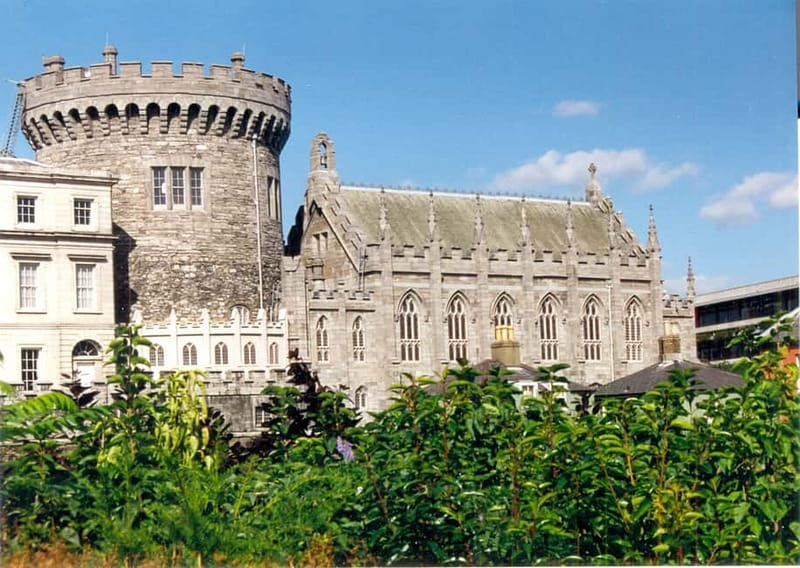
The opening section leads toward City Hall and Dublin Castle. City Hall is a fine place to begin because it connects present-day Dublin with the city’s older civic life. Dublin Castle, meanwhile, gives the walk its medieval and political setting.
You’ll see the castle grounds and gardens from outside. That keeps the tour moving and avoids the time needed for an indoor visit, but it also means you should plan another visit if you want to explore the State Apartments or other interiors. The same rule applies throughout the walk: the guide explains what you are seeing, but admission is not part of the tour.
This arrangement is useful if you want an overview before deciding where to spend more time later. You get context first, then you can return to the places that catch your interest.
Christ Church, Fishamble Street, and Smock Alley
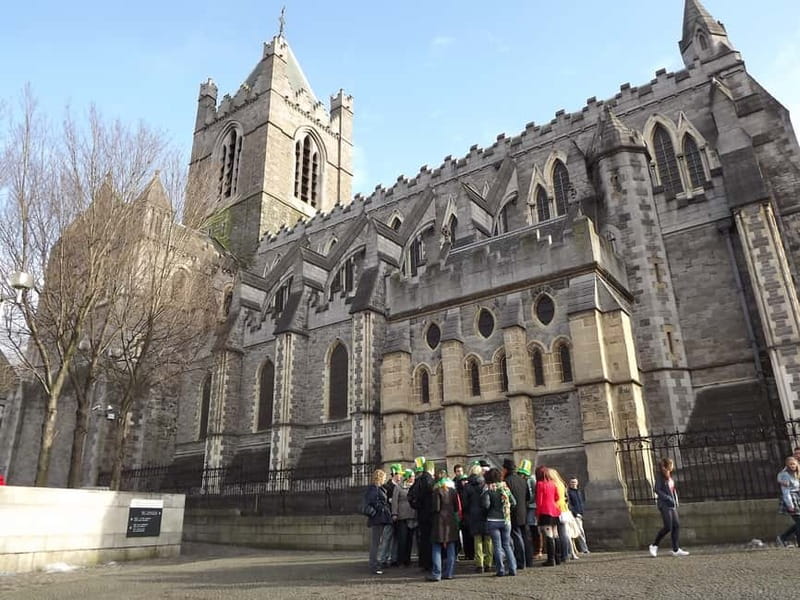
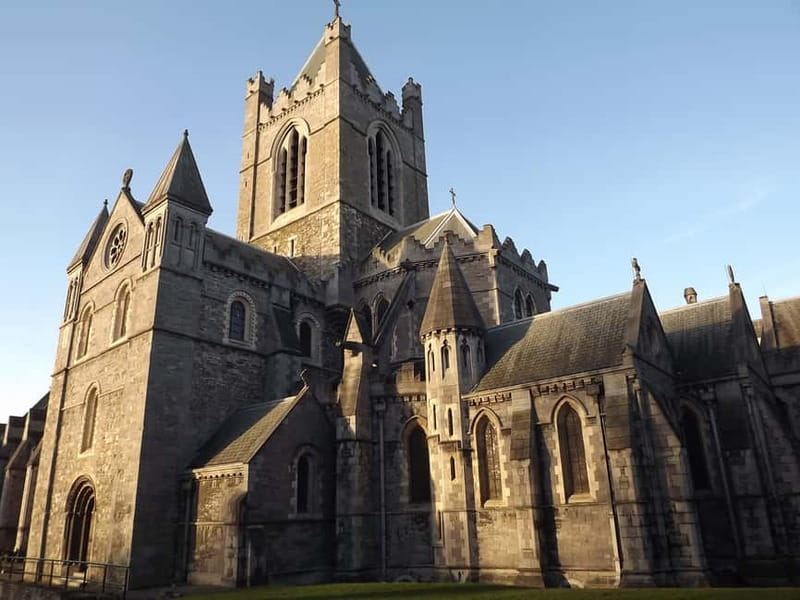
Christ Church Cathedral is one of the major landmarks in the old quarter. Its exterior helps show how concentrated Dublin’s early center is, with the cathedral, castle, civic buildings, and old streets all close together.
The walk continues along Fishamble Street and Smock Alley. These names can be easy to miss if you simply follow the main tourist paths, yet they help reveal a less polished and more layered side of central Dublin.
Smock Alley is especially useful as a reminder that Dublin’s past is not limited to grand monuments. The route uses streets, buildings, and small details to explain how ordinary urban life developed around the city’s major institutions.
Again, you view Christ Church from outside. If you want to enter, check opening times separately and allow extra time after the walk. The walking route itself is designed to introduce the setting, not to provide a full cathedral visit.
Temple Bar beyond the nightlife
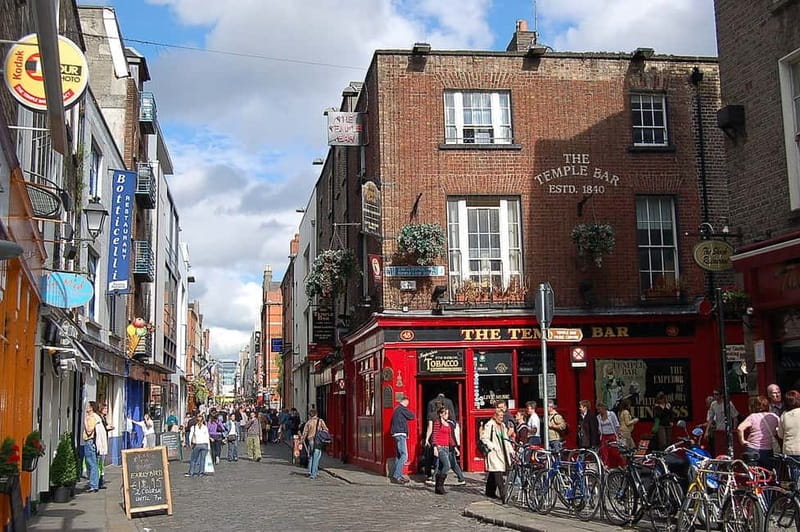
Next comes Meeting House Square and the Temple Bar area. Many people know Temple Bar mainly for pubs and evening crowds, but this tour places it within Dublin’s older street plan and cultural story.
Meeting House Square gives the area a more historical and architectural focus. The walk also passes Fishamble Street and Smock Alley before crossing toward the river, so you see Temple Bar as part of a connected district rather than as an isolated entertainment zone.
I appreciate this approach because it helps you look past the obvious pub signs. You may still find the area busy, and the tour does not remove that reality, but the guide can point out details that are easy to miss when you are focused only on finding a drink or taking a photograph.
The route also includes unusual surprises. You’ll hear about Dublin’s first full-time cinema, now defunct, and see an amusing representation of a Leonardo da Vinci painting. These details give the walk a lighter tone and break up the more formal political and religious history.
A different side of Dublin on the same trip:
- Dublin to Cliffs of Moher, including Wild Atlantic Way and Galway
★ 5.0 · 23,331 reviews - From Dublin: Cliffs of Moher, Burren & Galway City Day Tour
★ 4.8 · 18,888 reviews - Dublin: Guinness Storehouse Entry Ticket
★ 4.6 · 16,863 reviews - Dublin to Cliffs of Moher, Burren, Wild Atlantic Way, Galway Tour
★ 5.0 · 12,924 reviews
Crossing the Millennium Bridge over the Liffey
The Millennium Bridge brings you across the River Liffey and into the Italian Quarter. This is one of the most useful moments for understanding Dublin’s layout because the river is not just a scenic feature. It is the city’s central dividing line, with important streets and landmarks on both sides.
The bridge itself adds a small piece of fun to the walk. You’ll hear the story of its movement and can feel its wobbly character as you cross. It is a simple experience, but it gives the group a shared moment between the older streets of Temple Bar and the north side.
The Italian Quarter continues the route’s theme of surprising corners. Rather than offering only the standard postcard sights, the tour draws attention to places that you could easily pass without understanding their role in the city.
One detail to look for is a former Lisbon tram now serving as a café. It is the sort of curiosity that works well on a guided walk because the guide can explain why it is there and why it matters, rather than leaving you to wonder what you are looking at.
St Mary’s Church and Dublin’s unusual conversions
St Mary’s Church is another memorable stop. It is now a famous café and bar, which makes it a good example of Dublin’s habit of giving old buildings new lives.
The building’s present use may surprise you, but that is part of the point. Dublin’s past is visible not only in preserved monuments but also in places that have changed function. A church that is no longer a church tells you something about how the city adapts its old spaces.
This is also where the walk’s storytelling style comes into its own. The guide does not just list dates and architectural labels. The aim is to connect buildings to people, changes in use, and the everyday character of the city.
You’ll also encounter Henry and Moore Streets before reaching O’Connell Street. These streets help shift the mood from the medieval quarter and Temple Bar toward the north side’s main historic artery.
O’Connell Street, the General Post Office, and independence
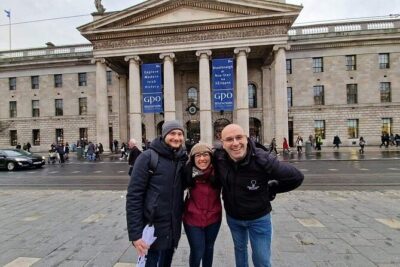
O’Connell Street is one of Dublin’s most important historic streets, and the General Post Office is its key landmark on this walk. The building served as the headquarters of the rebels during the 1916 Rising.
The Rising led to the destruction of the General Post Office and much of the surrounding street and district. Standing outside the building gives you a clear sense of how political history is tied to a real urban setting, not just a chapter in a book.
The tour also points out the O’Connell Monument. Together, the monument and the General Post Office frame the street’s national importance and help explain the changing public identity of Ireland.
One small detail adds a personal touch to the story: a post box connected with Ireland’s transition to independence. It is an easy object to walk past, but it gives the political shift a visible, everyday form.
This section may be especially valuable if you want more than dates and names. The guide focuses on the people linked to these events and the effect of political change on the city around them.
The former Parliament House and the final approach to Trinity
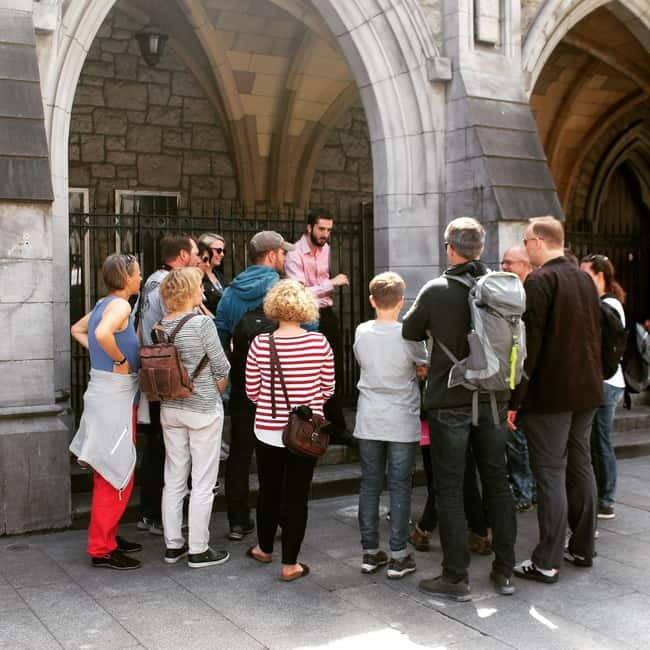
The walk continues toward the former Parliament House, now the Bank of Ireland. This building marks another important stage in Dublin’s political story and provides a counterpoint to the General Post Office.
Seeing both buildings on the same route helps you compare different periods of Irish government and public life. The tour does not require you to enter either one, but the exteriors provide useful reference points as you walk toward Trinity College.
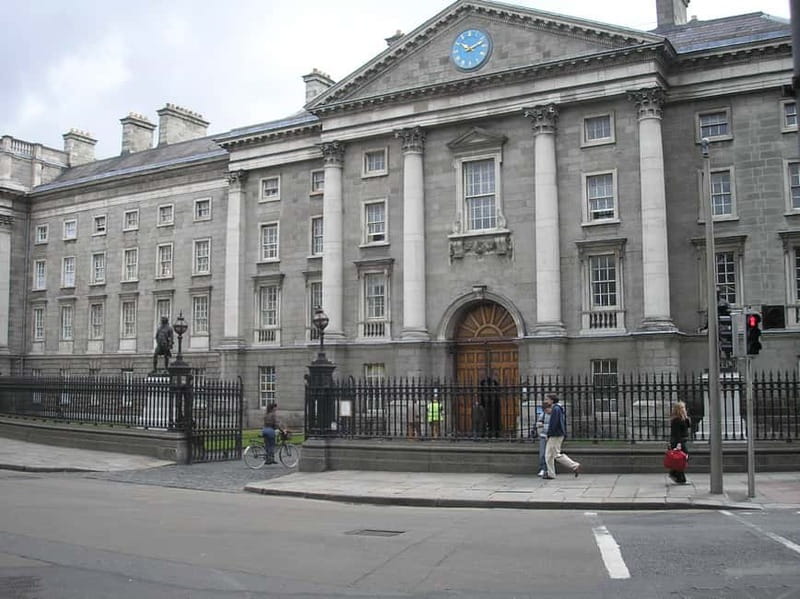
The published route description places the finish outside Trinity College, near its famed Book of Kells. That is a practical ending because Trinity is one of the easiest places to revisit on your own.
You should note a small point about the meeting information. The stated meeting point is the Tree of Gold statue on Dame Street, while the activity details also say the walk ends back at the meeting point. The route description says it finishes around Trinity College. Confirm the exact end point when you book, especially if you have a timed Trinity visit or another appointment afterward.
The Book of Kells itself is not included, and the tour does not provide an indoor Trinity visit. Still, ending near the college makes it easy to continue exploring if you have the time.
What the $34 price gives you
At $34 per person, the tour is priced as a guided city orientation rather than an attraction package. You are paying for a 2.5-hour German-speaking walk, a professional guide, and a route that links many of Dublin’s central sights.
No entrance tickets are included. That keeps the price lower than a tour built around several paid attractions, but you should budget separately if you want to enter Dublin Castle, Christ Church Cathedral, or Trinity College’s Book of Kells.
I see the value in this format if you are visiting Dublin for the first time, want German commentary, or prefer to choose your indoor visits after you understand the city’s layout. It is less useful if your main goal is extended time inside one landmark.
Gratuities are not included. Carry something extra if you would like to thank the guide at the end.
Pace, group size, and practical comfort
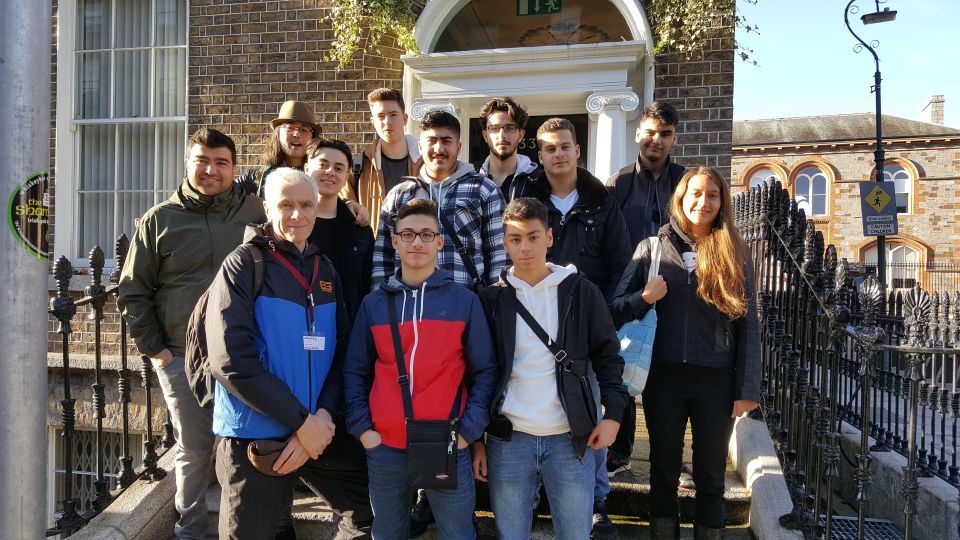
The walk lasts two and a half hours, so comfortable shoes are important. The route covers several districts and crosses the river, making it a real city walk rather than a short loop around one square.
The small-group format should make it easier to hear the German commentary and ask questions. Additional guides may be provided when required, which can help keep groups manageable.
The activity is listed as wheelchair accessible. Because the route uses city streets, squares, and a bridge, you should still confirm the current route details if you have specific mobility needs.
There are no stated food or drink inclusions, so plan to eat before or after the walk. The unusual café and bar stops are points of interest, not included refreshment breaks.
The tour offers free cancellation up to 24 hours in advance and allows you to reserve now and pay later. Those terms are useful if your Dublin plans are still shifting, but check the available starting times before arranging other activities.
Who should book this Dublin walk?
I would choose this tour for a first or second day in Dublin, especially if you want to get your bearings in German. The route covers enough ground to show how the south side, north side, Temple Bar, the old quarter, and Trinity fit together.
It is also a good match for you if you enjoy small details. The former cinema, converted church, tram café, da Vinci reference, post box, and wobbly bridge give the walk a lighter and more curious feel than a straight march between monuments.
History-minded visitors will appreciate the General Post Office, O’Connell Monument, former Parliament House, Dublin Castle, and Christ Church. The guide’s focus on human stories should make the political and religious material easier to remember.
I would be more cautious if you want indoor access, extensive free time at each stop, or a slow architectural study. You will see many places, but usually from the outside and in the flow of a walking route.
Should you book it?
Book this walk if you want a German-speaking introduction to central Dublin that combines major landmarks with small surprises. The route is broad, the price is reasonable for a 2.5-hour guided walk, and the small-group format should keep the experience personal.
Skip it if you already know central Dublin well or mainly want admission to the Book of Kells, Dublin Castle, or Christ Church Cathedral. For most first-time visitors who want clear German commentary and a useful city overview, this is a practical way to start.
FAQ
How long does the Dublin walking tour last?
The tour lasts 2.5 hours. Starting times vary, so check availability when booking.
What language is the tour conducted in?
The live tour guide speaks German. The activity information lists German as the available language.
Where does the tour start?
The stated meeting point is the Tree of Gold statue, Crann an Óir, at Central Plaza on Dame Street in Dublin 2, near the corner of Dame Street and Fownes Street Upper.
Which major landmarks are included?
The route includes City Hall, Dublin Castle grounds and gardens, Christ Church Cathedral, Meeting House Square, the Millennium Bridge, O’Connell Street, the General Post Office, the O’Connell Monument, the former Parliament House, and Trinity College.
Can I enter Dublin Castle or Christ Church Cathedral during the tour?
No. The tour information states that all visits are external. Opportunities may be available for you to visit some sites separately after the walk.
Does the tour include entry to the Book of Kells?
No. The walk finishes around Trinity College and its famed Book of Kells, but admission is not included.
Is the tour wheelchair accessible?
Yes. The activity is listed as wheelchair accessible.
How much does the tour cost?
The listed price is $34 per person.
Can I cancel or pay later?
Yes. You can cancel up to 24 hours in advance for a full refund, and the reserve-now, pay-later option lets you book without paying immediately.
Just added around Dublin
- Dublin: Pub Tour. Pour The Perfect Guinness, Whiskey & Music★ 5.0 · 3 reviews
- A Self Guided Walking Tour of Dublin’s Docklands★ 4.5 · 3 reviews
- Private Dublin City tour★ 5.0 · 3 reviews
- Dublin One Day Tour with a Local: 100% Personalized & Private★ 4.5 · 3 reviews
- Waterford Crystal and Kilkenny Full-Day Rail Tour from Dublin★ 5.0 · 3 reviews
- Secret and unusual Dublin: guided walking tour★ 5.0 · 3 reviews
- 5 Day Ireland’s South−East Including Admission from Dublin★ 4.5 · 3 reviews
- Turtle Bunbury’s Dublin: A Self-Guided Audio Tour from a Celebrated Author★ 5.0 · 3 reviews
Walking Tours, compared.
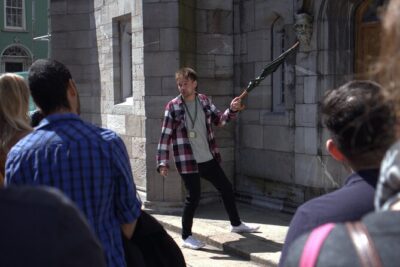
Dublin Highlights and Hidden Gems Guided Walking Tour
Read our review →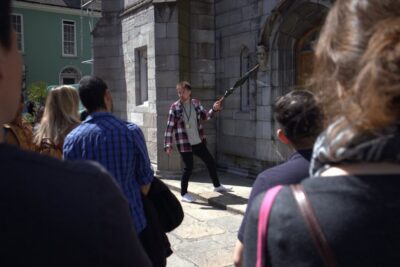
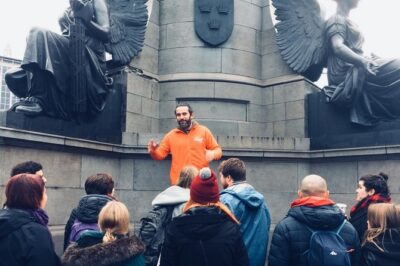
90 Minute Dublin Walking tour and Sightseeing tips
Read our review →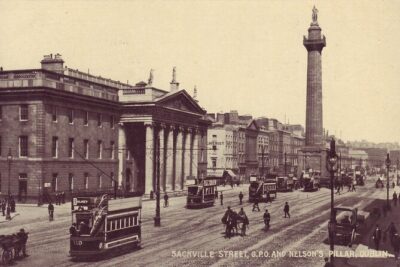

Dublin Traditional Irish 3 Course Meal Walking Tour with Local
Read our review →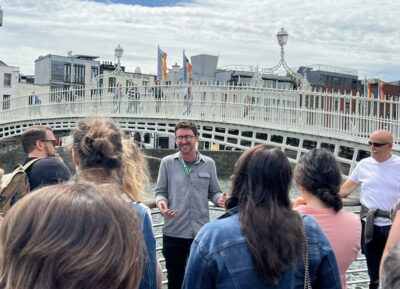
Browse the lists this tour appears in