
Reviewed · WALKING TOURS
Dublin: Bucket List Sights Walking Tour
Dublin’s long story is packed into this two-hour walk through the old city, from Viking foundations and Norman stonework to British rule, Irish independence, Georgian grandeur, and today’s Silicon Docks. You’ll see the city’s headline sights without spending a full day on your feet.
I like the route’s clear sense of time and place, especially the way Christchurch Cathedral, Dublin Castle, and Trinity College connect Dublin’s Viking, religious, political, and academic past. I also like the personal touch from guides such as Peter, who adapts his explanations to your English level and offers ideas for the rest of your stay.
The main consideration is pace. You cover many sights in two hours, but most are viewed from outside, and the tour finishes at Trinity College rather than including admission to the Book of Kells exhibition. This is an orientation walk, not a full interior tour.
In This Review
- Key points at a glance
- Starting beside Christchurch Cathedral
- St. Patrick’s Cathedral and Dublin’s literary side
- Dubh Linn Garden and the Viking waterfront
- Dublin Castle, from British rule to Irish independence
- Temple Bar, the city’s loudest postcard
- Crossing the Liffey and looking north
- The Ha’Penny Bridge and Central Plaza
- College Green and Dublin’s Georgian power
- Molly Malone and the final stop at Trinity College
- What the two-hour format really gives you
- Who should book this Dublin walk?
- My booking advice
- FAQ
- How much does the Dublin Bucket List Sights Walking Tour cost?
- How long does the walking tour last?
- Where does the tour start?
- How will I find the guide?
- Where does the tour end?
- Which language is the tour conducted in?
- Does the tour include entry to the Book of Kells exhibition?
- Is Dublin Castle included in the route?
- Is the walking tour wheelchair accessible?
- Can I cancel for a full refund?
Key points at a glance
- Viking beginnings: Start at Christchurch Cathedral, first built in wood by Vikings about a thousand years ago.
- Two important cathedrals: Compare Christchurch with St. Patrick’s Cathedral, linked to Jonathan Swift and Benjamin Lee Guinness.
- Power in one courtyard: Walk through Dublin Castle, the former centre of British government in Ireland.
- Modern pub district: See Temple Bar, famous for live music, pubs, and nightlife.
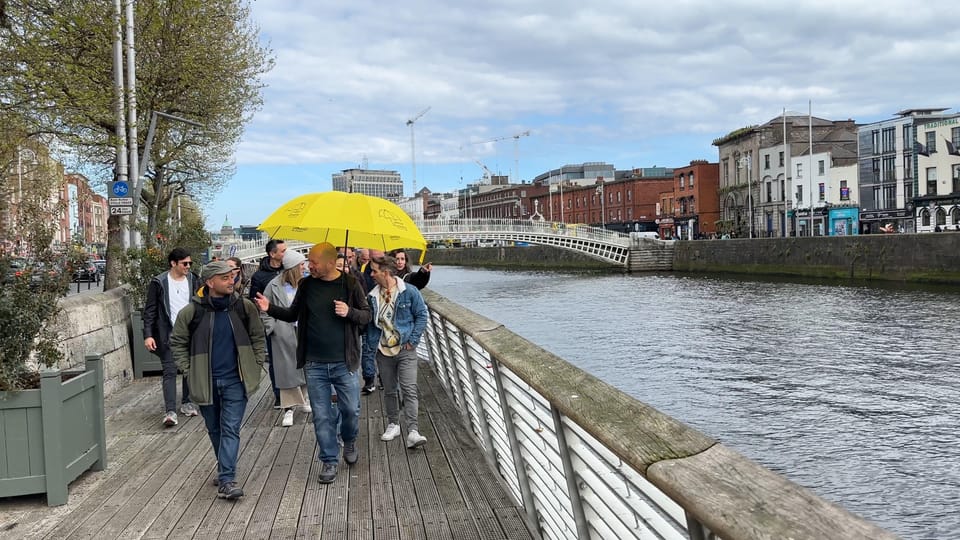
- City views across time: Look from the River Liffey toward Dublin’s Celtic origins and modern Silicon Docks.
- A useful finish: End outside Trinity College, giving you a clear next stop for the Book of Kells exhibition.
Starting beside Christchurch Cathedral
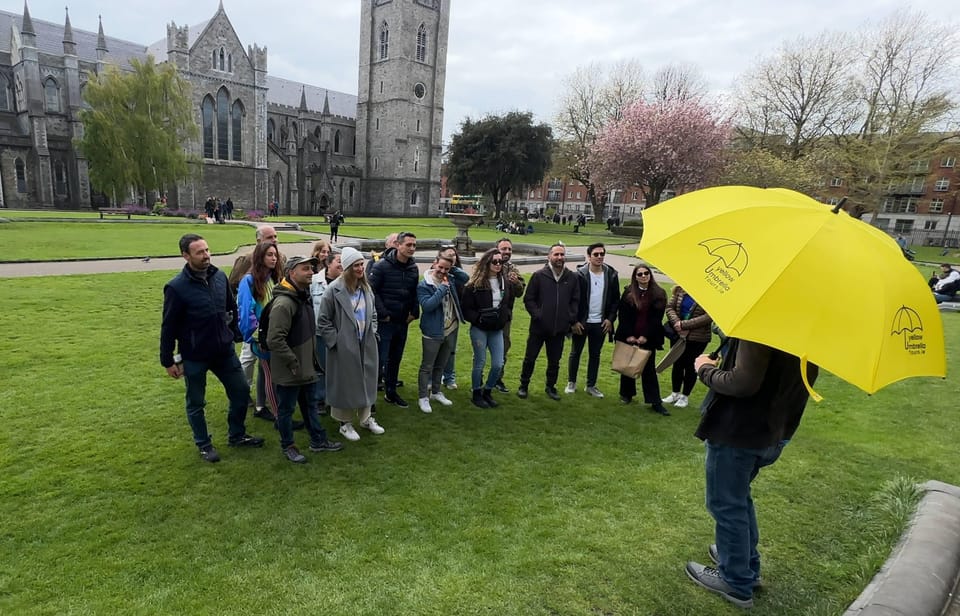
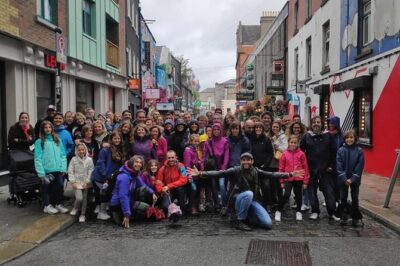
The meeting point is across from Christchurch Cathedral, outside the Bull and Castle. Look for the yellow umbrella. That simple marker matters in central Dublin, where busy streets and old buildings can make a precise meeting spot hard to pick out.
Christchurch is a strong place to begin because it gives you Dublin in layers. The site reaches back to Viking settlement, when the first cathedral was built in wood. The Normans later rebuilt it in stone, and the building you see today includes the result of major nineteenth-century work funded by whiskey money from Henry Roe.
I like this opening because it avoids treating Dublin as a single-period city. You start with Vikings, move through Norman influence, and then encounter the Victorian Gothic style that shapes much of the cathedral’s present appearance.
You should expect to admire Christchurch from the outside during this walk. The tour does not include cathedral admission, so if the interior is important to you, treat this stop as a preview and return later with a separate ticket.
More walking tours in Dublin:
- Dublin Highlights and Hidden Gems Guided Walking Tour
★ 5.0 · 6,020 reviews - Dublin: Highlights and Hidden Gems Walking Tour
★ 4.9 · 2,140 reviews - 1916 Rebellion Walking Tour
★ 5.0 · 1,605 reviews
St. Patrick’s Cathedral and Dublin’s literary side
From Christchurch, the route continues to St. Patrick’s Cathedral, named for Ireland’s patron saint. The tour connects the cathedral with the familiar story of Patrick banishing snakes from the island, one of the many legends that remain part of Ireland’s popular identity.
St. Patrick’s also gives the walk a literary angle. Jonathan Swift, author of Gulliver’s Travels and a former dean, is buried here. That detail helps you see the cathedral as more than a religious building. It is also linked to one of Ireland’s best-known writers.
The cathedral was restored in the 1860s with support from Sir Benjamin Lee Guinness. I find that useful context because it explains why a medieval religious site also carries the mark of Dublin’s industrial and commercial wealth.
Again, the cathedral is part of the walking route rather than an included interior visit. You’ll get the story and the exterior setting, then decide if you want to spend more time inside after the tour.
Dubh Linn Garden and the Viking waterfront
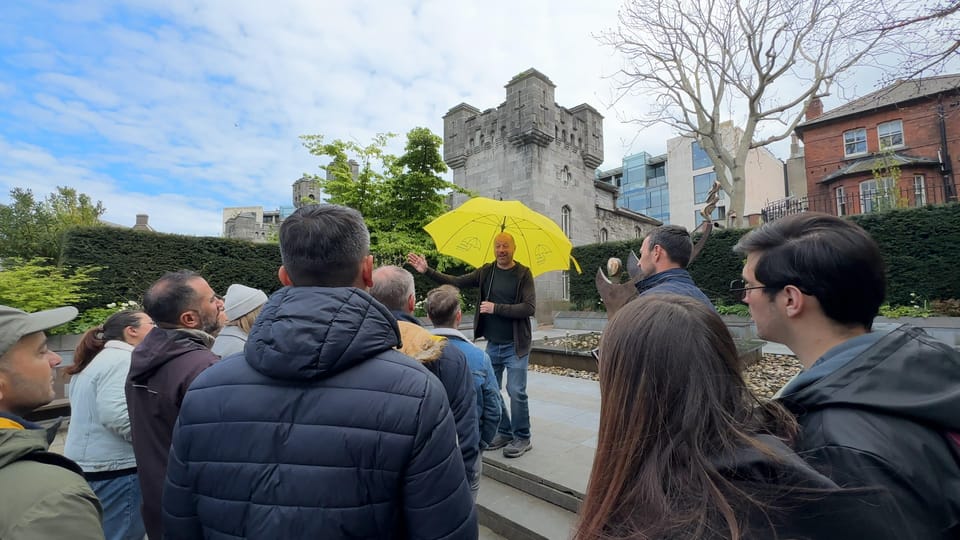
The walk then reaches Dubh Linn Garden, beside Dublin Castle and the Chester Beatty Library. This is where the old name of Dublin connects with the city’s Viking past. The area is identified as the place where Viking longboats were moored when they arrived roughly twelve hundred years ago.
That setting makes a useful bridge between the cathedrals and the castle. You are no longer looking only at grand stone buildings. You are also considering why the settlement grew here in the first place.
The Chester Beatty Library is another notable sight in the area, though entry is not listed as part of the tour. If you have extra time, you can note it as a possible return visit, but do not expect the walking tour to provide a full library visit.
Dublin Castle, from British rule to Irish independence
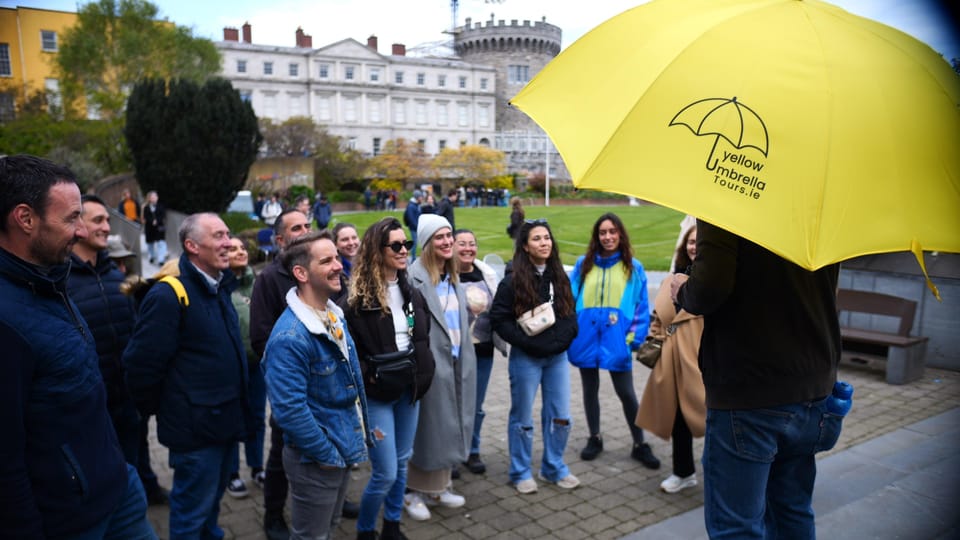
Dublin Castle is one of the tour’s most important political stops. You pass through both its lower and upper courtyards, seeing a mix of medieval and Georgian architecture. That combination gives you a quick visual lesson in how Dublin changed as power shifted and buildings were rebuilt.
For about 700 years, the castle served as the seat of British government in Ireland. In 1922, it was handed over to Michael Collins and the Irish Free State after independence. The political weight of that handover makes the courtyards more than attractive backdrops.
I like the way this stop places Irish independence in a real location rather than treating it as a date to memorize. You can connect the building to British administration, the transfer of power, and the creation of the Irish Free State.
The castle is a particularly good stop for first-time visitors who want a quick framework for Dublin’s political story. It is also one of the places where the two-hour limit becomes clear. You will receive context and see the courtyards, but this is not a detailed castle visit.
A different side of Dublin on the same trip:
- Dublin to Cliffs of Moher, including Wild Atlantic Way and Galway
★ 5.0 · 23,331 reviews - From Dublin: Cliffs of Moher, Burren & Galway City Day Tour
★ 4.8 · 18,888 reviews - Dublin: Guinness Storehouse Entry Ticket
★ 4.6 · 16,863 reviews - Dublin to Cliffs of Moher, Burren, Wild Atlantic Way, Galway Tour
★ 5.0 · 12,924 reviews
Temple Bar, the city’s loudest postcard

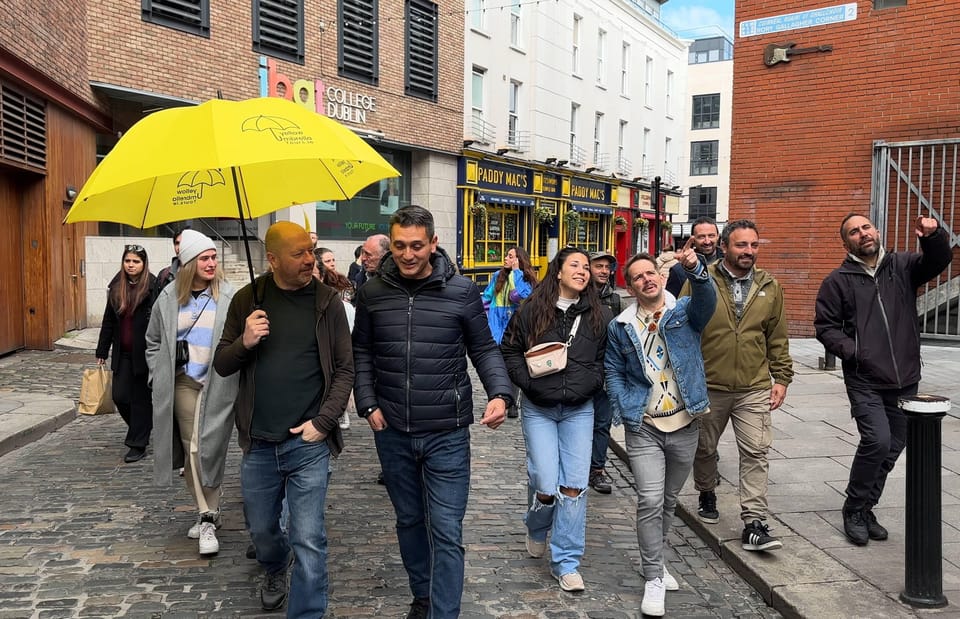
Temple Bar brings a very different mood. It is one of the older parts of Dublin, with roots linked to the Tudor conquest in the sixteenth century. Today, it is known for pubs, live music, and nightlife.
You’ll see why Temple Bar appears on nearly every first visit to Dublin, but you should keep your expectations in check. The district is famous and central, yet the tour does not turn into a pub crawl or include drinks. You pass through it as part of the city story.
For me, the value here is contrast. After cathedrals and government buildings, Temple Bar shows Dublin as a social city. Its music and pubs are part of the modern experience, even if the area can feel more tourist-focused than other parts of town.
The guide can help you understand where Temple Bar fits in the old city, then you can decide if you want to return later for music or a drink. This is one reason the walk works well near the start of a Dublin visit.
Crossing the Liffey and looking north

The route crosses the River Liffey to the north side, where you get a view across Dublin’s long timeline. The guide connects the original Celtic settlement from about 2,100 years ago with the modern development of the Silicon Docks, influenced by American companies in the twenty-first century.
That broad view is one of the more unusual parts of the walk. Many city tours focus only on medieval buildings. Here, you are encouraged to picture Dublin as a settlement that changed from Celtic beginnings to Viking arrival, English control, independence, and a modern technology economy.
The view is not described as a formal lookout with a long stop, so expect a city perspective during the route rather than a dedicated photography session. Still, it gives you a useful way to understand Dublin’s growth on both sides of the river.
The Ha’Penny Bridge and Central Plaza
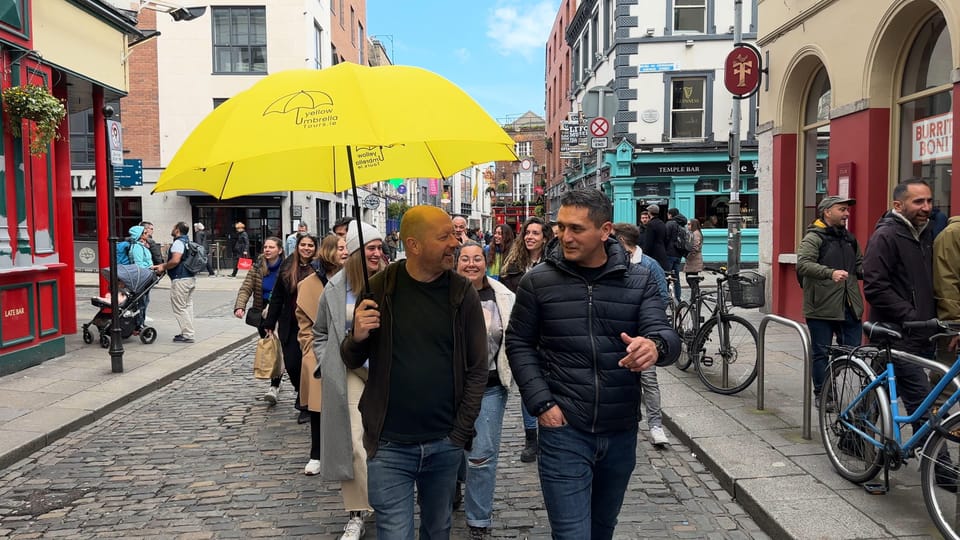
You return across the iconic Ha’Penny Bridge and pass through Merchant’s Arch toward Crown Alley. The bridge is one of Dublin’s best-known city symbols, and crossing it keeps the walk tied to the everyday shape of the city rather than only its monuments.
The route then considers Central Plaza, Sam Stephenson’s brutalist building. Its concrete design provides a sharp change from the cathedral stone, Georgian façades, and pub streets seen earlier.
I like this stop because it gives you permission to look at Dublin’s less-loved architecture. Not every notable building is pretty, and Central Plaza helps show how the city continued to change after its older landmarks were already in place.
This part of the route may appeal most to you if you enjoy cities as working places, not just collections of famous sights. It also keeps the tour from becoming a simple checklist of beautiful buildings.
College Green and Dublin’s Georgian power
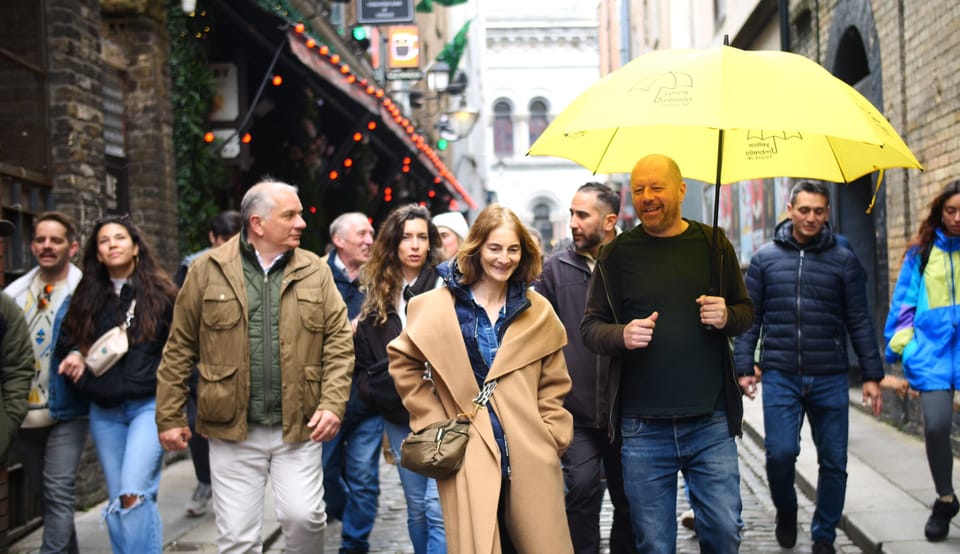
At College Green, the walk reaches some of Dublin’s finest neoclassical Georgian architecture. The area was once the centre of government and finance in a city that regarded itself as the second city of the British Empire.
The banks and former parliament buildings give you a strong sense of Dublin’s eighteenth-century ambitions. After hearing about British rule at Dublin Castle, you can see how government and money shaped the city’s public face.
This is another stop where the guide’s storytelling matters. The buildings alone are impressive, but the political setting explains why the area looks grander and more formal than many nearby streets.
As with the other stops, the tour emphasizes exterior views. You should book this walk for the city’s layout and background, not for long interior visits or specialist architectural study.
Molly Malone and the final stop at Trinity College
Near St. Andrew’s Church, you say hello to Molly Malone, Dublin’s favorite daughter. The statue is a familiar city marker and a lighthearted change after the more serious stories of religious authority, government, and independence.
The tour ends outside the front gate of Trinity College. This is a practical finish because Trinity’s famous Book of Kells exhibition is one of Dublin’s major paid sights. You can use the walk to decide if you want to visit the exhibition next, though admission is not included.
Ending at Trinity also leaves you in a useful central location. You have covered the old city on foot and can continue exploring from College Green, return to a cathedral, visit the Chester Beatty Library, or spend time in Temple Bar.
The final stop works best if you see the tour as a first chapter. It gives you enough context to make better choices with the rest of your day instead of asking you to cram every major attraction into one booking.
What the two-hour format really gives you
The $19 price is good value if you want a guided introduction to central Dublin. You are paying for a local English-speaking guide, a carefully connected route, and explanations that link buildings to larger events. That is less expensive than booking several individual attractions, though it does not include entry to any of them.
The route is full, with cathedrals, a garden, a castle, Temple Bar, river crossings, College Green, Molly Malone, and Trinity College all included. You will need to keep moving, and the tour may feel brisk if you want long photo stops or detailed questions at every building.
The strongest value comes from the guide’s flexibility. Peter, one of the named guides, is described as adjusting the tour to your level of English and answering additional questions. He also gives suggestions for the rest of your stay, which can be especially helpful when you have just arrived and need a basic plan.
The experience is conducted in English, so it suits you best if you can follow spoken English at a comfortable level. The guide’s ability to adapt helps, but the tour is still a spoken history walk rather than a multilingual audio experience.
The activity is wheelchair accessible. Since this is a walking route through central streets, you should still confirm the specific conditions that matter to you when booking, but the activity information identifies it as accessible.
You can cancel up to 24 hours before the tour for a full refund, and you can reserve now while paying later. Those policies make the $19 commitment easier if your Dublin schedule is still changing.
Who should book this Dublin walk?
I would choose this tour for a first visit, especially if you want to understand how Dublin’s main sights relate to one another. It suits people who prefer stories and city orientation over a single long attraction visit.
It is also a good match for solo visitors or couples who want a local guide at a modest price. Peter’s friendly, conversational approach, including answers to personal questions and suggestions for later, appears particularly useful if you want more than a memorized script.
Families with older children may appreciate the variety. Vikings, castles, churches, bridges, pubs, Molly Malone, and modern technology give the guide several subjects to work with. Younger children may find the two-hour pace and historical detail less engaging, though the activity details do not set an age range.
You might skip this walk if you already know central Dublin well, want extensive interior visits, or prefer a slower specialist tour. The route covers a lot, but its purpose is to connect the sights, not replace separate visits to Christchurch Cathedral, St. Patrick’s Cathedral, Dublin Castle, the Chester Beatty Library, or the Book of Kells exhibition.
My booking advice
Book it early in your Dublin stay if you want a useful framework for the city. The route covers the essential old-town sights, the guide can answer questions in real time, and the finish at Trinity College helps you plan what to do next.
At $19 for two hours, I consider it a sensible introduction, with one clear limit: expect exterior sightseeing and a brisk route. If that sounds right for you, the yellow umbrella at Christchurch Place is a good place to begin learning how Dublin’s Viking past, British period, independence, pub culture, and modern economy fit into one compact city.
FAQ
How much does the Dublin Bucket List Sights Walking Tour cost?
The tour costs $19 per person.
How long does the walking tour last?
The tour lasts two hours. Starting times vary, so check availability when booking.
Where does the tour start?
Meet across the road from Christchurch Cathedral, outside the Bull and Castle.
How will I find the guide?
Look for the yellow umbrella at the meeting point.
Where does the tour end?
The activity ends back at the meeting point.
Which language is the tour conducted in?
The live tour guide speaks English, and English is the listed tour language.
Does the tour include entry to the Book of Kells exhibition?
No. The walk finishes outside Trinity College, home of the Book of Kells exhibition, but admission is not included.
Is Dublin Castle included in the route?
Yes. The route includes Dublin Castle’s lower and upper courtyards.
Is the walking tour wheelchair accessible?
Yes. The activity is listed as wheelchair accessible.
Can I cancel for a full refund?
Yes. You can cancel up to 24 hours in advance for a full refund.
Just added around Dublin
- Dublin: Pub Tour. Pour The Perfect Guinness, Whiskey & Music★ 5.0 · 3 reviews
- A Self Guided Walking Tour of Dublin’s Docklands★ 4.5 · 3 reviews
- Private Dublin City tour★ 5.0 · 3 reviews
- Dublin One Day Tour with a Local: 100% Personalized & Private★ 4.5 · 3 reviews
- Waterford Crystal and Kilkenny Full-Day Rail Tour from Dublin★ 5.0 · 3 reviews
- Secret and unusual Dublin: guided walking tour★ 5.0 · 3 reviews
- 5 Day Ireland’s South−East Including Admission from Dublin★ 4.5 · 3 reviews
- Turtle Bunbury’s Dublin: A Self-Guided Audio Tour from a Celebrated Author★ 5.0 · 3 reviews
Walking Tours, compared.
Dublin Highlights and Hidden Gems Guided Walking Tour
Read our review →
90 Minute Dublin Walking tour and Sightseeing tips
Read our review →

Dublin Traditional Irish 3 Course Meal Walking Tour with Local
Read our review →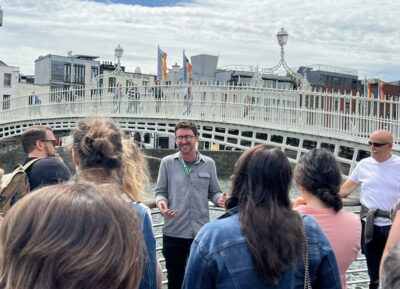

Browse the lists this tour appears in