
Reviewed · WORKSHOPS
Irish Baking Class: Granny’s Apple Cake, Traditional Scones
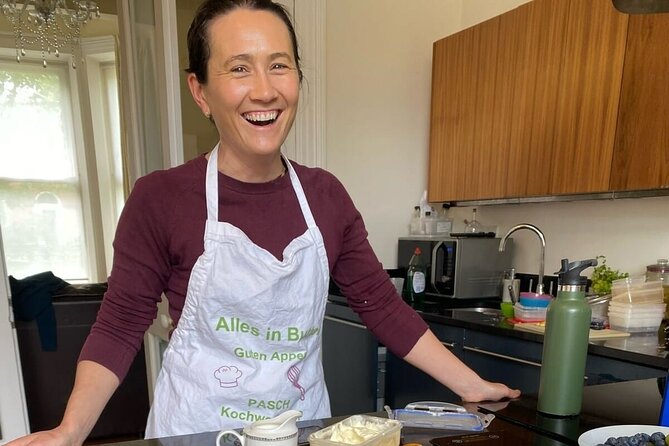
The best part of this Dublin class is that you bake in Emily Lavelle’s Victorian home, not in a polished cooking school built for tour groups. Over tea or coffee, you work through an Irish family recipe, hear about daily life and food traditions, then sit down to eat what you made while it is still warm.
I like the small group size, capped at six, and the choice between light, buttery scones and Granny’s spiced apple cake. I also like that Emily brings in her work as a diet and wellness coach, so the class includes useful cooking tips rather than just a recipe to copy.
The main consideration is timing. At about 90 minutes, this is a compact visit, and the advertised format asks you to choose one bake. It suits a relaxed morning better than anyone hoping for a long, multi-course cooking school session.
In This Review
- Key points to know before booking
- A Dublin morning that starts with tea
- Choosing between scones and Granny’s apple cake
- What happens while the bake is in the oven
- Eating the results at Emily’s table
- Why the home setting changes the feel
- The price and what you receive for $102.41
- Who will enjoy this class most
- Why Emily’s hosting matters
- How this fits into a Dublin itinerary
- Should you book Emily’s Irish baking class?
- FAQ
- Where does the Irish baking class take place?
- What time does the class start?
- How long does the baking class last?
- Which recipes can I make?
- Can children join the class?
- Can dietary requirements be accommodated?
Key points to know before booking
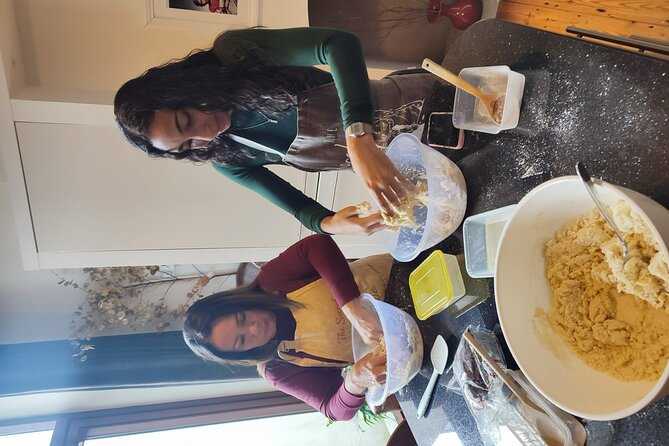
- Bake in a real Dublin home: The class takes place in Emily’s Victorian home in the Donnybrook area, giving the morning a personal, residential feel.
- Choose your Irish treat: Make traditional scones with butter, jam, and cream, or Granny’s apple cake with warm spice and fresh cream.
- Keep the group small: A maximum of six people makes it easier to follow the recipe and chat with Emily.
- Expect more than a recipe: Emily talks about Irish food, culture, heritage, and everyday life while you bake.
- Good for families: Children aged eight and older can take part, and dietary needs can be handled if you share them ahead of time.
- Plan for a 10:30 a.m. start: The class begins on Morehampton Road and finishes at the same meeting point.
A Dublin morning that starts with tea
This class begins at 10:30 a.m. on Morehampton Road, in the Donnybrook area of south Dublin. You meet Emily at her home, rather than at a central attraction or a commercial kitchen, so the morning starts in an ordinary Dublin neighborhood.
That setting matters. A home kitchen gives you a closer look at the way food fits into Irish family life. You are not simply watching a chef demonstrate a dish from behind a counter. You are sitting down, talking, measuring, mixing, and learning how a recipe is connected to a household and a family story.
The first step is a cup of tea or coffee before the baking starts. One session also included warm homemade soda bread at this point, which gives you a taste of the sort of welcome Emily offers, though it should not be treated as a guaranteed part of every booking.
The opening chat is useful for anyone who wants a cultural activity that feels easy and social. If you are traveling alone, you have a natural way to meet the host and other people in the room. If you are with family, the informal start helps children settle in before handling ingredients.
Other Dublin tours people book alongside this one:
- Dublin to Cliffs of Moher, including Wild Atlantic Way and Galway
★ 5.0 · 23,331 reviews - From Dublin: Cliffs of Moher, Burren & Galway City Day Tour
★ 4.8 · 18,888 reviews - Dublin: Guinness Storehouse Entry Ticket
★ 4.6 · 16,863 reviews
Choosing between scones and Granny’s apple cake
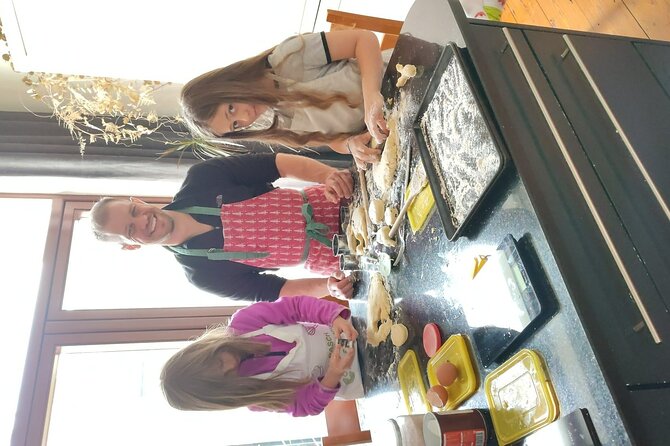
The class centers on a choice between two familiar Irish bakes. You can make traditional Irish scones, or you can choose Granny’s apple cake.
Scones are the more practical option if you want something quick and forgiving. The finished pastries are described as golden, buttery, light, and fluffy. You eat them with Irish butter, Irish jam, and fresh cream, which is a simple combination but also the point. This is everyday Irish baking, not a showpiece covered in elaborate decoration.
The scone choice works well for children and first-time bakers because the finished result is easy to understand. You can learn the basic technique, see how the dough should feel, and sit down to eat soon after the baking is complete. Emily’s focus on small techniques and useful tips is especially valuable here. A few modest changes in handling can make the difference between a tender scone and a heavy one.
Granny’s apple cake takes you in a different direction. It contains chunks of apple and uses a balance of sugar and spice. It is the better pick if you want a distinctly homestyle dessert with a family connection, rather than a bake intended for breakfast or afternoon tea.
You finish the cake with fresh cream. The result should appeal to anyone who likes warm fruit desserts and gentle spice. It is also the more memorable choice if the idea of learning a recipe tied to Emily’s grandmother appeals to you.
The published format presents these as alternatives, so you should select the recipe you most want to learn when booking. Some previous sessions have included both bakes, but the clearest expectation is one chosen recipe within the 90-minute class. If making both is important to you, ask Emily before you arrive.
What happens while the bake is in the oven
The baking time is not dead time. While your creation cooks, Emily talks about Irish food, traditions, and culture. She also shares parts of her own life in Dublin and the family background behind the recipes.
This is where the class becomes more than a basic cooking lesson. You get context for the food instead of only a list of ingredients and oven temperatures. Irish baking is closely tied to home kitchens, family gatherings, tea, and hospitality, and those subjects come up naturally as the class continues.
Emily’s work as a diet and wellness coach adds another layer. You can expect practical cooking suggestions aimed at a healthier, happier lifestyle. This does not turn the class into a nutrition seminar, but it gives the recipes a useful modern angle.
The small group limit helps here. With no more than six people, you have a better chance to ask questions and hear the conversation. It also keeps the class from feeling like a production line. The tradeoff is that this is a personal home visit, so the atmosphere depends on your comfort with a small social setting and conversation.
Eating the results at Emily’s table
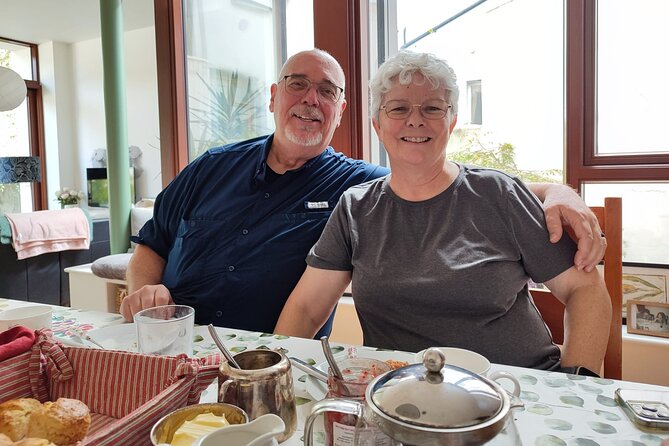
The final part is the reward: you sit down and eat your warm homemade bake. Scones come with fresh cream, butter, and jam. Apple cake comes with fresh cream and the flavor of baked apples, sugar, and spice.
That final sitting gives the class a clear rhythm. You arrive, settle in with tea or coffee, work with your hands, talk while the food bakes, then enjoy the result together. It feels more like being welcomed into a Dublin home for a morning than attending a formal lesson.
You can also take extra baking home. Emily sends the recipes afterward, so the class has value beyond the one morning in Dublin. This is important for the price: you are paying not only for food you eat on the day, but also for instruction, a personal cultural conversation, and recipes you can use later.
The recipes are the most durable souvenir. A magnet or packaged food item may remind you of Ireland, but making the same apple cake or scones at home can bring the memory back in a more useful way.
A few more Dublin tours worth weighing up
- Irish Craic & Cuisine: Cooking Class & Dinner in Central Dublin
★ 5.0 · 80 reviews - Private Cooking Class in a Modern Home with Sea Views in Skerries, Dublin
★ 5.0 · 12 reviews - Private Market Tour and Irish Cooking Class in a Modern Skerries Home
★ 5.0 · 7 reviews
Why the home setting changes the feel
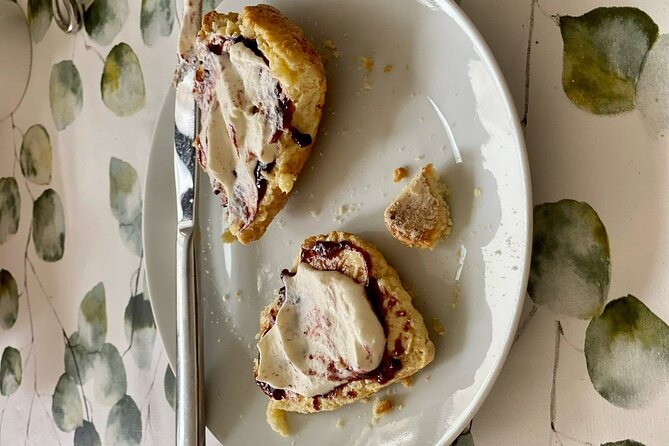
A cooking class in a dedicated school can offer more equipment and a wider menu. Emily’s class offers something different. The kitchen is part of a home in Donnybrook, and the area has a quiet, residential character.
That makes this a good choice if you have already seen Dublin’s major sights and want time with a local host. It also works well near the start of a trip, when you want a friendly introduction to Irish food and customs, or near the end, when you want a slower morning away from the city center.
Getting there may take a little planning. The meeting point is Morehampton Road, and the class ends there. Public transportation is nearby, and taxis to and from the house have been an easy option. Since the activity starts at a fixed time, leave enough room for the journey and do not treat the 10:30 a.m. start as flexible.
The home location is a strength, but it also means this is not a central Dublin landmark with a large sign out front. Keep the meeting details handy and follow the booking instructions carefully.
The price and what you receive for $102.41
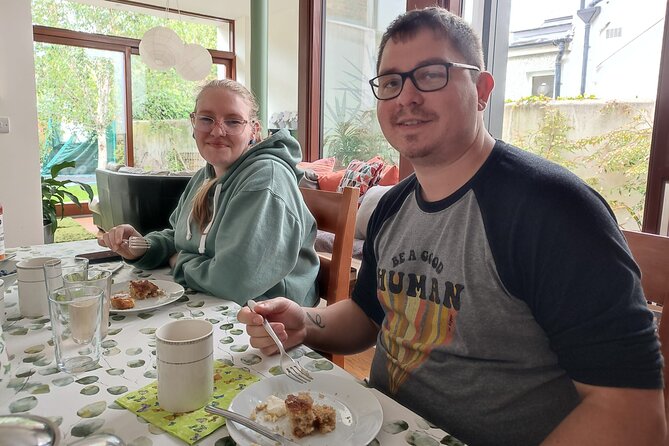
At $102.41 per person, this is not a cheap way to grab a scone. You should judge it as a hosted cultural activity with food, instruction, conversation, and a recipe to take home.
The value is strongest when you want personal contact. Emily is not simply handing you a printed recipe. She explains techniques, shares old family recipes and Irish heritage, and makes room for questions. You also eat the food you prepare, which gives the lesson a satisfying finish.
For a family, the cost adds up quickly, so you should decide if everyone genuinely wants a hands-on class. Children aged eight and older are welcome, and the format can suit a parent and child well. For adults who already bake often, the cultural conversation and family connection may matter more than learning basic pastry skills.
The maximum of six is another part of the value. A large class could offer a lower rate, but it would not provide the same access to the host. Here, the small group supports the relaxed, conversational format.
The class requires at least two people to operate. If that minimum is not met and the activity is canceled, you are offered another date or experience, or a full refund. You can cancel for a full refund up to 24 hours before the start time, but cancellations or changes inside that window are not refunded or accepted.
Who will enjoy this class most
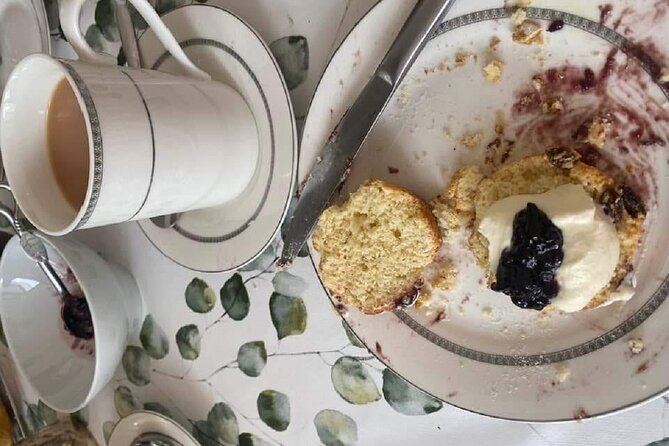
I would choose this for a family with children aged eight or older, a couple wanting a low-key Dublin morning, or a solo visitor who enjoys meeting a local person in a home setting.
It is especially good for you if:
- You prefer food with a story behind it.
- You like small groups and informal conversation.
- You want to learn a recipe you can repeat at home.
- You are interested in Irish heritage as well as Irish cooking.
- You want a break from museums, pubs, and crowded city sights.
- You appreciate a host who teaches practical techniques along with cultural background.
The class may be less suitable if you want advanced pastry instruction, a full meal, or several different recipes in one visit. It is also not the right pick if you prefer to keep your schedule completely open, since the morning has a fixed meeting point and start time.
Dietary requirements can be accommodated, but you need to tell Emily in advance. Do not wait until you arrive, especially if you have allergies or need a strict dietary adjustment.
Service animals are allowed, and the location is near public transportation. The available details do not promise that every part of a private home is step-free, so anyone with specific mobility needs should confirm arrangements before booking.
Why Emily’s hosting matters
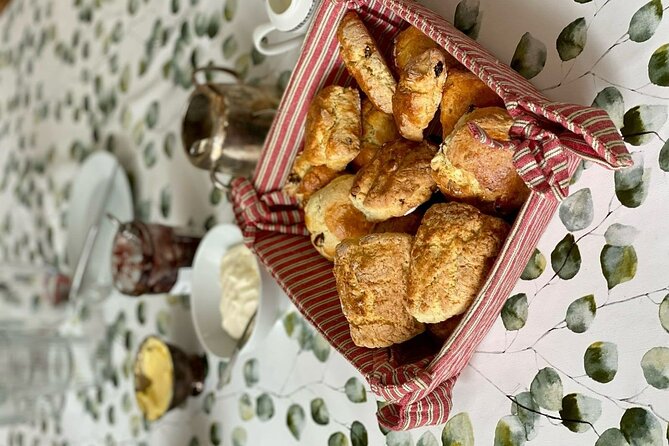
The strongest feature here is Emily herself. Her role is part teacher, part host, and part local storyteller. The class is designed around a warm Irish welcome, and that welcome shapes the whole morning.
You can expect conversation about Irish life alongside the baking. Emily shares family recipes, talks about Irish heritage, and explains how food connects to tradition. That personal element is why this activity can feel more valuable than a standard demonstration.
The teaching style also appears suited to people who do not consider themselves bakers. The hands-on work gives confident cooks something to do, while the relaxed tone keeps beginners from feeling tested. Even if your dough is not perfect, the class is built around learning and eating, not competition.
The most praised qualities are consistent: Emily’s warmth, her sense of fun, her ability to teach, and the comfort of the home setting. Those qualities are not minor extras. They are the reason to choose this particular class over a generic baking lesson.
How this fits into a Dublin itinerary
Schedule it on a morning when you can slow down. The 10:30 a.m. start and 90-minute duration leave part of the afternoon free, but you should allow additional time for reaching Morehampton Road and continuing to your next stop.
It pairs well with a day focused on south Dublin, or with a less structured afternoon. After eating scones or apple cake, you may not want to rush straight into a packed sightseeing schedule.
The class also gives you a useful break from formal attractions. Dublin has plenty of museums, churches, and historic streets, but a city is also understood through its kitchens and daily habits. This visit offers that smaller view of Ireland.
You should not book it mainly for the quantity of food. The portions are part of a tasting and learning session, not a full Irish lunch. Book it for the chance to bake, talk, and leave with a recipe and a personal memory of Dublin.
Should you book Emily’s Irish baking class?
I would book this if you want a small, personal Dublin activity built around home baking and conversation. The choice of scones or Granny’s apple cake gives you a clear focus, while tea, Irish food traditions, and Emily’s family stories add meaning to the cooking.
The price makes the most sense for people who value a private-home setting, a tiny group, and recipes they can use again. Families should confirm dietary needs in advance and decide whether the 90-minute format suits every child.
Skip it if you want advanced culinary training, a large menu, or a central city meeting point. Choose it if you want to spend a gentle morning with an Irish host, learn a traditional bake, and taste the result warm from the oven.
FAQ
Where does the Irish baking class take place?
The class takes place at Emily Lavelle’s home on Morehampton Road in Dublin, in the Donnybrook area. It begins and ends at the same meeting point.
What time does the class start?
The scheduled start time is 10:30 a.m.
How long does the baking class last?
The activity lasts approximately 1 hour and 30 minutes.
Which recipes can I make?
You can choose between traditional Irish scones and Granny’s apple cake. Scones are served with butter, jam, and fresh cream, while apple cake is served with fresh cream.
Can children join the class?
Yes. The activity is suitable for ages eight and older and is described as suitable for families.
Can dietary requirements be accommodated?
Yes. Dietary requirements can be catered for if you tell Emily in advance.
More Workshops in Dublin
- Dublin: Forge a Silver Ring Workshop on Drury Street
★ 4.9 · 1,065 reviews - Dublin: Irish Music and Dance Show with Dance Lesson
★ 4.7 · 567 reviews - Dublin: Roe and Co Distillery Cocktail Workshop Experience
★ 4.9 · 489 reviews - Dublin: Jameson Distillery Whiskey Blending Class
★ 4.8 · 113 reviews
Just added around Dublin
- Dublin: Pub Tour. Pour The Perfect Guinness, Whiskey & Music★ 5.0 · 3 reviews
- A Self Guided Walking Tour of Dublin’s Docklands★ 4.5 · 3 reviews
- Private Dublin City tour★ 5.0 · 3 reviews
- Dublin One Day Tour with a Local: 100% Personalized & Private★ 4.5 · 3 reviews
- Waterford Crystal and Kilkenny Full-Day Rail Tour from Dublin★ 5.0 · 3 reviews
- 5 Day Ireland’s South−East Including Admission from Dublin★ 4.5 · 3 reviews
- Turtle Bunbury’s Dublin: A Self-Guided Audio Tour from a Celebrated Author★ 5.0 · 3 reviews
- Secret and unusual Dublin: guided walking tour★ 5.0 · 3 reviews
Workshops, compared.

Roe and Co Distillery Cocktail Workshop Experience
Read our review →
Irish Craic & Cuisine: Cooking Class & Dinner in Central Dublin
Read our review →


Jameson Distillery Whiskey Cocktail-Making Class
Read our review →Browse the lists this tour appears in