
Reviewed · HISTORICAL TOURS
Dublin: Jeanie Johnston Tall Ship Irish Famine History Tour
The most powerful part of the Jeanie Johnston tour comes below deck, where you see how up to 250 people lived during a long Atlantic crossing. It is one thing to read about the Irish Famine. It is another to stand in the tight quarters and picture families spending most of their voyage there, with only half an hour of fresh air each day.
I like two things especially. First, the guides turn a difficult subject into a human story by introducing you to individual passengers and crew. Second, the tour gives you both the handsome upper deck and the sobering living quarters below. The main drawback is the ship’s tight, confined layout, which makes this a poor choice for wheelchair users or anyone with limited mobility.
In This Review
- Key points to know before you book
- Why the Jeanie Johnston matters in Dublin
- Starting above deck with masts and Docklands views
- Going below deck into cramped living quarters
- Guides who make the short tour work
- What you learn about the voyage
- How the experience feels for families
- Practical details at Custom House Quay
- Is $16 a fair price?
- Who should book the Jeanie Johnston tour?
- Should you book it?
- FAQ
- Where does the Jeanie Johnston tour start?
- Where does the tour end?
- How long does the tour last?
- What language is the tour in?
- What does the tour include?
- Is hotel pickup included?
- What should I bring?
- Is the tour suitable for wheelchair users?
- Can I cancel for a refund?
Key points to know before you book
- A 50-minute history tour: The visit is short enough to fit neatly into a Dublin sightseeing day, but it still covers the ship, the famine voyages, and life below deck.
- Two very different shipboard views: Above deck, you get masts, timber craftsmanship, wind, gulls, and Docklands views. Below deck, you confront cramped quarters and harsh travel conditions.
- Real passenger stories: The guide explains how people paid for their crossing, what they ate, how they passed the time, and what awaited them at their destination.
- Strong family appeal: Guides such as Steve, Claire, Katrina, and Catriona have kept children from age seven through teenagers engaged with questions, humor, and clear explanations.
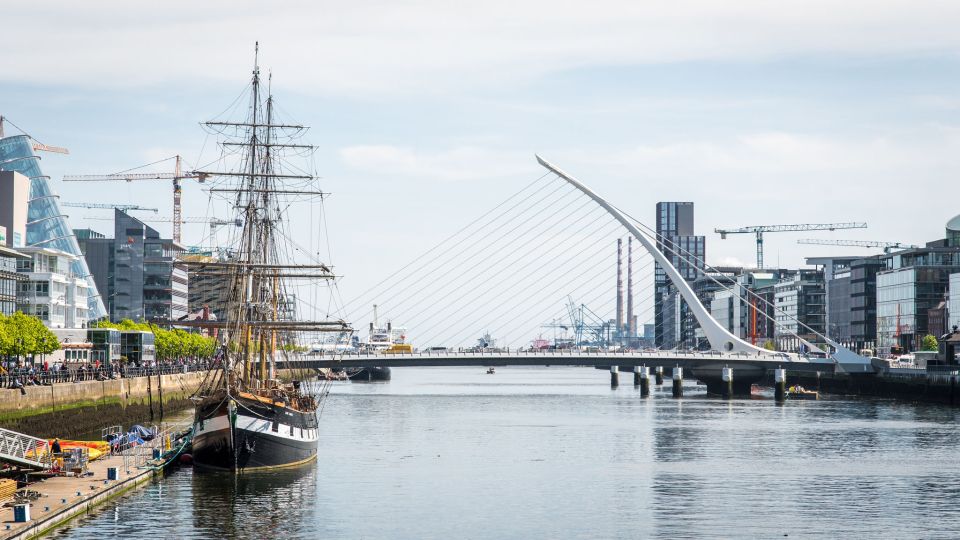
- A central Dublin location: The ship is moored at City Moorings on Custom House Quay, Dublin 1, and the tour finishes where it starts.
- Good value at $16: For the price of a modest meal or drink, you get a guided museum visit with a real ship setting and views of the Docklands.
Why the Jeanie Johnston matters in Dublin
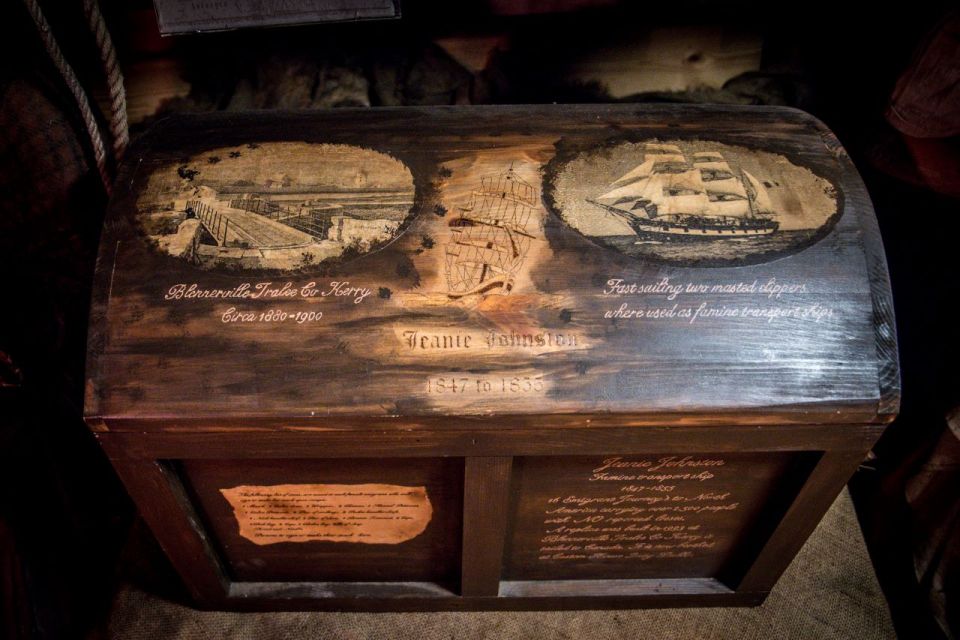
The Jeanie Johnston tells the story of the one million Irish people who left Ireland during the famine years. About 2,500 of them made their Atlantic crossing aboard this ship during its famine-era voyages.
That number matters because the ship turns a huge historical event into something you can picture at human scale. Instead of hearing only about population figures and emigration, you see the space where people slept, ate, waited, and worried. The ship gives the famine a physical setting.
This is not a long harbor cruise. The Jeanie Johnston is moored at Dublin’s North Dock, so your visit focuses on the vessel and its stories rather than on sailing out into Dublin Bay. That is useful if you want a compact historical stop near the city center, but less suitable if you are looking for a boat ride.
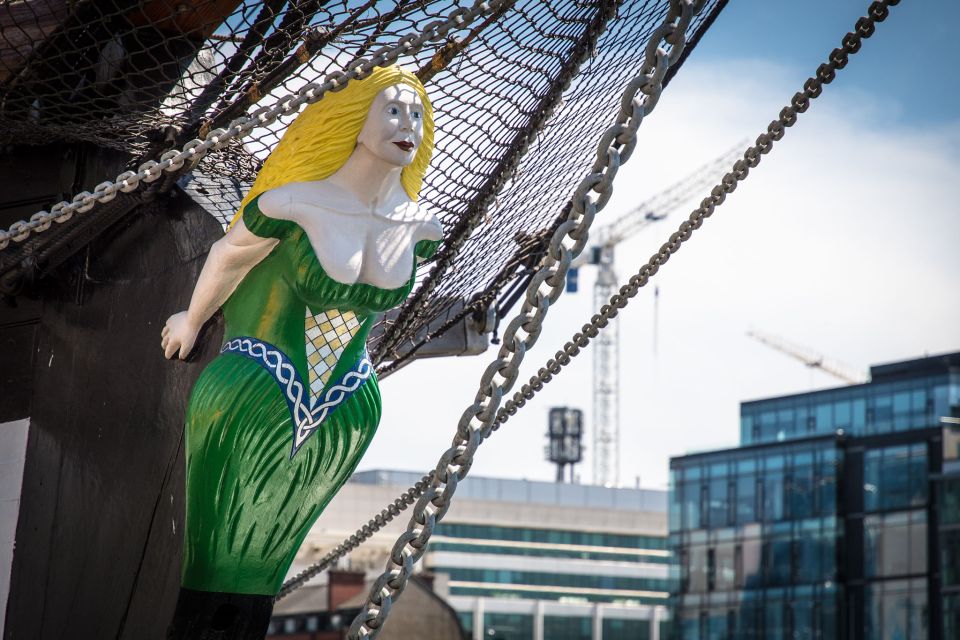
The story also reaches beyond the famine itself. You learn about the original Jeanie Johnston, the nineteenth-century shipping trade, and the ship’s earlier work transporting timber before it began carrying people. The building of the replica ship is part of the explanation too, helping you understand what you are seeing rather than treating the vessel as a decorative photo stop.
More history walks in Dublin:
- Dublin Historical Centre Food Tour with 8 Food Tastings & Drinks
★ 5.0 · 1,718 reviews - 2-Hour Historical Walking Tour from Dublin
★ 5.0 · 875 reviews - Historical 2-Hour Guided Walking Tour of Dublin
★ 4.7 · 865 reviews
Starting above deck with masts and Docklands views
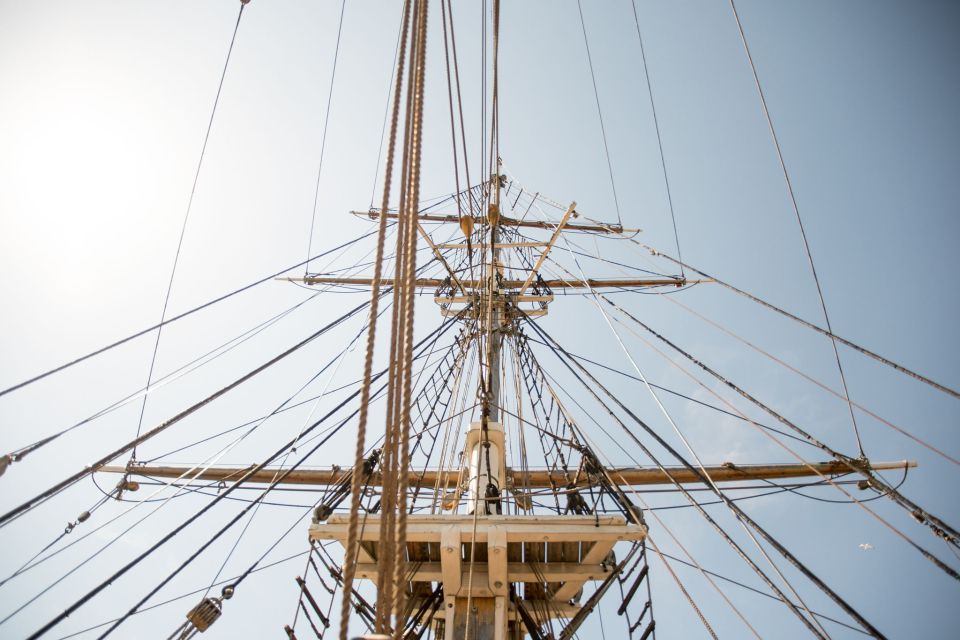
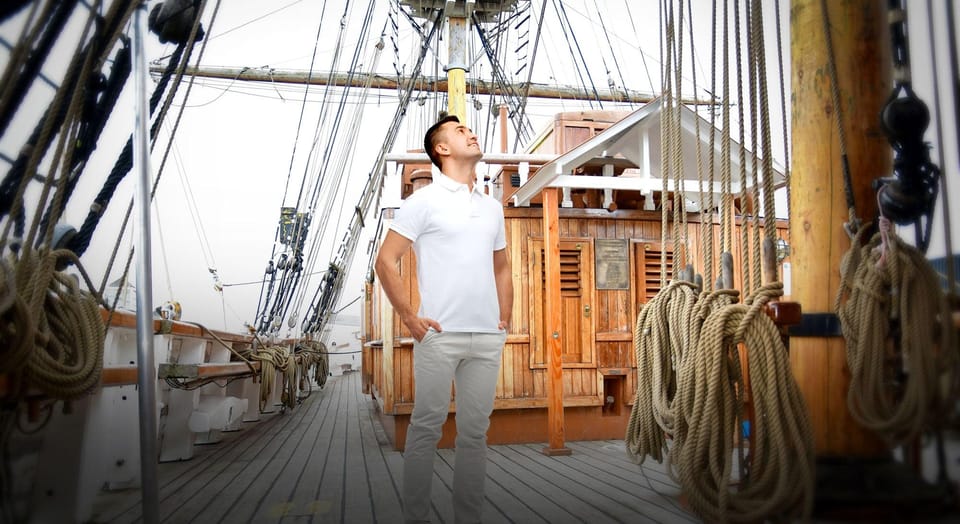
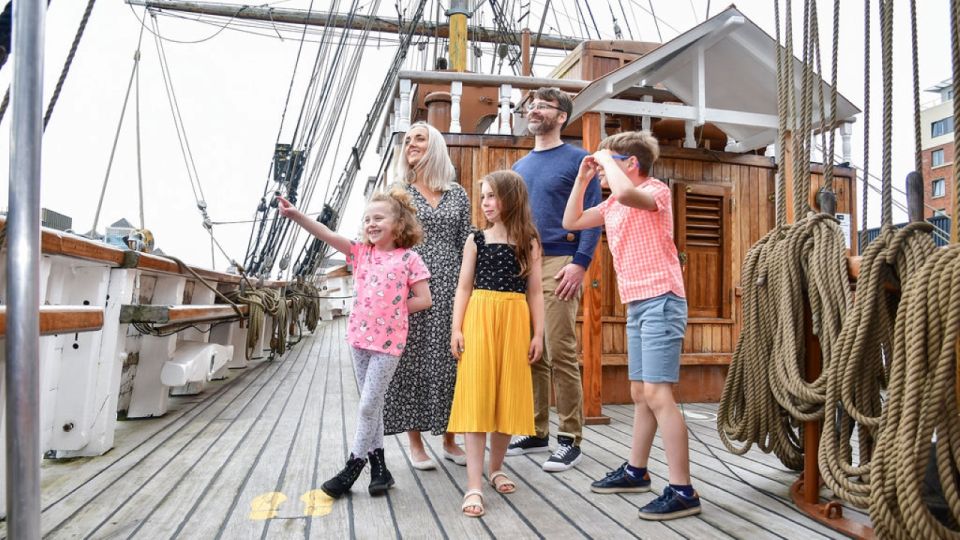
Your guide begins on the upper deck. This is the lighter part of the visit, with the tall masts, shipbuilding details, and open air giving you a chance to get your bearings before the subject turns darker.
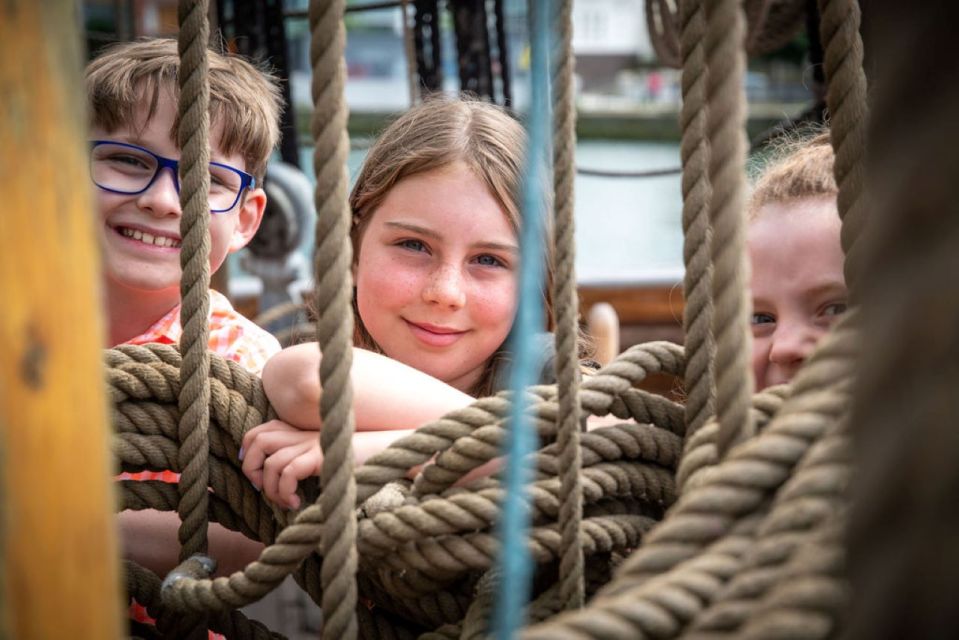
Look up at the rigging and take time to notice the scale of the ship. The Jeanie Johnston is one of the most photographed sights in this part of Dublin, and the deck gives you a natural place for a picture. You also get a different view of the North Dock, with the sounds of gulls and the feel of the air adding something a display in a conventional museum cannot provide.
The guide explains how tall ships worked and why ships were so important to nineteenth-century trade. You hear how this vessel changed from carrying timber to carrying emigrants. That change gives the ship’s design a practical meaning: it was not simply a grand sailing craft, but a working vessel tied to trade, migration, and survival.
I appreciate this opening because it keeps the tour from becoming a lecture in a dark room. You can look at the ship while the guide explains it. Families also get a more active start, and children can ask questions before the tour moves into the tighter lower deck.
The open deck is weather dependent in the ordinary sense that Dublin weather is always worth taking seriously. Comfortable shoes are recommended, and you should be prepared for wind or damp conditions. The tour does not call for special equipment, but sturdy footwear will make moving around the ship easier.
Going below deck into cramped living quarters
The emotional weight of the visit comes when you go below deck. This is where you gain a clearer sense of what the crossing demanded from the passengers.
Up to 250 people spent most of their time in these cramped quarters. They were allowed only about half an hour of fresh air each day. The close quarters, poor conditions, and lack of space make the voyage feel less like a romantic sea journey and more like a desperate attempt to reach safety.
Your guide introduces passengers and crew and explains their personal circumstances. You learn how people paid for the crossing, what food they had, and how they filled the long hours. These details help you think about emigrants as individuals with decisions to make, not simply as a group leaving Ireland.
The guide also covers the risks they faced: disease, starvation, and disaster. The conditions were filthy and crowded, and an illness could spread quickly. You hear about the fates that awaited people when they reached their destination, which adds an important second half to the story. Leaving Ireland did not mean that hardship ended at the shoreline.
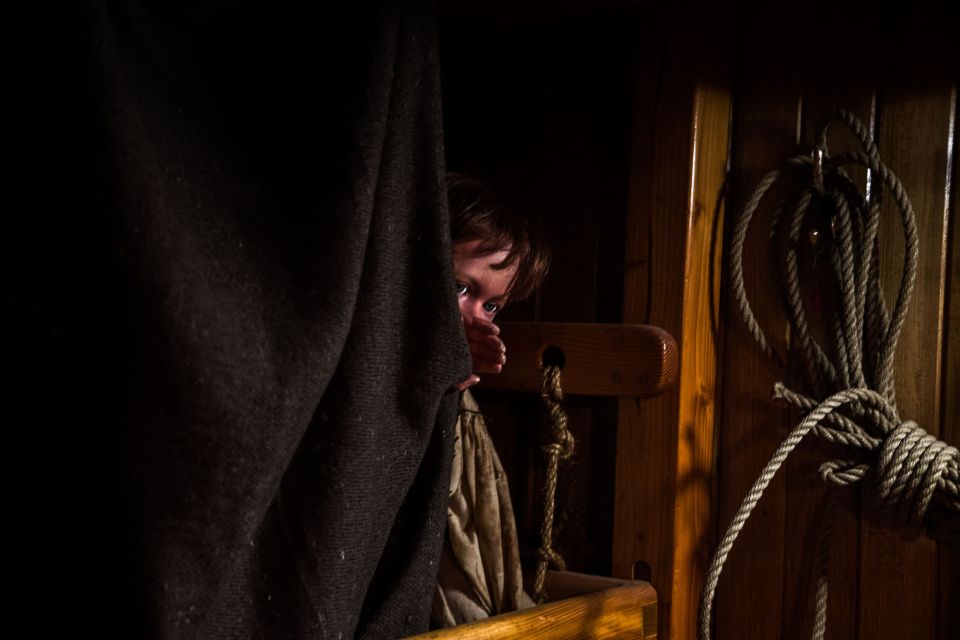
The lower deck can be emotionally difficult, especially if you are visiting with children. Still, the guides appear to handle the subject with care. Steve has been especially effective with mixed-age groups, explaining the famine clearly to adults while keeping children aged seven to fifteen involved. Catriona also helped a ten-year-old visitor work through concerns about the mannequins used on board.
The mannequins may not suit every child. They help show the crowded setting, but some younger visitors might find them unsettling. If your child is easily frightened, prepare them for a serious subject and a ship populated with display figures.
Guides who make the short tour work
A 50-minute tour depends heavily on the guide. There is not enough time for long pauses or a slow, unfocused talk. The strongest guides combine facts, personal stories, humor, and questions.
Steve is praised for being clear, friendly, and entertaining, including with families. Claire brings humor and a strong command of the material, while Owen is good at handling questions. Other guides named by visitors include Ronan, Rolland, Gearoid, Eoin, Katrina, Catriona, and Klee.
You cannot choose your guide when booking, so the useful point is not any one person’s style. The consistent pattern is that the tour is delivered live in English and allows questions. That makes it a better choice than a self-guided visit if you want help connecting the ship’s spaces to the people who used them.
The best guides also adjust their approach to the group. Katrina encouraged visitors to share where they came from, which helped create a more personal connection between people on the tour. She also involved children in the storytelling rather than expecting them to stand quietly through an adult history lesson.
Several guides use a mix of seriousness and humor. That balance matters. The famine was a catastrophe, and the ship’s lower deck should not be treated as a novelty. At the same time, a completely grim presentation can lose children and adults alike. A guide who explains the facts plainly, answers questions, and allows room for feeling gives the subject more weight.
A different side of Dublin on the same trip:
- Dublin to Cliffs of Moher, including Wild Atlantic Way and Galway
★ 5.0 · 23,331 reviews - From Dublin: Cliffs of Moher, Burren & Galway City Day Tour
★ 4.8 · 18,888 reviews - Dublin: Guinness Storehouse Entry Ticket
★ 4.6 · 16,863 reviews - Dublin to Cliffs of Moher, Burren, Wild Atlantic Way, Galway Tour
★ 5.0 · 12,924 reviews
What you learn about the voyage
The tour covers the practical details that often make history memorable. You hear about the food passengers ate, how they paid for their journey, and the ways they passed the time during the crossing.
These small points help you understand the choices families faced. Paying for passage could be difficult, and getting on board did not guarantee a safe future. The guide explains the dangers of disease, hunger, and accidents, along with the uncertainty waiting at the far end of the ocean.
The Jeanie Johnston’s own record adds a striking detail: nobody died on its 16 voyages to America. That does not make the journey comfortable or erase the suffering connected with famine emigration. It does, however, give the ship a specific place in the broader story of famine vessels, many of which carried people in terrible conditions.
You also learn how passengers spent their time. A long crossing was not just a matter of enduring bad food and tight quarters. People waited, talked, hoped, worried, and tried to maintain some sense of ordinary life. That human scale is one of the tour’s strongest features.
The guide’s explanation of the ship’s destination also matters. Emigration is not presented as a clean break, with danger on one side and success on the other. You are encouraged to think about what happened after arrival and what sort of future passengers might have faced.
How the experience feels for families
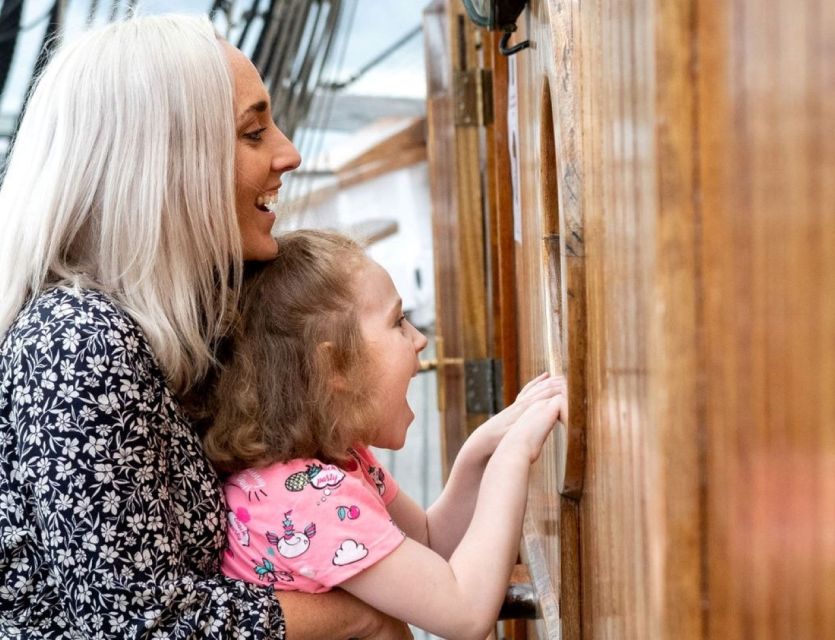
This is one of the better Dublin history stops for a family that wants substance without committing to a two-hour museum visit. The short length helps, and the ship gives children something physical to look at while the guide talks.
The subject is serious, so I would not describe it as a light family attraction. Children need to be ready for discussion of famine, illness, starvation, and hardship. Still, the guides have shown they can adapt their explanations. One tour held the attention of a 16-year-old, while another kept an easily bored eight-year-old engaged.
Questions are part of the experience. If your children are curious about food, sleeping arrangements, ships, or life at sea, they will have plenty to ask. The guide can also help explain why people left and how families managed to pay for the crossing.
For younger children, tell them beforehand that the ship contains mannequins and that the story includes sad events. That small warning can prevent surprise below deck. Comfortable shoes are important for everyone, and anyone who struggles with narrow or uneven spaces should think carefully before booking.
Practical details at Custom House Quay
The meeting point is the Jeanie Johnston Tallship at City Moorings, Custom House Quay, Dublin 1. The tour ends back at the same location, so you do not need to arrange a separate return transfer.
Hotel pickup and drop-off are not included. Plan to reach the ship on your own and check the available starting times when you book. Since the visit lasts 50 minutes, you can pair it with other Dublin Docklands sights or schedule it as a focused stop between other activities.
The tour is in English. If you need a different language, this experience does not list one. The activity is not suitable for wheelchair users or people with mobility impairments, and the supplied information specifically advises against it for people with limited mobility.
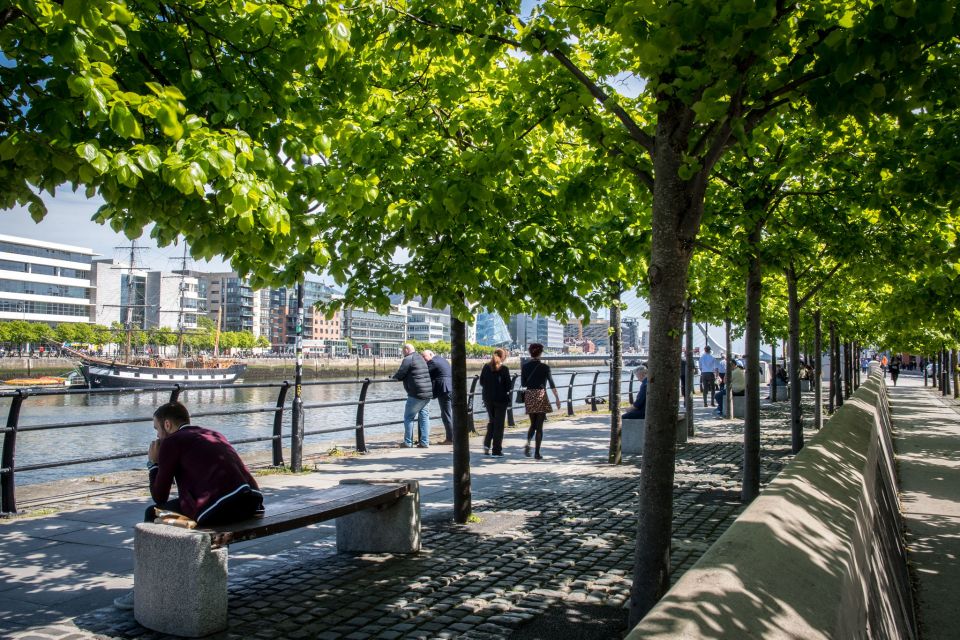
There is no need to bring specialist gear. Wear comfortable shoes and dress for an open upper deck. The ship’s location is also useful for photographs, especially if you want a picture that captures both the vessel and Dublin’s modern dockside setting.
Free cancellation is available up to 24 hours before the tour for a full refund. You can also reserve now and pay later, which helps if you are still arranging a Dublin itinerary.
Is $16 a fair price?
At $16 per person, I consider this a strong-value Dublin attraction. You get admission to the ship plus a live, guided presentation that covers the famine, emigration, shipbuilding, trade, and life on board.
The price is especially fair because the visit is more than a walk around a historic-looking boat. The guide provides the meaning, and the ship provides the setting. Without the talk, you would see masts and cramped rooms. With it, those spaces become part of a story about families making an agonizing decision to leave home.
The 50-minute length also works in your favor. You are not paying for a full-day excursion, and you do not need to give up a large part of your Dublin schedule. If you have only a short time in the city, this is a compact way to cover an important part of Irish history.
The limitation is that the tour is narrow in scope. You will not get a broad survey of every part of Dublin’s history, and you will not sail on the River Liffey. If you want panoramic city views or a relaxed cruise, spend your money elsewhere. If you want a focused historical experience with a real ship, the cost is easy to justify.
Who should book the Jeanie Johnston tour?
I would choose this tour if you want to understand the Irish Famine through personal stories and physical surroundings. It suits adults interested in Irish history, families with school-age children, and anyone tracing Irish emigration in their own family.
It is also a good fit for repeat visitors to Dublin. You may have walked past the ship before without making time to enter. The visit adds a different side to the Docklands and takes less than an hour.
You should think twice if you dislike enclosed spaces, have limited mobility, or want an outdoor boat trip. The lower deck is central to the experience, and the tour is not suitable for wheelchair users. The material is also sad and at times disturbing, so it may not suit anyone looking only for a cheerful sightseeing stop.
Should you book it?
Yes, if you want an affordable, well-paced history experience that makes the famine personal. The strongest part is the move from the breezy upper deck into the cramped quarters below, followed by stories about food, fares, illness, survival, and life after arrival.
Book it as a 50-minute stop in the Docklands, wear comfortable shoes, and arrive ready for a serious subject. You cannot select a particular guide, but guides including Steve, Claire, Owen, and Katrina have shown the value of a warm, clear presentation. Skip it only if accessibility or confined spaces rule it out, or if you are specifically seeking a sailing excursion.
FAQ
Where does the Jeanie Johnston tour start?
The tour starts at the Jeanie Johnston Tallship, City Moorings, Custom House Quay, Dublin 1.
Where does the tour end?
The activity ends back at the Jeanie Johnston meeting point.
How long does the tour last?
The guided tour lasts 50 minutes.
What language is the tour in?
The live tour guide speaks English.
What does the tour include?
The price includes entrance and access to the guided Jeanie Johnston Tallship tour.
Is hotel pickup included?
No. Hotel pickup and drop-off are not included.
What should I bring?
Bring comfortable shoes. The tour includes time on the upper deck and movement around the ship.
Is the tour suitable for wheelchair users?
No. The tour is not suitable for wheelchair users or people with mobility impairments.
Can I cancel for a refund?
Yes. You can cancel up to 24 hours in advance for a full refund. Reserve now and pay later is also available.
Just added around Dublin
- Dublin: Pub Tour. Pour The Perfect Guinness, Whiskey & Music★ 5.0 · 3 reviews
- A Self Guided Walking Tour of Dublin’s Docklands★ 4.5 · 3 reviews
- Private Dublin City tour★ 5.0 · 3 reviews
- Dublin One Day Tour with a Local: 100% Personalized & Private★ 4.5 · 3 reviews
- Waterford Crystal and Kilkenny Full-Day Rail Tour from Dublin★ 5.0 · 3 reviews
- Secret and unusual Dublin: guided walking tour★ 5.0 · 3 reviews
- 5 Day Ireland’s South−East Including Admission from Dublin★ 4.5 · 3 reviews
- Turtle Bunbury’s Dublin: A Self-Guided Audio Tour from a Celebrated Author★ 5.0 · 3 reviews
Historical Tours, compared.
Dublin Historical Centre Food Tour with 8 Food Tastings & Drinks
Read our review →

Dublin to Cork, Blarney Castle & Cóbh Heritage Centre by train
Read our review →

Deliciously Dublin: The Artisan Donut Walking & History Tour
Read our review →
Hidden Dublin: Haunted History Walking Tour v2.0 2026
Read our review →
Dublin Historical Centre Private Food Tour with 8 Food Tastings
Read our review →Browse the lists this tour appears in