
Reviewed · MUSEUMS
Irish Famine Museum / Exhibition Dublin
The Irish Famine Museum presents one of Ireland’s hardest stories in an unexpected place: upstairs inside St. Stephen’s Green Shopping Centre. You move through a temporary exhibition on the Great Hunger, reading panels, studying old photographs and newspapers, examining objects such as an original soup pot, and watching a 15-minute film.
I like the self-guided format, since you can give serious subjects the time they deserve instead of keeping pace with a group. I also like the rare views over St. Stephen’s Green, which add a useful sense of place to the visit. The main drawback is that this is a compact pop-up exhibition rather than a large, fully climate-controlled museum, so visitors who prefer hands-on displays or lots of audiovisual material may find it modest.
In This Review
- Key points to know before you go
- A serious history lesson in a shopping centre
- Finding the exhibition at St. Stephen’s Green
- What you see inside the one-hour exhibition
- The 15-minute documentary film
- The unusual view over St. Stephen’s Green
- How the self-guided format affects the visit
- Who will get the most from this Dublin stop
- Is $18.15 good value?
- Language help and practical details
- Should you book the Irish Famine Museum?
- FAQ
- Where is the Irish Famine Museum located?
- How long does the visit take?
- Is the experience guided?
- Is a film included?
- Are translation materials available?
- What are the opening hours?
- Is admission included when booking?
- Can children visit?
- What is the cancellation policy?
Key points to know before you go
- The exhibition is inside St. Stephen’s Green Shopping Centre, not in a traditional stand-alone museum building.
- A 15-minute documentary gives the display one focused audiovisual element.
- Original objects, newspapers, and 19th-century photographs help put the written material into human terms.
- The visit takes about one hour, making it easy to fit between central Dublin sights.
- French, German, Italian, and Spanish translation guides are available alongside the English presentation.
- Admission costs $18.15 per person, with advance booking, mobile tickets, and free cancellation up to 24 hours before the start time.
A serious history lesson in a shopping centre
The setting may seem odd at first. You enter a busy central shopping centre, then head upstairs to an exhibition about the Irish Potato Famine, known in Ireland as the Great Hunger. That contrast is part of the experience. The exhibition does not pretend to be a grand national museum, and it does not have the space or polish of one.
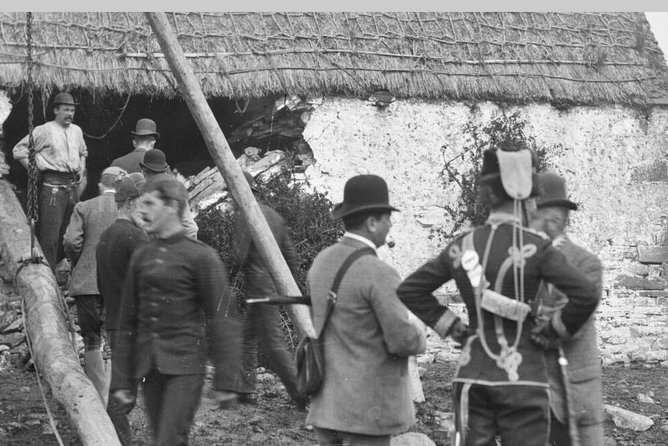
Instead, it offers a short, direct account of a disaster that reshaped Ireland. The display explains the agricultural crisis, the decisions made by political leaders and landowners, the slow response to mass hunger, and the huge wave of emigration that followed. It also shows how the famine affected families, communities, and the country’s population for generations.
You should come ready to read. Much of the visit uses written panels, photographs, newspapers, and historical explanation. The text aims to keep the story clear and accessible, but this is still a reading-based exhibition. If you prefer a museum built around interactive screens, reconstructed rooms, or constant video, you may find the format limited.
That simplicity can also work in its favor. The exhibition does not bury the central facts beneath complicated technology. You can stop, read, think, and move on when you are ready.
More museums in Dublin:
- Irish Rock ‘N’ Roll Museum Experience Dublin
★ 5.0 · 6,112 reviews - The Little Museum of Dublin Famous Guided Tour
★ 5.0 · 2,948 reviews - Dublin EPIC Museum Admission Ticket
★ 4.5 · 1,729 reviews
Finding the exhibition at St. Stephen’s Green
The meeting point is St. Stephen’s Green Shopping Centre at St. Stephen’s Green, Dublin, D02 HX65. It is near public transportation, so you can reach it as part of a day in central Dublin without arranging a special transfer.
Your mobile ticket is useful here. Booked admission is included, and advance purchase is intended to help you avoid entrance lines. The experience is not a guided walking tour, so there is no guide to meet and no coach departure to catch. You simply arrive at the shopping centre, find the exhibition, and begin at your own pace.
Allow a little extra time to locate the display within the building, especially if you are arriving on a tight schedule. The stated visit lasts about one hour, but a reader who stops for every panel or watches the film carefully may want slightly longer. The activity ends at the same place where it begins, which makes it easy to continue shopping, have lunch, or visit nearby Dublin sights.
Opening hours listed for January 4 through September 30, 2026, are noon to 6 p.m., Monday through Sunday. Check the selected date and time when booking, since a midday-to-evening schedule gives you a narrower window than many city museums.
What you see inside the one-hour exhibition
The route is self-guided. You are free to decide how quickly you move through the room, and that matters with a subject like this. Some people will want to read every panel. Others may already know the broad outline and prefer to focus on the objects, images, and film.
The exhibition covers the Great Hunger through historical information and visual material. Expect written explanations of the famine and its causes, along with discussion of government decisions, relief efforts, land ownership, and the human cost of the crisis. One particularly useful feature is the attempt to connect policy with daily suffering. The famine was not presented simply as a failed crop, but as a disaster made worse by slow and inadequate responses.
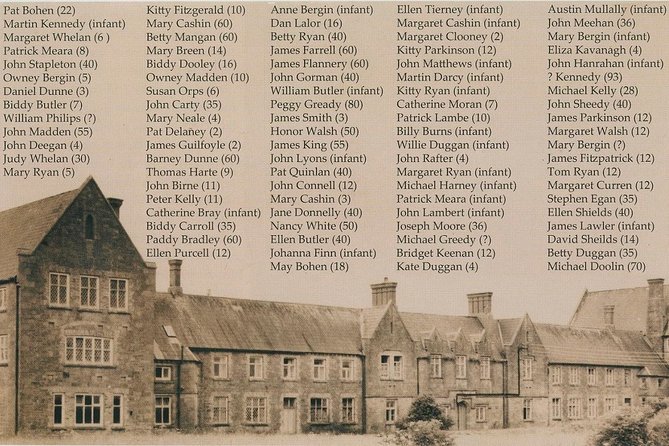
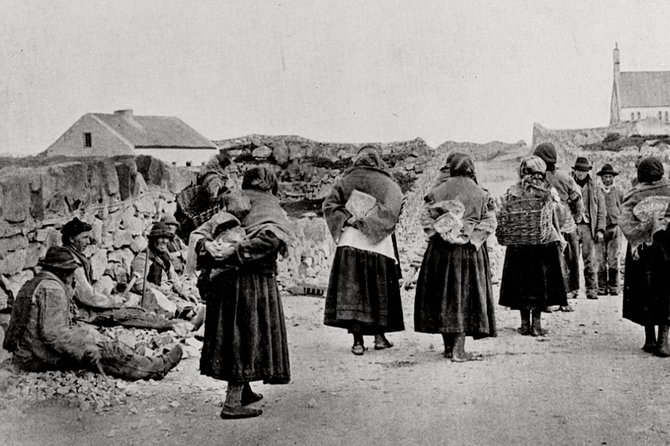
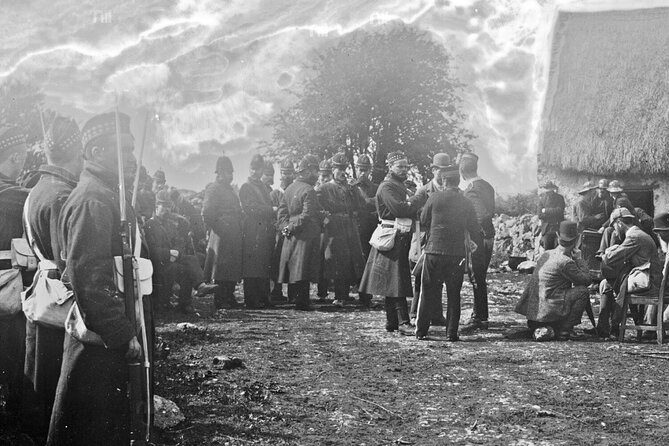
Among the objects are an original soup pot, historical newspapers, and 19th-century photographs. These are important because they give the display some physical weight. A panel can explain hunger, relief, or emigration, but an old cooking vessel or newspaper makes the story feel less abstract.
The photographs also add faces and places to a subject that can otherwise become a list of dates and statistics. You may find the display most affecting when it moves from general explanation to evidence of what ordinary people experienced.
The 15-minute documentary film
A short documentary is included in the admission. At about 15 minutes, it is easy to fit into a one-hour visit, even if you take your time with the written material before and after it.
The film provides a change of pace in an exhibition that relies heavily on reading. I would plan your visit around watching it rather than treating it as an optional extra. The written panels establish the facts, while the film gives the story a more continuous shape.
One practical point matters: the film area has been described as warm because the exhibition space is not climate controlled. On a hot day, you may be more comfortable standing or sitting near an open area before returning to the film. This is a temporary display in a shopping centre, not a purpose-built cinema or museum gallery, so keep your expectations realistic.
The documentary is short enough for families and visitors on a tight schedule. It is not the entire experience, though. If you only watch the film and skim the panels, you will miss much of the historical detail.
A different side of Dublin on the same trip:
- Dublin to Cliffs of Moher, including Wild Atlantic Way and Galway
★ 5.0 · 23,331 reviews - From Dublin: Cliffs of Moher, Burren & Galway City Day Tour
★ 4.8 · 18,888 reviews - Dublin: Guinness Storehouse Entry Ticket
★ 4.6 · 16,863 reviews - Dublin to Cliffs of Moher, Burren, Wild Atlantic Way, Galway Tour
★ 5.0 · 12,924 reviews
The unusual view over St. Stephen’s Green
The exhibition includes rare aerial views of St. Stephen’s Green. These are a small but memorable part of the visit because they show one of Dublin’s best-known public spaces from an angle you normally cannot get at street level.
I like this feature for a practical reason. The famine can feel distant when you encounter it only through text and old images. Looking out over modern Dublin and the green below brings the subject back into the city around you. You are not standing in a reconstructed famine village, and the exhibition does not claim to recreate that world. Instead, the view reminds you that the events being discussed shaped the city and country you are visiting now.
The view is not a replacement for the historical display, and you should not book this solely as a lookout. Think of it as a useful bonus in an exhibition that otherwise takes place indoors.
How the self-guided format affects the visit
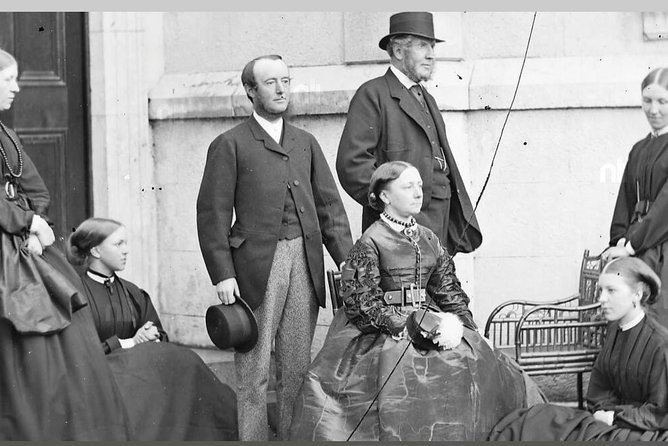
There is no named guide listed for this experience, and no live presentation is part of the admission. That means you control the rhythm. You can pause at difficult material, return to a panel, or move through familiar sections quickly.
This suits independent visitors who like to read at their own speed. It also works well for families or pairs with different interests, since you do not have to remain beside a group. Children must be accompanied by an adult, and most people can participate.
The trade-off is a lack of personal interpretation. A guide could explain how particular decisions affected Irish communities, answer questions, or add local context. Here, the panels must do that work. If you have a specific interest in genealogy, emigration, British policy, or the Irish language, you may want to buy the exhibition book for additional material.
The book is not included, but it may be purchased separately. It could be useful if you want to take the exhibition’s information home or need more than a one-hour introduction.
Who will get the most from this Dublin stop
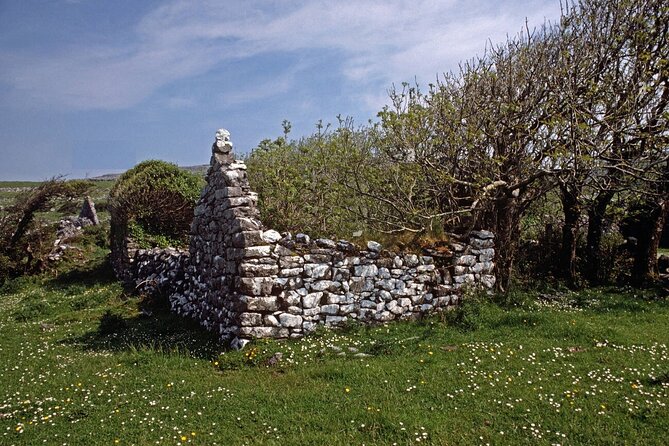
I would recommend this exhibition to you if you want a clear introduction to the Great Hunger before visiting other Irish historic sites. It also suits anyone tracing Irish family roots, since the famine and the resulting emigration are central to the story of many Irish families abroad.
It is a good choice for a short gap in a Dublin itinerary. The one-hour length is manageable, and the central location makes it easier to fit around other plans. The afternoon opening hours also suit a visitor who spends the morning elsewhere in the city.
Families can use it as a starting point for discussing why people left Ireland and how government policy can shape a crisis. The subject is painful, though, and younger children may not have enough historical context to follow the material. Since the presentation is mainly written, it is best for children who can read independently or are willing to learn with an adult.
I would be more cautious about booking it if you dislike reading displays. One direct criticism of the format is fair: the exhibition can feel like a pop-up display in a mall, with posters doing much of the work and only one short film providing audiovisual material. That is not a flaw if you want a focused history lesson, but it matters if you expect a large museum experience.
Is $18.15 good value?
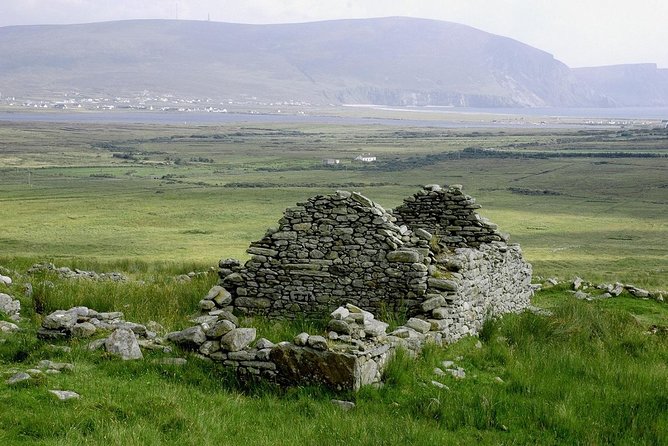
At $18.15 per person, this is not a full-day attraction. You are paying for roughly one hour of admission, a self-guided exhibition, the documentary, historical objects, and access to the aerial views.
The value depends on what you want. For a quick, central introduction to a major part of Irish history, the price is reasonable, especially if you use the full hour and watch the film. The original soup pot, newspapers, and photographs give the display more substance than a room of printed text alone.
The price feels less attractive if you expect a large collection or extensive staff interpretation. There is no live guide, and the exhibition has a temporary pop-up character. You should think of it as a focused historical stop, not as a substitute for spending half a day in a major national museum.
The 4.7 out of 5 score from 247 ratings, along with a 93 percent recommendation rate, suggests that the format works well for many visitors. Still, the difference between a good and poor experience will depend heavily on your interest in Irish history and your patience with reading.
Language help and practical details
The main offering is in English, but translation guides are available in French, German, Italian, and Spanish. That is helpful for visitors who can follow some English but want to check names, dates, or difficult sections in another language.
Confirmation is provided when you book, and the ticket is mobile. Service animals are allowed. The site is near public transportation, and most people can take part.
The activity has a maximum capacity of 90 people. That is a stated limit rather than a promise that the room will feel empty, but advance booking can still make sense during popular travel periods. This experience is booked an average of 35 days ahead, so leaving it until the last moment may not be wise if your Dublin schedule is fixed.
You can cancel for a full refund up to 24 hours before the local start time. Changes or cancellations made less than 24 hours ahead are not accepted for a refund.
Should you book the Irish Famine Museum?
Book it if you want a compact, serious introduction to the Great Hunger, value the freedom to read at your own pace, and appreciate a few real objects and a short film. The exhibition’s central location, translation guides, mobile ticket, and one-hour duration make it easy to add to a Dublin day.
Skip it if you want a large, interactive museum with extensive climate control, many films, or a live historian. You should also skip it if you are unlikely to read the panels, since the written material carries most of the visit.
For many people, this is worth the hour because it explains more than the name Potato Famine. It links the failed crop to decisions, relief efforts, emigration, and long-term loss. The setting is modest, but the subject is essential to understanding Ireland.
FAQ
Where is the Irish Famine Museum located?
It is located inside St. Stephen’s Green Shopping Centre at St. Stephen’s Green, Dublin, D02 HX65, Ireland.
How long does the visit take?
The visit lasts approximately one hour.
Is the experience guided?
No. It is a self-guided exhibition that you explore at your own pace.
Is a film included?
Yes. Admission includes a documentary film lasting about 15 minutes.
Are translation materials available?
Yes. Translation guides are available in French, German, Italian, and Spanish.
What are the opening hours?
For January 4 through September 30, 2026, it is open Monday through Sunday from 12 p.m. to 6 p.m.
Is admission included when booking?
Yes. The admission ticket is included, and the listed price is $18.15 per person.
Can children visit?
Yes, but children must be accompanied by an adult.
What is the cancellation policy?
You can cancel at least 24 hours before the experience begins for a full refund. Cancellations or changes made less than 24 hours before the start time are not accepted for a refund.
Just added around Dublin
- Dublin: Pub Tour. Pour The Perfect Guinness, Whiskey & Music★ 5.0 · 3 reviews
- A Self Guided Walking Tour of Dublin’s Docklands★ 4.5 · 3 reviews
- Private Dublin City tour★ 5.0 · 3 reviews
- Dublin One Day Tour with a Local: 100% Personalized & Private★ 4.5 · 3 reviews
- Waterford Crystal and Kilkenny Full-Day Rail Tour from Dublin★ 5.0 · 3 reviews
- Secret and unusual Dublin: guided walking tour★ 5.0 · 3 reviews
- 5 Day Ireland’s South−East Including Admission from Dublin★ 4.5 · 3 reviews
- Turtle Bunbury’s Dublin: A Self-Guided Audio Tour from a Celebrated Author★ 5.0 · 3 reviews
Museums, compared.
The Little Museum of Dublin Famous Guided Tour
Read our review →

Giant’s Causeway with the Titanic Exhibition and the best of Northern Ireland
Read our review →


Irish Whiskey Museum: Whiskey Blending Experience
Read our review →
Irish Whiskey Museum Blending Tour with Tastings
Read our review →Browse the lists this tour appears in