
Reviewed · DUBLIN GHOST & LEGEND TOURS
Dublin: North Quay Guided Ghost Walk
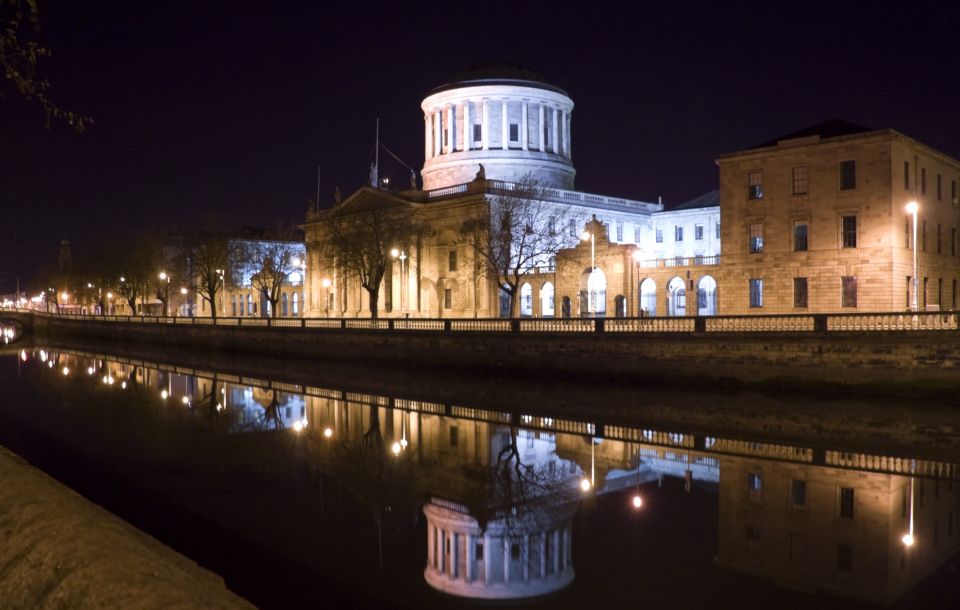
Dublin’s northside hides its strangest stories in plain sight. This guided ghost walk takes you through medieval Oxmantown, former Viking territory, ruined Saint Mary’s Abbey, Hendrick Street, and the grim ground known as Croppie’s Acre. The ghosts are only part of the appeal. You also get a brisk lesson in Dublin’s darker past.
I like the way the tour combines real city history with local folklore, rather than relying on actors or cheap shocks. I also like the guides’ strong storytelling. Kate, Darragh, Matthew, and Derek are singled out for humor, research, and an easy way with a crowd. The main caution is that the experience may feel more like a history walk than a fright night, and the stated duration varies between 1.5 and 2 hours.
In This Review
- Key points to know before you book
- Why Dublin’s northside makes a good ghost walk
- Saint Mary’s Abbey and the city beneath the city
- Hendrick Street and Dublin’s six reported ghosts
- Croppie’s Acre and the 1798 rebellion
- Scaldbrother, thieves, and the criminal northside
- Saint Michan’s mummies and Bram Stoker’s connection
- The Virgin Mary apparition and modern Dublin belief
- What the guides do best
- How frightening is the North Quay Ghost Walk?
- Price, timing, and practical value
- Who should book this experience?
- Should you book the North Quay Guided Ghost Walk?
- FAQ
- Where does the Dublin North Quay Guided Ghost Walk start?
- Where does the tour finish?
- How long does the ghost walk last?
- How much does the tour cost?
- What language is the tour conducted in?
- Is a guide included?
- Which places are covered during the walk?
- Can I cancel for a full refund?
- Do I have to pay when I reserve?
Key points to know before you book
- Medieval Oxmantown: Walk through the old northside, once home to Viking enclaves and later medieval settlements.
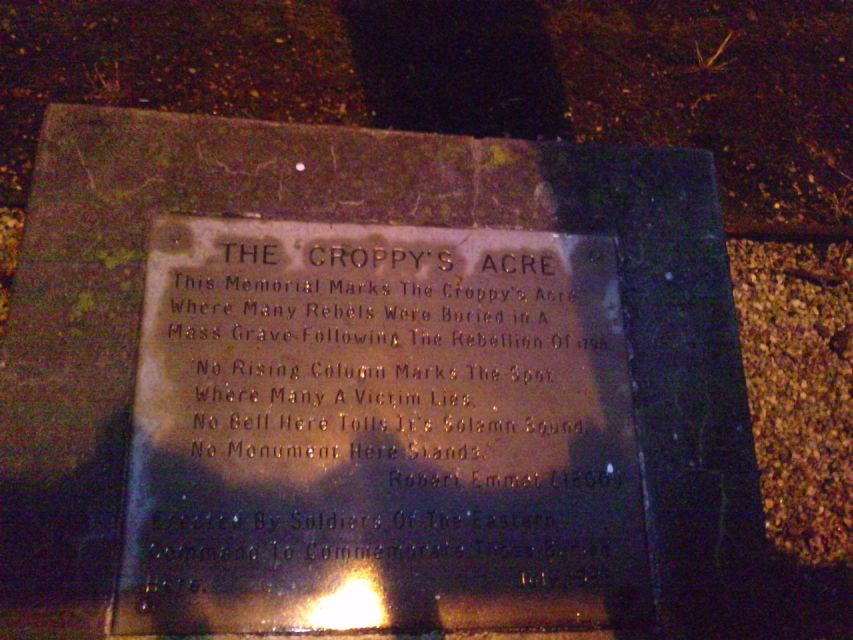
- Croppie’s Acre: Hear the grim story of the mass grave beneath a former football pitch, linked to the 1798 rebellion.
- Hendrick Street ghosts: Visit the former site of numbers 7 and 8, where six ghosts were said to inhabit the neighboring houses.
- Saint Mary’s Abbey: See what remains of one of medieval Ireland’s most powerful monastic foundations.
- Story-led, not theatrical: The focus is on local history, odd events, and ghost lore, with no promise of stage effects or jump scares.
- Northside orientation: You return to the meeting point outside The Church Bar and Restaurant on Mary Street.
Why Dublin’s northside makes a good ghost walk
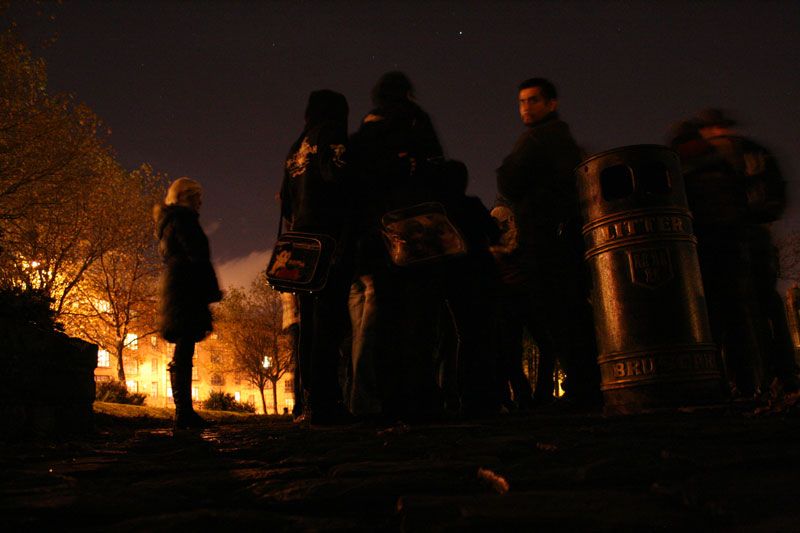
Dublin is an old city with a turbulent past, and its northside carries plenty of stories that are easy to miss during a normal sightseeing day. You can pass a ruined monastery on your way to the shops, walk above a mass grave, or stand outside an ordinary house without knowing what once happened there.
That contrast gives this tour its strength. You are not simply being led from one spooky prop to another. You are walking through working streets and overlooked corners, then hearing how violence, religion, poverty, crime, and belief shaped them.
The tour begins outside The Church Bar and Restaurant on Mary Street and ends back there. That simple arrangement matters. You do not have to find a second location late at night, and you can easily continue your evening in central Dublin after the walk.
The advertised duration is 1.5 hours, although the tour description and several comments about the experience refer to two hours. I would allow roughly two hours for the evening, especially if you have plans afterward. You will be on your feet for most of the walk, so comfortable shoes are sensible.
More Dublin ghost walks:
- Dublin Ghost Bus Tour with Professional Actors
★ 4.5 · 949 reviews - Haunted Dublin Walking Tour
★ 5.0 · 550 reviews - From Dublin: Gravedigger Ghost Bus Tour
★ 4.4 · 546 reviews
Saint Mary’s Abbey and the city beneath the city
One of the first major stories concerns Saint Mary’s Abbey. In medieval Ireland, this was one of the country’s most powerful monastic settlements. Today, only a small ruin remains, tucked down an alleyway and passed by thousands of people who may not realize what they are walking beside.
This is exactly the kind of stop that works well on a walking tour. The site is not presented as a grand monument with a large entrance and formal displays. Its small scale can make the history feel more startling. A major religious center once occupied this ground, but modern Dublin has largely folded it into the everyday city.
Your guide uses the abbey to explain how much of Dublin’s past sits below or behind its present appearance. The ghost element adds atmosphere, but the historical setting does most of the work. If you enjoy finding old fragments in ordinary streets, this part may be more rewarding than a conventional haunted-house story.
You should also expect the guide to add side stories and details beyond the main ghost material. Kate is praised for answering questions and for adding useful suggestions about other things to see in Dublin. That makes the tour helpful early in a visit, when you are still getting your bearings and deciding what deserves another look in daylight.
Hendrick Street and Dublin’s six reported ghosts

The walk continues to Hendrick Street, once the location of two of Dublin’s most haunted houses. Between numbers 7 and 8, six different ghosts were said to have lived, or at least appeared, in the neighboring buildings.
The appeal here is the setting. A ghost story in a ruined castle is easy to accept as a performance. A story attached to a normal city street feels more personal, and perhaps a little more unsettling. You are standing where people lived, worked, and went about their daily business, while the guide explains the strange reports connected with the houses.
Do not expect a haunted attraction with special effects. The best guides keep the tone conversational. Matthew, Darragh, and Kate are all praised for being funny and personable, while one account of the walk specifically appreciated the lack of theatrics. That is useful to know if you prefer stories based on place and tradition instead of actors hiding in dark corners.
The tone also means the tour is not likely to terrify everyone. Skeptics may enjoy spotting the gaps between fact and folklore, while children and adults who like spooky tales can treat the stories as entertainment. The guide’s delivery is more important than the shock value.
Croppie’s Acre and the 1798 rebellion
Croppie’s Acre is the walk’s darkest stop. The site was later used as a football pitch in the 20th century, but beneath it lies a mass grave connected with hundreds of rebels executed during the 1798 rebellion.
This is where the ghost walk gains real emotional weight. The story is not just about strange sounds or apparitions. It connects the supernatural mood to political violence and people whose final resting place was hidden beneath an ordinary public space.
You may find this stop more sobering than scary. That is a good thing. A strong ghost walk should give you something to think about after the story ends, and Croppie’s Acre links Dublin’s folklore to the difficult parts of Irish history.
The guide’s job here is to provide context without turning the evening into a formal lecture. The most praised guides seem to do that well, mixing unsettling details with humor and clear explanations. Still, the balance can vary by guide. One family found some of the historical detail uneven, with a few facts that seemed less solid than others. I would listen for the broad story, ask questions, and keep an open but sensible mind about the ghostly claims.
More walking tours in Dublin:
- Dublin Highlights and Hidden Gems Guided Walking Tour
★ 5.0 · 6,020 reviews - Dublin: Highlights and Hidden Gems Walking Tour
★ 4.9 · 2,140 reviews - 1916 Rebellion Walking Tour
★ 5.0 · 1,605 reviews - 90 Minute Dublin Walking tour and Sightseeing tips
★ 5.0 · 916 reviews
Scaldbrother, thieves, and the criminal northside
The walk also introduces Scaldbrother, an infamous medieval thief. His story adds a different kind of darkness to the evening. Not every memorable Dublin tale involves a ghost. Some concern people who exploited the city, challenged its authorities, or became notorious long after their crimes.
This wider range keeps the walk from becoming repetitive. You move from religious ruins to haunted houses, then to rebellion, crime, and stories of underground spaces. One account also refers to an electric factory, underground tunnels, and bold thieves as part of the material covered. These details suggest a tour interested in Dublin’s odd corners, not just a fixed list of supernatural sightings.
That variety is one reason I would recommend taking the walk even if you are uncertain about ghosts. The experience gives you a different way to read the northside. You learn where old religious power once sat, how rebellion left physical traces, and how stories about criminals and spirits became part of the city’s memory.
Saint Michan’s mummies and Bram Stoker’s connection
The walk includes stories about the mummies at Saint Michan’s Church. The church’s preserved bodies are often described as one of Ireland’s most macabre attractions, and they are linked in the tour’s storytelling to Bram Stoker, the Dublin-born author of Dracula.
This subject gives the evening a clear literary connection. Stoker was a native of Clontarf, and his association with Dublin adds another layer to the city’s dark reputation. The point is not simply that Dublin inspired a famous horror writer. It is that the city offered its own examples of death, preservation, religious history, and unsettling folklore.
The tour does not appear to include a separate entry to Saint Michan’s Church. Instead, you hear about the mummies as part of the walk. That distinction matters when you compare this experience with a church visit or a tour that includes admission to the crypts.
If the mummies interest you, treat the ghost walk as an introduction rather than a substitute. You will get the story and the context, then you can decide if Saint Michan’s deserves a separate visit during daylight.
The Virgin Mary apparition and modern Dublin belief
Not all the stories are medieval or tied to old buildings. The route also covers a 21st century apparition of the Virgin Mary. This modern account brings the subject of belief into present-day Dublin and prevents the walk from feeling locked in the distant past.
A recent apparition can be more provocative than a centuries-old legend. You are left to decide how much is faith, rumor, coincidence, or something else. The guide presents the story as part of the city’s supernatural tradition, while you can judge it for yourself.
This is another reason the walk works best for curious people rather than committed ghost hunters alone. It offers a mix of documented places, historical events, local tales, and reports of supernatural encounters. Some parts will feel firmly grounded, while others remain matters of belief.
What the guides do best
The strongest part of this experience is the guide. A familiar route can still be memorable when the person leading it knows how to pace a story and respond to questions.
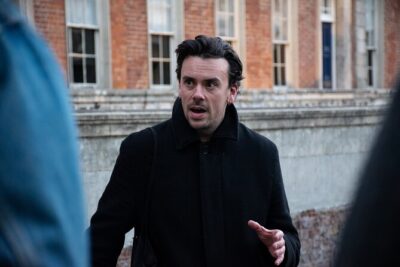
Kate is repeatedly praised for her research, warmth, and willingness to suggest other Dublin activities. Darragh is described as personable and an excellent storyteller. Matthew receives credit for humor, information, and a refreshing view of modern Ireland. Derek is praised for knowing a large number of small historical details and keeping the walk engaging.
Those comments point to a useful pattern. You are not getting a recorded script delivered in the same flat tone every night. The guide’s personality shapes the experience, and the best version should feel like an informed local telling you stories on a long evening stroll.
A large group can make any walking tour harder to hear, but one account specifically notes that the guide remained understandable despite the crowd. Smaller groups may feel more intimate, though group size is not fixed in the information provided. If you want a quiet, private encounter with Dublin’s past, this is not presented as a private tour.
The guides also seem willing to move beyond the formal ghost stories. You may hear extra facts about the city, receive ideas for later sightseeing, or get a modern perspective on Ireland. That added material is valuable, but it also explains why the walk can feel like a history lesson with ghosts rather than a pure supernatural experience.
How frightening is the North Quay Ghost Walk?
I would rate the atmosphere as spooky but not extreme. The route includes mass graves, mummies, executions, apparitions, and haunted houses, so the material can be macabre. Yet the experience depends on spoken stories and the real streets around you, not on actors or elaborate effects.
The time of year and starting hour will affect the mood. The tour description asks you to check availability for the start time, but no fixed time is supplied. One account noted that a summer evening with daylight lasting past 9 p.m. made the walk less eerie, suggesting that a darker departure may create a stronger atmosphere.
You should also allow for normal city distractions. Dublin streets do not fall silent for a ghost tour, and passersby may interrupt the mood. One account even described drunken teenagers shouting comments at the guide. That is not a flaw unique to this tour, but it is a reminder that this is a public street walk, not a sealed haunted attraction.
If you want theatrical scares, you may find the tour too gentle. If you prefer local stories, old places, and a little room for doubt, the tone should suit you well.
Price, timing, and practical value
At $28 per person, this is reasonably priced for a guided evening walk lasting 1.5 hours, or possibly closer to two hours depending on the outing. The value comes from access to a side of Dublin you could not easily reconstruct on your own. You can locate Saint Mary’s Abbey or read about Croppie’s Acre, but a good guide connects those places into one story.
The tour is also useful at the start of a Dublin stay. It helps you identify areas worth revisiting, and the guides may suggest other places to see after the walk. If you already know Dublin well, the northside route can still offer something different from the usual central sights.
You meet outside The Church Bar and Restaurant on Mary Street, and the tour returns there. The guided walking tour is included, and the experience is in English only. Booking allows you to reserve now and pay later, while cancellation is free up to 24 hours before the start for a full refund.
Wear comfortable shoes and bring suitable clothing for an outdoor walk. The tour is conducted on foot, and the duration can approach two hours. If you have a tight evening schedule, leave extra time rather than planning a meal or show immediately afterward.
Who should book this experience?
I would choose this walk if you enjoy history with a supernatural edge. It suits couples, families with older children, solo visitors who like joining a group, and Dublin regulars looking for a route outside the usual sightseeing circuit.
It is especially good for people who like stories attached to real places. You will hear about medieval religious power, Viking enclaves, rebellion, crime, church mummies, and modern apparitions, all while walking through the city.
I would skip it if you want a high-intensity scare attraction, a fully factual history lecture, or an indoor experience protected from Irish weather. The material can be grim, and some stories may feel more legendary than proven.
Should you book the North Quay Guided Ghost Walk?
Book it if you want a lively introduction to Dublin’s northside and enjoy deciding for yourself where history ends and ghost lore begins. The route reaches places you might pass without noticing, and the best guides, including Kate, Darragh, Matthew, and Derek, add humor and useful local detail.
The main thing to understand is the format. This is a walking history tour with eerie stories, not a theatrical haunted house. At $28, it offers fair value, particularly early in your visit or for anyone who has already done Dublin’s standard attractions and wants something stranger.
FAQ
Where does the Dublin North Quay Guided Ghost Walk start?
The tour starts outside The Church Bar and Restaurant on Mary Street.
Where does the tour finish?
The activity ends back at the meeting point outside The Church Bar and Restaurant.
How long does the ghost walk last?
The stated duration is 1.5 hours, although the description and some tour comments refer to two hours. Check the available start time and allow extra time in case the walk runs longer.
How much does the tour cost?
The listed price is $28 per person.
What language is the tour conducted in?
The live guided tour is conducted in English.
Is a guide included?
Yes. A live English-speaking guide leads the walking tour.
Which places are covered during the walk?
The tour includes Saint Mary’s Abbey, Hendrick Street, Croppie’s Acre, stories about Saint Michan’s Church and its mummies, the former Viking area of Oxmantown, and the site of a 21st century Virgin Mary apparition.
Can I cancel for a full refund?
Yes. You can cancel up to 24 hours in advance for a full refund.
Do I have to pay when I reserve?
No. The reserve-now, pay-later option allows you to hold your place without paying immediately.
Just added around Dublin
- Dublin: Pub Tour. Pour The Perfect Guinness, Whiskey & Music★ 5.0 · 3 reviews
- A Self Guided Walking Tour of Dublin’s Docklands★ 4.5 · 3 reviews
- Private Dublin City tour★ 5.0 · 3 reviews
- Dublin One Day Tour with a Local: 100% Personalized & Private★ 4.5 · 3 reviews
- Waterford Crystal and Kilkenny Full-Day Rail Tour from Dublin★ 5.0 · 3 reviews
- Secret and unusual Dublin: guided walking tour★ 5.0 · 3 reviews
- 5 Day Ireland’s South−East Including Admission from Dublin★ 4.5 · 3 reviews
- Turtle Bunbury’s Dublin: A Self-Guided Audio Tour from a Celebrated Author★ 5.0 · 3 reviews
Dublin Ghost & Legend Tours, compared.



Hidden Dublin: Haunted History Walking Tour v2.0 2026
Read our review →
Howth Hiking Trail from Dublin: Mythology and Legend
Read our review →
Browse the lists this tour appears in