
Reviewed · MUSEUMS
Dublin: Irish Famine Exhibition Entry Ticket
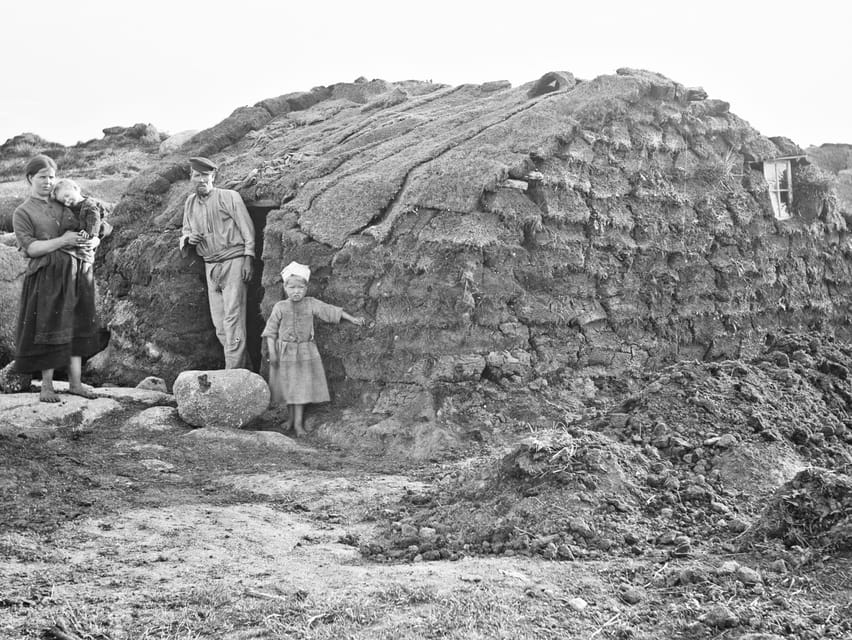
The most striking part of this Dublin exhibition is its central question: how did more than a million people die when Ireland still had food available during the famine years? The displays explain the crisis step by step, linking crop failure with disease, evictions, workhouses, emigration, and British rule.
I like the original personal letters, which bring the disaster down to one tenant, one landlord, one father, and one son. I also like the self-paced format: you can sit with a panel, watch the film, or take a quiet pause when the subject becomes heavy. The main drawback is simple: this is a serious museum visit, not a light sightseeing stop, and the small exhibition may feel brief if you want a large national museum.
In This Review
- Key points
- Why this small Dublin exhibition matters
- Finding Unit 200b at Stephens Green Shopping Centre
- Following the story through the exhibition rooms
- Rare photographs and the people behind the statistics
- Two newspapers and two personal letters
- The cast iron soup pot and the practical side of relief
- The 15-minute film and how long to allow
- Translation manuals and the optional book or USB
- Who will get the most from this $16 ticket
- Planning your visit around Dublin’s schedule
- My call: book it for context, not spectacle
- FAQ
- Where is the Irish Famine Exhibition located?
- How do I find the exhibition from Grafton Street?
- What are the opening hours?
- How long should I allow for the visit?
- Is the exhibition wheelchair accessible?
- What does the entry ticket include?
- Is the 15-minute film included?
- What original objects are on display?
- Can I buy exhibition materials?
- Can I cancel the booking?
Key points
- See rare 19th-century photographs that record Ireland during and around the famine years.
- Read original newspapers and personal letters, including a tenant’s letter to his landlord and a father’s letter to his son.
- Follow the story in separate rooms, with clear storyboards covering workhouses, evictions, coffin ships, starvation, and disease.
- Watch a 15-minute overview film with seating provided.
- Allow at least one hour, though the self-guided format lets you set your own pace.
- Find it on the second floor of Stephens Green Shopping Centre, open daily from noon to 6 p.m.
Why this small Dublin exhibition matters
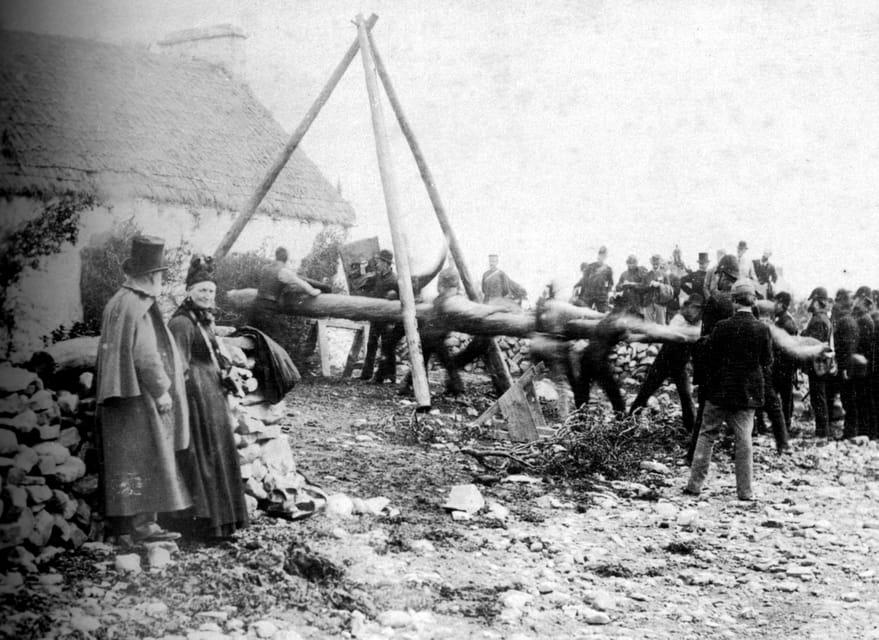
The Irish Potato Famine was not simply a story of potatoes failing. The potato crop collapsed, but the wider tragedy grew from the political and economic conditions around it. Ireland was then part of the British Empire, and food continued to leave the country during the famine years. That fact makes the word famine controversial and gives the exhibition its hard question: how could so many people starve in a country where food still existed?
The exhibition presents this issue in plain, direct steps. You begin with the crop failure and then see how hunger opened the door to disease, eviction, workhouse suffering, and mass emigration. I find that approach useful because it avoids reducing the crisis to one bad harvest.
This is a compact exhibition, not a full-scale museum with dozens of galleries. You come for a focused account of what happened and why. At about $16 per person, the price is reasonable if you want historical context during a Dublin visit, especially because the ticket remains valid for 180 days after booking. You are paying for a concentrated hour of interpretation rather than a full day of displays.
More museums in Dublin:
- Irish Rock ‘N’ Roll Museum Experience Dublin
★ 5.0 · 6,112 reviews - The Little Museum of Dublin Famous Guided Tour
★ 5.0 · 2,948 reviews - Dublin EPIC Museum Admission Ticket
★ 4.5 · 1,729 reviews
Finding Unit 200b at Stephens Green Shopping Centre

The exhibition is in Unit 200b on the top floor of Stephens Green Shopping Centre. From the main entrance on Grafton Street, walk about 20 metres to the elevator on the right. Take it to the second floor, then go left.
If you enter from the car park, head to the opposite end of the shopping centre. The exhibition returns you to the same meeting point, so there is no complicated route or separate exit to plan around.
The location makes this an easy addition to a day in central Dublin. You do not need to set aside half a day, arrange transport, or find a remote museum site. The practical catch is the opening window: it is open every day from 12 p.m. to 6 p.m. Plan your visit around those hours rather than assuming you can go first thing in the morning.
Wheelchair access is available. The elevator route from the main entrance is also helpful for anyone who prefers to avoid stairs.
Following the story through the exhibition rooms
The visit is self-paced. You walk through several rooms, each with storyboards that explain the story in an easy-to-follow sequence. This format suits you if you like to stop and read rather than keep up with a guide or a fixed group.
The panels cover the major subjects named in the exhibition:
- The potato crop failure and mass hunger
- Workhouses and their harsh conditions
- Evictions and the loss of homes
- Coffin ships carrying people away from Ireland
- Disease and the deaths that followed starvation
- The political question of how the disaster was handled
The order matters. Instead of seeing isolated objects with little explanation, you get a chain of cause and effect. The storyboards provide the framework, while the photographs, letters, newspapers, and artifacts give it a human scale.
A bench is provided in each room. That is a small but valuable detail. You can sit to read a longer panel, take a pause between sections, or simply give yourself a moment before moving on. This is not material to rush through while checking off a sight.
Rare photographs and the people behind the statistics
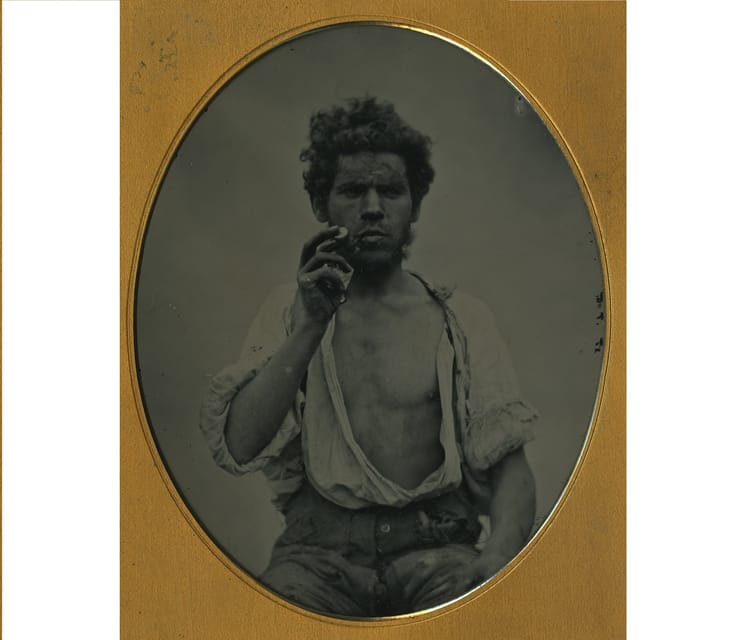
The 19th-century photographs are among the exhibition’s strongest features. They offer visual evidence of Ireland during a period often reduced to numbers: more than a million deaths and millions forced to leave.
Photographs cannot explain every cause, but they make the period less abstract. You see the people and places connected to the larger story. The exhibition pairs this visual record with simple explanations, so the images support the history rather than serving as decoration.
The subject is difficult, and the displays do not treat it as a romantic tale of Irish hardship. Workhouses, evictions, disease, and forced departure are presented as part of a national catastrophe. I appreciate that the exhibition asks you to think about responsibility and policy, not just weather and crops.
The photographs are also a good reason to take your time. A one-hour visit is enough for a solid overview, but you will get more from it if you do not hurry past the images on your way to the film.
More Dublin tickets worth pre-booking:
- Dublin: Guinness Storehouse Entry Ticket
★ 4.6 · 16,863 reviews - Dublin: Fast-Track Book of Kells Ticket & Dublin Castle Tour
★ 4.5 · 1,661 reviews - Dublin: The Dublin Pass with Tickets to 40+ Attractions
★ 4.3 · 1,639 reviews - From Dublin: Giant’s Causeway & Belfast Titanic with Ticket
★ 4.8 · 1,440 reviews
Two newspapers and two personal letters
Four original documents add a direct human voice to the exhibition. Two original newspaper articles describe the catastrophe. They show how the crisis was recorded at the time and connect the displays to the public record.
Two personal letters are also on display. One is from a tenant to his landlord. The other is from a father to his son. These are especially important because they shift the focus from a national event to relationships shaped by fear, hunger, rent, displacement, and separation.
I like this part of the visit because the letters do work that a general timeline cannot. A statistic tells you how many people died. A personal letter can show what uncertainty felt like inside a family or a tenant’s home.
The letters are original items, not just modern reproductions created for the display. That gives them a physical connection to the people who wrote and received them. Read them slowly, even if you have already understood the broad story from the panels.
The cast iron soup pot and the practical side of relief
A cast iron soup pot is another original object on display. It may appear modest beside photographs and documents, but it points to the practical side of famine relief. Food had to be prepared, distributed, and controlled in a period when hunger shaped every part of daily life.
This object also keeps the exhibition from becoming only a collection of written explanations. You see the machinery of relief in physical form, alongside the evidence of suffering and official response.
The exhibition does not provide a long list of objects. That is worth knowing before you book. Its strength is the connection among a small number of meaningful artifacts, clear panels, and film. If you prefer object-heavy museums, you may find the collection limited. If you want a focused introduction, the compact display works well.
The 15-minute film and how long to allow
A 15-minute overview film is included, with seating available. It gives you a second way to absorb the story after reading the storyboards, or it can provide a quick introduction before you examine the documents and photographs.
Allow at least one hour for the visit. That gives you time to move through the rooms, watch the film, read the main panels, and spend time with the original material. You can finish faster if you skim, but doing so would undercut the reason to visit.
The self-guided setup means the exact length depends on you. A history enthusiast may want longer with the letters and newspaper articles. Someone fitting the exhibition between other Dublin plans can get the main story in about an hour.
The seating is useful for more than the film. Each room has a bench, so you do not need to remain standing while reading. That makes the exhibition more manageable for people who need regular breaks.
Translation manuals and the optional book or USB
Translation manuals are included in French, German, and Italian. The supplied information also lists French twice, but the practical point is that language support is available for visitors who prefer one of those languages.
At the reception desk, you can buy the exhibition in book and USB formats. These are not included in the entry price. The USB contains the storyboards in film format, set to suitable mood music, and includes the 15-minute overview film.
The book or USB could be useful if you want to revisit the material after leaving Dublin. I would treat them as optional purchases, not necessary add-ons. The entry ticket gives you access to the full exhibition itself, while the extras are for taking the content home.
Who will get the most from this $16 ticket
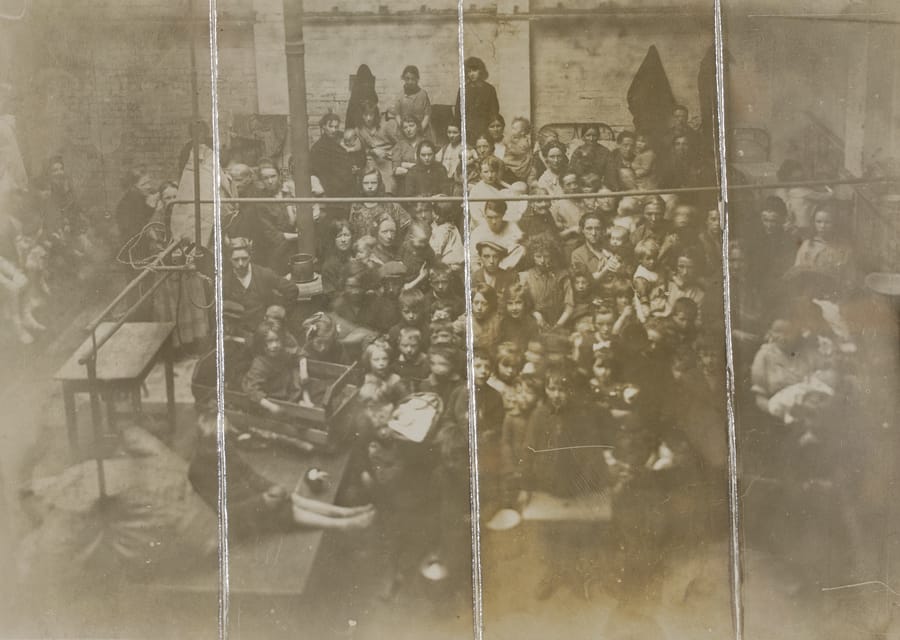
This visit suits you best if you want a clear introduction to the Irish Famine before visiting other Irish historical sites. It also works for anyone who prefers a short, focused museum experience over a large building with too much material to absorb in one sitting.
Families with older children may find the storyboards easier to follow than a dense academic display, but the subject is severe. Parents should decide if the material about death, disease, evictions, and forced migration is suitable for their children.
The exhibition is also a good choice for visitors interested in Irish migration. The section on coffin ships and mass departure helps explain why the famine changed communities far beyond Ireland. It connects hunger at home with the movement of millions of people abroad.
You may want to skip it if you are looking only for cheerful entertainment or a quick photo stop. This is a reflective visit. The film, letters, and displays ask for attention, and the subject deserves it.
Planning your visit around Dublin’s schedule
The exhibition opens daily from 12 p.m. to 6 p.m. Since it is inside Stephens Green Shopping Centre, you can pair it with time around Grafton Street and St. Stephen’s Green. Keep the opening hours in mind if you plan a morning of sightseeing.
The ticket is valid for 180 days, with starting times checked at booking. That long validity gives you flexibility if your Dublin plans change. You can reserve now and pay later, and cancellation is free up to 24 hours in advance for a full refund.
Those terms matter most if you are building a packed city itinerary. You can place the visit into an afternoon gap without committing to a rigid multi-day plan. The exhibition ends where it begins, so it is easy to continue with the rest of your day.
At $16 per person, the value depends on what you want from a museum visit. You receive a self-guided hour, a film, original documents, photographs, and artifacts. It is not a bargain if you expect a large collection or several hours of entertainment. It is fair value for a compact historical account in a central location.
My call: book it for context, not spectacle
I would book this exhibition if you want to understand the Irish Famine through more than dates and numbers. The clear sequence of storyboards, rare photographs, original letters, newspaper articles, soup pot, and film gives you several ways into the subject.
The best reason to go is the human material. A tenant writing to a landlord and a father writing to his son can say more than a long summary. Add the practical convenience of a central location, daily opening, seating, wheelchair access, and a visit of about an hour, and this becomes an easy history stop in Dublin.
Skip it if you need a large museum with a broad collection or if the subject feels too heavy for your itinerary. For everyone else, especially visitors who want the hard facts behind Ireland’s famine memory and mass emigration, the $16 ticket is a sensible buy.
FAQ
Where is the Irish Famine Exhibition located?
It is in Unit 200b on the top floor of Stephens Green Shopping Centre in Dublin.
How do I find the exhibition from Grafton Street?
Enter through the main entrance on Grafton Street. An elevator is about 20 metres in on the right. Go to the second floor and turn left.
What are the opening hours?
The exhibition is open every day from 12 p.m. to 6 p.m.
How long should I allow for the visit?
Allow at least one hour. The visit is self-paced, so the exact time depends on how closely you read the displays and watch the film.
Is the exhibition wheelchair accessible?
Yes, the activity is wheelchair accessible.
What does the entry ticket include?
It includes entry to the Irish Famine Exhibition and translation manuals in French, German, and Italian.
Is the 15-minute film included?
Yes, a 15-minute overview film is included, and seating is available for it.
What original objects are on display?
The exhibition includes two original newspaper articles, two personal letters, and an original cast iron soup pot.
Can I buy exhibition materials?
Yes. A book and a USB stick are available for purchase at the reception desk. They are not included with entry.
Can I cancel the booking?
You can cancel up to 24 hours in advance for a full refund. Reserve now and pay later is also available.
Just added around Dublin
- Dublin: Pub Tour. Pour The Perfect Guinness, Whiskey & Music★ 5.0 · 3 reviews
- A Self Guided Walking Tour of Dublin’s Docklands★ 4.5 · 3 reviews
- Private Dublin City tour★ 5.0 · 3 reviews
- Dublin One Day Tour with a Local: 100% Personalized & Private★ 4.5 · 3 reviews
- Waterford Crystal and Kilkenny Full-Day Rail Tour from Dublin★ 5.0 · 3 reviews
- Secret and unusual Dublin: guided walking tour★ 5.0 · 3 reviews
- 5 Day Ireland’s South−East Including Admission from Dublin★ 4.5 · 3 reviews
- Turtle Bunbury’s Dublin: A Self-Guided Audio Tour from a Celebrated Author★ 5.0 · 3 reviews
Museums, compared.
The Little Museum of Dublin Famous Guided Tour
Read our review →

Giant’s Causeway with the Titanic Exhibition and the best of Northern Ireland
Read our review →


Irish Whiskey Museum: Whiskey Blending Experience
Read our review →
Irish Whiskey Museum Blending Tour with Tastings
Read our review →Browse the lists this tour appears in