
Reviewed · BOYNE VALLEY & NEWGRANGE TOURS
Celtic Boyne Valley & Ancient Sites Day Tour From Dublin
The most striking part of this day is the chance to move through 5,000- to 6,000-year-old Ireland without renting a car. You will stand on the Hill of Tara, walk to Neolithic tombs at Loughcrew, and explore the ruins of Fore Abbey, all in one long sweep through the Boyne Valley.
I like two things here: the mix of famous places such as Trim Castle with quieter ancient sites, and the guides. Flann, Alex, Barry, Matthew, Philip, and Alec have all been praised for making the history clear, funny, and memorable. The main drawback is that the final distillery and lunch stop can take time away from Trim Castle or Fore Abbey, and the walking is harder than the easygoing title might suggest.
In This Review
- Key points to know before booking
- Why this Boyne Valley day trip is worth your time
- Starting beside the Molly Malone statue at 8 a.m.
- Hill of Tara, the seat of the High Kings
- Trim Castle brings the medieval story to life
- Loughcrew Cairns is the physical highlight
- Lunch and the Fore Distillery stop
- Fore Abbey and the remains of a monastic settlement
- The guides are central to the experience
- Walking, weather, and the right packing list
- Who will get the most from this $84.65 tour?
- Should you book the Celtic Boyne Valley tour?
- FAQ
- Where does the Celtic Boyne Valley tour start?
- How long does the tour last?
- Is lunch included?
- Is Trim Castle admission included?
- How difficult is the walking?
- Is the whiskey tasting included?
- Can I cancel for a refund?
Key points to know before booking
- Loughcrew Cairns requires a real uphill walk: Expect grassy slopes, steps, wind, and possibly slippery ground.
- The Hill of Tara connects you with Ireland’s ancient kings: You will see the Coronation Stone, An Forradh, and broad views across County Meath.
- Trim Castle is the day’s great medieval counterpoint: It is Ireland’s largest Anglo-Norman castle, but entry inside costs extra.
- The distillery stop divides opinion: It includes a tasting and local stories, but non-drinkers may prefer more time at the ruins.
- The guide can make or break the day: Flann, Alex, Barry, Matthew, Philip, and Alec have received especially warm praise, though guide quality can vary.
- This is good value at $84.65: Round-trip transport and guiding cover a lot of ground, but lunch and Trim Castle admission are not included.
Why this Boyne Valley day trip is worth your time
The Boyne Valley is one of Ireland’s best areas for ancient monuments. It is close enough to Dublin for a day trip, yet it feels far removed from the city’s pubs and Georgian streets.
This tour gives you a broad look at the area instead of focusing on one major attraction. You get ancient kingship at Tara, medieval power at Trim, Neolithic burial chambers at Loughcrew, Christian ruins at Fore, and a modern taste of Irish whiskey along the way.
That range is the real appeal. You are not simply looking at one ruined building and returning to Dublin. You are seeing how different societies used the same part of Ireland over thousands of years.
The tour costs $84.65 per person and lasts about 10 hours. For that price, the transport is useful. Several stops are spread across rural County Meath, and reaching Loughcrew or Fore by public transport would be awkward. You also have a driver-guide who explains the sites as you go.
The value is strongest if you want a full day outside Dublin and do not want to plan rural connections yourself. It is less convincing if you want long, unhurried visits at every stop. The schedule covers a lot of ground, so some stops feel carefully timed.
More Boyne Valley and Newgrange visits:
- Dublin: Boyne Valley with Newgrange and Bru Na Boinne Entry
★ 4.7 · 635 reviews - From Dublin: Celtic Boyne Valley and Ancient Sites Tour
★ 4.5 · 618 reviews - Dublin to Newgrange, Monasterboice Small Group Guided Tours
★ 4.5 · 500 reviews
Starting beside the Molly Malone statue at 8 a.m.
The meeting point is the Molly Malone statue on Suffolk Street in central Dublin. Be there at least 10 minutes early, since the coach leaves at 8 a.m.
You should bring your own breakfast. The first ride takes you north through the Irish countryside, and the tour does not include food. Service-station breaks are built into the day, where you can buy something and use the toilet.
The vehicle is air-conditioned. Some buses provide Wi-Fi and USB ports, and the seats have been described as comfortable on smaller coaches. The maximum group size is 55 people, though some departures are much smaller, with around 20 passengers.
That difference matters. A group of 20 can move faster and feel more personal. A full coach may mean slower boarding, longer waits at lunch, and more pressure to keep to the schedule.
A few people have dealt with late departures, so I would not plan a tight evening reservation in Dublin. The return is scheduled for the evening, but a 10-hour rural trip can be affected by traffic, weather, and delays at the stops.
Hill of Tara, the seat of the High Kings
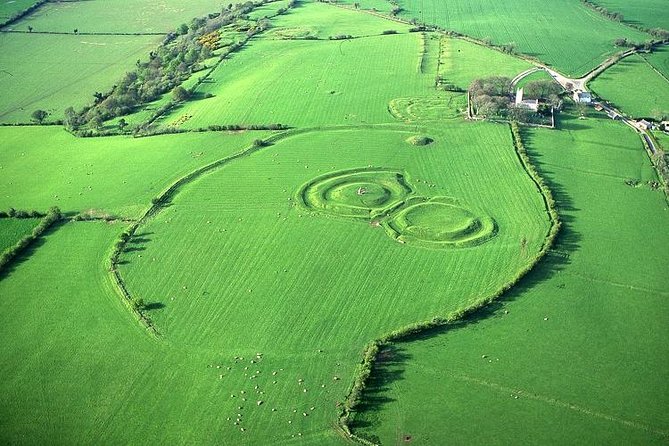
Your first proper stop is the Hill of Tara, a sacred site linked with the High Kings of ancient Ireland. You have about an hour here.
The site is not a grand fortress with intact walls. It is an open grassy hill marked by earthworks and monuments. You will see the Coronation Stone and An Forradh, along with wide views across the surrounding countryside.
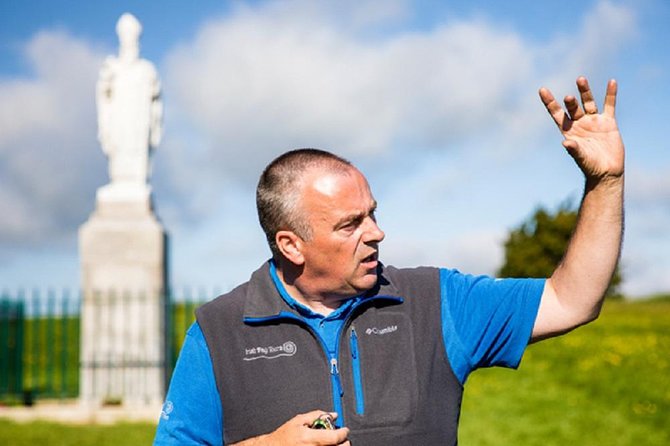
This is a place where a good guide matters. Without explanation, the low banks and rounded mounds can look modest. With context, they become traces of a ceremonial and political center used over many centuries.
I like Tara as an opening stop because it sets up the theme of the day. You begin with power, ritual, and kingship before moving to castles, tombs, and monasteries.
Wear shoes with a firm grip. The ground can be wet, and open hilltops are exposed to wind and rain. The walk is manageable for most people, but you should not expect a paved museum-style visit.
Trim Castle brings the medieval story to life
After Tara, the coach continues to Trim, a historic town on the River Boyne. You have roughly 1 hour and 10 minutes here.
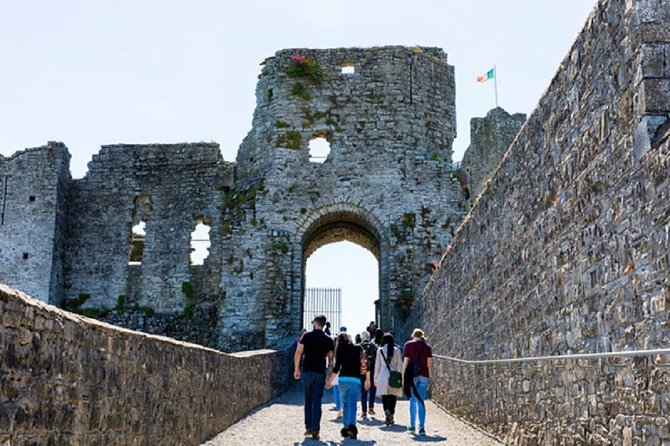
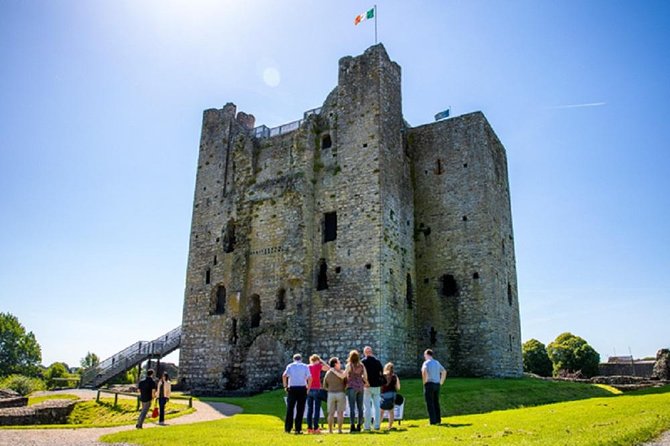
Trim Castle was built in the 1170s and is the largest Anglo-Norman castle in Ireland. Its massive stone keep and broad grounds give you a much clearer sense of medieval military power than the earthworks at Tara.
You will have time to walk around the exterior and take photographs. A local guide may provide a presentation, and the castle grounds are included in the day’s sightseeing. However, admission inside the castle is extra, so confirm the current entry cost if you want the interior visit.
This is one of the stops where I would happily take more time. The castle is visually strong, and the town adds a pleasant change after the open hill at Tara. Some departures allow a good visit, but delays earlier in the day can shorten the time available.
If Trim is your main reason for booking, check the timing carefully before you pay. The tour gives you an efficient introduction, not a leisurely castle afternoon.
A different side of Dublin on the same trip:
- Dublin to Cliffs of Moher, including Wild Atlantic Way and Galway
★ 5.0 · 23,331 reviews - From Dublin: Cliffs of Moher, Burren & Galway City Day Tour
★ 4.8 · 18,888 reviews - Dublin: Guinness Storehouse Entry Ticket
★ 4.6 · 16,863 reviews - Dublin to Cliffs of Moher, Burren, Wild Atlantic Way, Galway Tour
★ 5.0 · 12,924 reviews
Loughcrew Cairns is the physical highlight
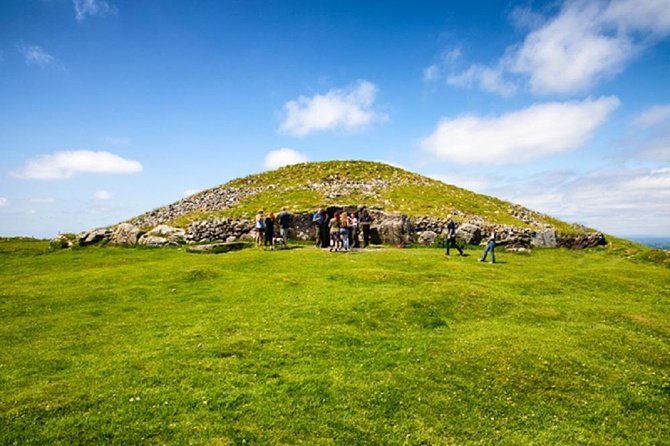
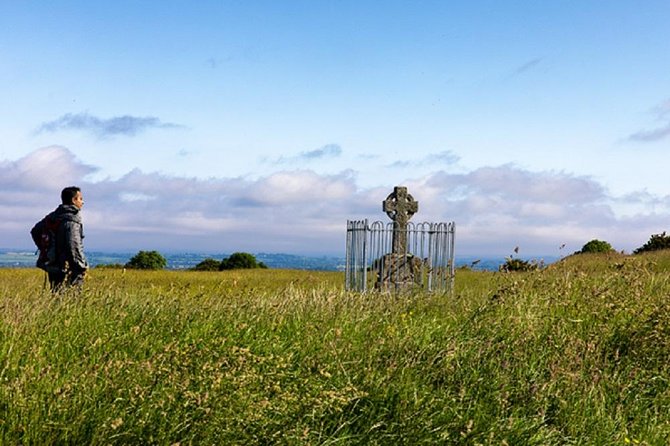
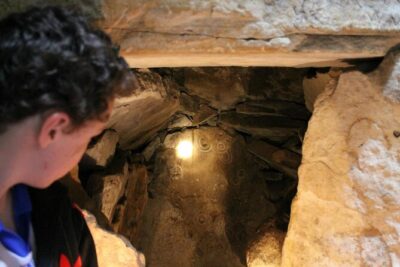
Loughcrew Cairns is the most demanding stop and, for many people, the most rewarding. These Neolithic passage tombs are more than 5,000 years old, with carved artwork inside the stone chambers.
The site sits uphill, and the approach includes a climb over grass and steps. You may face wind, wet ground, and slippery downhill sections on the return. Good walking shoes are essential. An umbrella is a poor choice in strong wind, so bring a waterproof jacket with a hood instead.
The climb is not suitable for everyone. Some people have stopped partway up, while others have found the effort well worth it for the views and the tombs. You should be comfortable walking uphill before choosing this excursion.
Inside the passage tomb, the stone carvings are the main prize. These ancient markings are not presented like a polished city museum exhibit. The setting is rural and exposed, and the experience depends on your guide helping you understand what you are seeing.
You will have about 50 minutes at Loughcrew, followed by lunch nearby. That is enough for a focused visit, but not much if you move slowly or need frequent rests.
For me, this stop gives the tour its strongest identity. Many day trips from Dublin concentrate on the best-known attractions. Loughcrew offers something older, quieter, and more unusual.
Lunch and the Fore Distillery stop
Lunch is not included in the tour price. The schedule places food near the Loughcrew and Fore portion of the day, and you may also find an option at the Fore Distillery’s Barrel & Bean Café.
Food arrangements can be a little chaotic when a full coach arrives at once. Ordering sandwiches may be faster than ordering soup, and one guide, Flann, was praised for calling ahead and sending orders early.
Do not book this day expecting a long restaurant meal. You are trying to eat, use the facilities, and stay on schedule. The quality can vary, so if lunch matters greatly to you, bring a snack in addition to the breakfast you buy before departure.
The Fore Distillery visit lasts around 25 minutes in the listed schedule, though some departures have spent much longer there. You can hear about local distilling, see something of the craft, and take part in a whiskey tasting.
Drinkers may enjoy the stop. Non-drinkers can still treat it as a local history presentation, and participation in the sample is not necessary. Still, this is the least natural fit for a tour built around ancient monuments.
That tradeoff is important. Some people love the family-run feel and the chance to stop in a small rural community. Others feel the whiskey talk is too long and would prefer more time at Trim Castle or Fore Abbey.
Fore Abbey and the remains of a monastic settlement
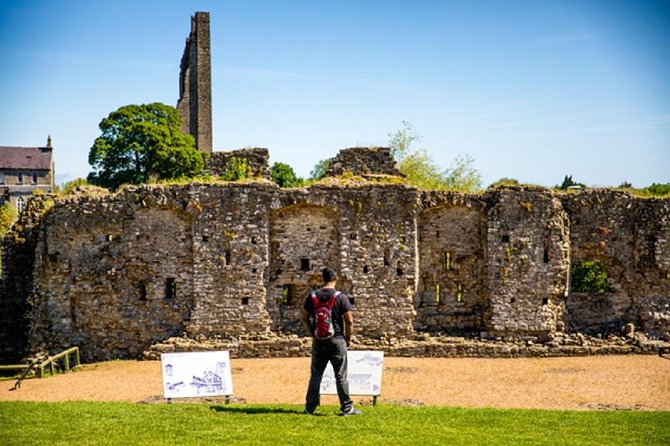
Fore Abbey is the final major historic stop. Saint Fechin founded a Christian monastery here in the seventh century, and the settlement once housed about 300 monks.
The ruins include Saint Fechin’s Church, which dates to around 900 AD. The settlement was destroyed twelve times, a detail that gives the site a hard, turbulent character. You can walk among the remains and picture a religious center that was repeatedly rebuilt and attacked.
You have about 45 minutes at the abbey, though the broader Fore stop can occupy much longer when lunch and the distillery are included. The ruins themselves do not require a huge amount of time, so some people may find the extra village time less engaging.
I would use the stop to slow down after the busier parts of the day. Look closely at the stonework, walk around the church ruins, and listen for the local stories. You may also hear Irish folklore along the way, including the tradition of making a wish at a fairy tree.
Fore is less polished than Trim Castle. That is part of its charm, but it also means you should arrive ready to explore rather than wait for a formal attraction with a large visitor center.
The guides are central to the experience
The best part of this tour is often the person in the driver’s seat. Flann has been praised for his warmth, humor, historical detail, and care with older passengers. Alex has been described as highly informed and engaging, while Barry, Matthew, Philip, Alec, and John have also made strong impressions.
A good guide turns Tara’s grassy mounds into a place of ceremony, explains why the tomb carvings matter, and links Trim Castle to the wider story of Norman Ireland. The day involves long stretches on the road, so clear commentary also keeps the bus ride from becoming dead time.
Guide quality can vary, however. One poor experience included limited explanation, confusion after a late start, and an uncomfortable tone with passengers. That is not a reason to dismiss the entire route, but it is a reminder that this is a guide-led experience rather than a self-contained attraction.
The company uses a maximum of 55 people, and guides need to keep everyone moving. Arrive on time, pay attention to meeting instructions, and return to the coach promptly at each stop. A late passenger can affect the whole group.
Walking, weather, and the right packing list
This is not a gentle sightseeing loop. You will walk on grass, climb hills, use steps, and deal with exposed weather at Tara and Loughcrew.
Bring:
- Waterproof jacket with a hood
- Sturdy shoes with good grip
- Water and snacks
- Warm layers
- Phone charger, even if your bus has USB ports
- Cash or a card for lunch and optional castle entry
Irish weather can change quickly. Even on a pleasant morning, the hilltops may be cold, wet, and windy. The day becomes much more enjoyable when you are prepared for mud and rain instead of hoping the forecast holds.
Most people can take part, but the route is not ideal if you have difficulty with steep uphill walking or slippery ground. The Loughcrew climb is the main test. If you prefer short, level walks and lots of indoor time, choose a different Dublin day trip.
Who will get the most from this $84.65 tour?
I would recommend this tour to anyone who likes archaeology, ruined churches, castles, Irish folklore, and open countryside. It is especially useful for first-time visitors who want to see more than Dublin but have only one free day.
It suits people who enjoy variety. In one day you move from prehistoric tombs to medieval architecture, then to a Christian ruin and a whiskey producer. You will not get a deep visit at every place, but you will gain a broad sense of the Boyne Valley.
It also suits visitors who want regular breaks. The coach generally stops at service stations often enough for food, toilets, and a stretch of the legs.
I would hesitate to recommend it to someone who dislikes group schedules, alcohol-focused stops, or long days. If you want to linger at Trim Castle, study every carving at Loughcrew, or spend a quiet afternoon at Fore Abbey, a private rental car or smaller custom tour may serve you better.
At $84.65, I think the price is fair because rural transport would otherwise be difficult and the day includes several widely separated sites. The value drops if you skip the whiskey tasting, buy an expensive lunch, and place a high priority on extended castle time.
The free cancellation policy is useful: you can cancel up to 24 hours before the start time for a full refund. Last-minute changes or cancellations are not refundable, and the tour requires a minimum number of participants.
Should you book the Celtic Boyne Valley tour?
Book it if you want an efficient, history-heavy day outside Dublin and do not mind walking uphill. The Hill of Tara, Loughcrew Cairns, and Fore Abbey give you access to older and quieter places than many standard Irish excursions.
Go in with realistic expectations. This is a packed day, not a slow rural ramble. Lunch is separate, Trim Castle entry costs extra, and the distillery may take more time than you expect.
My best advice is to bring proper shoes, waterproof clothing, a packed snack, and an open mind about the whiskey stop. If your guide is as engaging as Flann, Alex, Barry, Matthew, Philip, or Alec, the long drive becomes part of the pleasure. If ancient sites are your priority, this tour offers strong value. If castle interiors or relaxed meals matter most, choose a route with fewer stops.
FAQ
Where does the Celtic Boyne Valley tour start?
The tour starts at the Molly Malone statue on Suffolk Street, Dublin 2. You should arrive at least 10 minutes before the scheduled 8 a.m. departure.
How long does the tour last?
The tour lasts approximately 10 hours and returns to the Molly Malone statue in Dublin in the evening.
Is lunch included?
No. Lunch is not included in the tour price. Food can be purchased during the scheduled stops, including near Fore Distillery and the Barrel & Bean Café.
Is Trim Castle admission included?
The general tour information states that entry to Trim Castle is not included. You can walk around the grounds, but you should pay separately if you want the castle admission.
How difficult is the walking?
The tour includes uphill walking, steps, grassy paths, and potentially slippery downhill sections. Loughcrew Cairns is the most demanding stop, especially in wet or windy weather.
Is the whiskey tasting included?
The tour includes a stop at Fore Distillery and a tasting. You do not have to take the whiskey sample if you do not drink, but the distillery visit is part of the scheduled day.
Can I cancel for a refund?
You can cancel up to 24 hours before the experience starts for a full refund. Cancellations or changes made less than 24 hours before the start time are not refunded.
Just added around Dublin
- Dublin: Pub Tour. Pour The Perfect Guinness, Whiskey & Music★ 5.0 · 3 reviews
- A Self Guided Walking Tour of Dublin’s Docklands★ 4.5 · 3 reviews
- Private Dublin City tour★ 5.0 · 3 reviews
- Dublin One Day Tour with a Local: 100% Personalized & Private★ 4.5 · 3 reviews
- Waterford Crystal and Kilkenny Full-Day Rail Tour from Dublin★ 5.0 · 3 reviews
- Secret and unusual Dublin: guided walking tour★ 5.0 · 3 reviews
- 5 Day Ireland’s South−East Including Admission from Dublin★ 4.5 · 3 reviews
- Turtle Bunbury’s Dublin: A Self-Guided Audio Tour from a Celebrated Author★ 5.0 · 3 reviews
Boyne Valley & Newgrange Tours, compared.
Boyne Valley with Newgrange and Bru Na Boinne Entry
Read our review →
Dublin to Newgrange, Monasterboice Small Group Guided Tours
Read our review →
6 hour Half-Day Award Winning Private Tour of the Boyne Valley
Read our review →
Full-Day Irelands Ancient Boyne Valley Private Guided Tour
Read our review →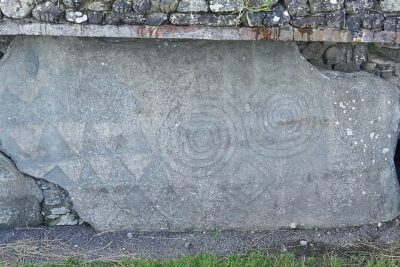
Browse the lists this tour appears in