
Reviewed · DUBLIN
Dublin: Gaelic Games Experience
The most interesting part of this Dublin activity is that you do not just watch Ireland’s national sports. You learn why Gaelic games matter, then step onto the pitch to try hurling, Gaelic football, and handball yourself. The session is built for beginners, so you get a real taste of Irish sporting life without needing athletic training.
I like the mix of culture and activity, and I like that the coaches keep things playful rather than turning the session into a serious sports lesson. The main consideration is physical effort: it is gentle, but you will run, move, compete, and sign a waiver accepting the activity at your own risk.
In This Review
- Key points to know
- Why Gaelic games make a memorable Dublin activity
- Arriving at Na Fianna GAA Club
- The opening lesson: history, rules, and Irish sporting life
- Trying Gaelic football on the astro pitch
- Learning why hurling is so special
- Adding handball to the mix
- Coaches who make beginners feel welcome
- What the $51 price includes
- What to wear and what to bring
- Who should book this experience
- What the experience does especially well
- A few limits to keep in mind
- Should you book the Dublin Gaelic Games Experience?
- FAQ
- Where does the Gaelic Games Experience take place?
- How far is the club from Dublin city center?
- How long does the activity last?
- Which sports will I try?
- Is equipment provided?
- What should I wear and bring?
- Can children and pregnant women take part?
Key points to know
- Three Irish sports in one session: Learn the basics of Gaelic football, hurling, and handball.
- A local club setting: Na Fianna GAA Club is about a 10-minute bus ride from Dublin city center.
- Culture before competition: Begin with history, video clips, and an explanation of the GAA before heading outside.
- Beginner-friendly coaching: The activities suit different ages and abilities, with team games and simple instruction.
- Useful facilities: Equipment and water are included, while dressing rooms and showers are available if you bring your own towel and toiletries.
- Good value for active visitors: At $51 per person for three hours, you get cultural context, coaching, equipment, and a hands-on experience.
Why Gaelic games make a memorable Dublin activity
Dublin has no shortage of historic buildings, pubs, museums, and walking tours. This experience gives you something different: a look at Ireland through the sports that shape local identity.
Gaelic games are not simply another set of ball games. They are tied to clubs, schools, counties, family life, and national pride. The session begins by explaining that place in Irish life, so you understand what you are seeing before anyone hands you a hurley or sends you onto the pitch.
That order matters. You are not expected to know the rules when you arrive. The introduction explains how the games work, shows video clips, and gives you a sense of the passion around the GAA, the Gaelic Athletic Association. You get enough background to recognize the difference between a casual training exercise and a sport with a serious following across Ireland.
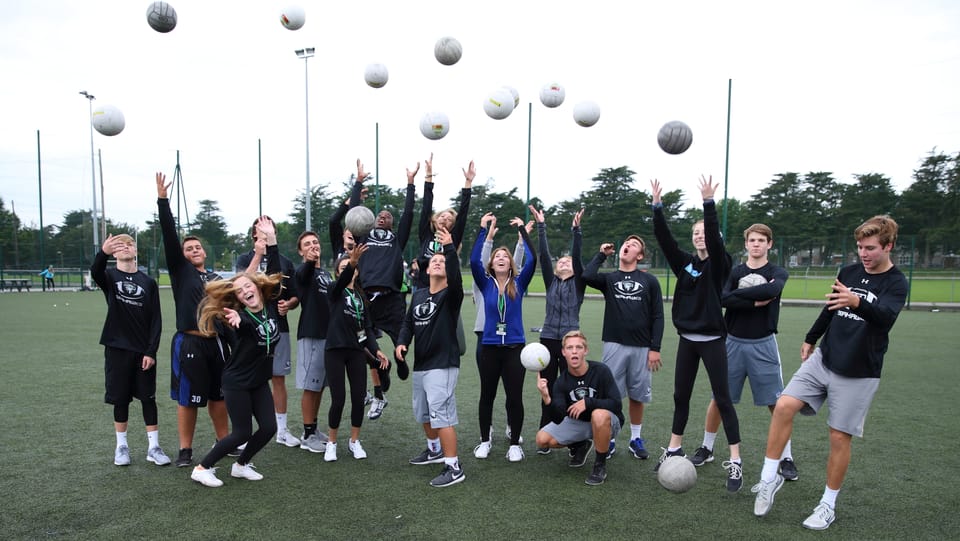
The result is a better cultural experience than simply seeing a match from the stands. You take part, make mistakes, laugh with your teammates, and begin to understand why the sports matter to people who grew up with them.
Other Dublin tours people book alongside this one:
- Dublin to Cliffs of Moher, including Wild Atlantic Way and Galway
★ 5.0 · 23,331 reviews - From Dublin: Cliffs of Moher, Burren & Galway City Day Tour
★ 4.8 · 18,888 reviews - Dublin: Guinness Storehouse Entry Ticket
★ 4.6 · 16,863 reviews
Arriving at Na Fianna GAA Club
The activity takes place at Na Fianna GAA Club on St Mobhi Road in Glasnevin, Dublin 9. From the city center, the club is roughly a 10-minute bus journey, making it easy to add to a Dublin sightseeing plan without giving up a full day.
Buses 4, 9, and 155 stop directly across from the club. That is useful because you do not need a complicated connection or a long walk through an unfamiliar area. You are responsible for getting to the club, though transport is not included in the $51 price.
When you arrive, go to the Experience Gaelic Games visitor center on the first floor of the clubhouse. The modern facility has a dedicated visitor area, and the session ends back at the same meeting point. That simple arrangement keeps the day easy to manage, especially if you are visiting with children or a mixed-age group.
The club setting also gives the experience a more local feel than a city-center attraction. You are visiting a working sports club, not a stage set made only for sightseeing. The tradeoff is that this is not right beside Trinity College or Temple Bar, so you need to allow time for the bus ride.
The opening lesson: history, rules, and Irish sporting life
The first section takes place indoors and sets up everything that follows. Your English-speaking instructors explain the history of Gaelic games, their place in Irish life, and the basic structure of each sport.
Expect video clips and a lively presentation rather than a formal lecture. The tone is informal, with plenty of humor and interaction. The coaches are passionate about their games, and that enthusiasm helps make the rules easier to follow.
This introduction is especially useful if you have watched the All-Ireland Final or seen Gaelic football and hurling on television but could not quite tell what was happening. One visitor came to the session after becoming curious about Gaelic football from watching the final, and the activity made a practical first step into the sport.
You do not need to memorize every rule. The aim is to give you enough understanding to play safely and enjoy the mini-matches later. The explanation also gives you a point of reference for the rest of your Ireland trip. If you see a GAA sign, a club jersey, or a match poster afterward, you will have a better idea of the community behind it.
Trying Gaelic football on the astro pitch
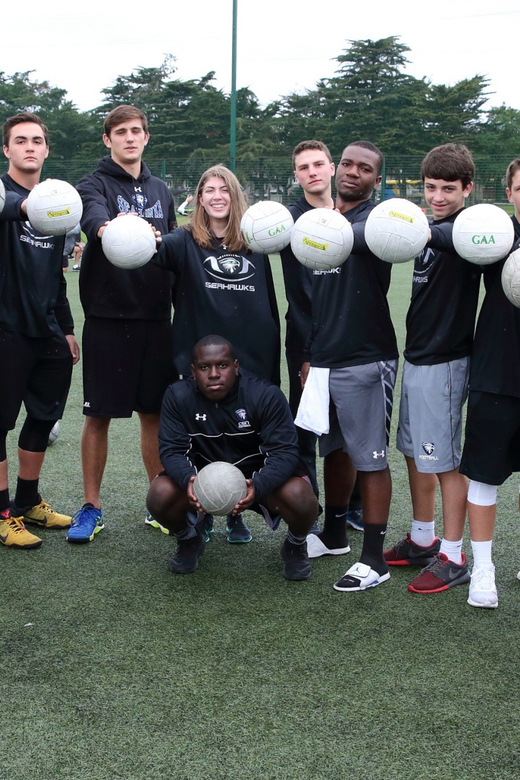
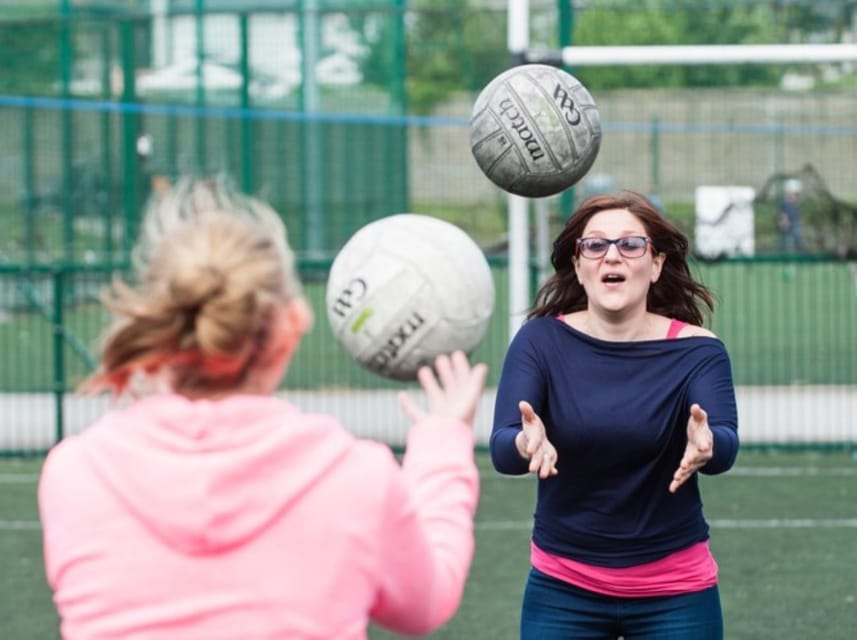
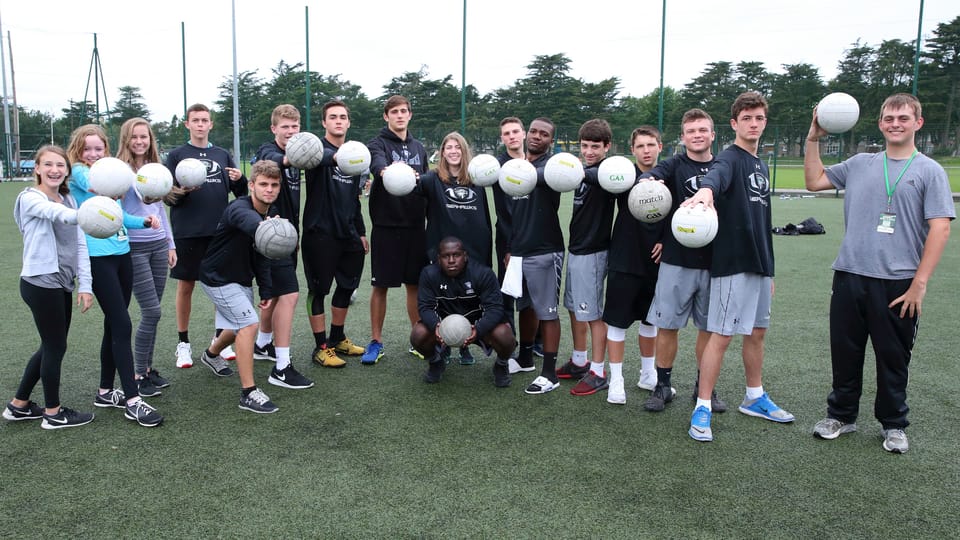
After the indoor introduction, you head to the astro pitch for gentle team-building activities. Gaelic football is likely to be the most familiar of the three sports because it combines elements that may remind you of soccer, basketball, and rugby, though it has its own rules and rhythm.
You will learn through movement rather than a long technical explanation. The instructors guide you through the basic skills, then organize simple team activities. Depending on the group, you may play short matches.
This is where the experience becomes more social. You are not practicing alone while a coach watches from the side. You work with other participants, pass the ball, try to score, and discover that beginners from different countries can quickly form a team.
The word gentle is important, but do not confuse it with completely inactive. You should expect to move around and become competitive once a ball is in play. Comfortable clothing and flat footwear are the sensible choice. If you already own sports clothes, bring them. You may begin with a relaxed attitude, but the mini-match can change that quickly.
A different side of Dublin on the same trip:
- Dublin to Cliffs of Moher, Burren, Wild Atlantic Way, Galway Tour
★ 5.0 · 12,924 reviews - Dublin: Giants Causeway, Dark Hedges, Dunluce & Belfast Tour
★ 4.8 · 8,843 reviews - Dublin to Belfast Black Cab, Dunluce Castle and Giant’s Causeway
★ 5.0 · 7,954 reviews - Kilkenny, Wicklow Mountains & Glendalough Day Tour from Dublin
★ 5.0 · 7,897 reviews
Learning why hurling is so special
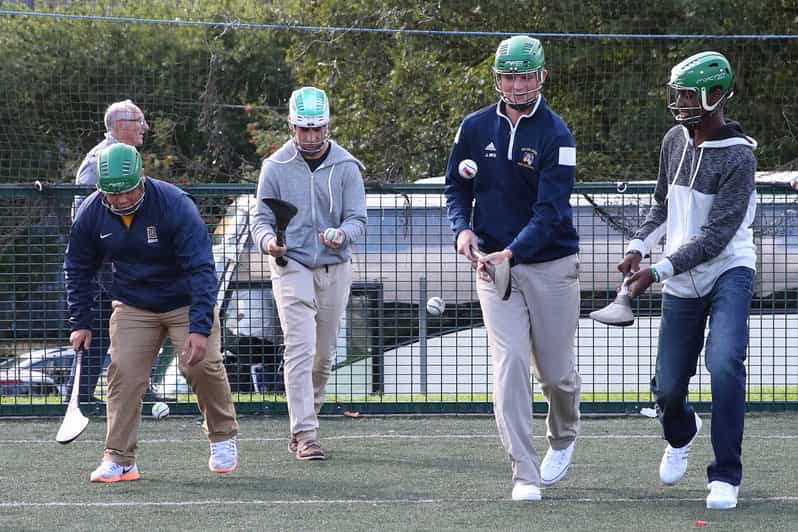
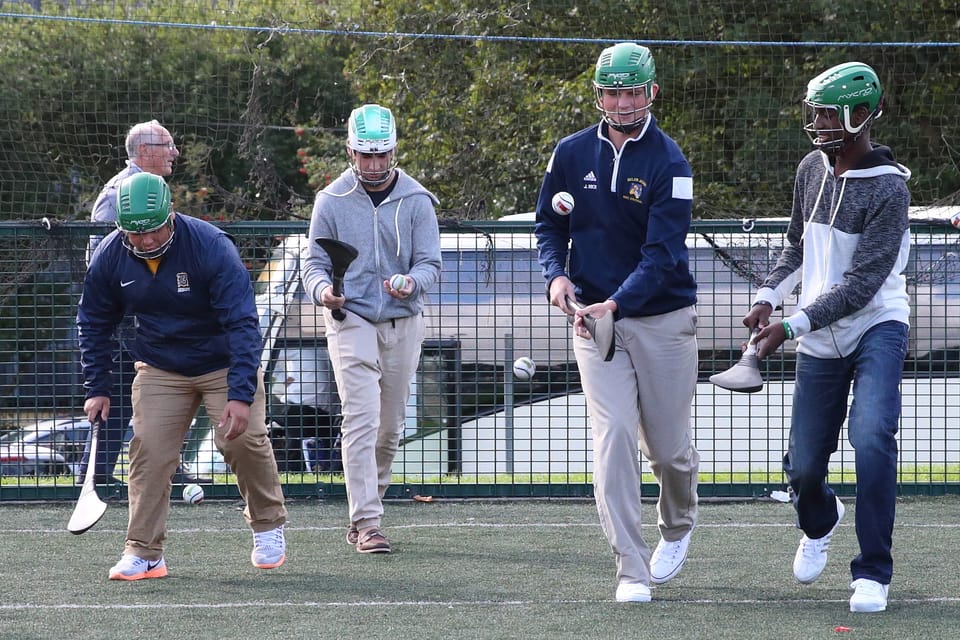
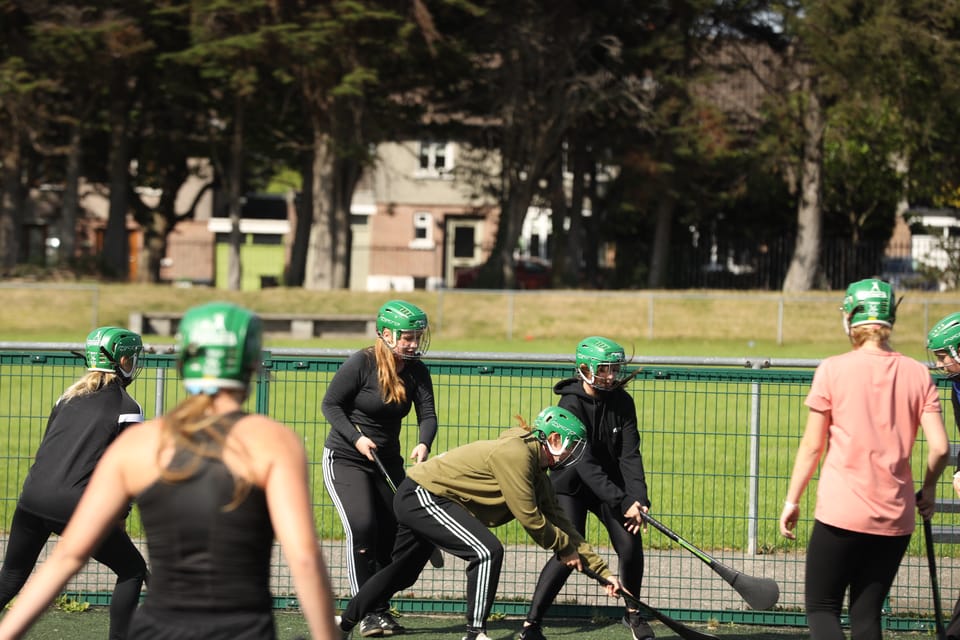
Hurling is the sport that gives this activity its strongest sense of place. It is often described as Europe’s oldest and fastest warrior field sport, and the speed of the game helps explain its reputation.
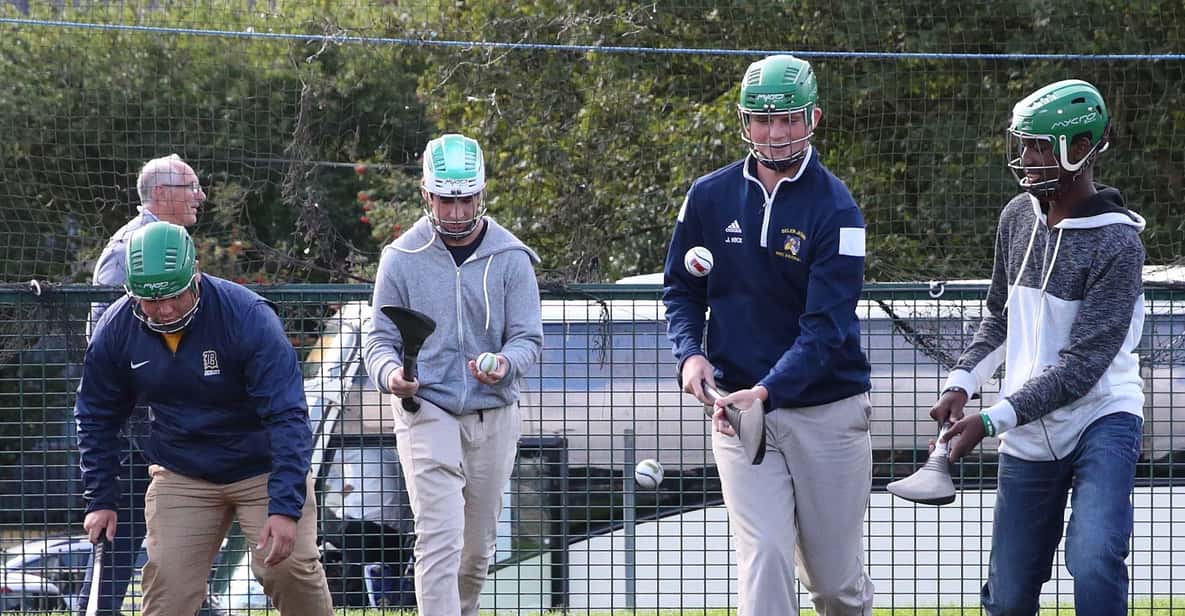
You use a hurley, the traditional wooden stick, and a sliotar, the small ball used in hurling. The equipment is provided, so you do not need to bring anything beyond suitable clothing and shoes. The instructors introduce the basic handling and movement in a controlled way before you take part in group activities.
For many people, hurling is the least familiar sport on the schedule. That is also its appeal. You are not simply playing a version of something you already know. You are trying a distinctly Irish game with its own tools, techniques, and traditions.
Do not expect to look polished on your first attempt. Handling the hurley takes coordination, and the point is to have fun while learning. You might miss the ball, send it in the wrong direction, or discover that your best skill is cheering for your team. That is all part of the experience.
Hurling also gives the cultural introduction more meaning. After hearing about Ireland’s sporting traditions, you are holding one of the objects at the center of that tradition. For a short activity, that connection between explanation and participation works very well.
Adding handball to the mix
Handball rounds out the session and gives you a change of pace after the field sports. The activity includes handball as part of the team-building program, alongside Gaelic football and hurling.
The variety is one of the strongest features of the three-hour format. You are not spending the whole time trying to master one unfamiliar sport. If one activity feels awkward, the next may suit you better. If you enjoy the first game, you get another chance to work with your team in a different setting.
The session is designed around participation, not testing. Your coaches can adjust the pace for the group, and the emphasis remains on good fun and shared activity. Still, the exact balance between the three sports can depend on the group and the way the instructors organize the session.
Coaches who make beginners feel welcome
The instructors are central to the experience. They are passionate about Gaelic games and interact closely with the people taking part. That personal approach matters because the sports may be completely new to you.
A dry rules talk would not be enough here. You need someone willing to demonstrate, correct, encourage, and laugh along when a movement goes wrong. The activity’s strong reputation comes largely from that combination of clear instruction and friendly energy.
You should not expect a private lesson or a highly technical coaching session. The goal is not to prepare you for a county championship. It is to help you understand the sports, try the main movements, and enjoy team play with other people.
The program suits a wide range of ages and abilities, but the instructors still ask every participant to sign a waiver confirming a willingness to take part at their own risk. That is a practical reminder that the session involves real movement, even though the activities are described as gentle.
What the $51 price includes
At $51 per person, this is not the cheapest way to spend three hours in Dublin. It is also more than the cost of simply visiting a museum or walking through a public park. The value comes from the combination of elements included in the session.
You receive:
- A cultural introduction to Gaelic games
- English-language instruction
- Use of the sports equipment, including hurleys
- Time on the astro pitch
- Practice in Gaelic football, hurling, and handball
- Team activities and possible mini-matches
- Water, with tea and coffee available at the facility
You do not pay separately for equipment, which is helpful for visitors who have no sports gear. You also avoid having to buy or borrow a hurley before the session.
The price makes the most sense if you want an active cultural experience rather than another sightseeing stop. For a family with older children, a group of friends, or sports-minded adults, three hours of instruction and play can feel like a fair use of time. If you are mainly looking for a quiet history lesson, the price may be harder to justify.
The experience also has free cancellation up to 24 hours before the start time, and you can reserve now while paying later. Those policies help if your Dublin schedule is still changing. Sessions require a minimum number of bookings, so an underbooked time may be rescheduled or refunded.
What to wear and what to bring
Wear comfortable clothes that let you move freely. Casual clothing works, but sports attire is a better choice if you expect to join the mini-matches with energy.
Flat footwear is required. You do not need specialist equipment, and the club supplies the hurleys and other gear. Bring water if you prefer your own bottle, though water is included.
Dressing rooms and showers are available on site. If you plan to use them, bring your own towel and toiletries. That can be useful if you have an afternoon appointment, dinner reservation, or evening activity after the session.
A face mask or protective covering is listed among the items to bring. Alcohol and drugs are not allowed. These are simple rules, but following them keeps the activity safe and suitable for the whole group.
Who should book this experience
I would recommend this activity most strongly to people who want to connect with Ireland through local life rather than only through landmarks. Sports fans get an obvious reason to book, especially if you have watched Gaelic football or hurling and want to understand them from the inside.
It also works well for families with children over five, groups of friends, and solo visitors who enjoy meeting people through an activity. You do not need previous experience, and the coaches aim the session at beginners.
The activity is not suitable for children under five, pregnant women, people with back problems, or people with pre-existing medical conditions. Because you must sign a waiver and take part at your own risk, you should be honest about any health concern before booking.
Wheelchair access is available, but the session still includes physical participation on the pitch. If you use a wheelchair or have mobility limits, check the exact arrangements with the provider before you go so you know which parts suit you.
What the experience does especially well
The biggest success is the way it connects explanation with action. You first learn why Gaelic games matter, then handle the equipment and try the sports. That sequence gives the activity more substance than a simple recreational game.
The second strength is the sense of discovery. A visitor who became interested after watching the All-Ireland Final described it as a strong introduction, and that is the right way to think about the session. You are not signing up for expert coaching. You are getting a friendly first encounter with a major part of Irish culture.
The atmosphere also matters. One participant enjoyed it so much that they began looking for GAA opportunities back home in Portland. That is a good sign for anyone who wants an activity that continues to interest you after you leave Dublin.
There is room for humor, friendly competition, and the occasional playful complaint about a teammate. The experience feels social without requiring you to arrive with a group of friends.
A few limits to keep in mind
The session is only three hours, so you will not become skilled at all three sports. The instruction is introductory, and the balance between Gaelic football, hurling, and handball can vary depending on the group.
You also need to arrange your own transport to Glasnevin. The buses are convenient, but the activity is not a central Dublin walking stop. Plan the journey before your start time rather than assuming you can arrive at the last minute.
Finally, gentle activity still means activity. If you have a medical condition, back trouble, or any concern about running and handling equipment, this may not be the right choice. The waiver is not just paperwork to ignore. It explains the level of responsibility expected from each participant.
Should you book the Dublin Gaelic Games Experience?
Book it if you want a distinctly Irish activity that combines culture, sport, and a good deal of laughter. At $51, the value is strongest for people who will take part fully, try all three games, and appreciate the background on the GAA.
I would choose it over a standard sports museum visit if you want to be active. I would also recommend it after watching an All-Ireland match or hearing about Gaelic football from an Irish friend, because the explanations and practice will give those conversations more meaning.
Skip it if you want a slow, central, sightseeing-focused day, or if physical activity is difficult for you. For everyone else, Na Fianna offers a friendly introduction to games that are central to Irish life, with equipment supplied and no previous skill required.
FAQ
Where does the Gaelic Games Experience take place?
It takes place at Na Fianna GAA Club, St Mobhi Road, Glasnevin, Dublin 9. On arrival, go to the Experience Gaelic Games visitor center on the first floor.
How far is the club from Dublin city center?
The club is about a 10-minute bus journey from the city center. Dublin bus routes 4, 9, and 155 stop directly across from the club.
How long does the activity last?
The session lasts three hours. Starting times vary, so check availability when choosing a date.
Which sports will I try?
The session includes Gaelic football, hurling, and handball. You may also take part in short mini-matches, depending on the group.
Is equipment provided?
Yes. Equipment, including hurleys, is provided. Water is included as well.
What should I wear and bring?
Bring comfortable shoes and wear casual or sports clothing suitable for gentle physical activity. If you plan to use the dressing rooms or showers, bring your own towel and toiletries. A face mask or protective covering is also listed as something to bring.
Can children and pregnant women take part?
Children under five cannot take part, and the activity is not suitable for pregnant women. It is also not suitable for people with back problems or pre-existing medical conditions. All participants must sign a waiver accepting the activity at their own risk.
Just added around Dublin
- Dublin: Pub Tour. Pour The Perfect Guinness, Whiskey & Music★ 5.0 · 3 reviews
- A Self Guided Walking Tour of Dublin’s Docklands★ 4.5 · 3 reviews
- Private Dublin City tour★ 5.0 · 3 reviews
- Dublin One Day Tour with a Local: 100% Personalized & Private★ 4.5 · 3 reviews
- Waterford Crystal and Kilkenny Full-Day Rail Tour from Dublin★ 5.0 · 3 reviews
- Turtle Bunbury’s Dublin: A Self-Guided Audio Tour from a Celebrated Author★ 5.0 · 3 reviews
- Secret and unusual Dublin: guided walking tour★ 5.0 · 3 reviews
- 5 Day Ireland’s South−East Including Admission from Dublin★ 4.5 · 3 reviews