
Reviewed · DUBLIN
Dark Dublin: Torture, Murder & Mystery
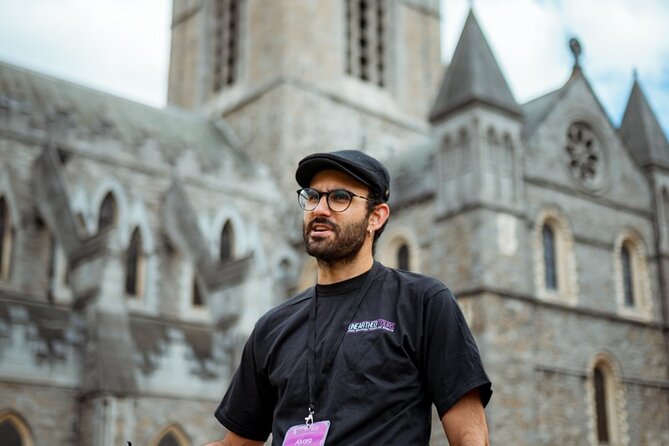
Dublin’s dark past is not tucked away in a museum. It sits under the cobbles, beside old churches, and within the courtyards of Dublin Castle. This two-hour walking tour links those places with stories of torture, grave robbery, cannibalism, executions, and murder. The setting is real, and the tales give familiar landmarks a very different feel.
I like the route for two reasons. First, it covers major sights such as Dublin Castle, St Patrick’s Cathedral, Christ Church Cathedral, and Smithfield without asking you to spend a full day on a standard city tour. Second, it reaches less obvious corners, including the 40 Steps and St Audoen’s Church, where a guide can explain stories you would be unlikely to find in a regular guidebook.
The main consideration is the delivery. A strong storyteller can make the grisly material gripping, and guides including Cillian, Kim, Michael, Killian, Mikayla, and Stephen have earned especially warm praise for their humor and energy. But sound from traffic and crowds can make some stories hard to hear, and one guide may suit you better than another. This is macabre history, not a gentle ghost walk.
In This Review
- Key points to know before you book
- Why this Dublin walking tour feels different
- Barnardo Square: an easy start on Dame Street
- Dublin Castle and the Devil’s Half Acre
- The 40 Steps and stories of cannibalism
- St Patrick’s Cathedral and Jonathan Swift
- Christ Church Cathedral and the hidden past of a famous landmark
- St Audoen’s Church and the body-snatching years
- St Michan’s Church and Billy in the Bowl
- Ending in Smithfield Square
- How the pace and group size affect the experience
- The guide makes or breaks the dark stories
- Is $23.22 a fair price?
- Who should book Dark Dublin?
- FAQ
- Where does the Dark Dublin tour start?
- Where does the tour finish?
- What time does the tour start?
- How long does the tour last?
- Is Dublin Castle included inside the tour?
- Do you enter the cathedrals and churches?
- What subjects does the guide cover?
- Is the tour suitable for a large group?
- What is the cancellation policy?
- Should you book it?
Key points to know before you book
- A south-side route through major landmarks: Walk from Barnardo Square past Dublin Castle, both cathedrals, St Audoen’s Church, and Smithfield.
- The stories are genuinely grim: Expect torture, cannibalism, body snatching, grave robbery, murder, and dark legends.
- No church or castle interiors: You visit courtyards and grounds, but do not enter Dublin Castle or the churches.
- A manageable two-hour walk: The route includes several stops and short talks, though the pace may feel quick for anyone who walks slowly.
- A guide-led experience: English is the tour language, with guides such as Cillian, Kim, Michael, Killian, and Mikayla praised for lively storytelling.
- Good value at $23.22: The price covers an in-person guide and a focused look at Dublin’s darker side, but not admission to paid sites or food.
Why this Dublin walking tour feels different
Many city walks point out statues, handsome buildings, and famous political events. This one asks what happened behind the walls, below the streets, and around the churches after dark. You still see important Dublin sights, but the guide frames them through crime, punishment, religion, disease, and superstition.
That makes the tour useful if you have already seen the obvious sights or want something more unusual between larger attractions. It also gives you a fresh reason to look at places you may otherwise pass without much thought. A church is no longer just a grand facade. A castle courtyard becomes a place linked to fear and punishment.
The route is not a theatrical haunted-house show. Its strength comes from mixing documented history with eerie tales and local legends. Guides have used humor to keep the mood from becoming too heavy, but the subject matter remains stark. Stories of torture, grave robbing, executions, cannibalism, and murder are central to the experience.
I would not choose this as a first activity for young children or anyone who dislikes graphic subjects. The title tells you what you are signing up for. If you enjoy true crime, old legends, or the uncomfortable parts of social history, the tone should suit you well.
Other Dublin tours people book alongside this one:
- Dublin to Cliffs of Moher, including Wild Atlantic Way and Galway
★ 5.0 · 23,331 reviews - From Dublin: Cliffs of Moher, Burren & Galway City Day Tour
★ 4.8 · 18,888 reviews - Dublin: Guinness Storehouse Entry Ticket
★ 4.6 · 16,863 reviews
Barnardo Square: an easy start on Dame Street
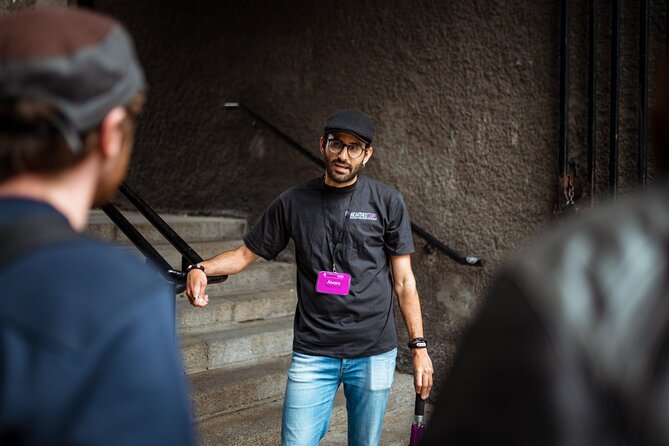
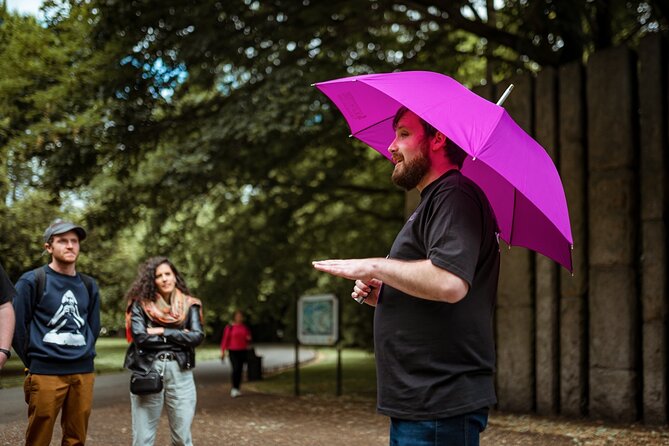
The tour begins at Barnardo Square on Dame Street, beside City Hall and opposite the Olympia Theatre. Guides use purple umbrellas, making the meeting point easier to spot in a busy central area.
This is a practical starting place. It is close to public transportation and near other central sights, so you can fit the walk into an evening plan without a long transfer across town. The scheduled start is 5:30 pm, which gives the route an evening mood without requiring a late-night finish.
Arrive ready to walk and use the toilet before setting out. A guide has been praised for reminding the group to handle those small practical needs before the first story begins. Dinner is not included, so plan to eat before or after the tour, especially if you prefer not to walk while hungry.
Dublin Castle and the Devil’s Half Acre
The first major stop is Dublin Castle. The guide spends time in the Lower Courtyard discussing torture and the harsh methods used in earlier periods. You then move to the Upper Courtyard for stories connected with the Devil’s Half Acre.
You do not enter the castle. That matters when comparing this walk with a paid castle visit. The value here is not access to rooms or exhibitions. It is the guide’s explanation of what the castle meant as a seat of authority, fear, and punishment.
The courtyards also help set the tone. You are looking at real historic spaces while hearing about the darker forces that shaped them. The talk lasts about 15 minutes, so expect a focused story rather than a long architectural lesson.
The 40 Steps and stories of cannibalism
The stop known as the 40 Steps shifts the mood from official power to one of the tour’s most disturbing subjects: cannibalism. This is likely to be one of the more memorable sections for anyone drawn to the extreme edges of crime and survival.
The stop is listed as including admission, but the walk remains primarily an outdoor experience. The guide’s storytelling matters here because the subject can sound sensational if handled poorly. The most effective approach is to connect the story to its setting and wider social conditions rather than simply pile on gruesome detail.
You should expect the tour to keep moving after each talk. This is not a seated presentation, and the group may gather in places where city noise competes with the guide. Stand close enough to hear clearly, particularly during the more detailed stories.
A different side of Dublin on the same trip:
- Dublin to Cliffs of Moher, Burren, Wild Atlantic Way, Galway Tour
★ 5.0 · 12,924 reviews - Dublin: Giants Causeway, Dark Hedges, Dunluce & Belfast Tour
★ 4.8 · 8,843 reviews - Dublin to Belfast Black Cab, Dunluce Castle and Giant’s Causeway
★ 5.0 · 7,954 reviews - Kilkenny, Wicklow Mountains & Glendalough Day Tour from Dublin
★ 5.0 · 7,897 reviews
St Patrick’s Cathedral and Jonathan Swift
At St Patrick’s Cathedral, the route enters the cathedral grounds but not the church itself. The guide connects the setting with Jonathan Swift, the writer and churchman best known for Gulliver’s Travels, and explores the less comfortable side of his Dublin story.
This stop adds useful context. The tour is not only about anonymous killers and old ghost tales. It also shows how famous people, religious institutions, and public life fit into Dublin’s darker past. The cathedral grounds offer a calmer pause after the harsher material at the 40 Steps.
Do not book this walk expecting interior access to St Patrick’s Cathedral. If you want to see the inside, you will need to arrange a separate visit and pay any required admission. Here, the guide provides the interpretation while you remain outside.
Christ Church Cathedral and the hidden past of a famous landmark
Christ Church Cathedral is another major sight on the route. The guide discusses the church’s less visible history, adding another layer to a building many people see only as a striking medieval landmark.
This is one reason I find the route good for repeat visits to Dublin. You can recognize the main attractions without following a standard sightseeing script. The stories encourage you to pay attention to the ground around the building, the old walls, and the relationship between religious power and ordinary life.
Again, there is no entry into Christ Church. The stop works best if you are happy to see the exterior and listen. If cathedral interiors are your priority, treat this tour as a supplement rather than a replacement for dedicated visits.
St Audoen’s Church and the body-snatching years
At St Audoen’s Church, the guide takes up grave robbery and attacks from the Black Pig. The church is not entered, but the location gives the story a suitably old and atmospheric backdrop.
Grave robbery is one of the strongest themes for a dark-history walk because it links crime with medicine, poverty, fear, and the value placed on bodies after death. The guide can turn a familiar churchyard into a place where practical motives and superstition collide.
This stop also shows the route’s balance. You are not only moving between Dublin’s best-known landmarks. You are also being brought to places that can be easy to miss when exploring the city on your own. The route remains central, but it does not feel limited to the busiest sightseeing streets.
St Michan’s Church and Billy in the Bowl
The next stop is St Michan’s Church. The guide discusses Billy in the Bowl and more recent dark events connected with the area. You do not enter St Michan’s, so the experience relies on the explanation rather than a visit to its famous interior.
The name Billy in the Bowl is the sort of local detail that gives the tour its character. It is not a broad fact you would necessarily pick up from a quick walk around Dublin. The guide brings attention to a person and a story tied to the city itself.
This section may appeal to you if you prefer strange local cases over famous national events. It also keeps the walk from becoming a simple checklist of cathedrals and castles. The darker material is attached to specific streets and places, not presented as a generic collection of ghost stories.
Ending in Smithfield Square
The tour finishes in Smithfield Square, near 7 Smithfield. The guide closes with a story about a local murderer, giving the walk a final crime-focused note rather than ending quietly at a church.
Smithfield is a useful end point. It is a public square with places nearby to continue your evening, though dinner is not part of the experience. Since the tour starts on Dame Street and ends in Smithfield, you see a meaningful stretch of Dublin on foot without needing private transport.
The finish also gives you a chance to place the route on a map. You have crossed from Dublin Castle and the cathedrals toward the western side of the historic center, passing locations that would be difficult to connect without a guide.
How the pace and group size affect the experience
The tour lasts about two hours and has a maximum of 30 people. That is small enough for a guide-led walk to feel organized, but it is not a private tour or a tiny group around one storyteller.
The pace is generally manageable, with stops of roughly 15 minutes. Several people have found the walking easy and appreciated the breaks between stories. Still, one useful warning is that the pace can feel fast for anyone who walks slowly. Wear comfortable shoes and tell the guide if you need a little more time.
City noise is another factor. Dublin traffic and passing crowds may interrupt parts of the narration, especially at open street corners. Stay near the guide and avoid hanging back at the edge of the group. The purple umbrella helps you keep track of the group when the pavement gets busy.
The tour is offered in English. Service animals are allowed, and most people can take part. Private transportation is not included, but none is needed to follow the route.
The guide makes or breaks the dark stories
The strongest part of this experience is the guide’s delivery. Cillian, Killian, Kim, Michael, Mikayla, Stephen, Ciarán, Keiron, and John have each been singled out for enthusiasm, humor, clear storytelling, or useful local recommendations.
That does not mean every departure will feel identical. Dark stories need timing, volume, and a sense of restraint. A lively guide can make two hours pass quickly, while a quieter delivery may leave you distracted, especially when traffic makes the talk harder to hear.
The best guides appear to balance grim facts with a light touch. That balance matters. Too much joking could make the subject feel cheap, while an overly serious tone could make a long outdoor walk tiring. The most praised guides keep the group focused and invite questions.
If you get a guide who encourages questions, use the chance. The stories are more useful when you can ask how a place connects to Dublin’s wider past rather than simply waiting for the next shock.
Is $23.22 a fair price?
At $23.22 per person, this is a reasonable price for a two-hour guided walk in central Dublin. You are paying for an in-person guide, route planning, and access to stories that are hard to assemble on your own.
The value is strongest if you want a focused theme. A general free walk might explain the city’s major dates and buildings, but it is less likely to connect Dublin Castle with torture, church grounds with grave robbing, or Smithfield with a local murder story.
The price does not include dinner, private transport, or entry to Dublin Castle, St Patrick’s Cathedral, Christ Church Cathedral, or St Michan’s Church. You should see this as an outdoor storytelling tour, not a ticket bundle for Dublin’s interiors.
Group discounts may be available. Confirmation arrives at booking, and free cancellation is offered up to 24 hours before the 5:30 pm start. Cancel within 24 hours and you should not expect a refund. If the minimum number is not reached and the tour is canceled, you are offered another date or experience, or a full refund.
Who should book Dark Dublin?
I would choose this tour if you like old crimes, uncomfortable facts, ghost stories, and historic places with a sinister edge. It is also a smart choice for an October visit, though the subject works year-round.
It suits a first-time visitor who wants to see several major south-side sights in a different way. It also works for someone who has already walked around Dublin’s center and wants stories beyond the usual tourist script.
I would think twice if you want to enter the cathedrals or Dublin Castle, need a very slow walking pace, or prefer polished historical lectures without graphic material. The experience is about atmosphere and storytelling, not interiors, dining, or transport.
FAQ
Where does the Dark Dublin tour start?
It starts at Barnardo Square on Dame Street in Dublin 8, beside City Hall and opposite the Olympia Theatre. Guides use purple umbrellas.
Where does the tour finish?
It finishes in Smithfield Square, near 7 Smithfield, Dublin.
What time does the tour start?
The scheduled start time is 5:30 pm.
How long does the tour last?
The walk lasts approximately two hours.
Is Dublin Castle included inside the tour?
No. The tour visits the Lower Courtyard and Upper Courtyard, but it does not enter Dublin Castle.
Do you enter the cathedrals and churches?
No. The route visits the grounds or outside areas of St Patrick’s Cathedral, Christ Church Cathedral, St Audoen’s Church, and St Michan’s Church, but does not enter them.
What subjects does the guide cover?
The stories include torture, murder, cannibalism, grave robbery, body snatching, executions, local criminals, and dark legends.
Is the tour suitable for a large group?
The maximum group size is 30 people. Group discounts are available.
What is the cancellation policy?
You can cancel up to 24 hours before the start time for a full refund. Cancellations or changes made within 24 hours are not accepted for a refund.
Should you book it?
Book Dark Dublin if you want Dublin’s famous landmarks explained through crime, punishment, folklore, and death. At $23.22, it is a fair way to add a distinctive two-hour walk to your itinerary, especially if Cillian, Kim, Michael, Killian, Mikayla, or another lively storyteller is leading your group.
Skip it if you want interior access, a slow stroll, or a conventional introduction to Dublin. For everyone else, bring good shoes, stay close enough to hear, and expect the city’s old stones to look rather different by the time you reach Smithfield.
Just added around Dublin
- Dublin: Pub Tour. Pour The Perfect Guinness, Whiskey & Music★ 5.0 · 3 reviews
- A Self Guided Walking Tour of Dublin’s Docklands★ 4.5 · 3 reviews
- Private Dublin City tour★ 5.0 · 3 reviews
- Dublin One Day Tour with a Local: 100% Personalized & Private★ 4.5 · 3 reviews
- Waterford Crystal and Kilkenny Full-Day Rail Tour from Dublin★ 5.0 · 3 reviews
- Secret and unusual Dublin: guided walking tour★ 5.0 · 3 reviews
- 5 Day Ireland’s South−East Including Admission from Dublin★ 4.5 · 3 reviews
- Turtle Bunbury’s Dublin: A Self-Guided Audio Tour from a Celebrated Author★ 5.0 · 3 reviews